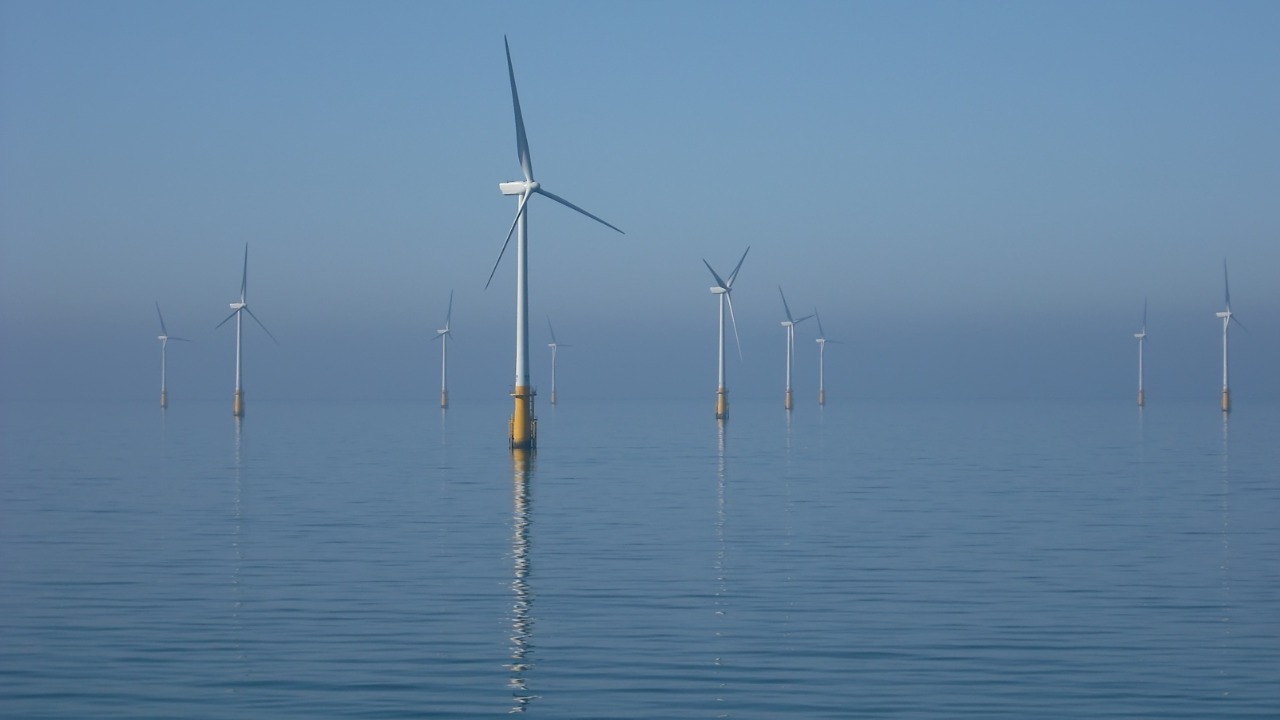

Wind turbines have become a familiar part of the energy landscape, appearing across open countryside and offshore waters. That raises an obvious question: if moving air can rotate turbine blades and generate electricity, why are more turbines not placed underwater where tides move enormous volumes of dense seawater every day?
The basic idea is sound. Tidal-stream turbines operate much like underwater wind turbines. Ocean currents rotate their blades, a generator converts that movement into electricity, and subsea cables carry the power ashore. Because water is far denser than air, a relatively compact rotor can capture significant energy from a strong current.
Tidal power also has one major advantage over wind and solar: its timing can be predicted years in advance. Nevertheless, predictable energy is not automatically inexpensive or easy to collect. Underwater construction, limited suitable locations, difficult maintenance and uncertain environmental effects have kept tidal energy behind faster-growing renewable technologies.
How Tidal Energy Generates Electricity
Tidal energy is produced by the gravitational interaction among Earth, the moon and the sun. As tides rise, fall and move through coastal channels, they create both differences in water level and powerful horizontal currents.
Tidal-stream projects place turbines in fast-moving currents, often between islands, around headlands or inside narrow channels. The passing water turns the rotor, which drives a generator. The US Department of Energy’s marine energy overview explains that turbines can capture the kinetic energy contained in tides, ocean currents and rivers.
A second approach, known as tidal-range power, captures the difference between high and low tide. Barrages or lagoons temporarily retain water before releasing it through turbines. These structures can generate substantial electricity but resemble large coastal infrastructure projects rather than individual underwater turbines.
Most current innovation focuses on tidal-stream devices because they can potentially be installed in arrays without constructing an entire barrier across an estuary.
Tidal Power Is Exceptionally Predictable
The strongest argument for tidal energy is predictability. Wind output depends on changing weather systems, while solar panels stop producing after sunset and generate less under cloud cover. Tidal movements follow astronomical cycles that can be forecast accurately far into the future.
This does not mean that tidal turbines deliver constant electricity. Output rises as the current accelerates, reaches its maximum during strong flow and falls toward zero around slack water when the tide changes direction. However, grid operators can know when those changes will occur.
The US Department of Energy’s explanation of marine energy benefits notes that predictable daily and seasonal cycles could allow marine power to complement other renewable resources. A grid containing wind, solar, storage and tidal energy would have a more varied production profile than one depending on a single weather-driven source.
Neighbouring tidal sites may also reach peak output at different times. Connecting several carefully selected locations could smooth generation rather than producing one simultaneous rise and fall.
Water Can Deliver Significant Power Through Smaller Rotors
Seawater is much denser than air. This allows an underwater turbine to extract useful power from a rotor that may be considerably smaller than the blades of a modern wind turbine.
That compact size can reduce visual impact. Tidal-stream turbines are normally positioned beneath the surface, meaning they do not dominate coastal views or create the same skyline concerns associated with some wind-energy developments.
Submerged installations can also be valuable near islands, ports and remote coastal communities where fuel is expensive and grid connections are weak. Marine energy systems may provide locally generated power while requiring shorter transmission routes than distant utility-scale projects. The Department of Energy identifies coastal resilience and support for isolated communities among marine energy’s potential advantages.
The resource itself can be substantial. The Crown Estate reported that the United Kingdom has approximately 11 gigawatts of accessible tidal-stream potential, illustrating how geographically favourable coastlines could support meaningful future capacity.
The Best Tidal Sites Are Limited
The ocean is enormous, but most of it is unsuitable for commercial tidal turbines. A viable location needs currents strong enough to justify installation while also offering appropriate depth, seabed conditions and access to an electricity network.
A turbine installed in a weak current will produce too little power. One placed extremely deep offshore may require expensive foundations, cables and maintenance vessels. Strong tidal channels may also be important for shipping, fishing, wildlife or military activity.
This site limitation makes tidal energy fundamentally different from solar power. Solar panels can be deployed across roofs, car parks, deserts, farms and industrial land. Tidal projects must be concentrated in comparatively small areas where geography naturally accelerates water.
Even countries with strong resources must complete detailed seabed surveys, current measurements, environmental assessments and grid studies before construction can begin. Securing leases and permits can take years, particularly when several industries depend on the same marine space.
Underwater Equipment Is Expensive to Install
A wind turbine can be inspected from the ground, a platform or a service vessel. A tidal turbine may sit beneath fast-moving, cold and poorly visible water.
Installation can require specialist vessels, divers, remotely operated vehicles, subsea foundations and heavy lifting equipment. Work must often be scheduled around short tidal and weather windows. If conditions become unsafe, an expensive vessel and crew may remain idle while waiting to proceed.
Connecting the project creates another major expense. Subsea export cables must survive currents, movement, anchors, fishing equipment and seabed changes before delivering electricity to a suitable coastal connection point.
These costs are being spread across relatively small pilot arrays rather than thousands of standardised turbines. Offshore wind became cheaper partly because manufacturers and developers deployed large numbers of increasingly standard machines. Tidal-stream technology has not yet reached comparable commercial scale.
The European Commission consequently classifies wave and tidal technologies as emerging rather than established renewables. Its current strategy targets at least one gigawatt of EU ocean-energy capacity by 2030 and 40 gigawatts by 2050, showing both the long-term ambition and the substantial scaling still required.
Maintenance Becomes a Major Engineering Challenge
Saltwater corrodes metals, marine organisms grow on exposed surfaces, and continuously moving currents place repeated loads on blades, seals, bearings and electrical connections.
When a component fails, technicians cannot simply park beside the turbine. The device may need to be accessed by divers or recovered using a vessel. In some designs, the entire turbine is lifted from the water and returned to shore for maintenance.
That process can become extremely expensive, particularly when bad weather prevents immediate recovery. Every day spent waiting reduces electricity production while vessel and specialist labour costs continue.
Developers are therefore testing floating platforms, retrievable turbine modules, stronger composite blades, improved seals and remote-monitoring systems. The Department of Energy describes the marine environment as harsh and corrosive, while noting that recent open-water testing is increasingly focused on proving reliability and reducing operational risk.
A tidal turbine must not merely generate efficiently during a demonstration. It must continue working for years with limited intervention before investors will finance large commercial arrays.
Marine Wildlife Must Be Protected
Underwater turbines naturally raise concerns about fish, seals, whales, dolphins and diving seabirds. Potential risks include blade collisions, underwater noise, electromagnetic fields from cables and changes to habitats or sediment movement.
Existing evidence from small projects is more reassuring than many headlines suggest. A major international state-of-the-science review supported by the US Department of Energy found no observed collisions between marine mammals, fish or seabirds and operating marine-energy devices in the evidence assessed. It also found that noise, cable fields and habitat changes from individual devices or small arrays were generally likely to pose low or limited risks when projects were properly located.
That does not prove that very large tidal farms would have no environmental effect. Most operational arrays remain small, meaning researchers have less evidence about cumulative impacts when dozens or hundreds of turbines occupy one channel.
Environmental monitoring must therefore continue as projects expand. Locations used by protected species, migratory fish or sensitive seabed habitats may require exclusion zones, altered turbine operation or rejection of the project altogether.
Tidal Energy Must Compete With Cheaper Renewables
The final barrier is economic competition. Utilities do not compare tidal energy only with coal or gas. They compare it with rapidly deployed solar farms, mature wind technology, batteries and other low-carbon resources.
Solar and wind already benefit from global factories, experienced developers, established financing models and extensive supply chains. Tidal technology remains divided among seabed-mounted turbines, floating devices, cross-flow rotors and other designs, making it harder for one standard architecture to dominate.
Government support can help early projects move from prototypes to arrays, but long-term growth will depend on reducing the cost of each installed megawatt and demonstrating dependable output. The European Commission’s latest ocean-energy assessment identifies technology development, financing, supply chains and market scale among the factors that will determine whether the sector meets its targets.
Tidal Turbines Could Become Valuable Without Becoming Dominant
Underwater turbines are unlikely to replace wind and solar across the entire electricity system. Suitable sites are too geographically limited, and installation remains too expensive for tidal power to become the default renewable technology everywhere.
Its value may instead come from being different. Tidal energy is local, renewable, visually unobtrusive and highly predictable. Those qualities could make it especially useful in coastal regions where strong currents coincide with high electricity demand and existing maritime expertise.
The reason more turbines are not already underwater is not that the concept fails. The challenge is making machines survive long enough, installing them cheaply enough and scaling projects without damaging the environments on which coastal communities depend.
As reliability improves and commercial arrays become larger, tidal energy could grow from a collection of demonstration projects into a dependable part of a diversified clean-energy grid. It may never cover every coastline, but in the right channels, underwater turbines could produce power with a consistency that weather-dependent renewables cannot provide alone.