
The Giza plateau is one of the most surveyed landscapes on Earth, yet some of its deepest shafts and corridors remain barely touched by modern excavation. While new technology is mapping hidden voids and sealed passages inside the pyramids, the vertical tunnels that plunge beneath them are still treated as side notes rather than priorities. The result is a strange disconnect: scientists are racing to scan every block of Khufu and Menkaure, but the most vertigo‑inducing holes in the bedrock are still waiting in the dark.
The shafts that go straight down, and the risks that follow
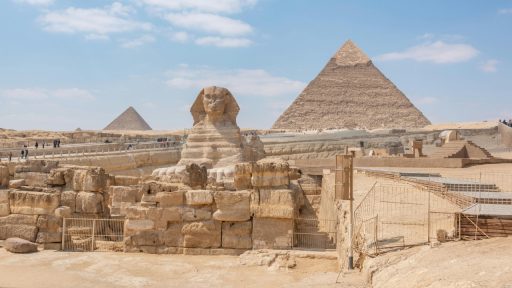
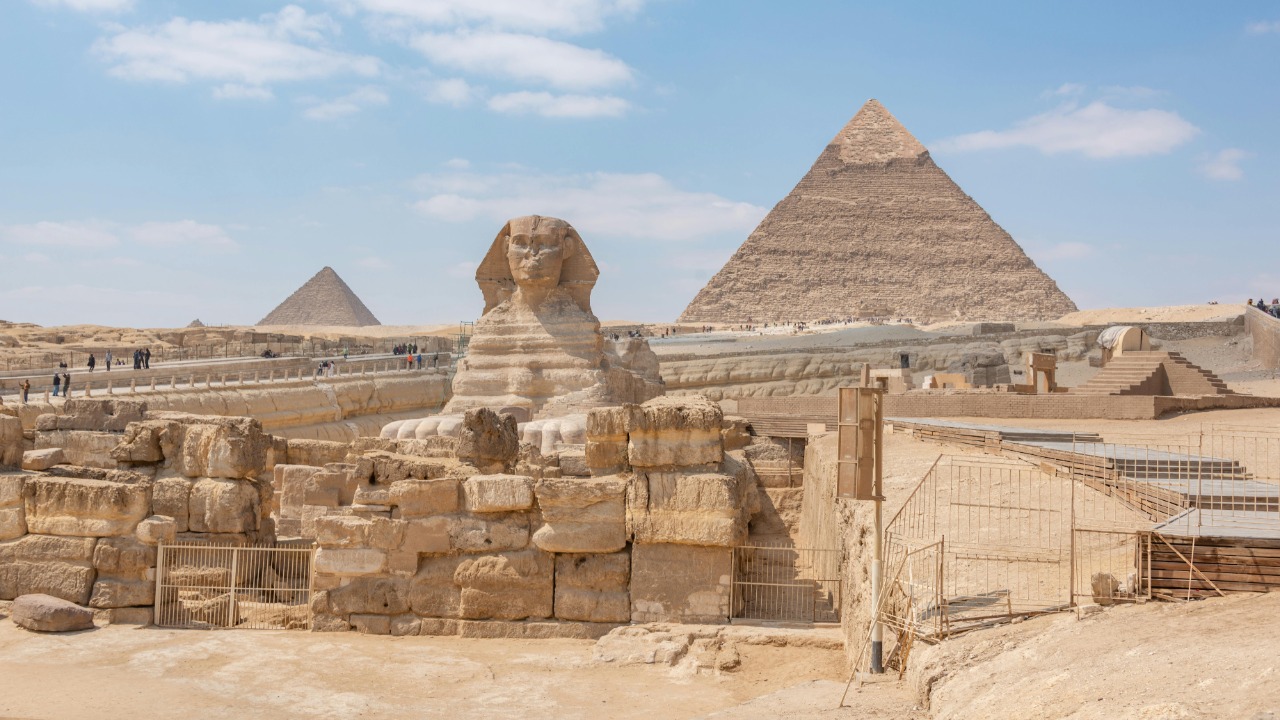
From an Aerial view, the Giza Necropolis looks like a clean grid of monuments, with the pyramids of Khufu, Khafre and Menkaure rising in orderly sequence. Up close, the picture is messier, punctured by narrow openings that drop into the plateau like elevator shafts without elevators. The most famous of these, known as The Osiris Shaft, descends through multiple levels to a flooded chamber, a configuration that has fueled decades of speculation about hidden burials and lost cult spaces beneath the pyramids.
Archaeologists who have actually worked in these spaces describe them as some of the most dangerous environments on the plateau. A detailed study of the excavation of the Osiris complex notes that the work was “very challenging” mainly because of the high water table and the instability that comes with it, a reminder that every meter down adds hydraulic pressure and collapse risk for crews in confined spaces, as documented in the Harvard report on the excavation. When I talk to field archaeologists, they tend to frame these shafts not as romantic gateways to mythic halls, but as logistical nightmares that demand pumps, shoring, and rescue plans before a single trowel touches sediment.
Khufu’s hidden corridors and the pull of non‑invasive discovery
Inside the Great Pyramid of Giza, the momentum is flowing in a different direction, toward sensors rather than ropes and ladders. A project highlighted in a Nov update describes a sealed corridor in the pyramid of Khufu that was detected using non‑invasive technology, part of a broader effort to probe the monument without cutting new passages. The same discussion frames the discovery under the banner of “What” and “Next,” a neat shorthand for the way scanning campaigns promise big revelations while keeping the stonework itself untouched.
That preference for remote sensing over physical descent helps explain why the vertical shafts are not getting equal attention. It is far easier to point muon detectors or ground‑penetrating radar at a known mass of masonry than to engineer safe access into a flooded pit. Egypt’s own star excavator, Renowned Egyptologist Zahi, has leaned into that promise of hidden spaces inside the Great Pyramid of Giza, telling audiences that a new find inside the monument could “rewrite history” and even be linked, in public imagination at least, to the search for the tomb of Nefertiti. When the most influential voices are focused on sealed corridors in Khufu’s core, the deep shafts outside its footprint inevitably slide down the priority list.
The Well‑Shaft, Osiris, and the YouTube effect
One of the few places where the vertical tunnels do get sustained attention is online video, where creators walk viewers through diagrams of the Great Pyramid’s internal “Well‑Shaft” and ask whether it functioned as a backdoor. A detailed breakdown on the channel History for Granite treats the Well‑Shaft as a deliberate feature of Old Kingdom engineering, not a random crack, and uses it to argue that the builders of Egypt were more flexible and pragmatic than the straight‑line passageways suggest. That kind of close reading of the architecture is valuable, but it also highlights a gap: the most intricate reconstructions of the shaft’s purpose are still being done from measurements and old survey notes rather than fresh excavation.
The same pattern plays out around the Osiris complex, which has become a magnet for long‑form video essays. A recent piece released in Sep pulls together archaeological papers and technical analyses to argue that the multi‑level shaft beneath the plateau is far more than a curiosity, describing it as plunging “hundreds of feet down” beneath the surface. Yet even that video, which is sympathetic to academic work, has to rely on older excavation reports and limited access footage, because the site is not being re‑excavated in a way that would answer basic questions about its chronology and function. The result is a feedback loop where online speculation grows faster than the data needed to confirm or kill it.
New anomalies, old hoaxes, and the politics of what gets dug
While the deep shafts wait, new subsurface anomalies around the pyramids are drawing official attention. Near the Great Pyramid, researchers have identified an L‑shaped structure about 33 feet long, buried 6.5 feet below the surface, with scans suggesting additional features Below it. The team behind the work, including voices quoted by Live Science reporter Owen Jarus, stresses that the anomaly “points to the possibility of the presence of archaeological remains” and is “certainly worthy of further exploration.” In other words, even shallow, accessible features are still at the stage of cautious probing rather than full excavation, which makes the neglect of the deepest shafts less surprising.
At the same time, Egyptologists are spending increasing energy batting down claims of a vast underground metropolis. A detailed critique posted in Mar under the heading “Why” describes the supposed “city beneath the pyramids of Giza” as a hoax, arguing that the Techn used in the research is unreliable in archaeology and cannot be compared with other reliable techniques. Another discussion in May notes that some of the loudest promoters of buried “giant structures” have no access to current fieldwork and are not involved in the careful excavation of the monument by excavating. When so much oxygen is being spent on debunking fantasies, it is harder for quieter proposals to systematically clear and document a single dangerous shaft to win funding and permits.
The backlash has gone all the way to formal fact‑checking. In Apr, a scientific review of claims about “giant structures” under Egypt concluded that the researchers’ assertions were not based on “any scientifically valid data,” quoting expert Olette Pelletier and noting that Zahi Hawass also rejected the idea. Another report on the so‑called underground city quotes one scholar describing talk of a vast Hall of Records beneath the plateau as “a huge exaggeration,” even as it acknowledges that the concept of Hall of Records is deeply rooted in Egyptian lore about the Great Pyrami. In this climate, any proposal to sink more resources into the deepest shafts risks being misread as pandering to fringe theories, even when the research design is conservative.
Menkaure’s voids, 2026 hype, and the quiet calculus of triage
Even beyond Khufu, the current wave of discoveries is skewed toward anomalies that can be studied from a safe distance. At the pyramid of Menkaure, a team of Researchers from Cairo and Munich has identified “air‑filled voids” behind the granite façade on the eastern face, suggesting a long‑suspected hidden entrance into the Menkaure pyramid. Those gaps can be mapped with scanners and modeled on computers without sending anyone into a confined space, which makes them ideal candidates for the next round of high‑profile announcements. It is telling that the excitement is focused on cavities behind a façade rather than on the flooded levels of the Osiris complex or the bottom of the Well‑Shaft.
The same logic is shaping the much‑trailed 2026 reveal. Multiple appearances by Egyptologist Dr Zahi Hawass have framed a “significant archaeological find” inside the pyramid of Khufu as a discovery that could open a new chapter of ancient Egyptian history. Another report notes that Egypt is preparing to announce an archaeological surprise in 2026 that will “rewrite history,” with Zahi Hawass describing previously inaccessible parts of the pyramid that are now within reach. A separate account of his remarks at a public event in Nov underlines that the latest hints about what lies hidden in the Great Pyramid of Giza are being carefully timed for that announcement.