
A 360-degree camera system can appear like a luxury feature designed mainly for expensive SUVs. In practice, it can become one of the most frequently used technologies in a car, especially for drivers who regularly deal with narrow parking spaces, busy streets, high kerbs or restricted driveways.
The system usually combines images from four wide-angle cameras positioned at the front, rear and sides of the vehicle. A control unit processes and joins those feeds to create a simulated overhead view, making the car appear as though it is being observed from above.
Bosch’s explanation of 360-degree surround-view technology states that modern systems use near-range cameras and image processing to provide a complete view during parking and low-speed manoeuvring. The system can also display alternative angles for checking lines, walls, obstacles and kerbs.
That overhead perspective can show areas that are difficult or impossible to see through the windows and mirrors alone.
Parking Becomes Much More Precise
The most obvious use for a 360-degree camera is parking. A standard reversing camera shows the area behind the car, but it provides little information about the front corners, wheels or passenger side.
A surround-view display shows how the entire vehicle is positioned within a space. Parking lines appear beside the car, helping the driver identify whether the vehicle is centred, angled or too close to one side.
This can be particularly helpful in multi-storey car parks, where spaces may be narrow and concrete pillars can sit close to the vehicle’s corners. Instead of repeatedly opening the door or adjusting the mirrors, the driver can check the overhead view and make smaller corrections.
Nissan’s Intelligent Around View Monitor was developed to provide this type of bird’s-eye perspective. Nissan says the technology helps drivers confirm the vehicle’s position when parking, travelling along narrow roads or approaching locations with restricted visibility.
The system does not park the vehicle automatically unless it is connected to additional automated parking functions. Its primary purpose is to give the driver better visual information.
It Can Help Protect Wheels From Kerb Damage
Alloy wheel damage often occurs because the driver cannot clearly see the distance between the passenger-side wheels and the kerb.
A side-camera view can display the wheels, road edge and nearby obstacles. This makes it easier to park close enough to the kerb without scraping the wheel or tyre.
The feature is especially valuable on vehicles fitted with large wheels and low-profile tyres. Even a minor contact can mark the wheel, while a more severe impact may damage the tyre sidewall.
Some factory systems automatically show the side or front camera when the driver selects reverse, turns at low speed or presses a dedicated camera button. Others allow the driver to choose between an overhead view and a close-up image of a specific wheel.
Toyota’s available Panoramic View Monitor similarly uses cameras to generate an overhead image of the vehicle’s surroundings for parking and low-speed movement.
Tight Driveways Become Easier to Navigate
A 360-degree camera can also be useful at home. Some driveways have narrow entrances, tight gates, walls, pillars or parked vehicles close to the turning path.
The front cameras can reveal how much space remains beside each corner of the bumper. The overhead image can also help the driver understand the vehicle’s position before turning.
This can be particularly valuable for anyone who has changed from a small car to a larger SUV, pickup or van. The driver may understand the vehicle’s general dimensions but still struggle to judge where its front corners end.
Bosch notes that surround-view systems can assist with precise alignment near walls and other obstacles. Some systems can also combine camera images with information from ultrasonic parking sensors, giving the driver both visual guidance and distance warnings.
The technology can reduce the repeated forward-and-reverse adjustments often needed when entering a confined space.
It Can Reveal Low Obstacles Near the Car
Mirrors are designed to show traffic and larger objects around the vehicle. They may not reveal a low post, rock, planter, bicycle or object lying close to the bumper.
A surround-view camera provides a better look at the immediate area around the car. This can help when driving through unfamiliar car parks, construction areas or private properties containing low obstacles.
Some newer vehicles also provide a “transparent bonnet” or under-vehicle-style view. This does not literally make the bodywork transparent. Instead, the system combines previously captured camera images to show the area that has moved beneath the front of the vehicle.
Bosch describes its transparent-hood function as a virtual view ahead of and underneath the car. It is intended for situations involving narrow spaces, car parks and off-road obstacles such as rocks and kerbs.
Such a view can be useful on large vehicles where the bonnet blocks a significant portion of the road immediately ahead.
Off-Road Drivers Can See the Terrain Around the Wheels
A 360-degree camera is not limited to paved car parks. On suitable SUVs and pickups, it can help drivers navigate trails by displaying rocks, deep ruts, steep edges and the position of each wheel.
This can reduce the need for a passenger to leave the vehicle and guide the driver through every difficult section. The camera image can show whether a tyre is correctly positioned on a safe part of the trail or approaching an obstacle.
Toyota’s Multi-Terrain Monitor, which operates as part of its panoramic camera system on certain vehicles, uses several cameras to display areas around the vehicle that may otherwise remain hidden. Toyota presents the system as an aid for identifying obstacles during more technical off-road driving.
However, cameras cannot accurately show every change in ground level or surface condition. Mud, water, snow and poor lighting can also make an image difficult to interpret. Off-road drivers must continue to assess the terrain directly rather than relying entirely on the display.
Trailer Connection and Loading Can Become Simpler
Connecting a trailer often requires lining up the tow ball with the trailer coupling to within a very small distance. A normal rear camera can help, but a multi-camera system may provide a clearer perspective of the vehicle’s angle and surrounding space.
Some factory systems include a dedicated tow-hitch view. This gives the driver a close-up image of the connection point while reversing. The overhead view can then help ensure that the vehicle and trailer are properly aligned.
Bosch explains that surround-camera technology can support trailer coupling and trailer manoeuvring functions by providing specialised views of the tow connection and surrounding area.
The same benefit can apply when positioning a pickup near a loading platform or manoeuvring a commercial vehicle within a restricted yard.
It May Help Identify Movement Around the Vehicle
Some factory-installed surround-view systems work with object-detection software, parking sensors or rear cross-traffic warning. These technologies can alert the driver when a pedestrian, cyclist or moving vehicle approaches during a reversing manoeuvre.
The camera itself is not necessarily responsible for every warning. Rear cross-traffic systems commonly rely on radar sensors located in the bumper. The camera provides the image, while separate sensors detect approaching movement.
The US National Highway Traffic Safety Administration explains that rear cross-traffic warning can identify vehicles approaching from the side while the driver is reversing, including traffic that may be outside the camera’s view.
Research from the Insurance Institute for Highway Safety has found that combinations of rear cameras, parking sensors and rear automatic braking can substantially reduce backing crashes. However, those results apply to complete driver-assistance packages, not to a camera operating by itself.
A Surround-View Camera Is Not Always a Dashcam
A common misunderstanding is that a 360-degree parking camera automatically records everything happening around the car.
Most factory surround-view systems are designed to display live images during low-speed manoeuvring. They may not continuously save video or provide evidence after an accident.
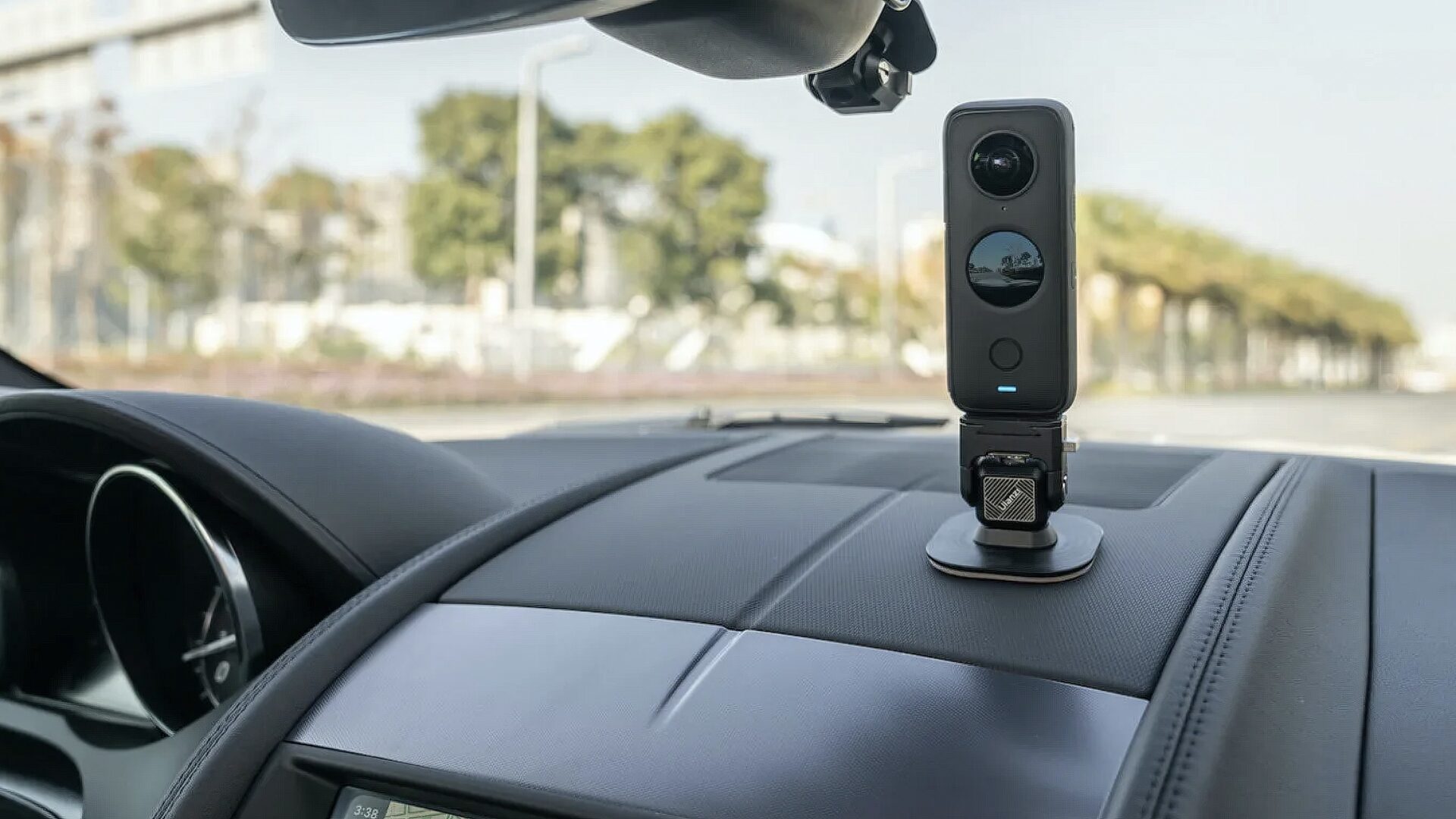
A 360-degree dashcam is a different product. It is built primarily to record journeys, collisions or events around a parked vehicle. Some dashcams use lenses that capture the cabin and exterior, while others use multiple cameras positioned around the car.
Anyone purchasing an aftermarket system should therefore confirm whether it provides only live parking assistance or also includes video recording, storage and parking surveillance. A product described as “360-degree” can refer to very different technologies.
Aftermarket Installation Requires Careful Calibration
Drivers can add surround-view technology to some vehicles through an aftermarket kit. These systems normally require cameras to be fitted at the front, rear and beneath both side mirrors.
Installation is considerably more involved than fitting a single reversing camera. Wiring must be routed through several areas of the vehicle, the cameras must be positioned symmetrically and the control unit must be connected to a compatible display.
Calibration is essential because the software needs to understand the position and angle of every camera before it can create an accurate overhead image. Autel explains that around-view systems use several camera feeds to create one top-down picture and that recalibration may be necessary after cameras are removed, vehicle electronics are replaced or ride height changes.
Poor calibration can make parking lines appear distorted or show objects in the wrong position. Professional installation is therefore usually preferable to choosing a kit solely because it has a low purchase price.
The Cameras Still Have Limitations
A 360-degree image is constructed from several wide-angle feeds, so some distortion is unavoidable. Objects near the joining points between cameras can appear stretched, duplicated or temporarily hidden.
Rain, dirt, snow and condensation can also block a lens. A dirty side camera may remove an important section of the overhead image without the driver immediately noticing.
The system should therefore supplement rather than replace mirrors, direct observation and proper parking checks. NHTSA advises drivers to look around the vehicle and check over their shoulders because children, animals and objects may remain outside a camera’s visible area.
More Useful Than It First Appears
A 360-degree camera may initially seem like an unnecessary convenience, but its value extends far beyond making parking look easier.
It can help protect wheels, reveal low obstacles, simplify narrow driveways, assist trailer connection and provide useful visibility during off-road manoeuvres. For larger vehicles, it can also make the car’s dimensions feel far more manageable.
Its usefulness ultimately depends on camera quality, correct calibration and the driver’s willingness to treat it as an additional view rather than a substitute for attention. When those conditions are met, a surround-view camera can become one of the technologies a driver uses almost every day.