
South Sudan is approaching what could become one of the most important political moments in its short history, but the United Nations is warning that the conditions needed for a credible national election remain dangerously incomplete.
The country has scheduled its first general election since independence for December 22, 2026, after years of delays. Yet continuing violence, political divisions, inadequate election funding, unresolved legal questions and incomplete security arrangements are raising serious doubts over whether the vote can be conducted freely, peacefully and credibly.
South Sudan’s National Elections Commission formally announced the December date in June, even while acknowledging that major financial and legal obstacles still had to be resolved. The election would be the country’s first national vote since it became independent from Sudan in 2011.
The stakes extend far beyond determining who governs the country. A badly organized or disputed election could deepen divisions created by years of conflict, while a credible vote could provide South Sudan with an opportunity to finally move beyond an exceptionally long political transition.
December 22 Election Date Is Official, but Preparations Lag
The National Elections Commission has insisted that voting will take place on December 22.
Commission chairman Abednego Akok Kacuol said the date was established in accordance with South Sudan’s electoral laws and the political transition created under the 2018 peace agreement. However, he simultaneously warned that legal inconsistencies and insufficient financial resources could prevent the commission from fulfilling its responsibilities.
The full context surrounding preparations can be followed through UNMISS reporting on South Sudan’s first democratic elections.
The UN Mission in South Sudan has previously warned that minimal funding had been made available to electoral institutions while essential legal frameworks, security arrangements and other preparations remained unfinished. In April, UN officials said time was rapidly running out to establish the conditions required for peaceful and credible elections.
That creates a difficult situation. Announcing an election date is relatively straightforward. Building an electoral system capable of registering voters, managing polling stations, resolving disputes, ensuring security and producing trusted results is considerably more complicated.
South Sudan Has Never Held a National Election
The significance of the December vote becomes clearer when viewed against South Sudan’s history.
The country became independent in July 2011 following decades of conflict with Sudan. Expectations were high that independence would allow the new nation to build stable political institutions.
Instead, fighting erupted in December 2013 between forces loyal to President Salva Kiir and those aligned with his rival Riek Machar. The conflict developed along political and ethnic lines and ultimately killed hundreds of thousands of people.
A revitalized peace agreement signed in 2018 created a power-sharing structure and was intended to bring the conflict to an end. Kiir remained president while Machar returned as first vice president.
Implementation of that agreement has repeatedly fallen behind schedule.
According to the United Nations Mission in South Sudan background briefing, the transitional period has already been extended four times and major provisions of the peace deal remain incomplete.
Elections originally expected much earlier were eventually scheduled for December 2024 before being postponed again to 2026.
For many citizens, another delay would reinforce frustration over a transition that has continued for years without producing an elected national government.
Political Rivalry Is Making the Election More Difficult
One of the biggest problems facing the election is the deterioration of relations between the country’s major political factions.
Riek Machar, one of the principal signatories to the 2018 peace agreement and President Kiir’s longtime political rival, was placed under house arrest in 2025 and later faced serious charges including treason. His detention contributed to renewed political tension and increased doubts over whether the peace agreement could survive.
Machar’s political future remains uncertain as the election approaches.
His SPLM-IO movement has challenged aspects of the electoral process, while fighting involving government and opposition-aligned forces has continued in parts of the country. Associated Press reporting on the December election announcement noted that opposition groups have raised concerns over political, legal and security conditions surrounding the planned vote.
The problem is particularly serious because competitive elections require more than ballot boxes. Opposition parties need to be able to organize, campaign and communicate with voters without intimidation.
Voters must also believe that participating in the process will not expose them to violence.
UN Says Consensus Is Essential for a Credible Vote
United Nations officials have repeatedly argued that elections cannot succeed without broad political agreement.
Earlier this year, UN peacekeeping chief Jean-Pierre Lacroix warned that South Sudan was approaching a “dangerous precipice” as political deadlock contributed to escalating violence. He emphasized that elections lacking consensus and participation across the country would struggle to gain credibility.
That warning matters because South Sudan remains heavily divided between areas controlled or influenced by different political and military actors.
The UN has consistently maintained that the 2018 peace agreement remains the central framework for preventing another large-scale conflict. The agreement was designed not simply to organize elections but to establish security, political and institutional conditions under which voting could occur without restarting the civil war.
Readers can examine the broader UN position through UN Peacekeeping’s assessment of South Sudan’s political transition.
UN officials have previously highlighted unfinished tasks including security-sector reform, deployment of unified forces, voter education and the creation of an agreed operational election timetable.
Security Crisis Creates Another Major Election Risk
Political disagreements are unfolding alongside continued violence.
Renewed fighting in Jonglei State during 2026 displaced hundreds of thousands of people. UN officials also reported restrictions on humanitarian access, attacks affecting medical facilities and escalating tensions between government and opposition-aligned forces.
Displacement directly complicates elections.
People forced from their homes may no longer live in the constituencies where they would normally vote. Refugees living outside South Sudan and internally displaced people require clear rules explaining whether, where and how they can participate.
Election authorities must therefore develop mechanisms capable of identifying eligible voters while ensuring that displaced communities are not effectively excluded from political representation.
The problem becomes even harder in areas where election officials cannot operate safely.
Humanitarian Crisis Adds Pressure to an Already Fragile State
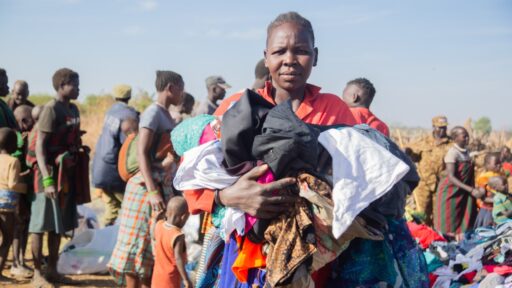
South Sudan’s political challenges are unfolding alongside one of the world’s most severe humanitarian emergencies.
The United Nations says approximately 10 million people require humanitarian assistance, while more than seven million face acute food insecurity. Continued conflict, displacement, economic instability and the effects of the war in neighboring Sudan have placed extraordinary pressure on the country.
The scale of the crisis can be explored through the UN’s reporting on South Sudan’s displacement and humanitarian emergency.
Those humanitarian conditions do not automatically make an election impossible, but they make organization considerably more difficult.
Election authorities need funding for voter registration, polling stations, transportation, security, staff training, communication and vote counting. At the same time, the government is under pressure to fund food assistance, healthcare, public salaries and basic infrastructure.
Another Election Delay Would Carry Its Own Risks
Postponing the election again would solve some logistical problems but create new political ones.
South Sudanese citizens have already waited fifteen years since independence for their first national election. Each extension of the transitional government raises questions about political accountability and whether leaders genuinely intend to transfer authority through elections.
Holding an election before necessary safeguards are established, however, could be even more dangerous.
A disputed result could create conditions for renewed armed confrontation, particularly if major political groups believe they were excluded or if voters question the legitimacy of the process.
That leaves South Sudan facing an increasingly narrow path between two undesirable outcomes: another politically damaging postponement or an election conducted before the country is fully prepared.
December Election Could Define South Sudan’s Future
The December 22 election remains officially scheduled, and South Sudanese authorities continue to insist that preparations are moving forward.
Yet the UN’s warnings show why simply reaching election day cannot be considered success.
The credibility of the vote will depend on whether citizens can register, political parties can compete, displaced communities can participate, election institutions receive sufficient resources and security forces can protect voters without influencing the political process.
South Sudan’s leaders therefore have only months to resolve issues that have remained unfinished for years.
For the world’s youngest country, the first national election could become a milestone marking the end of a prolonged transition. If preparations remain incomplete and political divisions continue to deepen, however, the same election could become another source of instability.
December 22 is approaching rapidly. Whether South Sudan is genuinely ready by then may determine far more than the result of a single election.