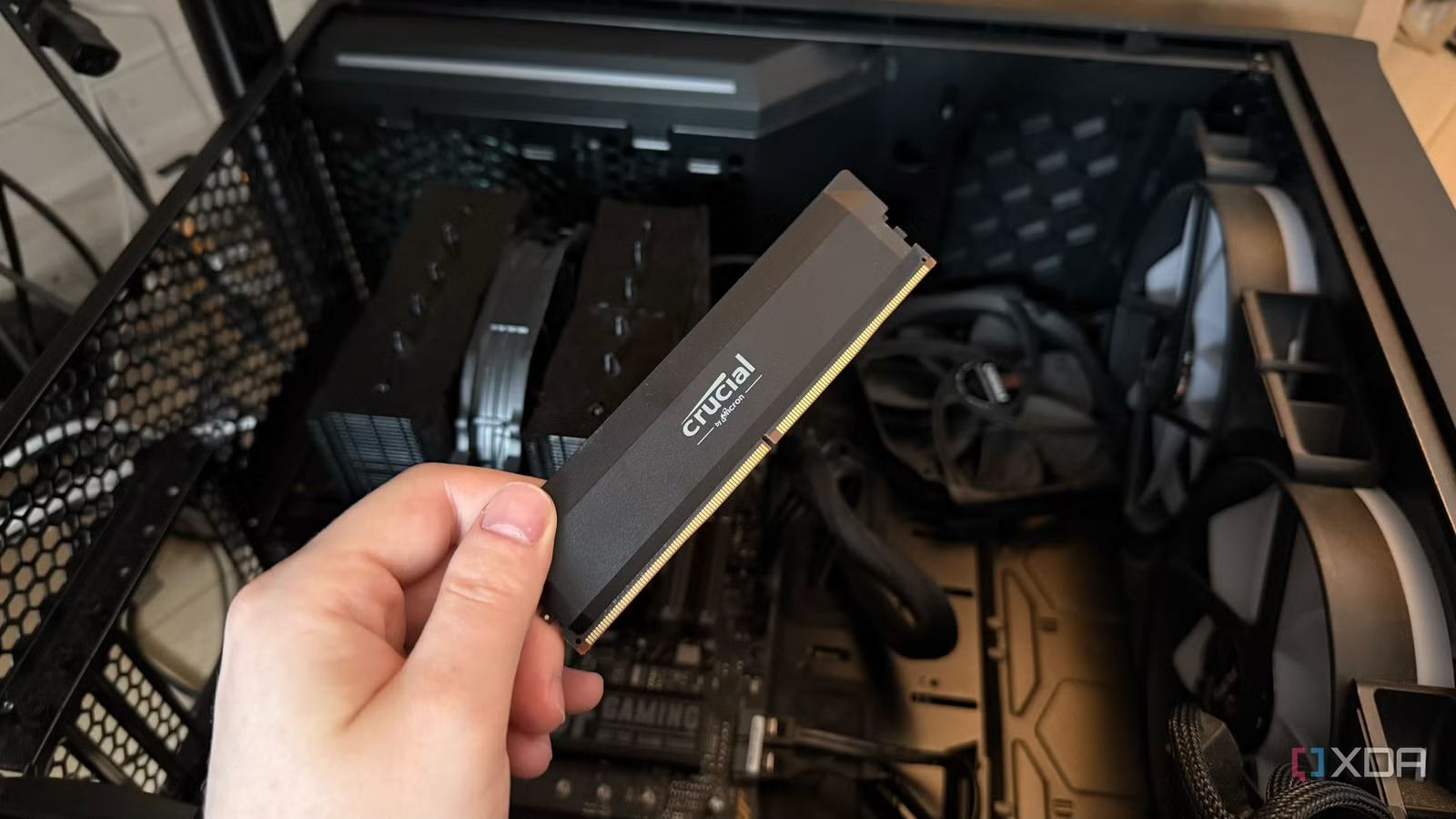

Two men have been detained in China after allegedly checking into multiple eSports hotels, opening the gaming computers inside their rooms and stealing 16 RAM modules.
The unusual theft series occurred in Shihezi, a city in China’s Xinjiang region. According to local police reporting, the suspects repeatedly rented rooms equipped with gaming PCs, removed the memory modules and later sold the hardware through online second-hand platforms and physical electronics shops.
The pair reportedly received more than 13,200 yuan from the stolen components. Their alleged operation continued for approximately half a month before malfunctioning computers exposed what had happened.
The First Theft Reportedly Involved Two RAM Sticks
Police identified the suspects only by the surnames Li and Cheng.
Li allegedly started the operation alone in May 2026. He checked into an eSports hotel in Shihezi, entered a standard room and removed two memory modules from one of its computers. The theft was not discovered immediately, apparently convincing him that the same method could be repeated.
Li then reportedly recruited Cheng. Between May 15 and May 31, the two men visited four eSports hotels and followed a repeated pattern: they registered as ordinary guests, entered rooms containing gaming computers, opened the machines, removed components and checked out.
Reports indicate that the pair stole another 14 RAM modules during this period, bringing the total to 16 when the original two sticks were included.
The precise specifications of the modules have not been officially confirmed. Some international reports have described them as possible DDR5 components, but the original police-sourced reporting refers more generally to computer memory modules. Claims about their capacity, manufacturer or memory generation should therefore be treated as speculation.
What Is an eSports Hotel?
An eSports hotel combines accommodation with private gaming facilities. Instead of providing only a bed, television and internet connection, each room may contain one or more powerful gaming computers, specialised chairs, high-refresh monitors and peripherals.
Groups can rent a room, play multiplayer games and stay overnight without visiting a separate internet café. This model has become particularly visible in China, where gaming-focused hotels can serve groups of friends seeking both entertainment and accommodation.
The computers are an essential part of the room rather than equipment stored in a supervised public area. That arrangement creates a clear security challenge: guests are left alone with valuable computer components that are relatively small and can be resold separately.
RAM is particularly attractive because the modules are compact, easy to carry and do not contain obvious account information linking them to a hotel. They can also be sold to computer builders without requiring the buyer to purchase an entire system.
The Stolen RAM Was Sold Online and Offline
After obtaining the memory modules, Li allegedly listed some of them on second-hand trading platforms at prices intended to attract buyers quickly. The stolen components were also sold through local digital-product and computer shops.
Authorities estimated that the operation generated more than 13,200 yuan in illegal proceeds. The reports do not explain whether that amount represents gross sales or the money remaining after room charges and other expenses.
The figure works out to an average of slightly more than 825 yuan per module. Actual prices could have varied considerably according to capacity, speed, brand and condition.
The suspects may have benefited from rising memory prices. TrendForce reported that conventional DRAM contract prices increased sharply during the first half of 2026 as manufacturers directed more production towards server and high-bandwidth memory used in artificial-intelligence infrastructure.
Its July 2026 DRAM market outlook forecast that conventional DRAM contract prices would rise by another 13% to 18% during the third quarter. The company attributed continued tightness partly to AI-server demand and the reallocation of manufacturing capacity away from consumer PC memory.
High prices do not prove that the suspects specifically planned the alleged crimes around a global shortage. However, police said the elevated resale value of computer memory appeared to have motivated the thefts.
Hotel Staff Found Computers That Would Not Start
The scheme was discovered after an eSports hotel operator noticed that several computers were no longer functioning properly.
Some reports say customers encountered black screens, reduced performance or computers that could not complete the normal startup process. During routine maintenance, staff opened the affected systems and discovered empty memory slots.
A computer normally cannot start correctly when all of its required system memory has been removed. Depending on the hardware configuration, it may display a blank screen, activate warning lights or produce diagnostic sounds instead of loading the operating system.
This appears to have been the central weakness in the alleged plan. Completely removing the RAM made the theft easier to identify than taking only part of a system’s installed memory. A machine left with reduced capacity might still operate, although its gaming performance and multitasking capability could decline.
After confirming that the components were missing, the hotel operator contacted the police.
CCTV and Guest Records Led Police to the Suspects
Officers from the Beiyi Road Police Station, part of the Eighth Division urban public security authorities, investigated the missing hardware.
According to the Xinjiang Daily report, investigators reviewed hotel surveillance footage, checked guest-registration information and compared the records with dates when the affected computers developed faults.
The combination of identifiable guests, recorded visits and equipment-maintenance records reportedly allowed police to isolate two suspects quickly. Li and Cheng were detained the day after investigators began focusing on them.
Hotel registration records made the alleged method much less anonymous than it may initially have appeared. Even when a theft takes place inside a private room without a camera recording the computer, the property can still establish who rented the room before the hardware stopped working.
Online sales may also leave payment, account and delivery records. The available reports do not specify whether investigators used transaction histories to identify the suspects, but authorities are continuing efforts to trace the proceeds and recover the stolen property.
The Men Were Detained, Not Convicted
Several English-language headlines describe the two men as arrested or jailed. The original Chinese reports use language indicating that they were placed under criminal detention on suspicion of theft.
That means they had been taken into custody while the investigation continued. It does not mean a court had already convicted or sentenced them.
Police were still investigating the case and attempting to recover the stolen RAM and money when the reports were published. No trial date, formal judgment or final punishment had been publicly announced.
Maintaining that distinction is important. The police allegations are supported by the reported surveillance, registration and sales evidence, but guilt is ultimately determined through the applicable legal process.
This Is Not the First Gaming-Hotel Hardware Theft
The case also highlights a broader vulnerability facing gaming-focused accommodation businesses.
In 2025, another Chinese eSports hotel reportedly lost processors, graphics cards and peripherals after guests dismantled several high-end gaming systems. The stolen hardware was said to include AMD Ryzen 7 9800X3D processors and Nvidia GeForce RTX 5070 graphics cards.
Those components are more valuable than typical desktop RAM, but they are also larger and may require more time and care to remove. Memory modules present a different risk because they are small enough to conceal easily and have an active second-hand market.
Hotels could respond by using locked or tamper-evident computer cases, recording component serial numbers and automatically monitoring hardware configurations. Software can detect when installed memory changes, although it cannot prevent a physical theft after the machine has been switched off.
Routine inspection between guests may also be more effective than waiting for customers to report a broken computer. The Shihezi case allegedly continued because the first missing modules were not detected for several days.
A Small Theft With a Very Modern Target
The alleged operation was modest compared with major electronics robberies, but its target reflects the changing value of ordinary computer hardware.
The suspects did not steal cash, televisions or complete gaming computers. They reportedly focused on memory modules that could be concealed, transported and resold through existing technology marketplaces.
Their plan ultimately appears to have failed because the hotels had guest identities, surveillance footage and maintenance histories connecting room occupants with disabled machines. Police reportedly used those records to identify the pair shortly after the theft was reported.
For eSports hotels, the case is a reminder that the gaming PC is not merely a room amenity. It is a collection of individually valuable, easily resold components located inside a private space temporarily controlled by the guest.