
When someone spends more than $60,000 on a large SUV, they probably expect it to survive more than a few family vacations.
But 250,000 miles?
That is a very different standard.
At that mileage, a vehicle may have spent decades carrying children, towing trailers, crossing states, dealing with extreme weather, and surviving thousands of everyday starts and stops. Most vehicles never make it anywhere close to that number.
The Toyota Sequoia apparently has much better odds.
Automotive research firm iSeeCars analyzed nearly 400 million vehicles for its latest Longest-Lasting Cars study and found that the Toyota Sequoia had a predicted 39.1% chance of reaching at least 250,000 miles. That gave it the highest probability of any vehicle included in the main ranking.
The average vehicle had just a 4.8% chance.
In other words, the Sequoia was more than eight times as likely as the average vehicle to reach a quarter-million miles.
So what makes Toyota’s massive three-row SUV such an endurance champion?
The Sequoia Didn’t Just Win by a Small Margin
The numbers become more impressive when the Sequoia is compared with other famously durable vehicles.
According to iSeeCars, the Toyota Sequoia ranked first with a 39.1% predicted chance of reaching 250,000 miles.
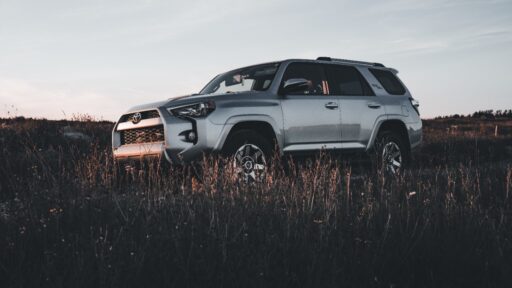
The Toyota 4Runner followed at 32.9%, while the Toyota Highlander Hybrid came in at 31%. The Toyota Tundra recorded a 30% probability, and the Lexus IS completed the top five at 27.5%.
That means the Sequoia did not simply outperform a collection of fragile luxury vehicles.
It beat several Toyotas that already have strong reputations for longevity.
The scale of the study matters as well. iSeeCars says it analyzed almost 400 million cars to estimate which models were most likely to continue operating beyond 250,000 miles. The firm’s analysis covers a huge amount of real-world vehicle history rather than relying only on owner impressions or short-term reliability surveys.
Readers can examine the complete methodology and rankings through iSeeCars’ Longest-Lasting Cars study.
What Does a 39.1% Chance Actually Mean?
The number needs some context.
It does not mean that 39.1% of every new Sequoia sold today is guaranteed to cross 250,000 miles.
A vehicle’s life depends on maintenance, climate, accidents, corrosion, driving conditions, towing frequency, repair decisions, and whether an owner is willing to keep spending money on it as it ages.
Instead, the iSeeCars figure is a predicted probability based on the model’s observed longevity across the vehicle population it analyzed.
That distinction matters.
If someone buys a Sequoia and ignores oil changes, overheats the engine, overloads it constantly, and never repairs emerging problems, the badge on the grille will not magically carry the SUV to 250,000 miles.
What the study suggests is that Sequoias historically possess the underlying durability to reach extremely high mileage at a rate far beyond the typical vehicle.
And Toyota does not dominate only at the model level.
Toyota Dominates the Entire Longevity Ranking
The Sequoia’s result looks much less accidental when the rest of Toyota’s performance is considered.
Toyota placed 10 different vehicles in the study’s overall top 25.
Beyond the Sequoia, the list included the 4Runner, Highlander Hybrid, Tundra, Tacoma, Avalon, Highlander, Prius, Camry Hybrid, and Avalon Hybrid.
Toyota also ranked first among brands.
iSeeCars estimated that a Toyota vehicle has a 17.8% predicted chance of reaching 250,000 miles. The overall industry average was just 4.8%.
Lexus ranked second at 12.8%, Honda came third at 10.8%, and Acura followed at 7.2%. Those were the only four brands above the overall industry average in that analysis.
That means someone looking at the Sequoia result is not seeing an isolated model that somehow escaped the normal reliability pattern of its manufacturer.
They are seeing the highest-ranked vehicle from the highest-ranked longevity brand.
The full manufacturer comparison is available through iSeeCars’ Longest-Lasting Car Brands ranking.
Big Toyota SUVs Have a Long History of Surviving Huge Mileage
The Sequoia has several characteristics that may help explain its longevity.
Historically, it has shared engineering philosophies and components with Toyota’s full-size trucks. Earlier Sequoias were relatively traditional body-on-frame SUVs designed around substantial engines, heavy-duty construction, and truck-derived hardware.
They were not lightweight crossovers trying to achieve maximum efficiency.
They were large utility vehicles built to tow, haul people, travel long distances, and survive demanding use.
Previous iSeeCars research has repeatedly placed the Sequoia near the top of high-mileage rankings. Another vehicle-lifespan analysis found both the Sequoia and Land Cruiser among models with the highest potential lifespans, approaching 300,000 miles among their longest-running examples.
That type of consistency is difficult to dismiss.
It suggests that the Sequoia’s reputation has been built across years of real-world ownership rather than emerging from a single study.
But There Is a Major Catch With the 2026 Sequoia
Someone shopping for a new 2026 Sequoia should understand one important limitation.
Today’s Sequoia is very different from the vehicles that created much of its historic durability record.
Toyota completely redesigned the SUV for the 2023 model year.
Older generations were strongly associated with naturally aspirated V8 engines. The third-generation Sequoia abandoned that formula and moved exclusively to Toyota’s i-FORCE MAX hybrid powertrain.
The current system combines a 3.4-liter twin-turbocharged V6 with an electric motor integrated between the engine and 10-speed automatic transmission. Toyota rates it at 437 horsepower and 583 lb-ft of torque.
That is a dramatically more sophisticated drivetrain.
The 2026 model continues using the same i-FORCE MAX architecture and can tow up to roughly 9,500 pounds depending on configuration.
Toyota’s official specifications can be explored through Toyota’s 2026 Sequoia page.
The important question is whether the new twin-turbo hybrid Sequoia will still regularly reach the sort of mileage achieved by its simpler predecessors.
Nobody can conclusively answer that yet.
A 2023 vehicle simply has not existed long enough to accumulate decades of real-world 250,000-mile evidence.
The New Hybrid Powertrain Changes the Longevity Equation
More technology does not automatically mean less durability.
Toyota has extensive experience building hybrids, and several hybrid models performed extremely well in the same iSeeCars study.
The Highlander Hybrid actually ranked third overall with a 31% chance of reaching 250,000 miles. The Prius, Camry Hybrid, Avalon Hybrid, and Lexus RX Hybrid also appeared among the stronger longevity performers.
That is strong evidence that hybridization itself should not automatically scare a long-term buyer.
Toyota also provides substantial hybrid battery coverage. For Toyota hybrids from the 2020 model year onward, the company says the hybrid battery warranty runs for 10 years or 150,000 miles, whichever occurs first.
But the current Sequoia combines hybrid technology with turbocharging, sophisticated electronics, and a significantly more complex powertrain than some older versions.
An owner hoping to keep one for 20 years therefore has less historical evidence than someone buying a used second-generation Sequoia with a proven V8 drivetrain.
The model name may have a legendary longevity record.
The current drivetrain still has to build its own.
Maintenance Still Decides Whether a Sequoia Gets There
What separates a 250,000-mile vehicle from one that disappears from the road at 150,000 miles?
Often, the answer is not simply manufacturing quality.
It is what happens during ownership.
Oil and filter changes become increasingly important. Cooling-system maintenance matters. Transmission servicing matters. Suspension components wear. Tires, brakes, wheel bearings, hoses, seals, batteries, and other components inevitably need replacement.
A high-mileage SUV is rarely a vehicle that never needed repairs.
It is usually a vehicle whose fundamental structure and major systems remained good enough that repairing it continued to make financial sense.
That is an important distinction in conversations about reliability.
A Sequoia reaching 250,000 miles does not mean the owner drove a quarter-million miles without replacing anything.
It means the vehicle remained worth maintaining.
The Sequoia Also Benefits From the Type of Owner It Attracts
There may be another factor behind its unusual mileage statistics.
People often buy Sequoias specifically because they need a vehicle for long-term family transportation, towing, road trips, outdoor recreation, or heavy use.
Those owners may accumulate mileage differently from someone leasing a luxury sedan every three years.
A large Toyota SUV may remain in the same household for 10 or 15 years. It may later become a second vehicle, get handed down to another family member, or enter the used market where another owner continues driving it.
The Sequoia’s high resale value and reputation can reinforce that cycle.
When an older vehicle is believed to be durable, owners are more willing to repair it.
When owners continue repairing it, more examples survive to extremely high mileage.
Durability and reputation can therefore strengthen each other.
A Quarter-Million Miles Is Still an Extraordinary Achievement
The most revealing number in the entire study may actually be 4.8%.
That was the predicted chance for the average vehicle to reach 250,000 miles.
The Sequoia came in at 39.1%.
Even the Acura MDX, which occupied the final position in the study’s top 25, had only a 9.1% probability.
That puts the Toyota’s result into perspective.
A quarter-million-mile lifespan is not normal.
The Sequoia simply makes it much more normal than nearly anything else.
Is the Toyota Sequoia the Best Vehicle for Someone Who Keeps Cars Forever?
For a buyer whose main objective is keeping a vehicle for hundreds of thousands of miles, the study gives the Sequoia an extremely compelling argument.
But longevity is not the same thing as affordability.
The current 2026 Sequoia starts above $65,000, and its enormous dimensions, tires, insurance costs, maintenance requirements, and fuel consumption mean it will not necessarily be the cheapest vehicle to own over 250,000 miles. Toyota lists fuel economy of up to an EPA-estimated 22 mpg combined depending on configuration.
Someone who does not need a full-size three-row SUV may find a Prius, Camry Hybrid, Highlander Hybrid, or another durable model substantially cheaper to operate.
But if they need towing capability, substantial interior space, truck-based construction, and long-term durability, the Sequoia’s combination is unusual.
The iSeeCars research does not prove that every new Sequoia will become a 250,000-mile SUV.
It does prove something almost as interesting.
Across hundreds of millions of vehicles studied, no model had better predicted odds.
And for someone who believes a vehicle should be measured in decades rather than lease terms, 39.1% may be one of the most impressive numbers on the entire specification sheet.