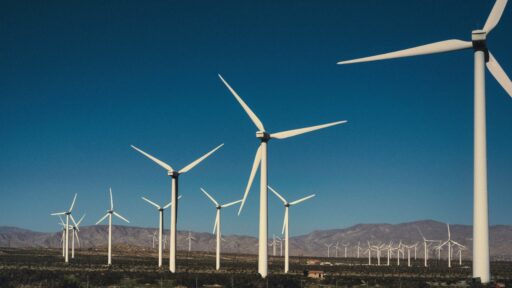
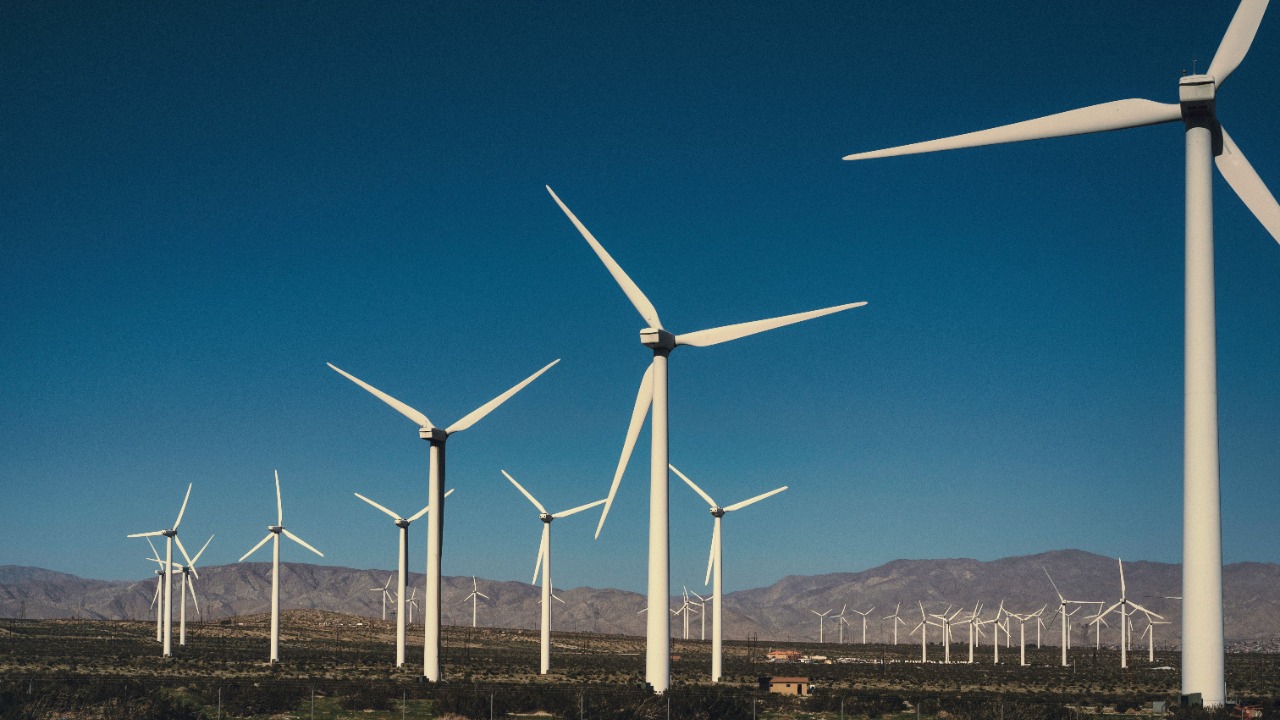

When a wind turbine reaches the end of its working life, most people probably imagine it being dismantled, recycled, or sent somewhere for disposal.
A Dutch company has another idea:
Turn parts of it into a house.
Rotterdam-based Blade-Made has developed a tiny home using the nacelle of a decommissioned wind turbine—the large enclosure that normally sits at the top of the tower and contains equipment such as the generator and gearbox. The project, called Nestle, was created with circular-design studio Superuse and energy company Vattenfall.
The result looks unusual from the outside because it still unmistakably resembles a wind-turbine component.
Step through the door, however, and there is a functioning home with a kitchen, bathroom, living space, heating, solar panels, and even a solar water heater.
It is a clever demonstration of an increasingly important problem facing renewable energy:
What happens to clean-energy infrastructure when the infrastructure itself gets old?
The House Started Life 100 Meters Above the Ground
Nestle was not built from a brand-new turbine component created specifically for an architecture experiment.
Its shell had already spent roughly 20 years operating as part of a Vestas V80 2MW wind turbine at the Gols wind farm in Austria. The nacelle originally sat approximately 100 meters above the ground.
During its operational life, that turbine produced around 73 GWh of electricity, which Vattenfall says is equivalent to the annual electricity consumption of more than 29,000 households.
Once the turbine reached retirement, Dutch decommissioning specialist Business in Wind provided the nacelle for the reuse project.
Instead of breaking the fiberglass shell down into raw material, the team asked a much more interesting question:
Could somebody live inside it?
The answer turned out to be yes.
A Nacelle Is Surprisingly Close to Tiny-House Size
Wind turbines look narrow from the ground because they are hundreds of feet away.
Up close, their components are enormous.
The nacelle used for Nestle is roughly 10 meters long, around 4 meters wide, and about 3 to 4 meters high, depending on the measurement point. The completed interior provides approximately 35 square meters, or about 376 square feet, of usable space.
That puts it firmly inside tiny-home territory.
For comparison, plenty of purpose-built tiny houses offer less than 400 square feet.
What makes the project particularly interesting is that the designers deliberately used one of the smallest turbine nacelles considered large enough to become a home. Superuse says nacelles from newer turbine generations can be considerably larger.
That creates a surprising possibility.
As turbines continue growing, the structures being retired decades from now may provide even more space for reuse.
The Interior Looks Nothing Like Industrial Machinery
On the outside, the project barely disguises its previous life.
The rounded white fiberglass shell still resembles the housing from a turbine.
Inside, almost everything changes.
The home contains a kitchen, bathroom, sitting area, storage, windows and residential finishes. Sustainable and second-hand furnishings were used throughout, and even one of the tables incorporates material recovered from a wind-turbine blade.
The designers added large glazed openings at the ends, which prevent the long fiberglass shell from feeling like a windowless industrial container.
The result is far closer to a compact studio apartment than a piece of power-generation equipment.
You can see the project’s specifications and development through Blade-Made’s Nacelle Micro Home project page.
It Even Meets Building Requirements
This was not designed purely as a decorative exhibition piece.
Superuse deliberately attempted what it called the most difficult version of the idea: converting the smallest practical nacelle into a home that complied with building regulations.
The company says the completed structure meets applicable building requirements and can therefore be used for habitation or as a holiday residence.
That required much more than placing furniture inside an empty turbine shell.
Woodwave handled much of the physical conversion.
Structural engineers designed a new steel framework inside the existing shell.
Feenstra installed technical systems.
The interior was then finished and furnished for its appearance at Dutch Design Week.
In other words, the nacelle becomes the starting structure.
It still needs to be engineered into a building.
Solar Panels Give the Old Wind Turbine Another Renewable-Energy Job
Perhaps the most appropriate detail is what sits on top.
Solar panels.
After spending two decades helping generate electricity from wind, the former turbine component now uses sunlight to help power its second life.
Vattenfall says the tiny house includes solar panels, a heat pump, and a solar water-heating system.
That creates a nice symmetry.
The structure used to house machinery converting wind into electricity.
Now it shelters people while solar technology helps operate the building.
The original renewable-energy component has effectively become renewable-energy architecture.
Why Not Simply Recycle the Old Turbine?
Because recycling and reuse are not the same thing.
Most wind-turbine foundations, towers, generators and gearbox components contain metals or concrete that can be processed through established recycling systems.
But recycling often requires substantial energy.
Steel has to be transported and melted.
Materials have to be broken down and processed.
That creates emissions and destroys much of the manufacturing effort already embedded in the component.
Vattenfall argues that direct reuse with minimal processing can sometimes be preferable because the original structure remains intact and useful for longer.
Blade-Made describes this philosophy as “slowing the loop.”
Instead of taking a component that has lasted 25 years and immediately reducing it to raw material, the company tries to give that material another functional life that might last decades.
Only later, when the material genuinely reaches the end of its technical usefulness, would conventional recycling become necessary.
Wind-Turbine Blades Are the Harder Problem
The nacelle is only one piece of the end-of-life challenge.
Wind-turbine blades are particularly difficult.
They are commonly made from composite materials combining fiberglass or carbon reinforcement with resins.
Those materials are strong.
Lightweight.
Durable.
And inconvenient to recycle.
That durability is exactly what makes them useful for turbines—and frustrating once the turbine is dismantled.
Blade-Made was originally created around finding alternative uses for those composite components. The company now develops projects using both retired blades and nacelles.
It has already turned old blade material into structures including noise barriers, benches, playground elements and other infrastructure. The BGR report notes examples ranging from a bench installed in a Shenzhen mall to a Blade-Made playground in Rotterdam.
A house is therefore not an isolated novelty.
It is part of a broader experiment in treating retired turbine parts as construction material rather than waste.
There Could Be Thousands of Suitable Nacelles
This is where the project potentially becomes more than an exhibition.
Superuse estimates that at least 10,000 nacelles from the same general turbine generation exist worldwide, with many still waiting to be decommissioned.
Not all of them will become houses.
They probably shouldn’t.
But that scale demonstrates why circular-design companies are interested.
Imagine retired nacelles becoming:
Holiday cabins.
Emergency shelters.
Small offices.
Kiosks.
Park facilities.
Workshops.
Utility buildings.
Temporary accommodation.
The tiny house is one of the most complex possible reuse cases.
If engineers can make a code-compliant home from one, simpler applications should be easier.
That is exactly the argument behind the project.
Newer Turbines Could Create Much Bigger Spaces
Wind turbines have grown dramatically.
A V80 was a significant turbine when introduced.
Modern offshore turbines make it look relatively small.
Rotor diameters now extend well beyond 200 meters, towers are taller, and nacelles can be enormous.
Blade-Made notes that wind turbines are often dismantled after roughly 25 years even though the composite materials themselves may retain much more usable life.
That means the reuse opportunity could expand as increasingly large modern turbines eventually reach retirement.
Today’s 376-square-foot nacelle house may look tiny.
Tomorrow’s decommissioned nacelle could provide enough volume for an entirely different category of structure.
But This Probably Won’t Solve the Housing Crisis
It is tempting to imagine fields of retired turbine houses providing cheap accommodation.
Reality is more complicated.
The nacelle itself may be reused, but converting one into a home still requires:
Transport.
Structural engineering.
Insulation.
Windows.
Doors.
Plumbing.
Electricity.
Heating.
Interior construction.
Land.
Foundations.
Permits.
Connection to utilities.
A wind turbine component also does not conveniently appear in the city where someone needs housing.
Moving something roughly 10 meters long and several meters wide requires specialized transportation.
So the fact that the shell is reused does not automatically mean the completed home will be inexpensive.
Nestle currently functions primarily as a demonstration of material reuse, not as evidence that mass-produced turbine housing is about to undercut conventional construction.
Transportation Could Determine Whether the Idea Makes Environmental Sense
This is an important point with almost every recycling project.
Reusing something is not automatically greener if enormous amounts of energy are required to move and modify it.
A nacelle located close to a potential building site may be an excellent candidate.
One requiring extraordinary heavy transport across thousands of kilometers might make less sense.
The environmental calculation needs to consider the complete lifecycle.
How much virgin material is avoided?
How much transport is required?
How much structural work is needed?
How long will the reused building remain in service?
What happens at its next end of life?
Circular design works best when those questions are considered from the beginning rather than simply assuming “reused” equals sustainable.
Wind Farms Are Entering a Massive Replacement Cycle
The timing is important.
Europe installed large numbers of wind turbines during earlier waves of renewable-energy expansion.
Many are now reaching the stage where operators can replace them with newer machines capable of producing much more electricity from the same site.
This process is called repowering.
For example, one Dutch wind project replaced seven older turbines totaling 3.5 MW with five newer turbines totaling around 20 MW.
Repowering can substantially increase renewable-energy production.
It also creates a growing stream of old blades, nacelles and towers that need somewhere to go.
That is why finding higher-value second lives for those materials is becoming increasingly important.
Blade-Made Wants Reuse to Become Part of Decommissioning
Blade-Made’s broader idea is to integrate reuse into the wind industry’s normal end-of-life process.
The company describes itself as offering solutions for composite turbine components, including its Blade Barrier and Nacelle Micro Home.
The long-term objective is not necessarily to manufacture thousands of identical houses.
It is to make operators ask a different question before recycling:
Does this component still have useful structural life?
If yes, perhaps breaking it into raw material is premature.
That is a fundamentally different approach from traditional waste management.
The Tiny House Was Originally Built for Dutch Design Week
Nestle was completed in October 2024 and displayed prominently during Dutch Design Week in Eindhoven.
The exhibition context is important.
It was meant to provoke ideas.
Vattenfall had invited several design studios to explore second-life applications for decommissioned wind-turbine components.
Other ideas included floating structures made from blades and artistic uses of historical turbine data.
Vattenfall continued exploring reuse during Dutch Design Week 2025, where it showed additional retired turbine components and let visitors experiment with tools for imagining new applications.
So the tiny house is part of a longer effort rather than a single social-media stunt.
Could You Actually Buy One?
Not as though you were ordering a normal prefab tiny house.
Blade-Made currently describes Nestle as a realized project and says it is gathering responses and considering future applications.
There is no standardized consumer catalog where someone chooses:
“One retired V80 nacelle, two-bedroom configuration, please.”
That could change if demand and suitable turbine supply justify commercial development.
But each decommissioned component brings practical questions involving dimensions, condition, location and transportation.
For now, the project is best viewed as proof that the conversion can be done.
The Most Sustainable Turbine May Be the One That Gets Two Jobs
Wind power already exists to reduce reliance on fossil fuels.
But renewable infrastructure still consumes resources.
Steel.
Concrete.
Copper.
Fiberglass.
Resins.
Energy.
Transportation.
Sustainability therefore cannot stop at asking how electricity is generated.
It also has to ask what happens when the equipment reaches retirement.
Nestle provides one surprisingly tangible answer.
A turbine works for roughly two decades.
It produces 73 GWh of electricity.
Its generating equipment is retired.
Then the outer structure gets windows, plumbing and furniture and becomes someone’s living space.
That will never be the solution for every wind turbine.
It does not need to be.
The more important idea is that decommissioned does not necessarily mean useless.
A giant fiberglass shell engineered to survive decades 100 meters above the ground is already a remarkably durable structure.
Blade-Made and Superuse simply looked at it from another angle and realized:
It also happens to be about the size of a small apartment.
And sometimes the smartest recycling technology is not breaking an old product apart.
It is finding one more job for something that still has decades of life left inside it.