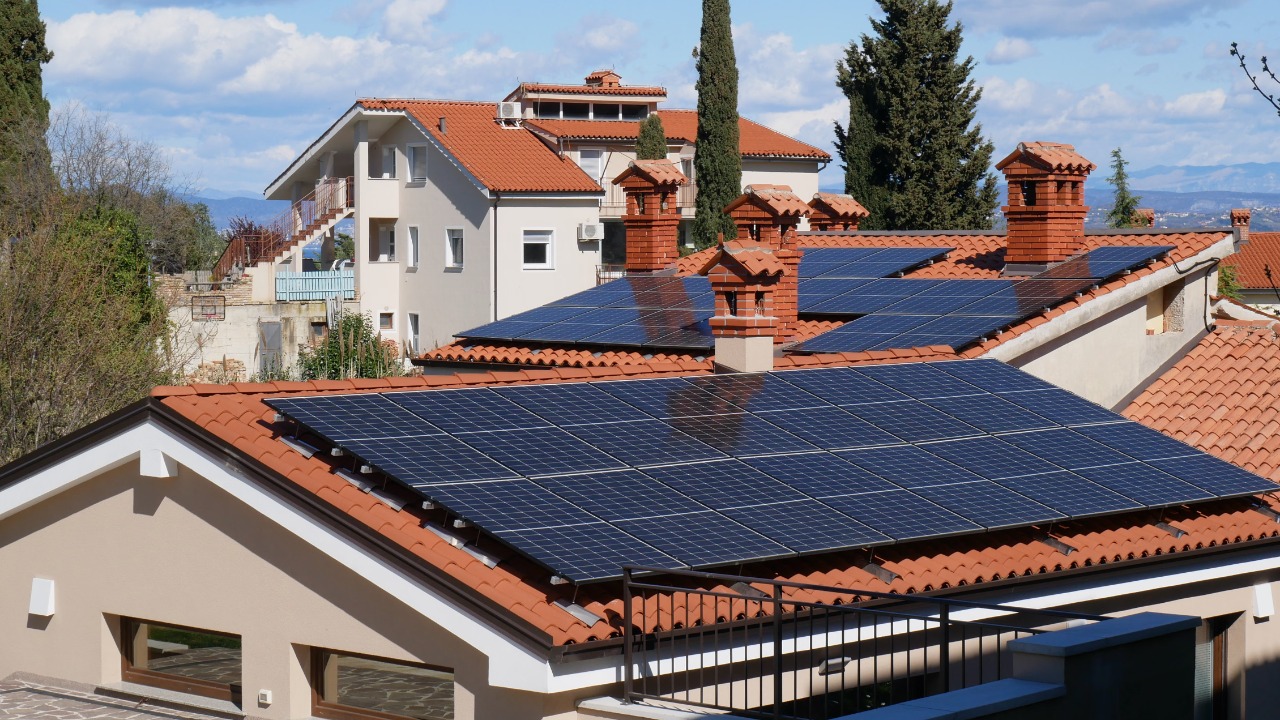

When Tesla unveiled the Solar Roof in 2016, the idea sounded almost perfect.
Why bolt conventional solar panels onto a house when the roof itself could generate electricity?
Tesla’s solution replaced ordinary roofing material with glass tiles, some containing photovoltaic cells. From street level, the system could look more like a premium roof than a conventional solar installation. Pair it with a Powerwall and a Tesla EV, and the vision became even more compelling: generate electricity on the roof, store it in the garage and use it to power both the house and car.
A decade later, that vision appears to have hit an economic wall.
According to a report highlighted by BGR, Tesla has decided to discontinue—or “sunset”—the Solar Roof program because it was not generating enough money. Tesla has not issued a conventional public announcement confirming the program’s termination, making this a reported discontinuation rather than an officially announced shutdown.
There are strong signs something has changed, however. Tesla’s consumer solar ordering experience now focuses on conventional Solar Panels and Powerwall, and its current solar ordering instructions tell customers to select “Solar Panels.”
So how did one of Tesla’s most futuristic products end up here?
Solar Roof Was Trying to Solve Two Expensive Problems at Once
A conventional residential solar installation is relatively straightforward conceptually.
A house already has a roof.
Install solar panels above it.
Tesla Solar Roof attempted something much more ambitious.
It had to be both:
A durable roofing system and an electricity-generating solar system.
That distinction created enormous complexity.
The product needed to withstand decades of rain, wind and weather while also safely generating electricity.
Tesla’s March 2026 Solar Roof warranty illustrates just how much responsibility the product carried. It offered 25-year coverage for product defects and weatherization, along with a 25-year module performance commitment.
A normal solar panel does not need to replace the physical roof beneath it.
Solar Roof did.
That made installation fundamentally more difficult.
Every House Is Different
Manufacturing thousands of identical cars is difficult.
Installing thousands of customized roofs may be even harder to standardize.
Tesla itself acknowledged that Solar Roof pricing depended on roof complexity.
Its installation calculations considered factors including:
Roof pitch.
Number of roof planes.
Chimneys.
Skylights.
Vents.
Fans.
Other obstructions.
A simple rectangular roof might be relatively straightforward.
Now imagine a large house containing multiple rooflines, steep pitches, dormers, skylights and ventilation equipment.
Every architectural complication creates additional labor.
More cuts.
More flashing.
More planning.
More installation time.
More opportunities for delays.
That makes it extremely difficult to create the kind of repeatable manufacturing economics Tesla has pursued in its automotive business.
The Price Became a Major Problem
Tesla originally presented Solar Roof as something that could compete economically with traditional roofing plus solar.
Reality proved more complicated.
BGR notes that Solar Roof installations became considerably more expensive than the early vision suggested, and Tesla faced controversy after increasing prices on some customers who had already entered agreements. Litigation followed, and Tesla ultimately agreed to a settlement worth roughly $6 million related to the price increases.
That damaged one of Solar Roof’s most important selling points.
A beautiful integrated solar roof is easy to want.
A beautiful integrated solar roof that costs substantially more than conventional roofing and solar becomes a luxury purchase.
And luxury purchases have much smaller markets.
Manufacturing Scale Wasn’t the Same as Installation Scale
Tesla reportedly had ambitious production goals for Solar Roof.
But making tiles was only half the challenge.
Someone still had to install them.
BGR, citing earlier reporting and Wood Mackenzie estimates, notes that Tesla was at one point targeting production capacity of roughly 1,000 Solar Roof systems per week, yet analysts estimated only around 3,000 systems had actually been installed in the U.S. through early 2023.
That is an enormous gap.
A product can have impressive manufacturing capacity and still fail commercially if deployment cannot keep pace.
Solar installation requires site surveys.
Design work.
Permits.
Electrical work.
Roofing expertise.
Utility approval.
Inspection.
Installation crews.
Tesla’s current conventional solar process still includes design, home assessment, local permits, utility approvals, installation, inspection and permission to operate.
Add an entirely new roof to that process and complexity increases considerably.
Tesla Couldn’t Treat a Roof Like a Model 3
Tesla’s automotive strategy thrives on standardization.
A Model 3 built for one customer is fundamentally similar to another Model 3.
Homes are nothing like that.
A roof in Arizona experiences different conditions from one in New York.
Building codes vary.
Utility requirements vary.
Roof structures vary.
Electrical systems vary.
Local permitting varies.
Even two neighboring houses can require different installation approaches.
That limits one of Tesla’s biggest competitive advantages: manufacturing huge quantities of standardized products and distributing them efficiently.
Solar Roof was closer to a custom construction project than a conventional consumer electronics product.
And custom construction is difficult to scale.
Conventional Solar Panels Became the Easier Business
Here is perhaps the most important clue about Tesla’s current strategy.
Tesla is not abandoning solar energy.
Far from it.
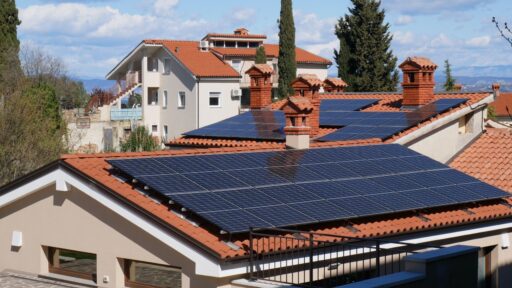
The company introduced updated Tesla Solar Panels in March 2026, describing them as being engineered in California and assembled at Gigafactory New York. The new panels use a low-profile all-black design and Tesla says their architecture provides improved performance under partial shading.
Tesla’s current consumer solar page prominently promotes Solar Panels + Powerwall.
The company says it has deployed more than 500,000 solar systems nationwide and continues promoting its integrated home-energy ecosystem.
So the story is not:
Tesla gave up on solar.
It is closer to:
Tesla appears to be prioritizing conventional solar panels over the far more complicated Solar Roof concept.
Conventional Panels Have a Huge Economic Advantage
Suppose a homeowner already has a perfectly good roof.
Why replace it?
Conventional panels can simply be mounted on top.
That eliminates much of the construction work involved with Solar Roof.
It also allows the homeowner to treat the roof and solar array as separate investments.
Need a new inverter?
Service the solar system.
Need roofing work?
Deal with the roof.
With an integrated solar roof, those systems become more interconnected.
Tesla’s conventional panels also allow the company to focus on the part of the business it can standardize more effectively.
Tesla says most conventional Solar Panel installations can be completed in one to three days once permitting and approvals are complete.
That is exactly the kind of operational efficiency a scalable solar business needs.
Powerwall May Have Been the More Important Product All Along
Solar Roof received enormous attention because it looked futuristic.
Powerwall arguably solves the more important problem.
Solar panels generate electricity when sunlight is available.
But households also need electricity:
At night.
During outages.
During periods of high utility rates.
During storms.
Powerwall stores electricity so it can be used later.
Tesla’s current home-energy strategy emphasizes this relationship heavily: Solar Panels generate electricity, Powerwall stores excess production, and the Tesla app manages energy use and EV charging.
That ecosystem works perfectly well without Solar Roof.
In fact, conventional solar panels may make the ecosystem considerably easier and cheaper to deploy.
What Happens to Existing Solar Roof Owners?
This is an important distinction.
Discontinuing new sales does not automatically mean existing roofs stop working.
Tesla still maintains Solar Roof support documentation, including information for billing, service and existing customers. Its current Energy Support area also continues to reference Solar Roof.
Tesla also published a U.S. Solar Roof Limited Warranty effective March 4, 2026, covering the relevant Solar Roof product for 25 years under specified conditions.
Existing customers therefore should not interpret reports of the program being sunset as meaning their roofs suddenly become unsupported hardware.
Warranty and service obligations are a separate issue from whether Tesla continues accepting new orders.
Tesla’s support site currently provides contact options for owners of Energy products, including Solar Roof.
Why Are Solar Roof Pages Still Online?
This creates some understandable confusion.
Tesla still hosts Solar Roof documentation.
There are pages explaining roof complexity, billing, support and installation concepts.
That does not necessarily mean the product remains available for new consumer orders.
A manufacturer cannot simply delete documentation for a long-lived product once sales end.
Existing customers may need those pages for decades.
Tesla’s current consumer-facing ordering material is much more revealing.
Its ordering instructions focus specifically on Solar Panels and Powerwall, and its main solar sales page promotes conventional panels.
That shift supports the reports that Solar Roof is being phased out.
Was Solar Roof Actually a Bad Idea?
Not necessarily.
This is what makes the story interesting.
Solar roofing remains an appealing concept.
Traditional solar panels alter the appearance of a house.
An integrated photovoltaic roof can potentially generate electricity while maintaining a cleaner architectural design.
For new construction—or a house that already needs a complete roof replacement—the concept makes particular sense.
The problem appears to have been economics and execution rather than the fundamental idea of building solar cells into roofing material.
A technology can work technically and still fail commercially.
Solar Roof appears to be an excellent example.
The Timing Problem Was Difficult to Overcome
Solar Roof made the most financial sense when two expensive events happened simultaneously:
The homeowner needed a new roof.
And:
The homeowner wanted solar.
That is a much smaller customer pool than everyone who simply wants solar panels.
If a roof has another 15 years of useful life, replacing the entire thing merely to obtain integrated solar tiles becomes difficult to justify.
Conventional panels can be installed without throwing away a functioning roof.
That economic reality naturally limits Solar Roof’s addressable market.
Solar Roof Was Also Competing Against Rapidly Improving Panels
Conventional solar panels did not stand still after Tesla unveiled Solar Roof in 2016.
Panels became more efficient.
Inverters improved.
Battery storage improved.
Installers gained experience.
Black panels and low-profile mounting systems also became more visually attractive.
Tesla’s own latest panels demonstrate this evolution.
Its 2026 Solar Panels use all-black cells, concealed electrical connections and a low-profile skirt specifically designed to produce a cleaner appearance.
In other words, conventional solar became better at solving one of Solar Roof’s original advantages:
looking good.
It may not disappear into the architecture completely, but modern solar does not necessarily look like an industrial rack bolted onto a house either.
Tesla Can Still Sell the Energy Ecosystem Without It
Remove Solar Roof and Tesla’s broader energy strategy remains intact.
Solar Panels generate electricity.
Powerwall stores it.
The Tesla app manages the system.
Wall Connector charges the vehicle.
Tesla says customers can monitor solar production, customize Powerwall behavior and modify vehicle-charging preferences through the same application.
That is still a compelling ecosystem.
More importantly, it is built from components that can be installed independently.
A homeowner can buy solar without replacing the roof.
Add Powerwall later.
Buy a Tesla vehicle later.
Install a Wall Connector.
The customer does not need to commit to rebuilding one of the largest structural components of the house just to enter the ecosystem.
Solar Roof May Ultimately Be Remembered as a Product Ahead of Its Economics
Tesla Solar Roof represented an attractive vision:
The roof becomes the power plant.
The battery stores the electricity.
The car consumes it.
The app controls everything.
Technically, much of that vision became real.
Commercially, however, the roof itself appears to have been the weak link.
Complex installations, expensive projects, inconsistent demand and difficulty achieving scale appear to have undermined the business case. BGR’s report says Tesla ultimately concluded the program was not making enough money.
Meanwhile, Tesla’s current solar strategy is considerably easier to understand.
It is actively selling conventional Solar Panels, highlighting its Powerwall integration and promoting a streamlined installation process.
Perhaps the most telling detail is that Tesla does not need Solar Roof for its home-energy vision to work.
The futuristic tiles were supposed to reinvent residential solar.
Instead, the more conventional solution may have won for the oldest business reason imaginable:
It is easier to install, easier to sell and apparently easier to make money from.