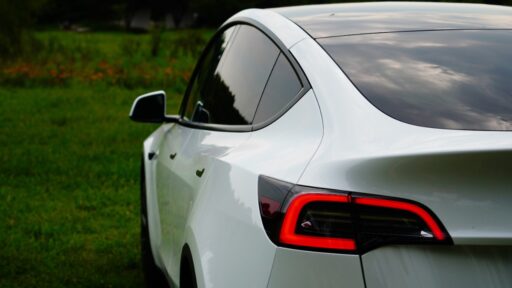
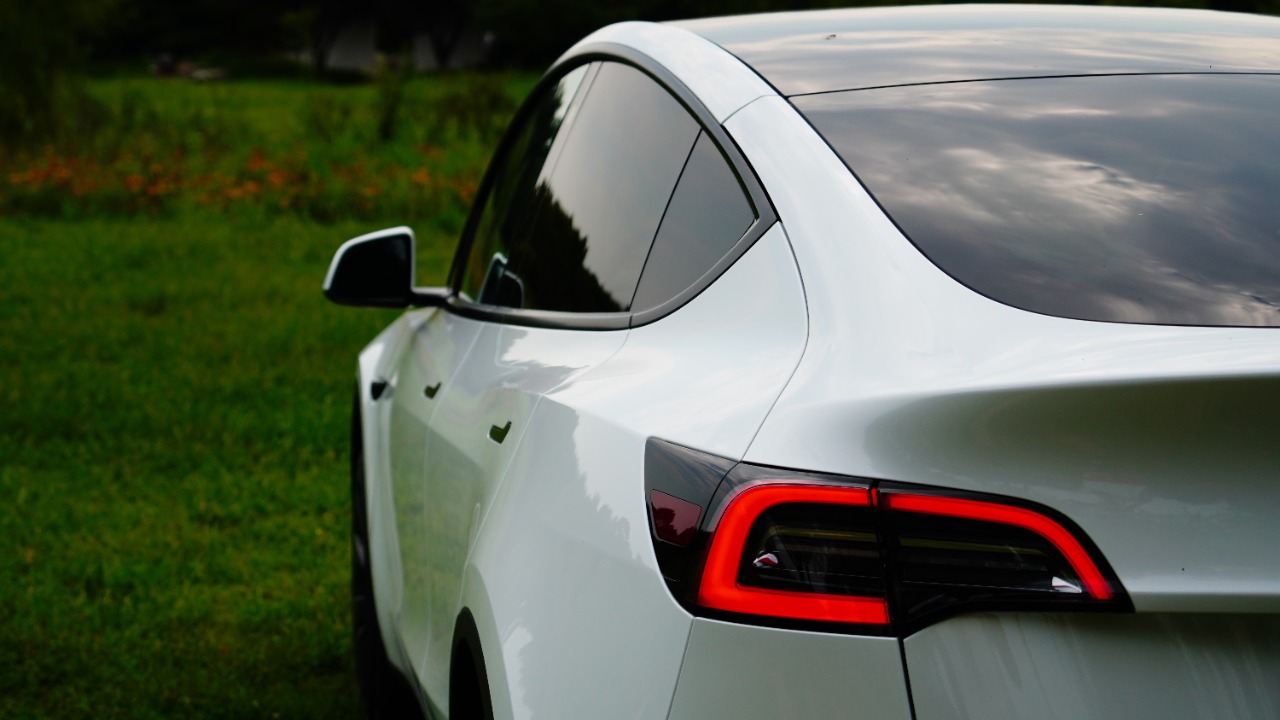

Tesla is recalling nearly 13,000 Model 3 and Model Y vehicles because a component inside the high-voltage battery pack can fail unexpectedly and cut power to the wheels while the car is being driven.
The recall covers 12,963 vehicles in the United States: 5,038 model-year 2025 Model 3 sedans and 7,925 model-year 2026 Model Y crossovers. The problem involves a battery-pack contactor that can unexpectedly open because of a weak electrical connection inside its solenoid.
If that happens while the car is moving, pressing the accelerator no longer sends torque to the wheels.
Perhaps more concerning, Tesla told federal regulators that there is no warning before the loss of propulsion occurs. A warning then appears on the vehicle’s screen telling the driver to pull over safely.
Tesla says it is not aware of any crashes, injuries or deaths connected with the defect.
Still, losing drive power unexpectedly in traffic is exactly the sort of failure regulators take seriously.
Which Teslas Are Being Recalled?
The recall is relatively narrow compared with some of Tesla’s previous campaigns.
It covers certain:
2025 Tesla Model 3 vehicles built between March 8 and August 12, 2025
and
2026 Tesla Model Y vehicles built between March 15 and August 15, 2025.
Not every Model 3 or Model Y from those model years is necessarily affected.
Tesla says the recalled vehicles contain specific battery-pack contactors equipped with a solenoid supplied by InTiCa. The suspect parts came from a fixed production batch that Tesla says was fully consumed by August 15, 2025.
So someone who owns a Model 3 or Model Y should not assume the vehicle is included based solely on the model year.
The VIN provides the definitive answer.
Tesla maintains its own recall lookup, and owners can also search through NHTSA.
What Is a Battery Contactor?
The name sounds obscure, but the component performs an essential job.
An EV’s battery pack contains hundreds or thousands of individual cells operating at high voltage.
For safety, that battery is not permanently connected directly to the motors and the rest of the high-voltage electrical system.
A contactor acts as a heavy-duty electrical switch.
When the vehicle needs high-voltage power, the contactor closes.
Electricity can then flow from the battery to components such as the inverter and electric motors.
When the vehicle needs to isolate the high-voltage battery, the contactor opens.
Tesla’s NHTSA filing describes the affected component simply as a high-voltage switch for vehicle power.
Normally, that switch is supposed to stay closed while the vehicle is driving.
The problem is what happens if it opens unexpectedly.
A Weak Coil Connection Can Make the Switch Open
The recall traces back to the contactor’s solenoid.
A solenoid uses an electromagnetic coil to operate the switching mechanism.
According to Tesla’s filing, the affected contactors can contain a poor coil termination connection. That connection may develop high resistance or fail sufficiently that the contactor unexpectedly opens.
Once the contactor opens, high-voltage battery power is disconnected from the drivetrain.
The electric motors therefore cannot continue producing propulsion.
In practical terms:
The car may still be moving because of momentum.
Steering and other systems do not necessarily disappear instantly.
But pressing the accelerator will no longer make the vehicle accelerate.
That can become dangerous depending on where the failure occurs.
Imagine It Happening While Merging Onto a Highway
A propulsion failure at 5 mph in a parking lot is inconvenient.
The same failure while crossing an intersection or merging into high-speed traffic can create a much more serious situation.
Tesla’s recall filing specifically says loss of propulsion can increase the risk of a collision.
Suppose a driver is accelerating onto a freeway.
The contactor opens.
The accelerator suddenly does nothing.
The vehicle begins coasting.
Cars behind it are still accelerating.
The driver now has to recognize the problem, activate hazards if appropriate and find a safe place to stop.
That is why the absence of advance warning matters.
There Is No Warning Before the Failure
Tesla told NHTSA:
“No warning occurs prior to the loss of propulsion.”
Once the failure has happened, the vehicle displays an alert telling the driver to pull over safely.
That distinction is important.
The car can tell someone what happened.
It apparently cannot reliably predict that it is about to happen.
There is no countdown.
No “service battery contactor soon” message.
No guaranteed dashboard warning several miles beforehand.
That makes preventive repair much more important once an owner knows the vehicle is included in the recall.
How Did Tesla Discover the Problem?
Tesla’s investigation began in August 2025.
According to its NHTSA filing, the company’s Field Reliability team started examining service records involving vehicles that could not enter Drive from Park and were found to have high coil resistance in the battery-pack contactor.
Tesla then recovered failed contactors from vehicles and performed a detailed failure analysis between August and late September.
By early October, engineers had reviewed the failure analysis, repair information and production records.
Tesla decided on October 3, 2025 that a voluntary recall was necessary.
At that point, the company had identified 36 warranty claims and 26 field reports related to the condition.
Tesla said it was unaware of crashes, injuries or fatalities associated with those cases.
Why Is the Recall Being Discussed Again in 2026?
Although the NHTSA campaign dates back to October 2025, the issue has regained attention as Tesla’s current recall information and service guidance circulate among owners.
Morning Overview highlighted the campaign again on August 21, 2026, emphasizing the unusually abrupt failure mode and the fact that affected vehicles require a physical repair rather than an over-the-air update.
That is worth clarifying because many Tesla recalls are solved remotely.
This one isn’t.
Tesla Cannot Fix This With a Software Update
Tesla has become famous for handling many recalls with over-the-air software.
A faulty warning message?
Push new software.
Incorrect camera behavior?
Push new software.
A driver-assistance configuration issue?
Potentially push new software.
But software cannot repair a bad electrical connection inside a physical high-voltage contactor.
Affected cars therefore need an actual service appointment.
Tesla says technicians will replace the affected contactors with certified components that maintain the coil termination connection.
According to Tesla, the repair should take about one hour.
The repair is free.
The Replacement Part Is Actually Different
Tesla’s NHTSA filing provides another useful detail.
The recalled contactor contains the InTiCa solenoid associated with the problem.
The replacement does not use that solenoid and is designed to maintain the coil termination connection.
That means the remedy is not simply:
Inspect it.
Tighten something.
Send the customer away.
Tesla is replacing the suspect component with a differently configured contactor.
That is a more definitive repair.
Owners Need to Schedule Service
Unlike an over-the-air recall, this campaign requires owners to bring the car in.
Tesla instructs affected customers to schedule through the Tesla app:
Service > Request Service > Other > Something Else
Then enter:
“Open Recall Repair – Battery Pack Contactors”
in the concern description.
Tesla says recall repairs are performed free of charge regardless of age or mileage when a vehicle is included in an active safety recall.
For these particular vehicles, the issue is even simpler because the recalled cars are relatively new.
What Should You Do If the Car Loses Power?
Tesla says that if the contactor opens while the vehicle is in Drive, the driver loses the ability to apply motor torque using the accelerator pedal. The interface then instructs the driver to safely move to the side of the road.
If it happens in real traffic, the priority is not diagnosing the battery system.
It is controlling the vehicle and getting out of danger.
Keep steering smoothly.
Avoid sudden movements.
Use hazard lights if appropriate.
Move toward a safe stopping location using the vehicle’s remaining momentum when traffic conditions permit.
Then arrange service or roadside assistance rather than attempting to continue driving normally.
Once propulsion is lost because the high-voltage contactor has opened, repeatedly pressing the accelerator will not fix the underlying hardware failure.
Does Losing Propulsion Mean the Entire Car Goes Dead?
Not necessarily.
“Loss of propulsion” has a specific meaning.
It means the motors can no longer provide the torque needed to drive the vehicle.
It does not automatically mean every electronic system instantly shuts down.
The touchscreen, lighting, steering systems and other vehicle functions may still have power through separate low-voltage systems.
That matters because “Tesla suddenly loses power” can sound like the entire vehicle goes completely black.
The safety issue described by NHTSA is more specifically loss of drive power.
That is still serious.
But it is technically different from a complete electrical blackout.
Why Do EVs Need Contactors at All?
High-voltage EV batteries contain enough energy that manufacturers need a reliable way to isolate them.
During normal driving, the contactors connect the battery to the drivetrain.
During servicing, certain faults or emergency conditions, the system can open those contactors and electrically separate the pack.
That is a safety feature.
In other words, contactors are supposed to disconnect the battery under the correct circumstances.
The problem here is that the connection can apparently break unintentionally.
A component designed partly to make a high-voltage EV safer becomes a hazard if it disconnects at the wrong time.
Is the Battery Itself Defective?
The recall does not suggest that the battery cells themselves are failing.
The problem concerns the switching hardware that connects the battery pack to the vehicle’s high-voltage system.
That distinction matters.
There is no indication in Tesla’s recall documentation that the affected cars need complete battery-pack replacements.
Nor is this recall primarily about battery fires or thermal runaway.
It is about an electrical switching component that can interrupt propulsion.
That is why Tesla can repair the vehicle by replacing the contactor rather than replacing the entire battery.
Tesla Estimates Only About 1% May Actually Have the Defect
The NHTSA filing lists 12,963 potentially involved vehicles but estimates the percentage containing the defect at approximately 1%.
That would imply the actual number of defective components could be much smaller than the recall population.
So why recall nearly 13,000 vehicles?
Because manufacturers generally need to identify a population broad enough to capture all vehicles that may contain the suspect part.
If engineers cannot determine which individual contactor will eventually fail, replacing the components across the defined population is safer than waiting for failures to reveal themselves.
It Is a Small Recall by Tesla Standards
Tesla has handled campaigns involving hundreds of thousands or even millions of vehicles.
By comparison, 12,963 cars is relatively modest.
But recall size and safety severity are different questions.
A software defect affecting 2 million vehicles might be corrected overnight with a remote update.
A hardware problem affecting 13,000 cars can require physical appointments while involving a more direct driving risk.
This recall sits in that second category.
Small population.
Potentially serious failure mode.
It Also Shows the Limits of the “EVs Have Fewer Parts” Argument
Electric vehicles unquestionably eliminate many mechanical components found in combustion cars.
No engine oil.
No spark plugs.
No exhaust system.
No conventional multi-speed transmission in most EVs.
But EVs introduce their own specialized hardware.
Battery modules.
High-voltage cables.
Inverters.
Onboard chargers.
DC-DC converters.
Contactors.
Thermal-management equipment.
Those components can fail too.
EVs may have fewer traditional drivetrain components, but that does not make them mechanically or electrically invulnerable.
The Tesla recall is a good example.
The failed part is something a gasoline car generally does not need.
Why Supplier Quality Matters So Much
The contactor itself involves multiple suppliers.
Tesla’s NHTSA report identifies InTiCa as the Tier 2 supplier associated with the solenoid and SongChuan as the Tier 1 contactor supplier.
Modern automakers rely on enormous supplier networks.
Tesla designs the vehicle.
But thousands of individual components may come from specialist manufacturers.
One improperly manufactured electrical connection buried deep inside a supplier component can eventually create a vehicle-level recall.
That is not unique to Tesla.
It is how modern automotive manufacturing works.
The challenge is identifying problems quickly enough that production can be corrected before huge numbers of vehicles are built.
Tesla Says Production Was Corrected by August 15, 2025
The good news is that Tesla says the suspect batch is finite.
According to the recall filing, contactors equipped with the affected InTiCa solenoids were installed between March 8 and August 15, 2025.
Tesla says the final suspect units were consumed in production on August 15, 2025.
That means later-built vehicles should not contain the same recalled hardware according to the company’s investigation.
Again, checking the VIN remains more reliable than assuming safety based only on a build month.
How Can You Tell Whether Your Tesla Has Already Been Fixed?
Check the VIN.
Tesla’s official recall lookup provides current safety-recall information tied to individual vehicles.
If the recall remains open, schedule the repair.
If the VIN shows no outstanding campaign, the vehicle may not be included or may already have had the required work completed.
Tesla’s database was updated as recently as August 25, 2026.
That makes it much more useful than relying on an old owner forum or social-media post.
Don’t Confuse This With Tesla’s 1.2-Million-Vehicle Suspension Investigation
Tesla has also recently been in the news because NHTSA is investigating approximately 1.2 million older Model 3 and Model Y vehicles over reports of front suspension-link separation.
That is a completely different issue.
The suspension case is currently an investigation.
This battery-contactor problem is an actual recall.
The affected model years are different.
The failure mechanisms are different.
And the remedies are different.
It is easy to combine the two headlines mentally because both involve Model 3 and Model Y vehicles.
Owners should treat them separately.
Should Owners Be Worried?
Concern is reasonable.
Panic is not.
Tesla has identified a specific hardware problem affecting a limited production population.
There are no known crashes, injuries or fatalities associated with the defect according to Tesla’s current information.
There is also a defined fix.
The concerning part is that the failure can happen without advance warning and can remove propulsion while the vehicle is moving.
That makes ignoring an open recall unnecessarily risky.
If the VIN is included, schedule the repair.
This Is Exactly What a Recall System Is Supposed to Do
No manufacturer produces millions of vehicles without defects eventually appearing.
The important questions are:
Can the failure create a safety risk?
Can the affected vehicles be identified?
Is there a fix?
And are owners notified before somebody gets hurt?
Here, Tesla investigated service failures, recovered parts, found a repeatable problem, narrowed it to a specific batch and voluntarily initiated a recall.
As of the recall filing, that happened before any known crash or injury was tied to the defect.
That is a better outcome than discovering the problem only after serious accidents.
The Bottom Line
Tesla’s Model 3/Y battery-contactor recall affects 12,963 U.S. vehicles, specifically certain 2025 Model 3s and 2026 Model Ys manufactured during a limited period in 2025.
The defective contactor can unexpectedly open because of a poor coil termination connection.
If that happens while driving, the accelerator stops providing motor torque and the vehicle loses propulsion.
There is no advance warning before the loss occurs, although the car displays a warning immediately afterward instructing the driver to pull over.
Tesla’s remedy is straightforward:
Replace the affected contactor with a certified replacement.
The repair is free and should take roughly an hour.
So if you own a recent Model 3 or Model Y, the most useful response isn’t worrying about every Tesla on the road.
It is checking one 17-character number.
If your VIN shows this recall as open, get the hardware replaced—because this is one Tesla problem that cannot be fixed with a software download.