
Tesla has increased Cybertruck prices again.
Normally, that would suggest strong demand.
This time, the opposite appears to be happening.
On August 25, Tesla raised the U.S. price of two Cybertruck variants by $5,000, even as sales of the angular electric pickup continue falling sharply.
The Dual Motor all-wheel-drive Cybertruck now starts at $74,990, up from $69,990, while the Premium All-Wheel Drive model has climbed to $84,990, from $79,990. The top Cyberbeast remains unchanged at $99,990.
That price increase is especially striking because the Cybertruck has fallen far short of the enormous sales expectations Elon Musk once set for it.
And rather than recovering in 2026, demand has weakened further.
Cybertruck Sales Are Moving in the Wrong Direction
Tesla launched the Cybertruck in late 2023 after years of anticipation.
Musk had previously discussed potential annual sales of around 250,000 units, with even higher numbers possible over time.
Reality has been dramatically different.
Cox Automotive estimates indicate Tesla sold about 38,965 Cybertrucks in the U.S. during 2024.
In 2025, sales fell to only 20,237 units, a decline of approximately 48.1%.
The decline continued into 2026.
First-quarter U.S. sales fell to approximately 3,519 trucks, down 45.1% from the same period a year earlier.
By the first half of 2026, only around 7,263 Cybertrucks had been sold in the U.S., representing a decline of approximately 32% compared with the same period of 2025.
Those numbers make the $5,000 price increase unusual.
Automakers generally cut prices when demand weakens.
Tesla is doing the reverse.
The Cheapest Cybertruck Has Become Much More Expensive in Only Months
The current Dual Motor model has already experienced an extraordinary pricing journey.
Tesla introduced a cheaper version in February 2026 at $59,990.
Musk warned that the introductory price would last only about 10 days.
Tesla later raised it to $69,990.
Now it costs $74,990.
That means the entry point has increased by $15,000 in roughly six months.
Someone who saw the $59,990 announcement earlier this year and assumed Cybertruck affordability was improving would now face a price roughly 25% higher.
The Premium AWD model has also risen by $5,000 to $84,990.
Tesla has not announced corresponding major hardware upgrades that would clearly explain the latest increase.
See Tesla’s current Cybertruck information
Why Would Tesla Raise Prices When Sales Are Falling?
Tesla has not provided a detailed public explanation.
One possibility is simple economics.
Instead of chasing higher volume, Tesla may be positioning Cybertruck increasingly as a low-volume luxury product.
Morningstar analyst Seth Goldstein told Business Insider that higher prices may help Tesla protect margins against materials and production costs while Cybertruck volume remains relatively low.
That strategy can make sense mathematically.
Imagine Tesla can sell 20,000 trucks with a larger profit on each one.
That may be preferable to cutting prices aggressively and selling somewhat more vehicles at much smaller margins.
But it represents a very different Cybertruck from the one originally presented to the public.
The Original Cybertruck Was Supposed to Be Much Cheaper
When Tesla revealed the Cybertruck in 2019, the entry-level model was supposed to start at approximately $39,900.
That price became one of the biggest reasons the vehicle attracted attention.
Here was a futuristic electric pickup that appeared capable of competing directly with mainstream gasoline trucks.
Production reality turned out very differently.
The original inexpensive rear-wheel-drive concept did not become the mass-market model many buyers expected.
When a lower-cost rear-drive version eventually appeared, it was priced far above the original 2019 promise and did not remain central to the lineup.
Car and Driver notes that Tesla’s originally planned $39,000 entry point bears little resemblance to the current truck, with the latest Dual Motor now costing more than $74,000 before destination and other charges.
That changes the customer completely.
A $40,000 pickup competes with mainstream work trucks.
A $75,000 pickup competes in luxury territory.
The Cybertruck Is Becoming a Luxury Vehicle
This may be the simplest explanation for Tesla’s current direction.
The company appears increasingly comfortable allowing Cybertruck to become a premium niche product rather than the mass-market pickup originally imagined.
Business Insider describes the latest move as Tesla settling the Cybertruck more firmly into a luxury niche.
That is particularly interesting because Tesla recently discontinued the Model S and Model X, which historically occupied the luxury end of its vehicle lineup.
Cybertruck can now partly fill that role.
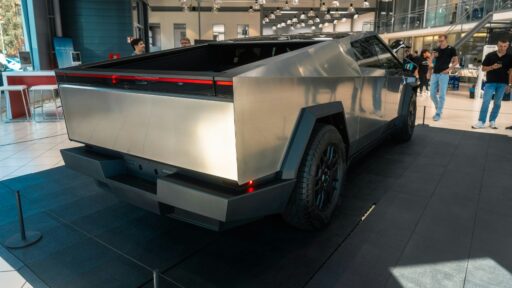
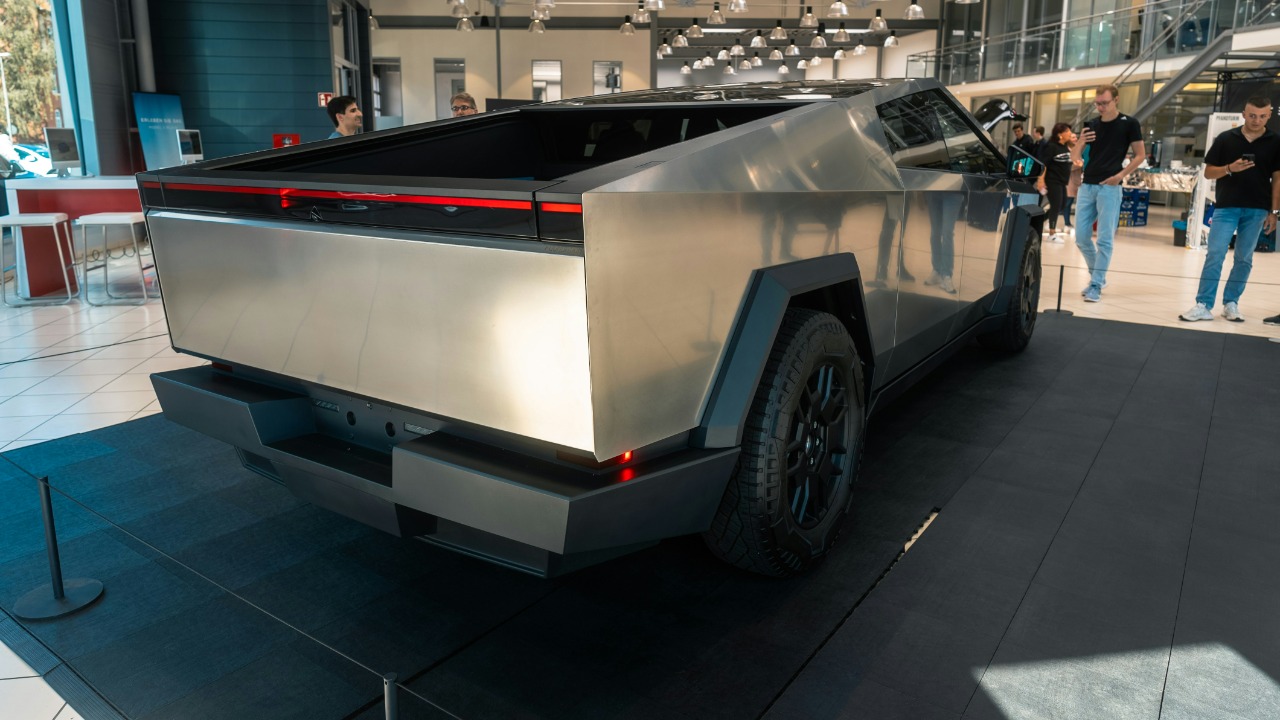
Its unusual stainless-steel body, steer-by-wire system, rear-wheel steering, high performance, and distinctive appearance already separate it from ordinary pickups.
Perhaps Tesla has concluded that competing directly on affordability is no longer realistic.
If so, higher prices become easier to understand.
The Problem Is That Luxury Buyers Still Need to Want It
Charging more only works if customers believe the vehicle is worth the premium.
The Cybertruck has several genuine strengths.
Its steer-by-wire system can make such a large vehicle surprisingly maneuverable.
Rear-wheel steering reduces the turning radius.
The stainless-steel exterior is visually distinctive.
Acceleration is extraordinary for something this large.
Its electrical architecture also provides significant power for tools and external equipment.
But the truck has also faced a difficult ownership narrative.
Multiple recalls.
Quality-control complaints.
Polarizing styling.
Insurance concerns.
Expensive repairs.
And questions about whether its practical truck capabilities justify its price.
Reuters notes that the Cybertruck has struggled to sustain market interest amid repeated recalls, quality issues, and frequent pricing changes.
That makes pushing prices higher a risky strategy.
Recalls Have Hurt the Cybertruck’s Reputation
New vehicle platforms frequently experience recalls.
Cybertruck has experienced a lot of them.
Tesla has issued recalls involving several different components since deliveries began.
Problems have included accelerator-pedal trim, windshield wipers, exterior trim pieces, electrical systems, and other issues.
Bloomberg reported in October 2025 that Cybertruck had already reached its 10th recall in less than two years.
Recall count alone does not tell the entire reliability story.
Some recalls are minor.
Others can be solved with software.
But frequent headlines about problems make it harder for any vehicle to build consumer confidence.
That becomes especially important once the truck costs more than $80,000 in a popular configuration.
The Stainless-Steel Body Is Both Its Strength and Its Weakness
Cybertruck would probably have been less famous if Tesla had given it a conventional pickup body.
The exposed stainless-steel exterior is the vehicle’s identity.
It is also one reason the truck is difficult to manufacture and repair.
Unlike ordinary painted body panels, stainless steel creates different challenges around shaping, finishing, panel alignment, and collision repair.
Minor scratches can look different.
Fingerprints can become visible.
Replacing damaged exterior sections can be expensive.
Tesla’s decision to build such an unconventional body guaranteed attention.
It also made Cybertruck much harder to treat like an ordinary high-volume pickup.
That trade-off may partly explain why the vehicle is increasingly behaving like an exotic luxury product rather than a mainstream truck.
Pickup Buyers Have Not Embraced EVs as Quickly as Automakers Expected
Cybertruck’s disappointing sales are not entirely a Tesla-specific problem.
The broader electric pickup market has also struggled.
Bloomberg reported that U.S. consumers bought only about 35,000 electric pickups in the first half of 2025, compared with roughly 1.6 million gasoline-powered full-size pickups during the same period.
Ford has adjusted production of the F-150 Lightning.
General Motors has revised its EV plans.
Ram canceled its planned battery-only electric pickup.
That tells us something important.
Electric pickup trucks solve some problems very well.
They offer huge torque.
Excellent acceleration.
Home charging.
Large onboard batteries capable of powering equipment.
But towing remains difficult.
Attach a large trailer and highway range can fall dramatically.
Then the vehicle needs to find a fast charger capable of accommodating both truck and trailer.
A gasoline or diesel truck can simply stop at almost any fuel station for a few minutes.
For many traditional pickup buyers, that difference remains significant.
Cybertruck Also Has to Compete With Excellent Electric Pickups
Even buyers specifically wanting an electric truck have alternatives.
Ford offers the F-150 Lightning.
Rivian has the R1T.
Chevrolet sells the Silverado EV.
GMC offers both Sierra EV and Hummer EV pickups.
Some of those alternatives have advantages that directly challenge Cybertruck.
The Silverado EV can offer dramatically longer range in some configurations.
The Lightning looks and functions more like a conventional pickup.
The Rivian is smaller and particularly strong for adventure use.
Cybertruck’s primary distinction remains its radical design and Tesla technology.
That may not be enough to justify increasing prices while competitors continue improving.
The Ford Edsel Comparison Has Become Hard to Ignore
One of the harshest comparisons came from Bloomberg.
It described the Cybertruck as potentially becoming the “Edsel of the EV era.”
The Ford Edsel launched in 1957 after enormous marketing hype.
Ford expected major sales.
Consumers responded poorly.
The car disappeared within only a few years and eventually became shorthand for one of the biggest product failures in automotive history.
The comparison is not perfect.
Tesla is still building Cybertrucks.
The vehicle has passionate owners.
And it has sold tens of thousands of units.
But the similarities are uncomfortable.
Huge hype.
Radical styling.
Enormous sales expectations.
Then dramatically weaker demand than predicted.
Cox Automotive figures show Cybertruck sales falling from 38,965 in 2024 to only 20,237 in 2025.
That decline looks particularly bad compared with Musk’s old 250,000-unit annual target.
SpaceX Purchases Made the Consumer Numbers Look Even Worse
The Cybertruck sales story became more unusual in 2026.
Bloomberg obtained U.S. registration data showing that SpaceX bought 1,279 Cybertrucks during the fourth quarter of 2025.
That represented more than 18% of the 7,071 Cybertrucks registered in the U.S. during that quarter.
Other Musk-controlled businesses acquired another 60.
In other words, nearly one in five Cybertrucks registered during that period went to companies controlled by the same person who leads Tesla.
That does not mean the sales were illegitimate.
SpaceX can buy whatever vehicles it needs.
But it makes consumer demand look weaker than the headline registration number suggests.
If Musk-affiliated companies had not purchased those trucks, fourth-quarter retail demand would have been substantially lower.
Tesla Could Cut Prices Later Anyway
Cybertruck pricing has already demonstrated that it can move in both directions.
In August 2025, Tesla increased the price of the Cyberbeast by $15,000, taking it to $114,990.
The company reversed that increase the following February.
That history means buyers should be careful about assuming today’s $5,000 increase is permanent.
Tesla has long used flexible pricing.
Prices can move based on inventory.
Demand.
Production costs.
Incentives.
Configuration changes.
Anyone considering a Cybertruck may therefore want to watch the configurator rather than assuming the current price will remain unchanged for years.
Check current Cybertruck pricing directly from Tesla
Higher Prices Could Protect Existing Owners
There is one group that may appreciate the price increase.
Current Cybertruck owners.
Aggressive new-car discounts can destroy used values.
If Tesla repeatedly reduced Cybertruck prices, people who already purchased one could see resale values fall even more quickly.
Maintaining or increasing new prices can help stabilize the reference price of existing vehicles.
That does not guarantee strong resale values.
Used-car markets ultimately reflect supply and demand.
But from an ownership perspective, a manufacturer raising prices is generally less painful than suddenly cutting $15,000 from the same vehicle you purchased six months earlier.
Tesla May No Longer Care About Cybertruck Volume
This may be the larger strategic story.
Tesla increasingly talks about robotaxis, artificial intelligence, energy storage, and Optimus humanoid robots as major future businesses.
Traditional vehicle volume may no longer dominate the company’s narrative in the way it once did.
Reuters reported earlier this year that some analysts expect Tesla vehicle deliveries to decline for a third consecutive year while Musk focuses more heavily on robotaxis and humanoid robots.
If Cybertruck is no longer expected to become a major volume driver, Tesla has less reason to chase every possible sale.
A smaller number of high-margin Cybertrucks could be acceptable.
That would make the vehicle more like a halo product.
Something designed to attract attention and demonstrate technology rather than dominate U.S. pickup sales.
That Is Very Different From the Original Promise
The Cybertruck introduced in 2019 seemed designed to transform the pickup market.
Affordable starting price.
Huge production ambitions.
Extreme durability.
Long range.
Outstanding towing.
A radically different manufacturing process.
The 2026 Cybertruck tells a different story.
Prices start much higher.
Sales are low.
Demand is declining.
The lineup is increasingly premium.
And Tesla appears willing to charge even more rather than aggressively pursue volume.
That does not necessarily mean the vehicle has no future.
It means the future looks very different from the one originally advertised.
Is Cybertruck Really Tesla’s Worst Flop?
Calling something the “worst flop in Tesla history” depends on what measurement is being used.
Tesla has had other unsuccessful products and strategies.
The original Roadster was tiny in volume by design.
Model X experienced difficult production problems but remained in production for years.
The company’s Solar Roof never reached anything close to the scale Musk originally envisioned.
But Cybertruck is unusual because of the gap between its expectations and actual sales.
Musk discussed hundreds of thousands of annual deliveries.
Tesla built manufacturing capacity around significant volume.
The truck became one of the company’s most heavily promoted products.
Yet 2025 U.S. sales were only about 20,000 units.
That gap is what makes the flop label difficult to dismiss.
The Price Increase Might Actually Tell Us What Cybertruck Has Become
The easiest interpretation of Tesla’s $5,000 increase is that the company is making an unpopular vehicle even harder to buy.
But there may be another interpretation.
Tesla could be accepting reality.
Cybertruck may never be America’s next mass-market pickup.
It may never sell 250,000 units annually.
It may never compete with the F-150 on volume.
Instead, it could survive as a strange, expensive, instantly recognizable niche vehicle with strong margins and a small but enthusiastic customer base.
If that is Tesla’s new goal, increasing prices becomes more logical.
The company no longer needs everyone to want a Cybertruck.
It simply needs the people who do want one to be willing to pay more.
The Bottom Line
Tesla has increased the price of the Cybertruck Dual Motor from $69,990 to $74,990 and the Premium AWD from $79,990 to $84,990. Cyberbeast remains $99,990.
The move arrives while Cybertruck sales remain dramatically below Elon Musk’s original ambitions.
Sales fell nearly 48% in 2025.
They declined again during the first half of 2026.
And some recent registrations came from Musk’s own companies rather than ordinary retail customers.
That makes the latest price increase difficult to interpret as a response to booming demand.
It looks more like Tesla has decided Cybertruck does not need to become a mass-market pickup at all.
Perhaps it can simply become something much smaller:
an expensive, controversial, low-volume luxury truck for people who specifically want a Cybertruck and nothing else.
If that is the strategy, the $5,000 increase makes more sense.
But it also represents one of the clearest signs yet that the Cybertruck Tesla is selling in 2026 is a very different product from the affordable pickup revolution promised back in 2019.