
SpaceX has quietly become one of the most profitable companies in the world, generating about $8 billion in profit last year on the back of its launch and satellite businesses, according to people familiar with its finances. Those figures, which imply margins that would be the envy of Big Tech, arrive just as Elon Musk prepares the rocket maker for a long-awaited stock market debut. The numbers help explain why banks and investors are circling what could be one of the largest initial public offerings in history.
The profit haul underscores how far SpaceX has moved beyond its roots as a scrappy launch contractor into a dominant infrastructure provider in orbit. It also sets the stage for a fierce debate over valuation, governance and strategy as Musk weighs how to bring public investors into a company that is already reshaping the economics of space.
Inside the $8 billion profit engine
People briefed on SpaceX’s finances say the company produced roughly $8 billion in net income last year, a level of profitability that would put it ahead of many long-established industrial and technology giants. One detailed breakdown indicated that SpaceX made about US$8 billion in profit on between US$15 billion and US$16 billion in revenue in 2023, suggesting operating margins that are unusually high for a capital intensive business, according to sources familiar with the company. That scale of earnings helps explain why investors are willing to contemplate valuations that would have seemed fantastical when the company was flying a handful of Falcon 1 rockets.
The profit figures have been echoed in other briefings to investors, with one report noting that Elon Musk’s company saw its profits “topped” $8 billion last year as interest in a record-setting listing intensified, according to briefings to markets. Another account, By Mohd Haider, similarly described how the company reportedly generated approximately that level of earnings as bankers and investors sized up the opportunity, underscoring how consistent the internal numbers appear to be across different audiences briefed on. For a private company that still spends heavily on Starship development and Starlink satellites, the scale of those profits is striking.
IPO timing, valuation and the trillion-dollar debate
With that profit base in place, Elon Musk is now openly preparing to tap public markets. He has confirmed that he is targeting a SpaceX initial public offering in 2026 and has floated the idea of the company ultimately reaching a $1 trillion valuation, according to remarks cited in Jakarta, Gotrade News. In those discussions, Musk has framed the listing as a way to unlock value from the company’s Starlink internet service while still preserving his control over long term strategy.
Bankers, meanwhile, are already sketching out scenarios that go even higher. Some institutions are eyeing a deal that could raise $50 Billion and value SpaceX at $1.5 Trillion, according to projections attributed to Banks Eye a Billion Raise At that Trillion Valuation, According to Reuters. Separate analysis has described how Elon Musk weighs a SpaceX IPO at a $1.5 Trillion Valuation, highlighting how the company’s private market pricing has already crept into that range and how Musk has considered using proceeds to support other ventures such as TSLA to invest in xAI evaluates options. The debate now is less about whether SpaceX can command a mega valuation and more about how far public investors are willing to stretch for a company whose cash flows are still tied to launch cadence and satellite adoption.
Merger intrigue: Tesla, xAI and the search for structure
Behind the headline numbers, Musk is also testing how far he can push corporate structure before going public. Reports indicate that SpaceX is exploring a potential merger with Tesla or xAI before the planned mid 2026 IPO, a move that could consolidate his empire and potentially shift value between shareholders of the different entities. A Quick Read of those deliberations notes that SpaceX has examined combining with Tesla, which trades under the ticker TSLA, or with his artificial intelligence startup xAI, ahead of an IPO expected to value the space company at about $1.5 part of a.
Other accounts describe how SpaceX is reportedly considering strategic options, including a potential merger with Elon Musk’s artificial intelligence startup and Tesla, in the run up to an anticipated listing that could value the combined operations at more than $1 trillion according to people. If Musk proceeds, public investors would not just be buying into a launch and satellite business, but into a complex technology conglomerate that spans electric vehicles, rockets and artificial intelligence, with all the governance and conflict of interest questions that implies.
How Starlink and launch economics fuel the numbers
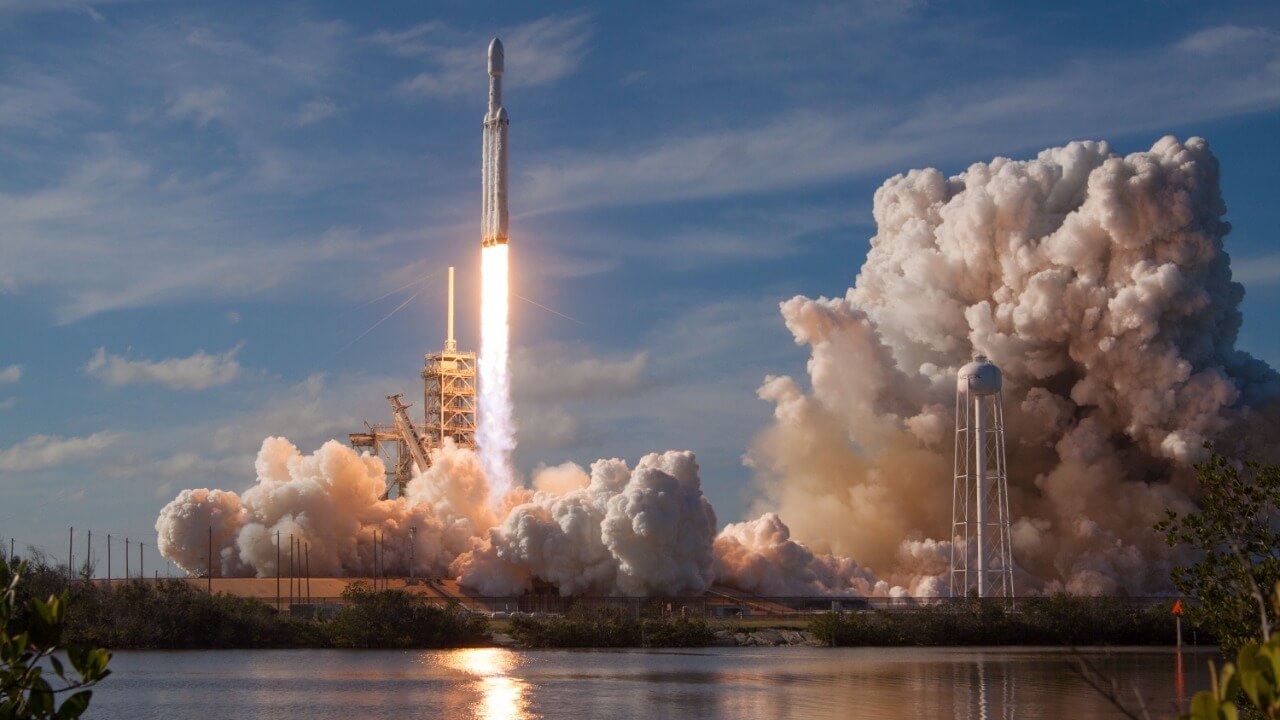
The profit surge is rooted in a business model that now spans reusable rockets and a rapidly scaling broadband network. SpaceX’s Falcon 9 and Falcon Heavy fleets have driven down the cost per kilogram to orbit, allowing the company to capture a dominant share of commercial and government launch contracts while flying its own Starlink satellites at marginal cost. One report from The Mighty 790 K radio station, branded as The Mighty 790 K and KFGO, described how the company’s rapid cadence and internal demand helped SpaceX generate about $8 billion in profit last year ahead of the IPO, according to an Exclusive account that has circulated among investors.
Starlink is increasingly central to that story. The satellite internet service has grown from a beta product into a global network that sells directly to consumers, businesses and governments, providing recurring revenue that is less cyclical than launch contracts. In Jakarta, Gotrade News, for example, coverage of Musk’s IPO plans has emphasized how the listing could crystallize the value of Starlink’s subscriber base and cash flow, which underpin his ambition for a $1 trillion valuation laid out in. The combination of high margin connectivity revenue and a largely depreciated Falcon fleet helps explain how SpaceX can post such large profits while still pouring billions into Starship and next generation satellites.
What a record-setting listing would mean for markets and rivals
If SpaceX proceeds with an offering sized anywhere near current expectations, it would instantly become one of the most closely watched stocks in the world. Analysts have already framed the potential deal as a record setter, with one report noting that Elon Musk’s company has profits that “topped” $8 billion last year as record-setting IPO talk heats up, a characterization that reflects how unusual it is for a private company to reach that scale before listing according to investor. A successful float at or near a $1.5 Trillion valuation would instantly place SpaceX among the most valuable companies on earth, reshaping index composition and forcing large asset managers to decide how much exposure they want to Musk’s governance style.
The ripple effects would extend beyond equities. Musk has already suggested that SpaceX’s commercial revenue from space will soon exceed the entire budget of NASA, and he has said he expects revenue to reach about $15.5B in 2025, a milestone that would underline how far private industry has overtaken traditional government programs in some areas of space activity Perhaps most strikingly. For rivals in launch and satellite communications, a cash rich, publicly traded SpaceX would be an even more formidable competitor, able to tap equity markets to fund Starship, deep space missions and further Starlink expansion while they struggle to match its cadence and cost base.