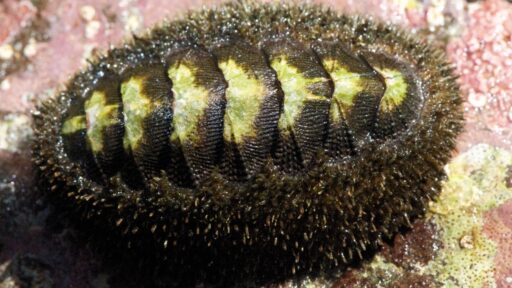
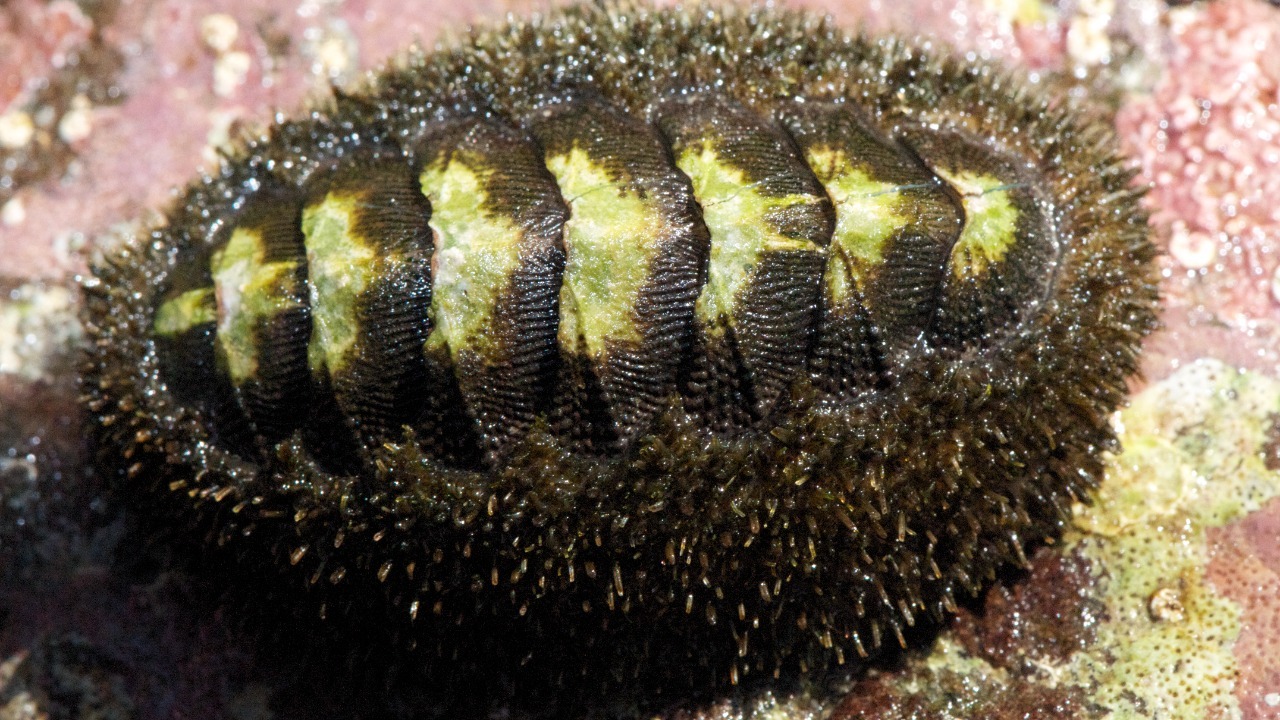

Three miles below the Pacific, in water near freezing and under crushing pressure, a fingernail-sized mollusk has built its entire life around drifting logs. The newly described deep-sea chiton clings only to sunken wood, carving out a niche so narrow that a single missing ingredient, a falling tree, could erase it.
Drawn from the darkness by a remote-operated vehicle, the discovery is more than a curiosity. It reveals a hidden economy of wood, microbes, and animals that links coastal forests to the abyss, and it raises urgent questions about how human activity might be reshaping even these distant, lightless refuges.
How scientists found a wood‑loving chiton in the abyss
The new species emerged during targeted dives to deep Pacific basins where researchers had previously spotted fields of decaying logs. Using a remotely operated vehicle, the team surveyed wood falls resting roughly 5,000 meters below the surface, then collected small patches of bark and splinters that were carpeted with unfamiliar, armored mollusks. The animal turned out to be a chiton, a group better known from rocky shores than from the deep sea, and genetic work confirmed that it represented a distinct lineage adapted to life on submerged timber.
According to the study summarized by deep‑sea biologists, every individual of this chiton species was attached to wood and nowhere else. Researchers scanned surrounding sediments, nearby rocks, and even whale bones for comparison, yet the species appeared to ignore all other available surfaces. That strict fidelity sets it apart from many other deep‑sea invertebrates, which often use any hard substrate in a largely soft, muddy environment.
Close inspection of the logs revealed a layered community. Filaments of fungi and films of bacteria riddled the wood, breaking down cellulose and lignin. The chiton grazed across this living patina, scraping up microbes rather than the wood itself. Its mouthparts, the radula, were equipped with rows of tiny teeth that seemed specialized for rasping biofilms from uneven, splintered surfaces, a stark contrast with relatives that feed on algae in shallow water.
The species also showed a distinctive shell architecture. Like other chitons, it carried eight overlapping plates, but these plates were thinner and more flexible than those of intertidal forms, which may help it conform to irregular bark and avoid being pried off by currents. The girdle tissue that rims the plates extended into fine, gripping structures that anchored the animal along cracks and grain lines, turning the log into both shelter and dinner table.
What changed in the understanding of deep‑sea wood falls
Wood falls were once treated as rare accidents, the occasional tree that happened to sink intact. Over the past two decades, systematic surveys have revealed that coastal rivers send a constant trickle of trunks and branches into deep basins, where they gather in depressions and trenches. The new chiton sharpens that picture, showing that some animals have evolved to rely on these temporary islands of carbon as their only home.
Earlier work on sunken wood focused heavily on bivalves such as Xylophaga, clams that bore into logs and digest cellulose with the help of symbiotic bacteria. Those clams are still key players, but the chiton adds a new tier to the food web. Instead of attacking the wood directly, it exploits the microbial bloom that follows the clams and fungi, effectively turning the log into a multi‑stage buffet. That sequence, from fresh timber to skeletonized stump, now appears more structured than previously appreciated.
The discovery also shifts thinking about connectivity between shallow and deep ecosystems. Trees that grow in coastal watersheds can end up as habitat thousands of meters down, meaning that logging, dam construction, and shoreline engineering on land can reverberate into the abyss. Until now, many deep‑sea models treated organic input as a diffuse rain of particles from the surface. Wood falls show that large, discrete packages of carbon create hotspots that can sustain specialized species for years.
Taxonomically, the chiton forces a revision of where certain lineages are expected to live. Many described chiton species occupy rocky intertidal zones or continental shelves. Finding a close relative at 5,000 meters, confined to dead trees, suggests that deep colonization may have occurred multiple times and that existing collections underrepresent this hidden diversity. Museum drawers filled with unexamined deep‑sea specimens could hold more wood‑associated forms that were previously lumped with shallow cousins.
Why a wood‑restricted chiton matters in a warming, industrial ocean
On its face, a tiny mollusk scraping bacteria from logs might seem far removed from global change. In practice, such specialists act as sensitive indicators. Because the chiton relies on a chain that starts with coastal forests, any disruption along that chain can ripple through its population. Reduced tree input, altered storm patterns, or changes in river flow can all affect how many logs reach the deep sea, how long they persist, and where they land.
Climate change is already reshaping those upstream pieces. Shifts in precipitation alter flood regimes, which in turn control how often riverbanks collapse and trees are flushed seaward. Warmer temperatures and changing fire patterns influence forest composition, affecting the density and buoyancy of wood that enters the ocean. Each of these factors can change the delivery of what researchers call terrigenous carbon to deep basins, and the chiton sits at the end of that delivery route.
Industrial activity adds another layer of risk. Large dams trap floating timber before it reaches the coast, and river engineering can straighten channels, reducing the likelihood that whole trees are uprooted and exported. At sea, expanding trawl fisheries and prospective deep‑sea mining threaten to disturb or bury existing wood falls. A log field that took years to assemble can be scattered in hours by heavy gear dragged across the bottom, stripping away habitat for animals that have nowhere else to go.
Because the new chiton appears to be endemic to a specific depth range and substrate, it also highlights how conservation frameworks often overlook microhabitats. Marine protected areas tend to be drawn around seamounts, vents, or charismatic features such as canyons. Drifting logs that eventually sink are rarely mapped, let alone managed, yet they host communities as specialized as those at hydrothermal vents. The chiton, in that sense, stands in for a suite of organisms whose existence depends on a material most people associate with forests and furniture.
What scientists want to learn next about this extreme specialist
Researchers now face a series of practical and conceptual questions. One priority is to estimate how many wood‑restricted chiton populations actually exist. That will require better mapping of deep‑sea log fields, likely through autonomous vehicles that can scan large areas for the acoustic signatures of clustered timber. Once candidate sites are located, targeted sampling can test whether the species occurs across basins or is confined to a narrow geographic corridor.
Another line of work will focus on life history. The chiton’s larvae almost certainly spend time in the water column before settling, but how they locate a log in the vastness of the deep sea remains unknown. Scientists suspect that chemical cues released by decaying wood and associated microbes create a scent trail, yet direct evidence is lacking. Laboratory experiments that expose larvae to controlled gradients of wood‑derived compounds could reveal whether they actively swim toward such signals or rely on chance encounters.
Genomic studies are also on the agenda. By comparing the new species’ DNA with that of shallow‑water relatives, researchers hope to identify genes linked to pressure tolerance, low‑temperature metabolism, and specialized feeding. Such work can clarify whether deep‑sea adaptation occurred once or multiple times within the group, and how quickly lineages can shift from rocky shores to the abyss when new habitats become available.