
An artificial intelligence-powered blood test has detected liver cancer in two geographically and biologically distinct patient populations, offering encouraging evidence that the technology may work across different ethnic backgrounds and causes of liver disease.
Researchers from the Johns Hopkins Kimmel Cancer Center tested the approach using blood samples from people in Guatemala and Romania. Despite substantial differences in the health conditions and environmental exposures associated with cancer in the two countries, the test continued to identify hepatocellular carcinoma, the most common form of primary liver cancer.
The findings strengthen the possibility that a future blood-based screening tool could complement ultrasound and conventional blood testing. However, the assay remains under investigation and is not yet a replacement for established liver cancer surveillance or diagnostic imaging. The results were published on July 31, 2026, in the Cell Press journal Blue.
The Study Tested Patients in Guatemala and Romania
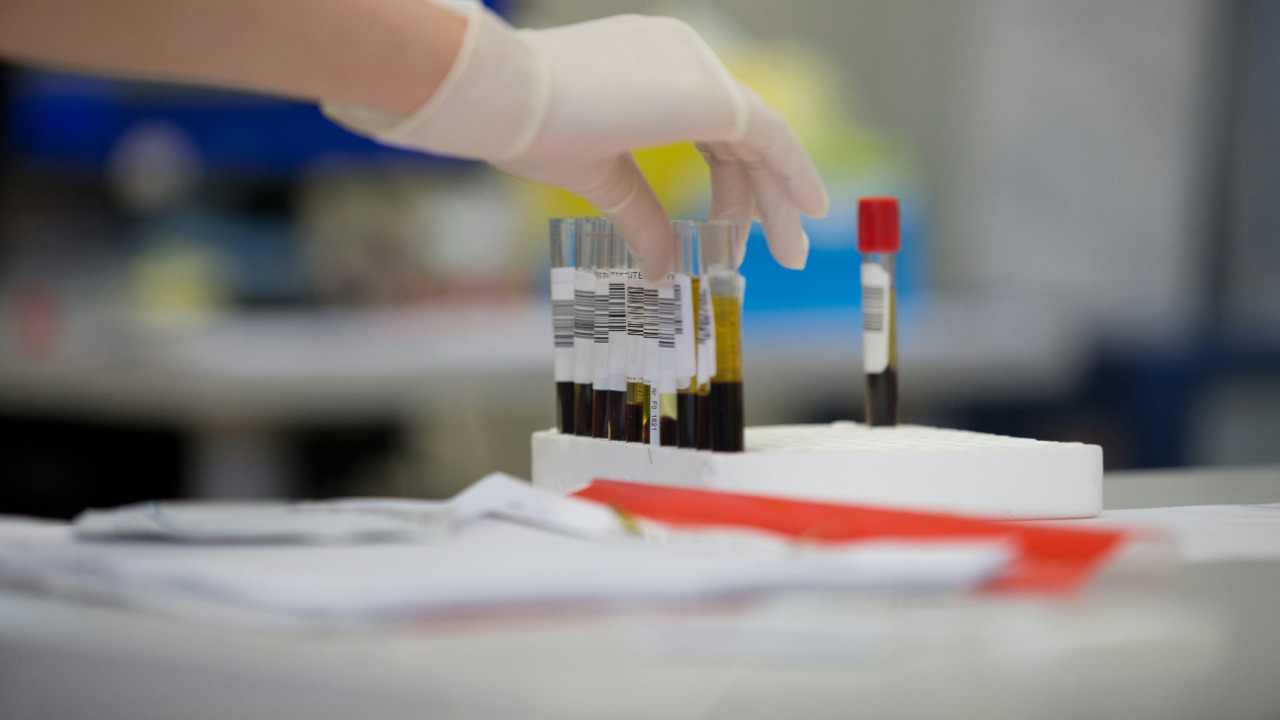
The researchers analysed plasma samples from 377 people, including 244 patients with hepatocellular carcinoma and 133 people without cancer. Among the participants without cancer, 85 had cirrhosis, making the comparison more clinically relevant because cirrhosis substantially increases liver cancer risk and can produce biological changes that complicate detection.
The study included 203 participants from Guatemala and 174 from Romania. The Guatemalan group was evaluated through a case-control cohort, while the Romanian samples came from a prospective collection. The previously developed detection model was locked before it was applied to these populations, meaning researchers did not continually retrain it to fit the new samples.
That design provided an important test of whether the technology could generalise beyond the populations in which it was originally developed. Earlier research had examined samples from the United States, Europe and Hong Kong, but a screening test intended for broader use must remain reliable when the patients, risk factors and biological pathways behind their cancers differ.
The Two Populations Had Different Cancer Risk Patterns
Most Romanian participants had liver disease associated with viral hepatitis or alcohol use. In Guatemala, metabolic liver disease, obesity and diabetes were more prominent, while many participants had also experienced exposure to aflatoxin.
Aflatoxin is a naturally occurring toxin produced by certain fungi that can contaminate crops such as maize and peanuts. Long-term dietary exposure is associated with liver damage and an increased risk of hepatocellular carcinoma, particularly in regions where food storage conditions allow fungal contamination to develop.
The researchers detected a distinctive genome-wide mutation pattern linked with aflatoxin exposure in the Guatemalan samples. Nevertheless, the broader AI classifier remained effective in both countries, suggesting that it recognised biological characteristics shared by liver cancers rather than depending entirely on one disease cause. The official Johns Hopkins Medicine study announcement provides further details about the two cohorts and their different risk profiles.
How the AI-Powered Blood Test Works
The test is based on a liquid-biopsy platform called DELFI, which stands for DNA Evaluation of Fragments for Early Interception. It examines cell-free DNA, or cfDNA, circulating in a blood sample.
Cells throughout the body regularly release small pieces of DNA into the bloodstream. Cancer and other diseases can alter where those fragments originate, how long they are and how they are distributed across the genome.
Instead of searching only for a small set of cancer-causing mutations, DELFI studies millions of fragmentation patterns across the genome. A machine-learning classifier then looks for combinations of features associated with hepatocellular carcinoma. This approach is known as fragmentome analysis.
The AI involved is therefore not a generative chatbot. It is a trained statistical model designed to recognise complex molecular patterns in sequencing data and produce a cancer-detection score.
The Classifier Outperformed AFP Testing Alone
Across the 377 participants, the locked cfDNA fragmentome classifier detected hepatocellular carcinoma with approximately 70 percent sensitivity and 94 percent specificity. The conventional alpha-fetoprotein blood marker achieved 62 percent sensitivity and 93 percent specificity in the same analysis.
Sensitivity describes how frequently a test correctly detects people who have cancer. Specificity describes how frequently it correctly identifies people who do not have it. A useful screening test must balance both measures because poor sensitivity can miss cancers, while poor specificity can send too many people for unnecessary imaging and invasive follow-up.
The researchers found that combining the fragmentome result with AFP and straightforward clinical factors such as age and sex improved detection of both early- and late-stage cancers compared with existing blood testing alone. Earlier analysis of these cohorts reported that a combined DELFI-or-AFP approach achieved 82 percent overall sensitivity and 74 percent sensitivity for early-stage disease at 92 percent specificity.
Those results are promising, but they should not be interpreted as perfect accuracy. Some cancers were missed, and some individuals without cancer could still receive a positive result requiring further investigation.
Current Liver Cancer Screening Has Important Limitations
People at high risk of hepatocellular carcinoma are commonly monitored with abdominal ultrasound and AFP testing approximately every six months. High-risk groups can include certain patients with cirrhosis or chronic hepatitis B. The American Association for the Study of Liver Diseases guidance provides the established framework for surveillance and follow-up.
Ultrasound remains valuable because it can identify suspicious liver abnormalities without radiation. Its effectiveness, however, can depend on the operator, equipment and the patient’s anatomy. Obesity, advanced liver scarring and other factors may make small tumours difficult to see.
AFP can support surveillance, but not every liver cancer produces an elevated AFP level. The biomarker can also rise for reasons unrelated to cancer, limiting its ability to serve as an independent screening or diagnostic test. Reviews of hepatocellular carcinoma biomarkers have therefore emphasised the need for more sensitive blood-based approaches.
A reliable blood test could make surveillance more accessible, especially in communities where specialist ultrasound services are limited. It would still need to direct patients toward diagnostic imaging rather than independently confirming cancer.
The Test Reads Signals Beyond the Tumour
One of the study’s most notable findings concerns why fragmentome analysis appears to work. Using a method called MethID, researchers traced the likely tissue origins of DNA fragments circulating in the blood.
The analysis indicated that the classifier was not detecting DNA released only by tumour cells. It was also reading changes associated with healthy and damaged liver cells, blood vessels and immune cells responding to the cancer.
This broader signal may be valuable because early tumours can release very small quantities of cancer-specific DNA. Measuring the surrounding biological response could provide additional evidence that abnormal growth is developing before large amounts of tumour DNA enter the circulation.
The same principle may eventually support blood tests for other liver conditions. Related Johns Hopkins research involving 1,576 individuals found that cfDNA fragmentation patterns could also detect early liver disease, advanced fibrosis and cirrhosis, conditions that often develop before liver cancer.
Earlier Detection Could Expand Treatment Options
Early detection matters because patients with localised hepatocellular carcinoma may be eligible for potentially curative treatment, including surgical removal, liver transplantation or tumour ablation. Once the disease becomes advanced, treatment is more likely to focus on controlling progression rather than eliminating the cancer. The National Cancer Institute’s liver cancer treatment overview explains how treatment opportunities differ by disease stage and liver function.
The study also found that participants with positive DELFI results had shorter overall survival, including some patients with early-stage disease. AFP alone did not produce the same survival separation among early-stage patients, suggesting that fragmentation patterns may reveal information about tumour biology as well as its presence.
That observation requires further validation before the test could be used for prognosis or treatment planning.
The Test Is Not Ready to Replace Ultrasound
Despite the encouraging results, this was a relatively small study involving selected high-risk cohorts. A test can perform strongly in research samples but produce different results when introduced into routine screening, where cancer is less common and patients have a wider range of medical conditions.
Prospective clinical trials must determine how the assay performs when people are tested before their cancer status is known. Researchers must also establish how frequently testing should occur, what score should trigger imaging and whether using the test actually increases early diagnoses or reduces liver cancer deaths. Johns Hopkins investigators say prospective clinical validation and continued development of multimodal testing are the next priorities.
Financial interests also require transparency. Johns Hopkins disclosed that several researchers are founders, consultants, shareholders or patent inventors connected with DELFI Diagnostics and related companies. The university owns equity in DELFI Diagnostics and may receive licensing revenue from relevant intellectual property.
A Promising Step Toward More Inclusive Cancer Detection
The study’s greatest contribution may be its demonstration that a single fragmentome classifier can recognise liver cancer across populations with markedly different disease causes.
That kind of cross-population validation is essential for medical AI. A model trained too narrowly may work well for one group while failing in communities that were poorly represented during development. Testing the technology in Guatemala and Romania does not prove universal reliability, but it moves the research closer to a tool that could function across diverse healthcare environments.
For now, the assay remains a research development rather than a stand-alone diagnostic test. Its ability to detect shared cancer biology, regional molecular differences and signals from the surrounding liver makes it a particularly promising candidate for larger clinical trials.