
NASA’s Perseverance rover has quietly crossed a symbolic but striking threshold on Mars, logging a driving distance comparable to a full 42.195 kilometer marathon. The six wheeled robot took more than five Earth years to reach a distance that human runners cover in a few hours, yet every slow meter has been packed with scientific work, hazard dodging and route finding across Jezero Crater. The long haul now offers a vivid way to appreciate how much of Mars the rover has physically explored.
How Perseverance turned five years of driving into a Martian marathon
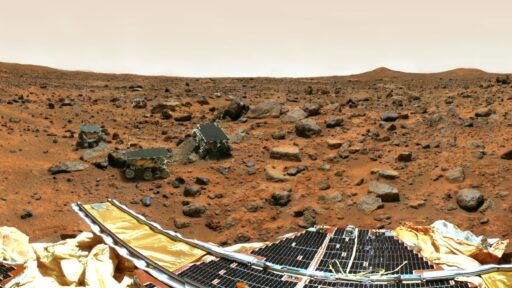
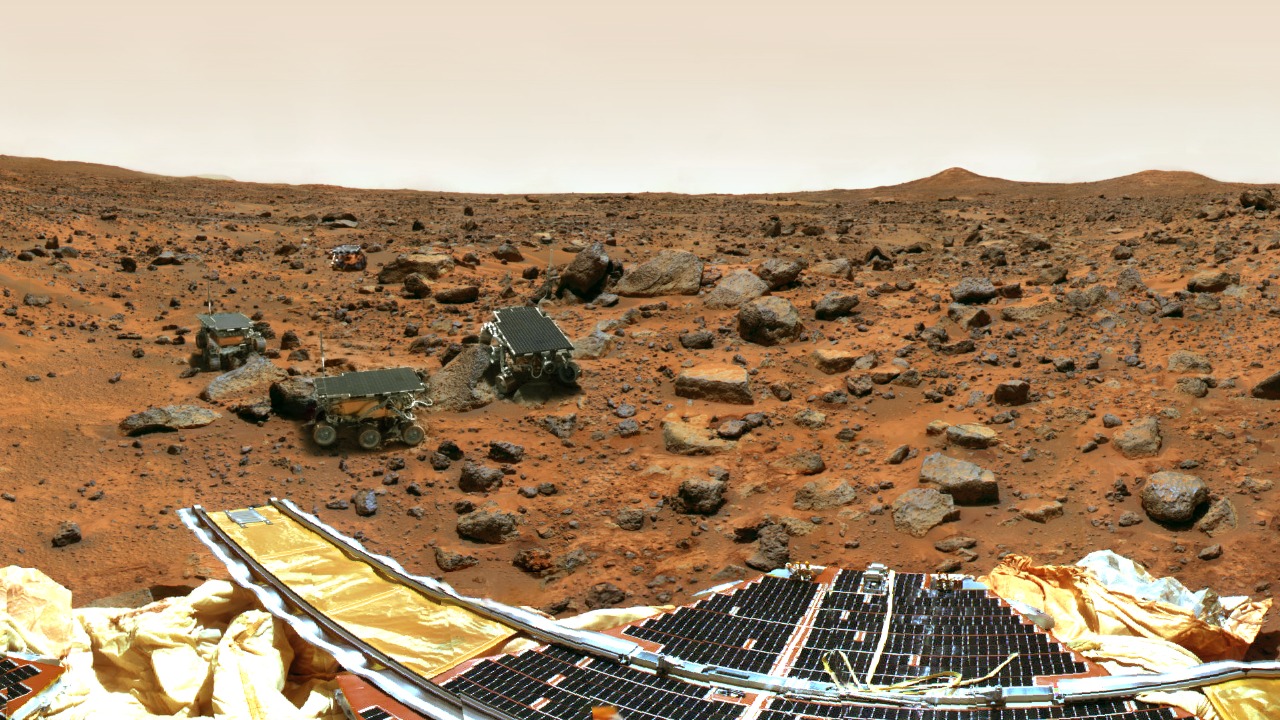
Perseverance landed inside Jezero Crater with a clear mandate to hunt for signs of ancient microbial life and to cache rock cores for a future sample return. From its touchdown site, the rover began a carefully choreographed traverse that first examined the crater floor, then climbed to ancient river deposits that once fed a lake. Over time, its odometer crept toward the 42 kilometer mark that mission planners had identified as a natural milestone for the traverse.
Earlier this year, mission updates described the rover as being ready to complete a Martian marathon as it pushed across the western side of Jezero. Engineers had to balance the desire for distance with the need to stop frequently for imaging, drilling and atmospheric measurements. The route was never a straight line, as Perseverance steered around sand ripples that could trap its wheels and skirted rock fields that might damage its hardware.
Along the way, the rover used its autonomous navigation system, known as AutoNav, to pick safe paths beyond the line of sight of Earth based drivers. That capability allowed longer uninterrupted drives on suitable terrain, which helped the odometer climb even as the rover continued to pause for science campaigns. A recent drive across what the team calls the “western frontier” of Jezero produced a new selfie in Mars’, capturing both the rover and the surrounding layered rocks that record the crater’s watery past.
Perseverance’s marathon distance is not just a raw number. It reflects a traverse that has crossed multiple geologic units, from basaltic crater floor lavas to sedimentary deposits laid down by an ancient river delta. Each shift in terrain required new driving strategies and new decisions about where to stop and drill. The long route has also tested the durability of the rover’s wheels and suspension over thousands of small bumps, slopes and embedded rocks.
Why this long-distance drive matters for Mars science and engineering
On Earth, a marathon is a test of endurance and planning. On Mars, the same distance becomes a testbed for exploration strategy. Perseverance has used its marathon length traverse to collect a diverse suite of rock cores that will eventually anchor a detailed story of Jezero’s history. The rover has drilled samples from key locations along its path, including the ancient delta where a river once fanned into the crater lake, giving scientists a timeline of changing environments.
Images and data from across the route show how water shaped Jezero over time, which is central to the mission’s search for biosignatures. By driving far from its landing site, Perseverance has been able to compare rocks that formed in deep water with those deposited closer to the shoreline. That comparison helps researchers identify the most promising places to look for preserved organic molecules and potential microfossil textures. Coverage of the rover’s latest marathon record image has focused on how this broad spatial context strengthens any future claims about ancient life.
The marathon distance also highlights the engineering payoff of Perseverance’s mobility upgrades over earlier rovers. Compared with Opportunity and Spirit, which relied more heavily on human driving commands, Perseverance’s AutoNav can process stereo images on board and steer around obstacles in real time. Analysts have pointed out that this autonomy is one reason the rover could realistically aim for a 42 kilometer traverse in a single prime mission period. As one breakdown of how far Perseverance notes, humans might cover the same distance in a few hours, but the rover must survive every rock and slope with no chance of roadside repair.
There is also a psychological and public engagement angle. A marathon is a familiar benchmark, even for people who do not follow space missions closely. Framing Perseverance’s traverse in those terms helps convey the scale of its exploration more intuitively than a bare kilometer count. Mission teams have used similar comparisons before, such as when Opportunity surpassed the distance record for off world driving, but Perseverance’s marathon comes with the added hook of sample caching for a future return to Earth.
The slow pace is not a drawback. Each pause along the route has produced detailed panoramas, subsurface radar profiles and atmospheric measurements that fill in a three dimensional view of Jezero. That combination of distance and depth gives scientists a better handle on how representative any single rock core might be of the wider region. It also provides a blueprint for how future rovers, including potential human operated vehicles, might plan their own long range traverses.
What Perseverance’s marathon reveals about mission longevity and strategy
Reaching marathon distance has taken Perseverance more than five years, a span that reflects both the complexity of Martian terrain and the constraints of interplanetary operations. Every drive segment must be planned around communication windows, power availability and the need to keep sensitive instruments within safe temperature limits. A detailed account of the trek notes that the rover’s first marathon has taken more than, yet the vehicle remains healthy enough to keep going well beyond that.
The long traverse has also validated the mission’s approach to risk. Engineers have occasionally accepted shorter term wear on the wheels in exchange for reaching high value science targets, such as steep delta outcrops that could record lake level changes. At other times, they have chosen longer detours to avoid hazards that might threaten the rover’s ability to continue driving for years. The fact that Perseverance can still add kilometers after a marathon distance suggests that this balance has worked.
From a strategic perspective, the marathon milestone marks a transition from initial site characterization to more targeted exploration. The rover has now sampled the main geologic units that were visible from orbit before landing. With that baseline in hand, scientists can use the remaining driving time to chase specific puzzles that emerged from the first wave of data. These might include subtle mineral changes along ancient shorelines or unusual textures in rocks that could hint at biological activity.
Coverage that tracks how far the has also emphasized the value of overlapping datasets. As Perseverance drives, the Mars Reconnaissance Orbiter continues to image its path from above, while the rover’s own cameras capture the ground truth below. That combination allows scientists to refine their interpretations of orbital data, which will be essential when selecting landing sites for future missions that cannot explore every square kilometer in person.
Where Perseverance heads after the 42 kilometer mark
With a marathon behind it, Perseverance is not expected to stop. Mission planners are already looking ahead to additional traverses that will extend the rover’s reach beyond the current western frontier of Jezero. Analyses of the long term plan describe how the rover could head toward new terrain that may preserve older rocks beneath the delta deposits, giving scientists a window into an even earlier chapter of Martian history. A recent overview of the mission’s distance record suggests that the rover is likely to break further records if its systems remain stable.