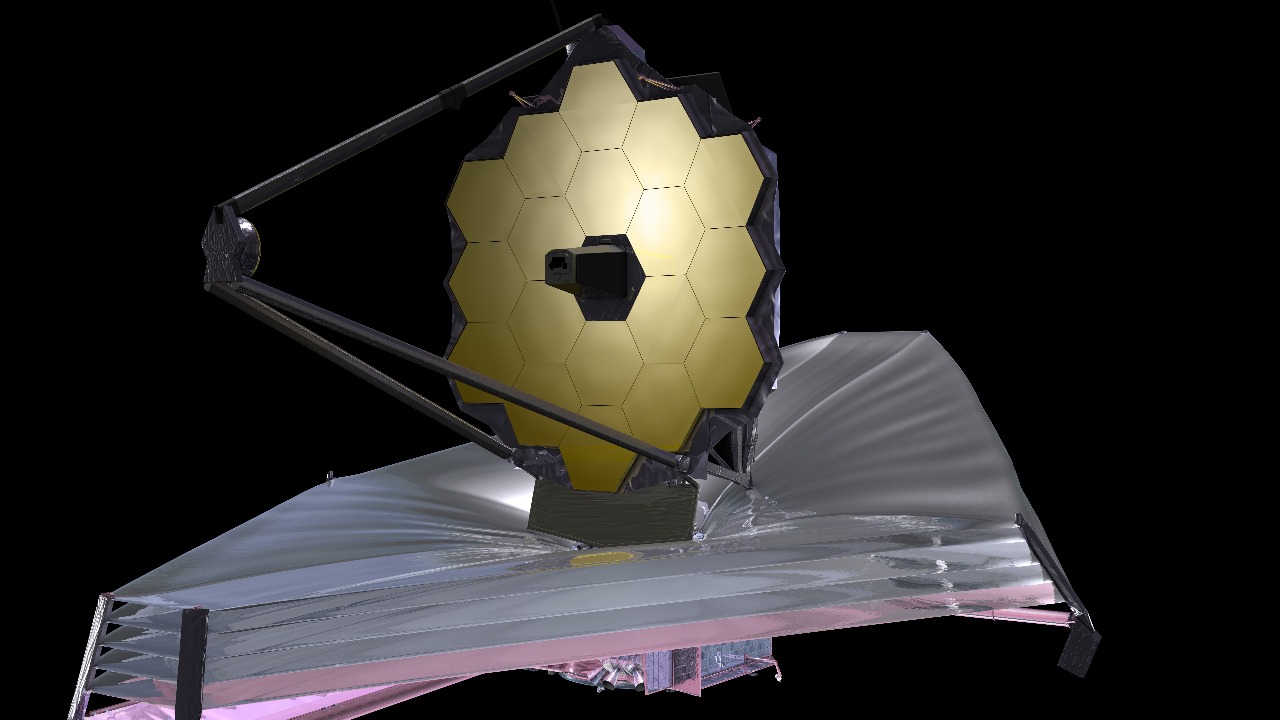

NASA’s next flagship observatory has arrived at Florida’s Kennedy Space Center about eight months earlier than planners once expected, setting up a relatively relaxed march toward an ambitious August launch. The Nancy Grace Roman Space Telescope is now entering its final round of tests, checkouts, and integration steps at the launch site, with mission teams treating the schedule margin as a rare luxury for a billion-dollar space observatory.
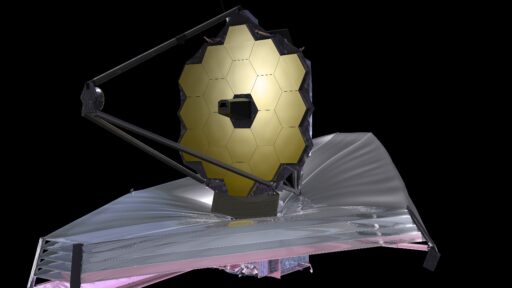
The early arrival caps years of redesigns and pandemic-era delays and puts Roman on track to join the James Webb Space Telescope as a cornerstone of NASA’s astrophysics fleet. If the current plan holds, the new telescope will head to deep space near the end of the summer to begin a sweeping survey of dark energy, exoplanets, and the structure of the universe.
How Roman’s early arrival reshapes the road to launch
The Nancy Grace Roman Space Telescope, often described as a wide-field counterpart to Webb, reached Kennedy Space Center after completing integration and testing at NASA’s Goddard Space Flight Center. According to mission briefings, engineers had originally budgeted a far tighter delivery window. The observatory’s appearance at the Cape roughly eight months ahead of that internal target gives the launch campaign significant breathing room for rehearsals, fueling, and any last-minute repairs that might emerge during final inspections.
At Kennedy, Roman will be prepared for liftoff from Space Launch Complex 39A, a pad that has hosted everything from Apollo missions to Crew Dragon flights. The telescope is currently targeting an August 30 launch date, a milestone highlighted in detailed previews of the Space Coast launch that map out a crowded summer for Florida’s space industry. That calendar places Roman among high-profile commercial and government missions vying for pad time and range support, which makes its early arrival even more valuable.
Mission planners are using this schedule margin to sequence a series of operations that are often compressed into a hectic few weeks. Those steps include unpacking and inspection, mechanical and electrical fit checks with the launch vehicle, fueling of the spacecraft’s propulsion system, and full-up end-to-end communications tests that link the observatory with ground stations and mission control. Any anomaly discovered during these rehearsals can now be investigated and corrected without immediate pressure to hold a narrow launch window.
Roman’s path to the pad also benefits from hard lessons learned on earlier NASA missions. The rollout of the Space Launch System rocket for the Artemis I test flight, for instance, involved repeated trips between the Vehicle Assembly Building and the pad as teams worked through tanking tests and hardware issues, as described in coverage of the new moon rocket and its dress rehearsals. That experience reinforced how vulnerable complex missions are to cascading delays when schedules are tight. Roman’s leadership has been explicit that the extra months at Kennedy are an intentional buffer against that kind of crunch.
The telescope itself is built around a 2.4-meter mirror and a powerful Wide Field Instrument that can capture images covering a patch of sky about 100 times larger than Webb’s infrared camera in a single pointing. Final tests at the launch site will verify that the optics and detectors survived transport and still meet their exacting performance requirements. Any rework on such sensitive hardware is far easier to manage with months of margin rather than weeks.
Why an early-arriving telescope matters for science and strategy
The stakes for Roman’s schedule extend far beyond launch logistics. Once in its operational halo orbit around the Sun-Earth L2 point, the telescope is expected to survey billions of galaxies and monitor hundreds of millions of stars. NASA scientists project that its microlensing program could detect on the order of 100,000 exoplanets, a figure highlighted in mission previews that describe how Roman will hunt by watching for tiny gravitational lensing events. A slip in launch timing would ripple through years of planned surveys and time-critical observing campaigns.
The mission’s core science portfolio focuses on three intertwined goals. First, Roman will map the expansion history of the universe with unprecedented precision, using Type Ia supernovae, baryon acoustic oscillations, and weak gravitational lensing to probe the nature of dark energy. Second, it will create a deep, wide census of exoplanets using both microlensing and direct imaging, capturing populations of worlds from free-floating planets to analogs of Jupiter and Saturn. Third, its wide-field imaging will support studies of galaxy evolution, stellar populations, and the structure of the Milky Way, producing datasets that astronomers expect to mine for decades.
Arriving early at the launch site strengthens NASA’s ability to hit the August window that underpins this science plan. The mission’s observing strategy is tied to celestial alignments and seasonal visibility of target fields near the galactic bulge. A significant delay could push key microlensing campaigns out of optimal observing seasons, forcing tradeoffs between exoplanet science and dark energy surveys in the first years of operation.
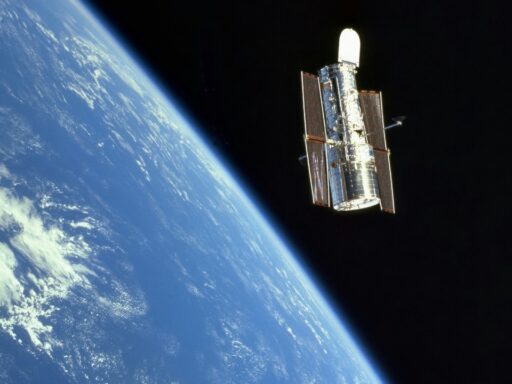
Timing also matters for how Roman fits into the broader astrophysics ecosystem. The telescope is designed to work in concert with both the Hubble Space Telescope and the James Webb Space Telescope, pairing its enormous field of view with their high-resolution, narrow-field imaging and spectroscopy. Coordinated campaigns will rely on Roman to identify rare or transient phenomena, such as gravitationally lensed supernovae, that Webb can then study in detail. A launch later in the decade would risk overlapping with potential end-of-life scenarios for older observatories and could compress the window for such joint programs.
On the policy and budget side, Roman’s progress carries symbolic weight. The mission has navigated cost pressures and design changes tied to its origins as a repurposed spy satellite mirror, and it has often been held up as a test case for whether NASA can deliver a flagship-class observatory on a more predictable schedule. An early arrival at Kennedy, followed by a smooth launch campaign, would bolster arguments that the agency can manage complex astrophysics missions without the kind of chronic overruns that have plagued earlier flagships.
For the broader space community on Florida’s east coast, Roman’s presence at Kennedy adds another marquee mission to an already busy year. Local launch calendars show a mix of crewed flights, cargo runs, and science payloads sharing the range, and the inclusion of a high-profile NASA observatory on that late August manifest reinforces the region’s status as a hub for both commercial and government spaceflight. The steady cadence of launches has economic implications for the Space Coast, from tourism tied to major missions to long-term workforce demand at Kennedy and nearby facilities.
What to watch between now and Roman’s planned August liftoff
With the telescope now at Kennedy, the next few months will follow a familiar but high-stakes script. Technicians will first complete post-shipment inspections, verifying that no contamination or mechanical damage occurred during transport. They will then integrate Roman with its spacecraft bus and test the combined observatory in configurations that mimic launch conditions. Any anomaly in these tests could trigger troubleshooting campaigns that consume part of the schedule margin but are far less likely to threaten the launch date because of the early arrival.
Parallel to the hardware work, mission teams will rehearse launch and early operations scenarios. That includes simulations of countdown procedures, handoffs between ground systems and the spacecraft, and the critical first hours after separation from the rocket, when Roman must deploy its solar arrays, establish stable communications, and begin its journey to L2. These rehearsals are designed to surface software bugs, procedural gaps, or coordination issues between NASA centers and international partners before the countdown begins.
Launch timing will also depend on how Roman fits into the broader traffic at Kennedy and Cape Canaveral. Range availability, pad readiness, and potential conflicts with crewed missions or national security launches can all shift target dates by days or weeks. The telescope’s position within the late summer Space Coast lineup gives planners some flexibility, but weather and technical issues could still prompt a series of short delays. The early shipment to Florida is essentially an insurance policy against those common disruptions.