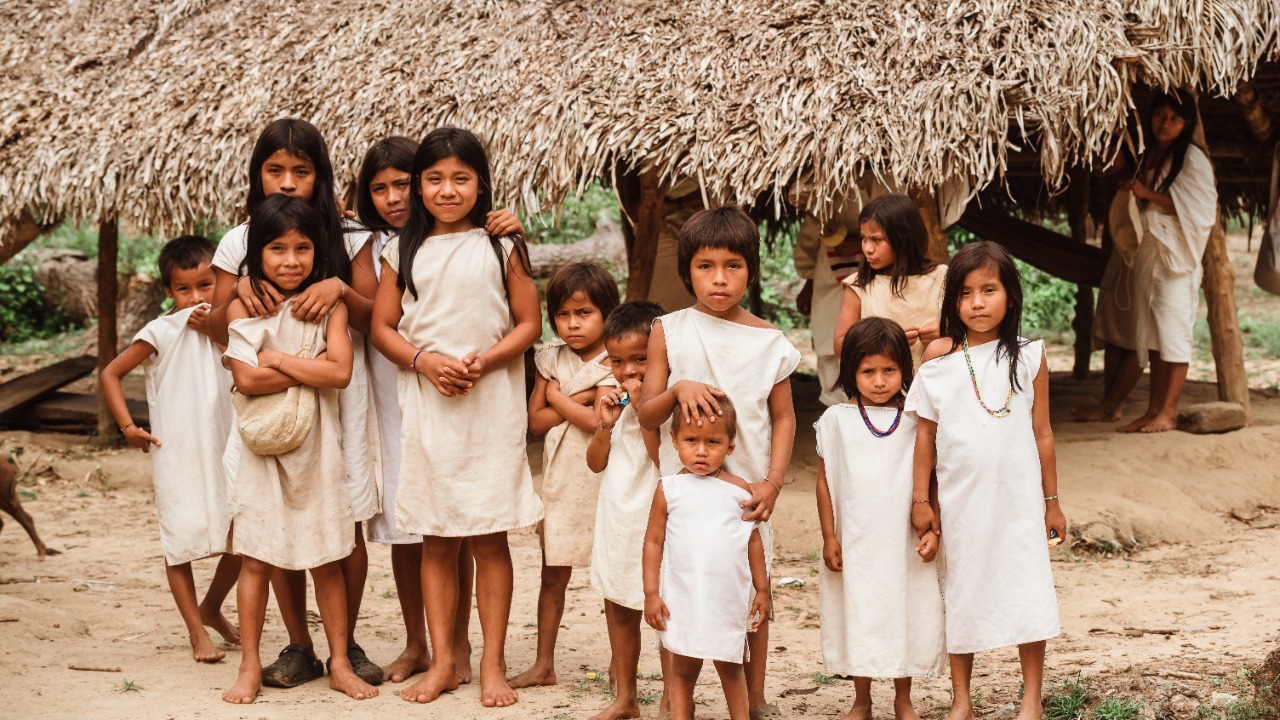

High in the northern Andes, an Indigenous nation that calls itself the Elder Brother has spent centuries watching the lowlands unravel. The Kogi have not suddenly appeared from their mountain for the first time in 2026, but over the past few decades they have carefully stepped into contact with the outside world to deliver a stark ecological warning. I want to trace how that message has evolved, why they say time is running out, and what their prophecy demands of the rest of us.
The mountain world of the Elder Brothers
The Kogi live in the Sierra Nevada de Santa Marta, a coastal massif where The Sierra Nevada mountains rise from sea level to 18,700 feet, creating what they regard as the literal heart of the world. I see their geography as central to their message, because they argue that damage to this mountain system ripples outward into oceans, rivers and climate far beyond Colombia. A culturally intact pre-Colombian society, they have lived in seclusion since the Spanish conquest roughly 500 years ago, maintaining a spiritual discipline that treats the peaks as the womb of the Great Mother and the source of planetary balance.
The Kogi describe themselves as Elder Brothers to the rest of humanity, whom they call Younger Brother, a framing that casts their isolation as guardianship rather than retreat. According to one account, The Kogi are descendants of the Tairona people, whose land was seized by the Spanish Conquistadors, and The Tairona and Kogi fled higher into the mountains to escape the voracious attempts of conquest. That history helps explain why they limited contact for centuries, and why any decision to speak to outsiders now is framed as an emergency intervention rather than a cultural opening.
From seclusion to selective contact
When I look at the record, the Kogi did not simply descend one day with a single warning, but instead orchestrated a series of controlled encounters. In 1990, they invited a BBC team led by Documentary Filmmaker Alan Ereira In to film what later became known as Lost Tribe of, explaining that they were breaking silence because Younger Brother had forgotten how to live with the Earth. Later, Alan Ereira was granted the rare honour of being welcomed deeper into Kogi lands so he could help spread their vital message to the outside world, as described in a profile of Alan Ereira and the Kogi. These were not casual media appearances, but carefully negotiated emissary missions.
In subsequent years, the Kogi expanded that outreach through another documentary, described as Heart of the, which carried The Elder Brother and Warning in its very framing. That film, sometimes referred to as The Elder Brothers Warning, showed how they read environmental collapse in the thinning glaciers, drying lagoons and disrupted animal patterns around the land they inhabit. Perhaps most striking is that They view themselves as the Guardians of the planet, warning that if Younger Brother continues to damage the rivers and water, all life will die. That is the chilling core of their outreach, and it has been unfolding for decades rather than arriving as a single breaking-news moment.
A cosmology of ecological warning
At the heart of the Kogi message is a spiritual ecology that treats every river, stone and cloud as part of a living body. The Mamos, spiritual guides of the Arhuaco and Kogi peoples in Colombia, have repeatedly warned of repercussions if we do not fix our relationship with nature, linking mining, deforestation and industrial agriculture to landslides, floods and changing weather patterns. In their view, what many scientists describe as climate change is also a breakdown in reciprocity with the Earth, and rituals of payment and restraint are as important as emissions cuts.
That worldview is not abstract. One account of a visit to their territory describes how Their rivers with clear, running water were free of any debris, and the forest was their home, providing a source of clean air and food, a scene captured in a reflection on Their environment. The Kogi are profoundly frightened by what we are doing to the world, but also well aware that we have come to believe only what we can see, a tension laid out in a statement on Ecological Warning. The Kogi argue that by the time the damage is visible in city streets, the deeper spiritual harm to the Great Mother has already taken place.
Prophecy, the “great cleanse” and a closing window
Alongside their ecological analysis, the Kogi have shared a timeline that they say humanity is now living through. According to one spiritual teaching, these are trying times and, According to the Kogi prophecy, we are collectively moving through 13 years they call the great cleanse, which they say will lead into the beginning in 2026. A parallel description notes that, According to the Kogi prophecy, this period is a time when hidden imbalances surface, from political turmoil to extreme weather, forcing Younger Brother to confront the consequences of extraction. I read this not as a dated prediction, but as a framework that casts the current decade of fires, floods and social unrest as a painful but necessary reckoning.
For the Kogi, prophecy is inseparable from responsibility. They insist that Kogi’s Ecological Warning is not meant to paralyze people with fear, but to push Younger Brother to change course while there is still time. In their telling, the great cleanse is an opportunity to restore balance before irreversible thresholds are crossed, not a guarantee of collapse. That nuance is often lost when their message is reduced to a single ominous soundbite about the end of the world.
Conservation, science and the Kogi worldview
What makes the Kogi message particularly striking in 2026 is how closely it aligns with emerging conservation practice in Colombia. Recent reporting on Indigenous Kogi worldview describes how their spiritual governance is starting to change the face of conservation for good, with Colombia officials and researchers recognizing that protecting sacred sites and river headwaters can be more effective than isolated park boundaries. Latest analysis suggests that Colombia is poised for another drop in deforestation in 2025, and journalist Maxwell Radwin has highlighted how Hidden heroe communities like the Kogi are central to that trend. In practice, this means mapping spiritual corridors, limiting road building and supporting Indigenous patrols rather than imposing top-down rules from distant capitals.
On the ground, Protecting the Sierra Nevada of Colombia Indigenous Territories with the Kogui People has become a concrete conservation program, with a Progress Report detailing Highlights and Natu based efforts from 2023 to 2024. That initiative, described as Protecting the Sierra Nevada of Colombia Indigenous Territories with the Kogui People, supports community guards, camera traps and legal defense of land titles, showing how spiritual guardianship can mesh with modern tools. For me, this is where the Kogi prophecy intersects with policy: their warnings are not just metaphors, but a blueprint for how to keep forests standing and rivers flowing in a rapidly warming world.