
Spain’s latest migration emergency began at a border, but it rapidly became a battle over information, national politics and European solidarity. Tens of thousands of people attempted to enter Ceuta from neighbouring Morocco after social-media posts suggested that a Spanish court ruling had opened a route into Europe.
The claims were misleading. Reaching Ceuta did not guarantee permission to stay in Spain, travel to the mainland or move freely through the Schengen area. Yet by the time the legal reality became clear, viral videos and messages had already encouraged an extraordinary movement of people toward the enclave.
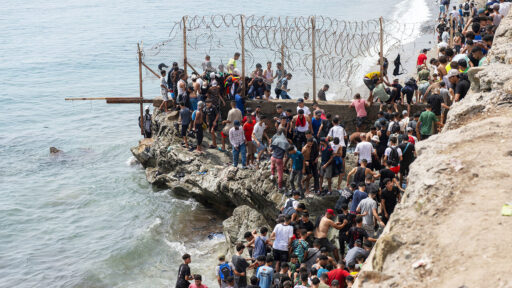
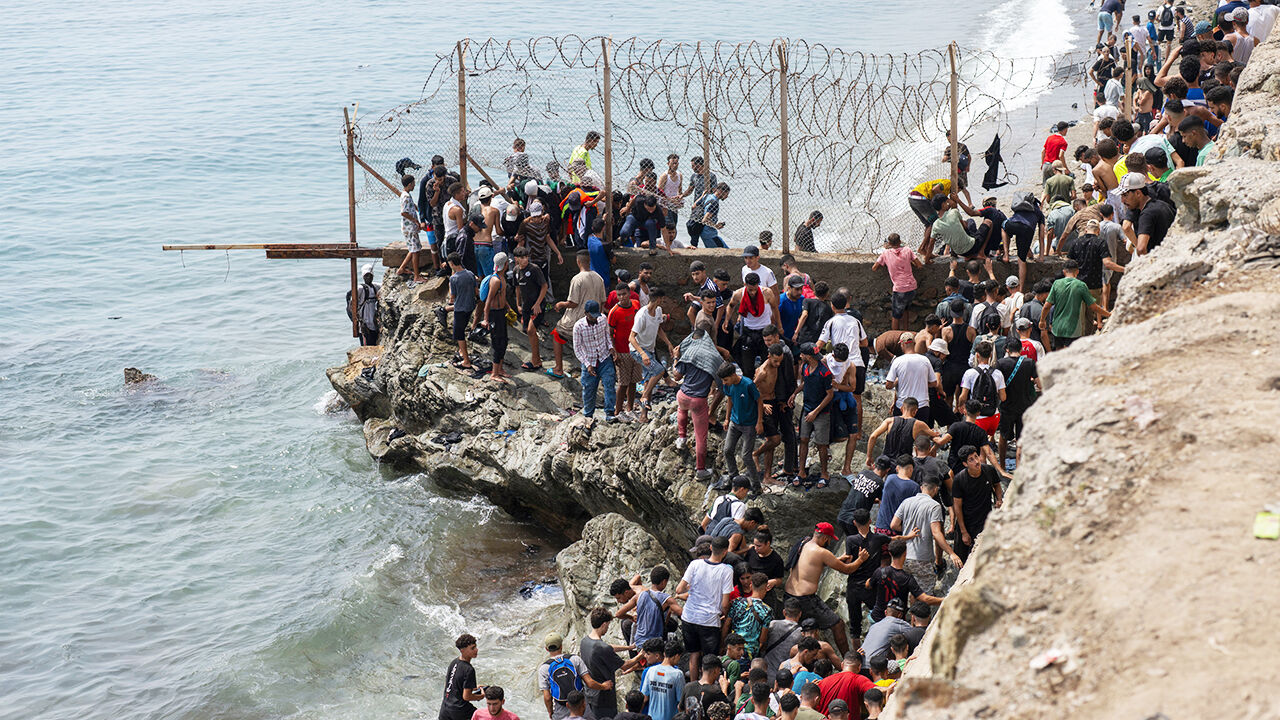
More than 50,000 people reportedly attempted the crossing by land and sea, with estimates in some reports reaching approximately 60,000. At least 72 people had died by August 2, many through drowning or crushing near the border infrastructure. More than 1,000 required medical attention, while most of those who entered eventually returned to Morocco. (Reuters’ latest report on the Ceuta death toll describes how misinformation and economic desperation combined to produce the deadly surge.)
Viral Posts Created the Impression That “Spain Is Open”
Social media did not create the economic hardship behind the crossings, but it appears to have accelerated the crisis dramatically.
Videos circulated showing young people approaching Ceuta in wetsuits, using flippers to swim around coastal barriers or encouraging others to follow. Other posts reportedly declared that Spain was open and suggested that anyone arriving by sea could remain.
Many migrants appear to have relied on these videos rather than receiving instructions directly from established smuggling networks. The images gave viewers immediate visual proof that people were reaching Spanish territory, while the legal explanations attached to them were often simplified, distorted or entirely false. A report based on the original BBC investigation found that viral content portrayed the border as newly accessible and encouraged others to attempt the same journey.
The speed of social platforms made correction difficult. A dramatic video of someone entering Ceuta could travel widely within minutes, while a careful explanation of Spanish immigration law was less likely to attract the same attention.
A Court Ruling Was Stripped of Its Legal Context
Much of the online activity centred on a Spanish Supreme Court ruling concerning people intercepted while attempting to enter Ceuta by sea.
The ruling restricted immediate or summary returns in certain circumstances. It did not create an automatic right to remain in Spain, prevent legal repatriation or grant free movement into mainland Europe.
Online posts and informal networks appear to have transformed that narrow legal distinction into a much broader claim: reach Ceuta by water and Spain cannot send the person back. Reuters found that some young Moroccans understood the judgment in precisely that way, even though Spain retained the ability to process and return people through established legal procedures.
The misinformation was especially powerful because it presented the crossing as a temporary opportunity. When users believe a border has opened only briefly, they may feel pressure to act immediately rather than verify the information or consider the physical danger.
Economic Desperation Made the Rumors More Persuasive
False information is most influential when it reaches people already searching for a reason to act.
Many of those who attempted the crossing were young Moroccans facing unemployment, limited opportunities and frustration with public services. Official figures cited by Reuters indicated that around one-quarter of Moroccans between 15 and 24 were not in employment, education or training.
For someone who has spent years hoping to reach Europe, a video claiming that the border is temporarily accessible may appear more credible than it would to an outside observer. The apparent evidence of others crossing can reduce the perceived danger and create a sense that failing to act means losing a rare opportunity.
That does not make the decision safe or legally sound. It explains why correcting the rumor after the crossings began was unlikely to stop everyone already moving toward Ceuta.
Spain’s Regularization Policy Became a Political Target
The crisis also became entangled with Spain’s separate programme for undocumented migrants already living in the country.
The government announced a process expected to provide legal status to hundreds of thousands of qualifying residents. Critics claimed that the policy had encouraged the Ceuta crossings by signalling that irregular arrivals would eventually be rewarded.
That argument omitted a critical eligibility rule. The programme applied to people who had arrived before January 1, 2026, and could demonstrate that they had already lived in Spain for a required period. People entering Ceuta during the July surge would not automatically qualify.
An Associated Press fact-check examining claims about the Ceuta crisis found no evidence that the regularization programme offered the newly arriving migrants a direct path to legal status. It also challenged claims that the crossings had allowed large numbers of people to spread across mainland Europe.
The distinction did little to slow the political argument. Spain’s policy was already controversial, making the crisis an opportunity for opponents at home and abroad to connect the two issues regardless of the programme’s actual rules.
Images of Chaos Reshaped the Political Debate
The enormous scale of the arrivals overwhelmed Ceuta, a city with a population of roughly 85,000. Businesses closed, reception capacity came under severe pressure and emergency services responded to injuries, deaths and disorder around the border.
Images of crowded streets and people moving past border infrastructure quickly became political material. Some Spanish opposition figures described the event as an invasion and accused Prime Minister Pedro Sánchez’s government of losing control.
Far-right politicians travelled to Ceuta, demanded expulsions and used the crisis to strengthen arguments for harder national borders. Their appearances also triggered counterprotests, including opposition from members of Ceuta’s Muslim community, increasing tension in a city known for its Christian, Muslim, Jewish and Hindu populations.
Social media therefore operated in two directions. It reportedly helped mobilize the crossings, and it later amplified the most frightening images from the aftermath, often without context about how many migrants had returned or whether they could travel onward.
Most Migrants Returned, but the Political Crisis Continued
More than 48,000 people returned to Morocco within approximately 48 hours, according to Spanish authorities. Some left voluntarily after discovering that entering Ceuta did not provide a clear route to mainland Spain.
This rapid reversal showed the gap between the online promise and the reality on the ground. Migrants encountered food shortages, exhaustion, uncertainty and no automatic permission to continue deeper into Europe.
The humanitarian emergency eased as people returned, but the political consequences continued. Spain installed a 500-metre floating barrier near the border and strengthened security around crossing points. The government also blamed trafficking networks and misinformation for exploiting the court decision.
European Governments Turned the Crisis Against Spain
The events quickly expanded beyond a disagreement between Spain and Morocco. Several European governments questioned Spain’s border management, while Italy announced temporary checks affecting travel from Spain.
Some politicians discussed Spain’s position in the Schengen system, even though Ceuta has special border arrangements and entering the enclave does not automatically permit unrestricted movement into mainland Spain or the rest of the Schengen area.
Sánchez accused some European partners of responding selfishly and using the emergency for domestic political advantage. Supporters of Spain argued that Madrid had contained the arrivals, prevented large-scale onward travel and secured the return of most migrants within a short period.
Others saw the event as proof that permissive immigration policies can create expectations far beyond the people formally covered by them. The result was a wider argument about whether border countries should receive European solidarity or be blamed when a frontier suddenly collapses.
EU home-affairs ministers are scheduled to discuss Ceuta during an informal video conference on August 4, according to the Council of the European Union’s official meeting agenda.
Morocco’s Role Remains Politically Sensitive
Questions have also emerged about why Moroccan security forces initially appeared unable or unwilling to prevent such a large movement toward the border.
Spain and Morocco cooperate extensively on migration control, and previous tensions have raised suspicions that movement at Ceuta can be used as diplomatic pressure. Some analysts connected the latest incident with disagreements involving Algeria, Western Sahara and Spain’s regional diplomacy.
However, claims that Morocco deliberately engineered the surge remain unproven. Moroccan forces later intervened, accepted returnees and worked with Spain to restore border control. The Associated Press found that theories describing the entire episode as an orchestrated political operation lacked confirmed evidence.
Presenting suspicion as established fact would repeat the same information failure that helped turn the original crossings into a crisis.
The Crisis Showed How Online Rumors Can Become Physical Events
The Ceuta emergency was driven by real economic hardship, geographic proximity and long-standing migration pressure. Social media did not invent those conditions.
What it did was compress them into a dangerous message: the border is open, others are crossing and the opportunity may disappear soon.
That message moved faster than legal clarification, official warnings or evidence about what awaited migrants after arrival. Once tens of thousands acted on it, the consequences became physical—drownings, crushing, injuries, overwhelmed services and intense fear among local residents.
The same online ecosystem then helped political actors frame the event as proof of whichever argument they already supported. To some, it demonstrated failed border control. To others, it showed the consequences of European disunity, misinformation and insufficient legal routes for migration.
Spain restored control over the border relatively quickly, but correcting the political narrative may be far more difficult. The crisis demonstrated that modern migration emergencies do not begin only with movements of people. They can begin with a viral video, an incomplete legal claim and an algorithm capable of turning rumor into mass action.