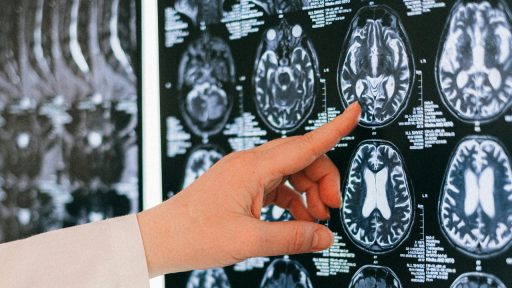
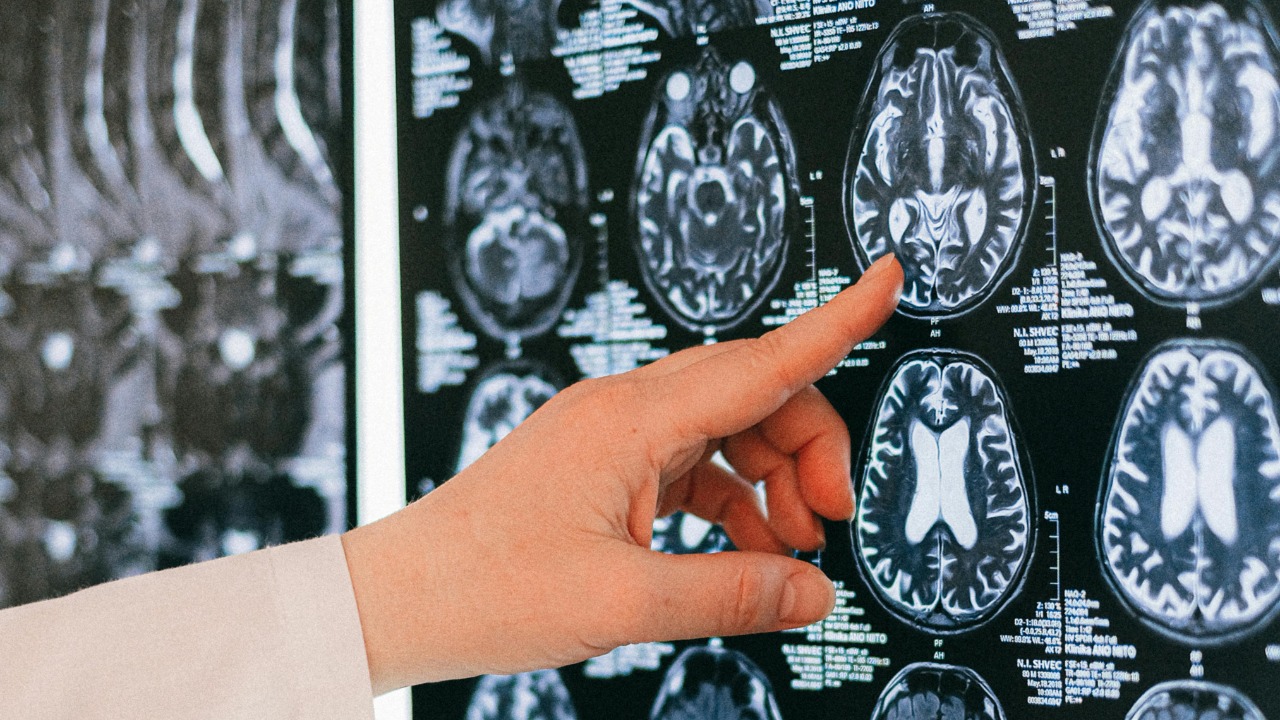

For more than a century, Alzheimer’s disease has been framed as a problem that begins and ends in the brain. Now a growing body of work is challenging that assumption, arguing that the first sparks of the disease may ignite in the liver, the immune system, or other organs long before memory starts to fray. If that is right, the condition that robs people of their minds might actually start with processes unfolding far from the neurons it ultimately destroys.
I see a pattern emerging from these studies: the brain still bears the brunt of the damage, but the earliest triggers and key drivers may lie in the body’s periphery. That shift in perspective is not just semantic. It could redefine how we screen for risk, where we aim new drugs, and why so many brain focused treatments have failed.
The expert who says Alzheimer’s “might not actually be” a brain disease
The most provocative version of this rethink comes from a top researcher who argues that Alzheimer, Might Not Actually Be, a Brain Disease in the narrow sense that its origins and main drivers may sit outside the central nervous system. In that view, the familiar brain plaques are less a root cause and more a downstream sign of a wider biological crisis. The expert points to years of disappointing trials that tried to clear amyloid directly from the brain, alongside evidence that some of the data underpinning the classic amyloid story had been based on fabricated results, as a warning that neurology may have been chasing the wrong target all along, a case laid out in detail in a recent Alzheimer analysis.
In parallel, a popular explainer video has amplified this argument for a wider audience, presenting the case that Alzheimer’s Might Not Actually Be a Brain Disease, Reveals Expert as a turning point that forces medicine to look beyond neurons and synapses. That clip leans heavily on the idea that if the foundational amyloid story is shaky, then the field must be open to models that start in the liver, the immune system, or even the mouth, a message that has spread widely through Illustration of the disease process outside the skull.
From autoimmune reaction to whole body disorder
One of the most developed alternatives reframes the condition as an autoimmune problem that happens to devastate the brain. In this model, Alzheimer, Might Not Be Primarily, a Brain Disease, New Theory Suggests It, Autoimmune Condition that arises when the body’s own defenses misinterpret normal brain proteins as threats. Rather than being simply a disease of toxic buildup, the pathology is cast as a chronic misfire of the immune system within the brain, with microglia and other cells attacking synapses in a misguided attempt at protection, an idea laid out in detail in a Sep report.
That autoimmune framing is echoed and expanded in a companion analysis that explicitly argues Alzheimer, Might Not Be Primarily, a Brain Disease, New Theory Suggests It, Autoimmune Condition rooted in the way the immune system responds to amyloid and other proteins. Rather than treating plaques as inert debris, the work suggests they may be part of a defensive response that spirals out of control, turning a short term protective reaction into a long term assault on neurons, a shift in thinking that is captured in a detailed Summary of the theory.
Evidence that toxic proteins come from outside the brain
If the disease is not born in the brain, where might it start? A series of experiments in mice suggests that the notorious amyloid proteins can be produced in the body and then carried into the brain by the bloodstream. In one set of studies, Scientists from Canada and China engineered animals so that only their bodies, not their brains, made human amyloid, then showed that their healthy partners, surgically joined to share blood, all developed Alzheimer like symptoms, a striking result described as part of a broader Complex Understanding of the disease.
Those findings were reinforced by work showing that amyloid made in the body can cross into the brain and seed plaques. In one report, researchers tracked how the proteins had traveled into the brains of normal mice and developed into plaques causing a variety of Alzheimer like symptoms, evidence that the toxic material did not have to originate in neurons themselves, as detailed in a focused Oct analysis. A companion piece described how They were then surgically connected to their partner, who did not carry the gene and therefore should not develop Alzheimer, yet still went on to accumulate plaques, a key observation laid out in a They focused report.
The liver and blood as hidden players
Among peripheral organs, the liver has emerged as a prime suspect. More than a decade ago, researchers proposed that the protein that forms plaques in the brains of people with dementia might actually be produced elsewhere, pointing to experiments in which a cancer drug called Gleevec, which cannot cross the blood brain barrier, appeared to lower amyloid by acting in the body rather than the brain, a provocative idea described in a Mar report that also highlighted how They chose the drug Gleevec precisely because of that limitation.
More recently, a Landmark study presents evidence Alzheimer disease begins in the liver, arguing that amyloid linked lipoproteins made in that organ can travel through the circulation and deposit in the brain as plaques, a prominent physiological sign of Alzheimer, a case laid out in detail By Rich Haridy. That line of thinking has been strengthened by population work showing that Liver function may be important in Alzheimer disease risk, with a new study reporting a strong link between altered liver enzymes, including alanine aminotransferase and aspartate aminotransferase (AST), and dementia, a relationship described in detail in a Jul analysis.
Immune cells, infections and the periphery’s influence
Beyond the liver, the immune system is increasingly seen as a bridge between body and brain in dementia. Work on peripheral blood has shown that AD has been considered as a central nervous system disease, yet there is a growing appreciation of how circulating amyloid and related proteins interact with tau tangles in the brain, another crucial pathologic factor contributing to the progression of the condition, a relationship unpacked in a detailed Jan review. Infections outside the brain also appear to matter, with one Abstract noting that Alzheimer disease affects approximately 4.5 m people in the U.S. and arguing that peripheral infections may be a modifiable risk factor for AD, a point made explicitly in a Alzheimer focused summary.
At the cellular level, attention has turned to myeloid cells that patrol the body and then influence the brain. One line of work highlights how TREM1 is almost exclusive to macrophages and to certain other related immune cells, collectively called myeloid cells, that participate in inflammatory cascades in the periphery and, resultingly, in the brain, a connection described in a Sep insight. A broader theoretical piece argues that Clinical specialization has helped fragment knowledge, and asks whether Alzheimer might be better understood as a liver disease of the brain, suggesting that therapies could either reduce hepatic amyloid production or increase peripheral clearance, an argument laid out in an Abstract that explicitly calls for reconnecting neurology with systemic medicine.