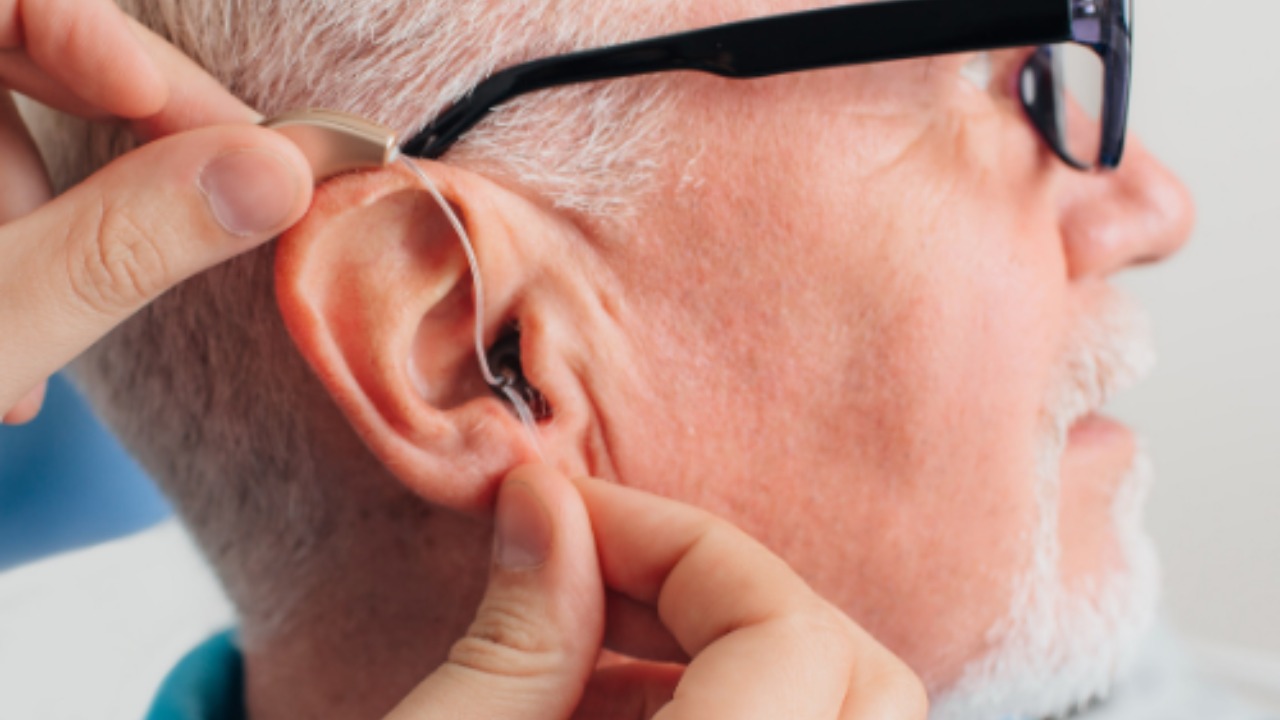

Older adults whose hearing improved meaningfully with hearing aids had a lower risk of developing probable dementia during nearly seven years of follow-up, according to a large international study.
Researchers analyzed information from 61,089 adults aged 55 and older who had hearing impairment. Participants came from seven aging studies covering 33 countries across Asia, Europe, North America and Latin America.
During an average follow-up period of 6.5 years, 8,911 participants developed probable dementia. People who used hearing aids had a 9 percent lower dementia risk than participants with hearing impairment who did not use them. The association was stronger among users who said the devices improved their hearing well: that group had a 14 percent lower risk.
Participants who reported little improvement from their hearing aids did not experience a statistically significant reduction in risk.
That distinction is one of the study’s most important findings. The possible benefit was not associated merely with owning or occasionally wearing a device. It appeared to depend on whether the hearing aid effectively improved communication in daily life.
The Study Followed More Than 61,000 People
The research was led by investigators from the University of Hong Kong and Shandong University, working with scientists from institutions in several countries.
Participants were drawn from China, South Korea, the United Kingdom, the United States, Ireland, Mexico and other European countries. This broad geographic reach allowed the researchers to examine hearing-aid use in populations with different healthcare systems, incomes and levels of access to hearing services.
Everyone included in the analysis was at least 55 years old and had reported hearing impairment. Researchers compared people who used hearing aids with those who did not and then examined who developed probable dementia during follow-up.
The study was published in Cell Reports Medicine. Its main conclusion was that effective hearing-aid use was associated with a lower risk of probable dementia across the multinational population.
Why “Nearly Seven Years” Is More Accurate
Some coverage describes the research as a seven-year study.
The actual average follow-up was 6.5 years. Individual participants may have been observed for shorter or longer periods depending on the aging cohort from which their information came.
Rounding 6.5 years to seven is understandable in a headline, but the average should be stated precisely when discussing the results.
The researchers were also studying the development of “probable dementia.” The diagnosis was determined using the methods available within each contributing cohort rather than one identical clinical examination conducted for every participant worldwide.
That approach made the large international analysis possible, but it is one reason the findings should be interpreted as strong observational evidence rather than a definitive clinical trial result.
Good Hearing Improvement Was Linked to the Largest Benefit
Overall hearing-aid use was associated with a 9 percent reduction in probable dementia risk.
Among participants who said their devices provided good hearing improvement, the reduction was 14 percent compared with hearing-impaired adults who did not use hearing aids.
Users who reported poor improvement did not show a clear benefit.
Several practical issues can determine whether a hearing aid works well. The device must match the person’s degree and type of hearing loss. It also needs proper programming, a comfortable fit and adjustment for the environments in which the person has difficulty hearing.
Follow-up care may be needed to correct feedback, discomfort, excessive loudness or problems understanding speech in background noise.
A hearing aid left in a drawer because it is uncomfortable or ineffective cannot provide the same potential benefit as one that is properly fitted and used consistently.
The study therefore supports hearing rehabilitation rather than simply distributing devices without assessment or support.
The Research Does Not Prove Hearing Aids Prevent Dementia
The study was observational.
Researchers compared outcomes among people who had already chosen to use or not use hearing aids. They did not randomly assign all 61,089 participants to receive a device or remain untreated.
That means other differences between the groups may have influenced the results.
Hearing-aid users may have had better access to healthcare, greater income, stronger family support or more motivation to manage chronic health conditions. They may also have differed in education, social activity or general health.
Researchers adjusted their analysis for several relevant factors, but an observational study cannot remove every possible source of confounding.
The authors therefore did not conclude that hearing aids directly prevent dementia. They said effective hearing-aid use was associated with lower risk and called for future studies using objective hearing tests, real-world usage data and more representative populations.
Randomized Evidence Has Produced a More Complicated Picture
The strongest way to determine whether a treatment causes an outcome is through a randomized controlled trial.
The major ACHIEVE trial enrolled 977 adults aged 70 to 84 with untreated hearing loss. Participants were randomly assigned to receive a comprehensive hearing intervention or a health-education program and were followed for three years.
Across the entire group, hearing treatment did not significantly reduce the overall rate of cognitive decline.
A different result appeared among participants who entered the trial with a higher risk of dementia and faster cognitive decline. Within that group, hearing intervention reduced the rate of cognitive decline by almost 50 percent compared with health education.
The trial suggests that hearing treatment may provide the greatest cognitive benefit to people who already have several risk factors, rather than producing the same effect in every older adult.
It also illustrates why headlines claiming that hearing aids definitively prevent dementia go beyond the available evidence.
Why Hearing Loss Could Affect the Brain
Researchers have proposed several possible pathways connecting hearing loss with cognitive decline.
When speech becomes difficult to hear, the brain must devote more attention to decoding incomplete or distorted sounds. This increased cognitive effort may leave fewer mental resources available for memory, comprehension and other tasks.
Hearing difficulty may also cause people to withdraw from conversations, group activities and public settings. Reduced social participation can contribute to loneliness and isolation, both of which are associated with poorer cognitive health.
A third possibility involves changes in brain structure and auditory stimulation. When the brain receives less meaningful sound over a long period, networks involved in hearing, communication and cognition may function differently.
There may also be shared underlying causes. Cardiovascular disease, aging and other biological processes could contribute to both hearing loss and dementia without one condition directly causing the other.
These explanations are not mutually exclusive, and researchers are still determining how much each mechanism contributes.
Hearing Loss Is Considered a Modifiable Dementia Risk Factor
The 2024 Lancet Commission identified hearing loss as one of 14 potentially modifiable factors associated with dementia.
The commission estimated that hearing loss accounts for roughly 7 percent of dementia cases at the population level, although such estimates do not mean that hearing loss is the sole cause in an individual patient.
A modifiable risk factor is something that may potentially be treated or reduced. It is not a guarantee that addressing the factor will prevent disease.
Age, genetics and many medical conditions also contribute to dementia risk. No hearing aid can eliminate those influences.
Treating hearing loss is nevertheless attractive as a prevention strategy because it is relatively safe and can improve communication and daily functioning even when its long-term effect on dementia remains uncertain.
Access to Hearing Aids Varied Sharply Between Countries
The multinational study found major differences in hearing-aid use.
About 20 percent of hearing-impaired participants in high-income countries reported using a hearing aid. In middle-income countries, only 2.6 percent did so.
The association with lower dementia risk appeared stronger in middle-income settings, where access was more limited.
Researchers suggested that expanding affordable hearing services could have significant public-health value in these countries. However, access involves more than making devices available.
People may need hearing assessments, fitting, counseling, maintenance, batteries or charging equipment and follow-up adjustments. Cost, stigma and shortages of trained hearing professionals can all discourage consistent use.
A cheap device that does not improve speech understanding may provide little practical value and may quickly be abandoned.
Some Groups Appeared to Benefit More
The association between hearing-aid use and lower probable dementia risk was more pronounced among women, unmarried participants and people with lower educational attainment.
The researchers suggested that effective hearing rehabilitation may be particularly important for socially vulnerable adults.
An unmarried person living alone, for example, may have fewer daily conversations and less immediate support when hearing problems begin interfering with communication.
Better hearing could make social interaction, healthcare appointments and community participation easier. Those changes might help reduce isolation and support cognitive health.
Subgroup findings should still be interpreted cautiously. They can identify patterns worth studying but do not prove that every person within one group receives a larger biological benefit.
Hearing Aids Should Not Be Viewed as Dementia Medicine
Hearing aids are designed to improve access to sound and speech.
They are not approved drugs for preventing or treating Alzheimer’s disease or other forms of dementia.
A person should not purchase an unsuitable device solely because of a headline about dementia risk. Proper hearing care begins with identifying whether hearing loss is present and determining its severity and possible cause.
Sudden hearing loss, hearing loss affecting only one ear, ear pain, drainage, severe dizziness or rapidly worsening symptoms may require medical evaluation rather than an immediate over-the-counter purchase.
For ordinary gradual age-related hearing difficulty, an audiologist or another qualified hearing professional can assess speech understanding, hearing thresholds and individual communication needs.
Signs That a Hearing Assessment May Be Needed
Hearing loss often develops gradually, so the person experiencing it may not notice the change at first.
Common signs include repeatedly asking others to speak again, increasing television volume, struggling in restaurants or group conversations and feeling that people are mumbling.
Some people begin avoiding phone calls, meetings or social events because following speech has become tiring.
Family members may notice the problem before the individual does.
A formal assessment can distinguish hearing loss from problems caused by earwax, medication effects, infection or other medical conditions. It can also establish a baseline for future comparison.
The NIH-funded ACHIEVE researchers recommend that older adults have their hearing checked regularly and properly address identified problems for general health and well-being.
The Quality of the Fitting Matters
The new study suggests that the success of hearing rehabilitation may matter more than the simple presence of a device.
A professional fitting can account for the frequencies at which hearing has declined, rather than amplifying every sound equally.
Users may require time to adapt because sounds that have been absent for years can initially seem sharp or distracting.
Follow-up appointments allow the device to be adjusted based on real experiences at home, work, restaurants and family gatherings.
Communication strategies can also help. Facing the listener, reducing background noise, improving lighting and asking speakers to communicate clearly may work alongside hearing technology.
The goal is not merely making sounds louder. It is improving meaningful understanding and allowing the person to participate more comfortably in daily life.
The Main Takeaway
A multinational study of 61,089 hearing-impaired adults found that hearing-aid use was associated with a 9 percent lower risk of probable dementia over an average of 6.5 years.
Among people who said their hearing aids provided good improvement, the associated reduction reached 14 percent. Users who reported poor improvement did not show a significant reduction.
The research does not prove that hearing aids directly prevent dementia because it was observational.
Randomized evidence has also been mixed. The ACHIEVE trial did not find a cognitive benefit across all participants, although it recorded nearly 50 percent slower cognitive decline among older adults who entered the study at greater risk.
Taken together, the findings strengthen the case for identifying and effectively treating hearing loss, particularly among vulnerable older adults.
Even without a guaranteed dementia-prevention effect, properly fitted hearing aids can improve communication and make it easier to remain socially engaged. The potential connection with healthier cognitive aging gives people another reason not to dismiss hearing loss as an unavoidable inconvenience of getting older.