
California’s battle over autonomous trucking has moved from the Legislature to the courtroom.
Teamsters California has sued the state over newly adopted regulations that allow companies to apply for permits to test and eventually deploy heavy-duty self-driving trucks on public roads. The union argues that the California Department of Motor Vehicles failed to conduct the economic analysis required for a regulatory change that could affect hundreds of thousands of driving jobs and attract hundreds of millions of dollars in autonomous-trucking investment.
The lawsuit does not simply argue that autonomous trucks are unsafe or unpopular. Its central legal claim is procedural: the Teamsters say California underestimated the regulations’ economic impact so dramatically that the DMV avoided a more rigorous review required for a “major regulation.”
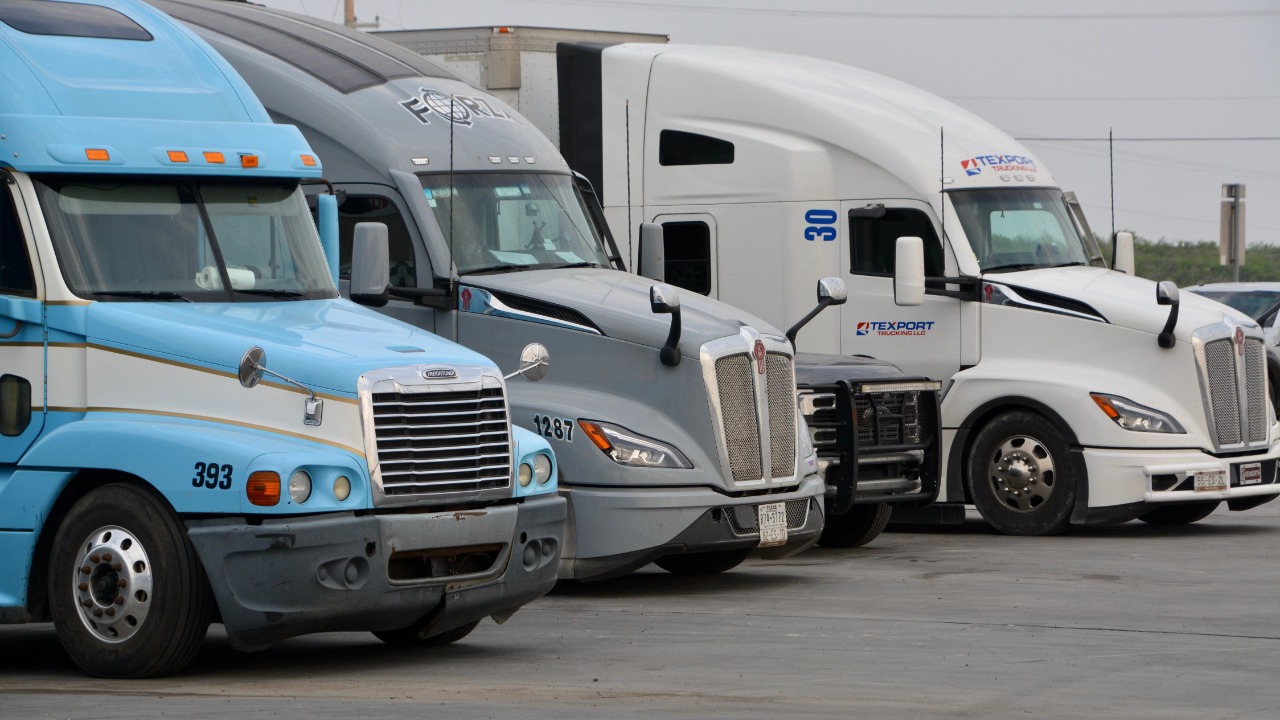
At the same time, the case has become a much larger fight over automation, road safety and whether California should allow 80,000-pound commercial vehicles to eventually operate without a human driver.
California Just Opened the Door to Heavy-Duty Autonomous Trucks
Until this year, California prohibited autonomous vehicles with a gross vehicle weight rating above 10,000 pounds from operating under its general autonomous-vehicle testing framework.
That changed on April 28, 2026, when the DMV adopted a broad overhaul of the state’s AV regulations. The new rules remove the prohibition on heavy-duty autonomous vehicles and allow manufacturers to seek permits for testing and, eventually, commercial deployment.
The full regulatory framework can be reviewed through the California DMV’s autonomous-vehicle regulations announcement.
The rules do not allow a company to place an untested driverless semi directly into commercial service.
Manufacturers must begin testing with a human safety driver. Heavy-duty autonomous vehicles must then complete at least 500,000 miles during that phase before progressing to driverless testing, followed by another 500,000 miles before a company can seek commercial deployment. Manufacturers must also submit a structured safety case covering the vehicle’s hardware, software and operational procedures.
That phased structure is central to the state’s argument that California is regulating autonomous trucks rather than simply unleashing them.
The Teamsters Say California Skipped a Required Economic Review
The lawsuit, filed in Alameda County Superior Court, challenges how the DMV calculated the economic consequences of the regulations.
According to the union, the DMV estimated that the new rules would impose approximately $5.8 million in costs, largely associated with reporting and regulatory compliance. That figure kept the rule below the threshold that would have triggered a Standardized Regulatory Impact Assessment, or SRIA.
The Teamsters argue that this calculation ignored much larger investments that autonomous-trucking companies would have to make when entering California.
Their complaint estimates direct first-year costs approaching $288 million and indirect economic effects that could raise the total to nearly $576 million. If those estimates are accepted, the rules would have qualified for the more intensive economic analysis the union says state law requires.
The Teamsters are asking the court to invalidate the regulations, stop the DMV from enforcing them and require the state to conduct the fuller review.
CBS Sacramento provides a summary of the filing and its economic argument in its coverage of the Teamsters’ lawsuit against the California DMV.
The Union Says More Than 200,000 Employee Trucking Jobs Are at Risk
Employment is the political force behind the lawsuit.
The Teamsters claim driverless-truck deployment could eventually eliminate more than 200,000 employee semi-truck driving jobs in California. When self-employed drivers are included, the union argues that the number of potentially affected workers could approach or exceed 400,000.
Those numbers should be understood as the union’s projection, not as a confirmed forecast that 400,000 workers will lose their jobs.
Autonomous trucking companies may initially focus on long-haul highway segments while humans continue handling loading, local delivery, maintenance, remote operations and difficult urban routes. Automation could therefore change the structure of trucking employment before it eliminates every driving role.
Still, the Teamsters view the technology as an existential labour threat. Their broader position is laid out in the union’s autonomous-vehicle campaign, which calls for trained human operators to remain inside commercial autonomous vehicles.
Newsom Has Already Vetoed Human-Driver Requirements Twice
The lawsuit follows years of political conflict between organized labour and Governor Gavin Newsom’s administration.
In both 2023 and 2024, lawmakers advanced legislation that would have required a trained human safety operator inside autonomous trucks weighing more than 10,000 pounds.
Newsom vetoed the 2024 version, AB 2286. In his veto message, he argued that California should rely on DMV regulation rather than impose a statutory requirement for a human operator. He also noted that dozens of other U.S. jurisdictions had already permitted heavy-duty autonomous-vehicle testing.
The governor’s full explanation is available in his AB 2286 veto message.
For the Teamsters, the new DMV regulations effectively accomplish through administrative rulemaking what the union had repeatedly tried to prevent through legislation.
That is why the lawsuit is as much about who gets to decide the future of trucking as it is about the technical wording of an economic-impact assessment.
California Says Its Rules Include Strong Safety Controls
The DMV describes its 2026 framework as the most comprehensive autonomous-vehicle regulatory system in the country.
In addition to the million-mile progression required before heavy-duty commercial deployment, the rules establish stronger reporting requirements, remote-operator standards and enforcement powers.
Law enforcement can issue notices when autonomous vehicles commit moving violations. Companies must provide two-way communication with first responders and respond within 30 seconds. Local emergency officials can create temporary geofenced exclusion zones during emergencies, and the DMV can restrict an operator’s fleet size, geography, speed or weather conditions when safety concerns arise.
Heavy autonomous trucks must also stop at California Highway Patrol weigh stations and remain subject to applicable state and federal commercial-vehicle requirements.
The existence of safeguards does not settle the safety debate. Long-distance autonomous trucks have accumulated far less public-road experience in California than conventional commercial vehicles, and performance in one state or operating environment does not automatically establish safety everywhere.
Self-Driving Trucks Are Already Operating Elsewhere
California is not deciding whether autonomous trucking exists. It is deciding whether companies already developing the technology elsewhere can expand into one of America’s largest freight markets.
Aurora, one of the most prominent autonomous-trucking developers, has already operated driverless commercial trucks in Texas. The Teamsters’ complaint specifically points to companies capable of long driverless operations and argues that California represents a major future market.
Autonomous-trucking companies see highway freight as one of the most attractive applications for driverless technology. Long-haul routes are relatively structured, trucks spend substantial time on controlled-access highways, and commercial fleets can closely manage maintenance and operating conditions.
The economic appeal is equally clear. A driverless system could theoretically operate for longer periods without mandatory rest breaks, ease driver shortages on some routes and reduce labour costs.
Those same advantages explain why unions are fighting the technology so aggressively.
Safety and Employment Are Becoming Separate Questions
The political debate often treats autonomous trucks as one question: are they safe enough to replace drivers?
In reality, two different issues are developing.
The first is technical safety. Regulators need evidence showing how autonomous trucks behave around construction, emergency vehicles, bad weather, tire failures, unusual cargo and unpredictable human drivers.
The second is labour policy. Even if a driverless truck eventually proves safer on a particular highway route, policymakers still have to decide what happens to workers whose jobs become unnecessary.
The Teamsters argue California should not allow technology companies to capture the economic benefits while workers and communities absorb the disruption.
Supporters of autonomous trucking respond that protecting every existing job indefinitely could delay technologies that might reduce crashes, improve freight efficiency and lower transportation costs.
The lawsuit will not resolve that philosophical disagreement. It may determine whether California followed the correct legal process before choosing a side.
The Court Could Delay California’s Driverless-Truck Rollout
The Teamsters want an Alameda County judge to set aside the regulations and prevent the DMV from enforcing them.
If the court agrees that California should have performed a major economic-impact assessment, the state could be forced to redo part of the rulemaking process. That could significantly delay autonomous-truck testing and deployment even if the underlying technology is eventually allowed.
The DMV, Department of Finance and other state defendants have declined to discuss the allegations in detail while litigation is pending.
For autonomous-vehicle companies, the case creates uncertainty around one of the most important freight markets in the United States. For organized labour, a delay could provide time to push for new legislation or wait for a future California administration that may be more sympathetic to mandatory human operators.
The fight is therefore bigger than whether a robotic truck can navigate Interstate 5.
California is confronting a question that will spread far beyond trucking as artificial intelligence and automation become more capable: when technology can perform work previously done by hundreds of thousands of people, how much economic disruption should regulators examine before allowing the transition?
The Teamsters are asking a court to force California to answer that question before driverless semis become a normal sight on the state’s highways.