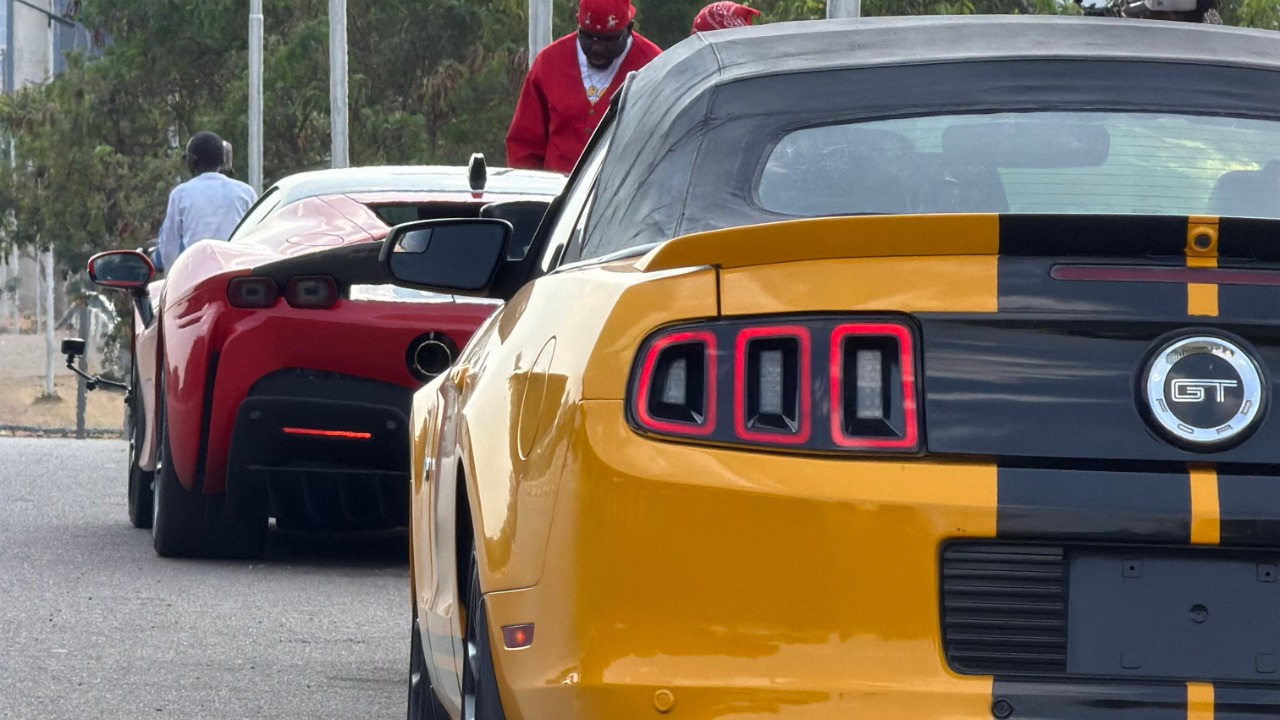

A convoy of high-performance supercars has ended with police intervention after motorists reported dangerous driving on one of Britain’s busiest motorways during peak travel time.
Thirteen supercars, collectively valued at more than £2.5 million, were seized after the group was reported travelling along the M11 during the Tuesday afternoon rush hour. The remarkable line-up reportedly included seven Lamborghinis, four Audi R8s, a Ferrari and a Porsche.
The incident attracted attention not simply because of the value of the vehicles involved, but because witnesses described behaviour including excessive acceleration, sudden braking, vehicles bunching together and alleged use of the hard shoulder to pass other motorists.
For drivers already navigating busy peak-time motorway traffic, the presence of a large convoy of powerful cars allegedly making unpredictable manoeuvres created an obvious safety concern.
Supercar Convoy Joined the M11 During Rush Hour
Reports indicate that the group entered the M11 from London at approximately 4.20pm on Tuesday, July 28, a time when commuter traffic was already building.
Motorists subsequently contacted police over the way the vehicles were being driven. Witnesses reportedly described cars accelerating to excessive speeds before braking sharply and gathering closely together, disrupting the normal flow of traffic. There were also allegations that some members of the convoy used the hard shoulder to undertake other vehicles.
That allegation is particularly significant because the official UK Highway Code motorway guidance states that motorists must not use the hard shoulder except in an emergency, when directed by police or traffic officers, or where signs specifically indicate that the shoulder is open as an additional traffic lane.
The issue therefore extends beyond the spectacle of expensive cars travelling together. On a motorway carrying vehicles at high speed, sudden changes in speed, unexpected lane movements and restricted stopping distances can rapidly increase collision risks.
Seven Lamborghinis Among Cars Taken Off the Road
The scale of the police action made the incident particularly unusual.
According to reports, officers ultimately seized all 13 high-performance vehicles. Seven were Lamborghinis, while another four were Audi R8s. A Ferrari and a Porsche completed the convoy. Their combined estimated value was reported to exceed £2.5 million.
Each driver was reportedly given an anti-social driving warning following the incident.
The value or performance of a vehicle does not alter the basic rules that apply to motorists. Sergeant Will Willsher of Essex Police stressed that speed limits exist for public safety and that traffic laws apply equally to everyone. Police said the reported behaviour potentially placed other motorway users at serious risk, particularly because it occurred during peak travel time.
Essex Police has repeatedly taken a strong position on dangerous driving involving high-performance vehicles. In an earlier M11 investigation, the force appealed for footage after several luxury vehicles were reportedly seen swerving between lanes and disrupting traffic. Police said at the time that public roads should not be treated as playgrounds and warned that dangerous driving can have fatal consequences.
Drivers wanting to understand the force’s wider approach to these incidents can visit the Essex Police road safety information and appeals, where officers regularly highlight speeding, careless driving and other behaviours associated with serious collisions.
Why Peak-Time Motorway Driving Raises the Stakes
A supercar capable of enormous acceleration is not necessarily dangerous by itself. Risk comes from how any vehicle is driven and from the environment surrounding it.
Rush-hour motorway conditions can involve changing traffic speeds, vehicles merging at junctions, limited gaps between cars and sudden congestion. When one vehicle brakes unexpectedly, several vehicles behind it may also need to react immediately.
The challenge becomes greater when multiple cars are travelling together.
Convoy driving can encourage participants to concentrate on maintaining their position within the group instead of responding independently to surrounding traffic. If cars accelerate together, change lanes together or attempt to avoid becoming separated, ordinary motorway users may find those movements difficult to anticipate.
The government’s Highway Code guidance exists specifically to create predictable behaviour between road users. It explains that many rules identified with “MUST” or “MUST NOT” reflect legal requirements and that breaches can result in penalties ranging from fines and licence points to disqualification in serious cases.
Predictability is one of the foundations of motorway safety. Other drivers need to be able to reasonably anticipate where surrounding vehicles are going and how quickly they are travelling.
Police Powers Against Anti-Social Driving Are Significant
The seizure also highlights how police can respond when driving behaviour moves beyond an ordinary traffic infringement and becomes anti-social or potentially dangerous.
UK legislation gives police powers relating to vehicles being used in ways that cause, or are likely to cause, alarm, distress or annoyance. The legal framework surrounding anti-social vehicle use has recently been addressed again through the Crime and Policing Act 2026, which includes provisions concerning the seizure of vehicles used in such circumstances.
Essex Police has already used anti-social driving warnings in other enforcement operations. Following a major Southend car-meet investigation, 24 drivers received a combined 130 penalty points, while three new drivers were expected to lose their licences. Each sentenced driver also received a warning that repeated anti-social behaviour could lead to immediate vehicle seizure.
Those cases demonstrate why motorists participating in organised car gatherings or convoys need to distinguish enthusiasm for performance vehicles from behaviour that interferes with public roads.
Dashcam Footage Could Play an Important Role
The M11 investigation may not necessarily finish with the seizure of the vehicles.
Police appealed for additional witnesses and requested dashcam or video footage from anyone who observed the convoy. Anyone providing information was asked to quote incident 955 of July 28.
Dashcams have increasingly become valuable evidence in road-policing investigations because they can capture vehicle movements, registration plates and the sequence of events surrounding an alleged offence.
Essex Police also supports the Extra Eyes initiative, through which footage of irresponsible, dangerous or illegal road behaviour can be submitted for review by roads-policing investigators. Details of the scheme are referenced through Essex Police’s M11 road-policing guidance.
A Spectacular Convoy With a Costly Ending
Seeing thirteen Lamborghinis, Audi R8s, Ferraris and Porsches travelling together would normally attract considerable attention from motoring enthusiasts. This convoy attracted attention for a very different reason.
What might have begun as a group drive resulted in more than £2.5 million worth of performance cars being taken off the motorway by police.
The incident also reinforces a straightforward principle. Performance, price and prestige provide no exemption from the rules governing public roads. Powerful cars can be enjoyed legally, but busy motorways particularly during rush hour leave little margin for unpredictable driving.
For the motorists who witnessed the M11 convoy, the concern was therefore not what the drivers were driving. It was how those vehicles were allegedly being driven around everyone else.