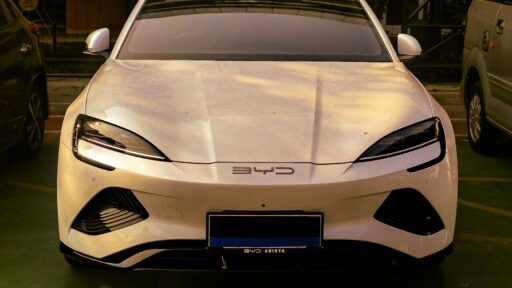
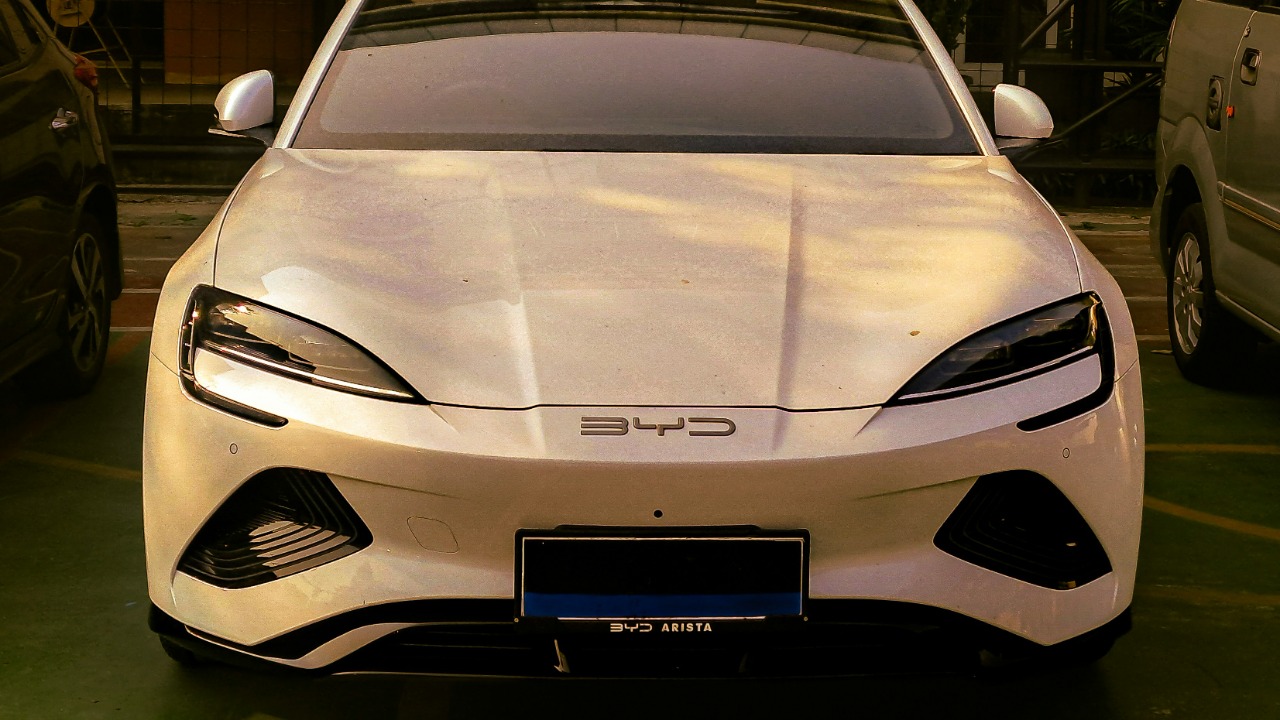

Tesla may still be the first company many drivers associate with electric cars, but the global sales race has changed. In 2026, China’s BYD is emerging as the most powerful electric-vehicle brand worldwide.
BYD ended 2025 with more than 4.6 million new-energy vehicle sales, including battery-electric cars and plug-in hybrids. More than one million of those vehicles were sold outside China, marking a major step in the company’s transformation from a domestic manufacturer into an international automotive force. BYD’s own global sales announcement identifies it as the world’s leading new-energy vehicle seller.
The company’s growth does not mean it dominates every region or every definition of the EV market. Tesla briefly moved ahead in global battery-electric deliveries during the first quarter of 2026, while BYD’s totals also include plug-in hybrids. Across the broader plug-in market, however, BYD remains the clear volume leader and is expanding rapidly in Europe, Southeast Asia, Latin America and other regions.
BYD Sold More Than 4.6 Million Vehicles in 2025
BYD reported 4,602,436 vehicle sales during 2025.
That figure included approximately 2.26 million fully electric passenger cars, with the rest consisting mainly of plug-in hybrids. Its battery-electric sales alone were enough to make BYD the world’s largest all-electric car manufacturer over the full year, overtaking Tesla’s annual total.
The broader global plug-in ranking was even less competitive. Market data compiled by Autovista found that BYD recorded nearly four million plug-in registrations in 2025 and captured approximately 19 percent of the worldwide EV market. The Autovista global brand analysis placed it well ahead of its nearest competitor.
This distinction is important because “EV” can refer either only to battery-electric vehicles or to the broader category that includes plug-in hybrids.
Tesla sells only battery-electric cars. BYD sells both battery-electric vehicles and plug-in hybrids, which it markets as new-energy vehicles. When only pure electric cars are counted, the competition remains close. When all plug-in vehicles are included, BYD has a much larger lead.
The Company Offers Far More Models Than Tesla
One reason for BYD’s rapid growth is the size and variety of its product range.
Tesla relies primarily on the Model 3 and Model Y for most of its global volume. BYD offers small hatchbacks, sedans, family crossovers, large SUVs, pickup trucks and premium vehicles across several brands and price levels.
The compact Seagull has become particularly important in markets where affordability matters more than extreme range or performance. At the other end of the market, BYD operates premium brands such as Denza, Fang Cheng Bao and Yangwang.
This broad portfolio allows the company to compete with inexpensive city cars, conventional family vehicles and high-end luxury models at the same time.
The International Energy Agency reported that the BYD Seagull alone represented approximately 3 percent of global battery-electric car sales in 2025, placing it among the world’s five highest-volume electric models. The IEA’s Global EV Outlook 2026 shows how affordable Chinese models are becoming increasingly important to worldwide adoption.
BYD Controls Much of Its Own Supply Chain
BYD began as a battery company before expanding into automobiles.
That history gives it an important advantage. The company manufactures its own battery cells, electric motors, power electronics, semiconductors and many other key components.
Greater vertical integration can reduce exposure to suppliers, improve manufacturing coordination and give BYD more control over costs. It also allows the company to spread research and factory investment across millions of vehicles.
Its best-known battery product is the Blade Battery, which uses lithium iron phosphate chemistry. LFP batteries generally cost less and avoid nickel and cobalt, although they can store less energy per kilogram than some nickel-based alternatives.
BYD has continued developing charging and battery technology. In 2026, the company announced a second-generation Blade Battery and a high-speed charging system designed to significantly reduce charging times, though real-world availability depends on compatible vehicles and charging stations. The company’s latest technology claims can be reviewed through its official BYD news releases.
Overseas Sales Have Become the Main Growth Story
BYD’s rise began in China, the world’s largest electric-car market. Its future growth increasingly depends on international buyers.
The company sold more than one million passenger vehicles and pickups outside China during 2025, an increase of approximately 145 percent from the previous year. It reported a presence across 119 countries and regions, with stronger performance in markets including Brazil, Australia, the United Kingdom and Singapore.
In May 2026 alone, BYD reported more than 160,000 overseas vehicle sales, a new monthly record for the company. Its total monthly sales reached more than 383,000 vehicles. The figures are available through BYD’s May 2026 sales announcement.
The International Energy Agency found that more than half of Chinese EV exports in 2025 went to markets outside Europe and the United States. Chinese electric-car sales grew especially quickly in Southeast Asia, Latin America and the Middle East. The IEA’s manufacturing and trade analysis also notes that BYD has invested in dedicated vehicle-transport ships to support this overseas expansion.
Europe Is Becoming an Important Test
Europe is one of the most difficult and valuable markets for BYD.
The region contains strong established manufacturers, demanding safety standards and increasing political concern about Chinese state support and low-priced imports. The European Union has imposed additional tariffs on certain China-made battery-electric vehicles following an anti-subsidy investigation.
Despite those barriers, BYD’s European registrations are rising quickly.
European Automobile Manufacturers’ Association data showed 135,307 BYD registrations across the wider European market during the first five months of 2026. That represented growth of more than 145 percent compared with the same period in 2025. In May alone, its registrations increased by approximately 137 percent year over year. The figures appear in the ACEA May 2026 registration report.
BYD is also building vehicles locally to reduce shipping expenses and tariff exposure. European production can help the company present itself as a long-term regional manufacturer rather than only an importer.
Its European success is still developing. BYD remains much smaller there than Volkswagen, Stellantis, Renault and other established groups. The growth rate, however, shows that the brand is no longer a marginal participant.
Competitive Prices Are a Major Advantage
BYD’s vehicles are often priced below comparable products from established European, Japanese and American manufacturers.
Lower prices do not come from one factor alone. China has an enormous battery supply chain, strong component manufacturing, intense domestic competition and large-scale production capacity.
BYD’s internal manufacturing also limits the margins paid to outside suppliers.
This allows the company to sell small EVs in price categories largely abandoned by several Western brands. It can then use the same technology across larger and more expensive models.
Affordability is becoming increasingly important as the global EV market moves beyond wealthy early adopters. The IEA estimates that worldwide electric-car sales could reach 23 million units in 2026, representing close to 30 percent of all new-car sales. Its Global EV Outlook executive summary identifies lower prices and wider model availability as important drivers of future growth.
BYD Is Not Equally Popular Everywhere
Calling BYD the world’s most popular EV brand requires context.
Its largest market is still China, where the company benefits from strong brand recognition, an extensive dealership network and a mature electric-vehicle supply chain.
BYD does not sell passenger cars in the United States, where tariffs and national-security rules create major barriers for Chinese automakers. Tesla therefore remains far more visible to American consumers.
The company also faces pressure at home. China’s car market has become intensely competitive, with manufacturers frequently lowering prices and releasing updated models. Geely, Chery, SAIC, Leapmotor, Xiaomi and other companies are challenging BYD across several segments.
Tesla also remains a major rival in pure battery-electric sales. After BYD led the full-year BEV market in 2025, Tesla regained the quarterly lead during the first three months of 2026. The two companies may continue exchanging the top position depending on how the market is measured and which period is used.
Popularity Does Not Automatically Prove Better Quality
High sales volume does not mean every BYD vehicle is superior to every alternative.
Availability, servicing, resale value and software quality differ by country. A model that is inexpensive and well supported in China may have a smaller repair network in a recently entered market.
Buyers should examine local warranty coverage, charging compatibility, crash-test results and replacement-part availability rather than relying only on global sales numbers.
BYD must also establish long-term trust among drivers unfamiliar with Chinese automotive brands. Building factories and opening dealerships can happen quickly, but developing a mature service network takes longer.
The company’s international reputation will depend on how well its vehicles perform after several years of use, particularly in regions with different climates and road conditions.
BYD Is Becoming a Global Automotive Power
BYD is no longer merely a fast-growing Chinese EV company.
It has become the world’s largest plug-in vehicle manufacturer, the 2025 leader in annual battery-electric sales and an increasingly serious competitor in markets far beyond China.
Its advantages are clear: a large model range, control over batteries and components, aggressive pricing and a rapidly expanding international distribution network.
Tesla remains more recognizable in several Western markets and may still lead certain quarterly comparisons of pure electric deliveries. BYD’s broader scale and faster overseas growth, however, make it the brand reshaping the global EV market most dramatically in 2026.
The most significant change is not simply that BYD sells millions of cars. It is that buyers in Europe, Latin America, Southeast Asia and other regions are beginning to consider the company alongside brands they have known for decades.
That transition from Chinese market leader to global mainstream manufacturer is why BYD is quickly becoming the most popular EV brand in the world.