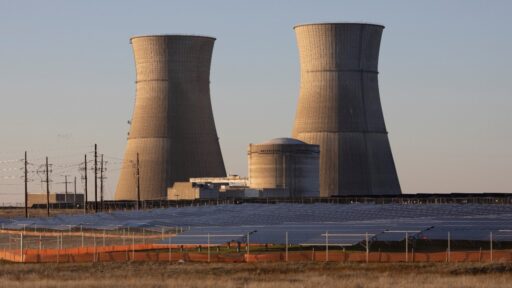
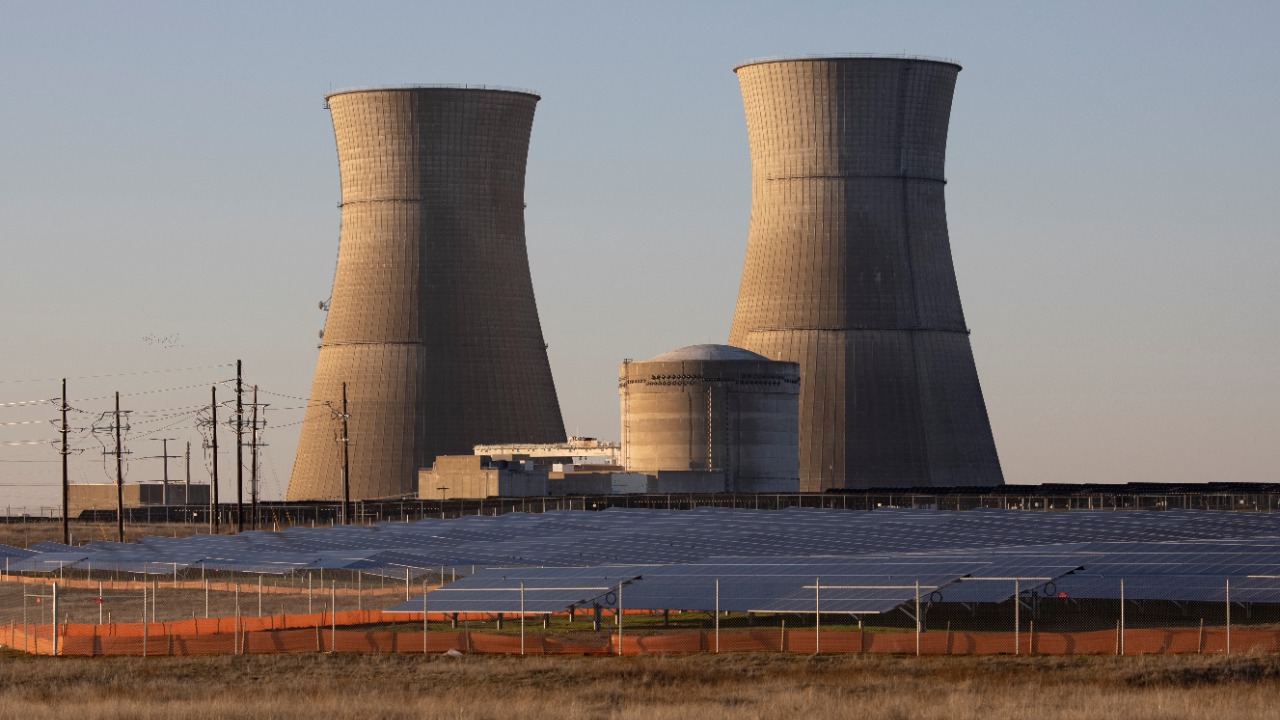

Artificial intelligence has a power problem.
Building more GPUs is only part of the challenge. Those processors need enormous quantities of electricity, and some planned AI data centers require hundreds of megawatts before they can even reach their intended scale.
Now four American nuclear startups believe they have part of the solution.
Antares Nuclear, Valar Atomics, Deployable Energy, and Aalo Atomics have each brought an advanced reactor to criticality in 2026, demonstrating that their reactor cores can sustain controlled nuclear fission reactions. The milestones were achieved as part of an accelerated U.S. push to bring new reactor designs into operation.
The achievement is significant.
But it needs to be understood correctly.
These companies have not suddenly switched on four commercial nuclear plants beside AI data centers.
For several of the projects, the demonstrations were conducted at zero or very low power and were primarily intended to prove that the nuclear physics and reactor designs work.
The difficult next step is turning those demonstrations into reliable, economical power plants.
And that is where the AI industry becomes extremely interested.
Why AI Companies Suddenly Care About Nuclear Power
Modern AI infrastructure consumes electricity on an extraordinary scale.
Thousands of GPUs can operate continuously inside a single facility.
They need electricity for computing.
More electricity for cooling.
Additional power for networking, storage, pumps, backup systems, and other infrastructure.
Meanwhile, connecting a giant new data center to the electrical grid can take years.
Transmission lines need upgrading.
Substations need construction.
Transformers can have long lead times.
New generation capacity may also need to be built.
That creates a serious problem for technology companies spending billions of dollars on AI hardware.
A warehouse filled with GPUs is not particularly valuable if there is not enough electricity available to turn them on.
Small nuclear reactors offer a different possibility:
Bring the power plant to the data center.
The Four Companies That Reached Criticality
The four startups are pursuing different reactor designs, but they share a broad objective: make nuclear energy smaller, faster to deploy, and easier to manufacture than traditional gigawatt-scale nuclear stations.
The first was Antares Nuclear.
Its Mark-0 reactor achieved zero-power criticality at Idaho National Laboratory on June 4. The U.S. Department of Energy said the demonstration confirmed important aspects of the reactor’s nuclear fundamentals and could provide the basis for future reactors capable of producing electricity.
Then came Valar Atomics.
Its Ward 250 reactor achieved criticality at the San Rafael Energy Lab in Utah on June 18, becoming the first DOE-authorized reactor built outside a national laboratory.
Deployable Energy followed with its Unity demonstration reactor at Idaho National Laboratory, reaching criticality at the end of June. DOE announced the achievement on July 1.
Finally, Aalo Atomics brought its Critical Test Reactor to criticality on July 4.
Aalo says it went from groundbreaking to a sustained chain reaction in less than eight months. Its test core is intended to demonstrate the nuclear components that will eventually be used in its commercial reactors.
Four startups had therefore demonstrated operating reactor cores within roughly one month.
For an industry famous for projects taking decades, that pace attracted attention.
What Does ‘Criticality’ Actually Mean?
The word sounds alarming if you are unfamiliar with nuclear engineering.
A reactor becoming “critical” does not mean something has gone wrong.
Criticality means the reactor has reached the point where its nuclear chain reaction becomes self-sustaining.
Uranium atoms split.
Those reactions release neutrons.
Those neutrons cause additional atoms to split.
When the process becomes stable and controlled without requiring an external neutron source, the reactor has reached criticality.
That is fundamental to operating a nuclear reactor.
But reaching criticality does not automatically mean the reactor is producing useful commercial electricity.
Some of these demonstrations were deliberately conducted at extremely low or effectively zero thermal power.
Deployable Energy’s DOE documentation, for example, states that its criticality test was limited to zero-power operation and would not generate electricity or useful thermal energy.
Think of criticality as proving that the engine can successfully start.
You still need to demonstrate that it can operate safely, reliably, economically, and continuously before selling power to customers.
Valar Went One Step Further
Valar Atomics produced one particularly symbolic demonstration.
After reaching criticality, its Ward 250 system progressed beyond the initial zero-power test and reportedly generated electricity that was used to power an Nvidia AI chip.
The amount was tiny compared with the requirements of a commercial AI data center.
But symbolically, it was significant.
Nuclear fission.
Electricity generation.
AI computing.
All connected in one demonstration.
That is essentially the business model many advanced nuclear companies are now pursuing, only at a dramatically larger scale.
Aalo Is Targeting AI Data Centers Directly
Among the four companies, Aalo Atomics has been particularly explicit about its AI ambitions.
Its commercial reactor design is intended to produce approximately 10 megawatts of electricity per reactor, with multiple reactors grouped together into larger power installations.
Aalo describes its planned configuration as an Aalo Pod, combining reactors to produce around 50MW.
The company says its critical test reactor uses a full-scale core representative of the nuclear components that will eventually be used in those commercial 10MW systems.
That size begins to become interesting for data centers.
A 50MW nuclear installation would still be small compared with some hyperscale AI campuses, but multiple modules could theoretically be installed as computing demand increases.
Instead of building one enormous nuclear plant, operators could add reactors in stages.
Aalo Has Already Found an AI Infrastructure Partner
Aalo’s strategy became more concrete when it announced a partnership with AI infrastructure company Crusoe.
The two companies want to develop what they describe as the first nuclear-powered AI factory designed specifically to demonstrate nuclear power with AI workloads.
Crusoe has become a significant player in AI data-center infrastructure, making the partnership more than a theoretical experiment.
The idea is straightforward.
Put modular nuclear generation close to the computing facility.
Generate electricity continuously.
Feed that electricity directly into AI infrastructure.
Avoid some of the transmission constraints associated with pulling hundreds of megawatts from an already crowded regional grid.
If it works commercially, the model could significantly change data-center development.
Antares Is Thinking Smaller
Antares Nuclear is developing reactors that are smaller than many conventional small modular reactor concepts.
Its systems are aimed at approximately 100 kilowatts to 1 megawatt, depending on configuration.
That would not independently power a giant hyperscale data center.
But it could be useful for military bases, remote industrial facilities, isolated computing infrastructure, and other locations where dependable electricity is more important than enormous capacity.
Antares recently raised $470 million to continue developing its technology, including $370 million in equity and $100 million in debt.
The company has also been selected for the U.S. Army’s new nuclear microreactor program.
Its reactor technology is expected to be deployed at Fort Bragg in North Carolina as part of the Army’s broader effort to make military installations less dependent on vulnerable electrical grids.
That gives Antares another potential route toward commercial maturity before widespread data-center deployment.
Deployable Energy Wants a Nuclear Battery
Deployable Energy describes its system as the Unity Nuclear Battery.
The name gives away the concept.
Instead of thinking about nuclear power as an enormous permanent power station, the company wants to build compact reactors more like standardized industrial energy products.
Unity is designed around approximately 1MW of output.
The company describes it as modular, transportable, and suitable for industrial, defense, humanitarian, and remote applications.
Its first demonstration reactor reached criticality at Idaho National Laboratory after roughly 150 days of project execution.
Deployable Energy says testing will continue as it works toward a full-power demonstration in 2027.
Again, the important word is demonstration.
Commercial deployment still requires considerably more work.
Why Not Just Build Normal Nuclear Plants?
Traditional nuclear plants are extremely good at producing enormous quantities of electricity continuously.
The problem is building them.
A conventional nuclear reactor can cost billions of dollars.
Construction can take many years.
Financing is difficult.
Regulatory approval can be lengthy.
Projects can suffer enormous cost overruns.
That timetable does not match the AI industry’s current pace.
A technology company may want another 500MW of computing capacity within two or three years.
Waiting a decade for a traditional nuclear station may not be commercially attractive.
Microreactor and small modular reactor companies are trying to change the economics by shrinking and standardizing the technology.
Factory-Built Nuclear Is the Big Idea
Instead of designing almost every nuclear plant as an enormous custom construction project, advanced reactor startups want to manufacture significant portions of reactors in factories.
Build standardized components.
Repeat the same design.
Ship modules to the site.
Install them.
Then add additional modules when more electricity is required.
The theory resembles what manufacturing did for aircraft, automobiles, and computers.
Repetition should reduce cost.
Workers become familiar with the design.
Supply chains become standardized.
Construction becomes more predictable.
That is the promise.
The industry has not yet demonstrated that it can consistently deliver those cost savings at commercial scale.
Data Centers Could Be the Perfect Early Customer
AI data centers have several characteristics that make them unusually attractive customers for advanced nuclear companies.
First, they need electricity continuously.
Solar panels stop producing at night.
Wind farms produce electricity only when conditions cooperate.
Batteries can smooth those fluctuations, but providing days of backup storage at enormous scale remains expensive.
Nuclear reactors can operate around the clock.
Second, AI companies can afford expensive electricity if it allows them to deploy computing capacity faster.
A reactor that looks expensive compared with ordinary grid electricity may still be financially attractive if waiting three years for a grid connection would leave billions of dollars of AI hardware sitting idle.
Third, data centers can provide long-term contracts.
A nuclear startup needs predictable revenue to finance construction.
A 15- or 20-year electricity agreement with a major technology company can make financing much easier.
Big Tech Is Already Moving Toward Nuclear
The four startups are part of a much larger shift.
Technology companies have been signing deals across the nuclear industry.
Microsoft has backed the planned restart of a reactor at Three Mile Island.
Google has pursued advanced nuclear agreements.
Amazon has invested in small modular reactor projects.
Meta has signed nuclear power agreements, including plans involving TerraPower.
TerraPower, founded by Bill Gates, is also preparing to announce additional projects aimed at the data-center market.
The message is becoming difficult to miss.
AI companies no longer view nuclear energy simply as part of the national electricity grid.
They increasingly see it as part of their own infrastructure strategy.
AI Data Centers Cannot Wait Forever for the Grid
The reason is becoming more obvious every year.
A modern hyperscale data center can require tens or hundreds of megawatts.
Some planned AI campuses are measured in gigawatts.
For perspective, one gigawatt is roughly the output of a traditional large nuclear reactor.
Now imagine several enormous AI campuses requesting that amount of electricity from the same regional grid.
Utilities cannot instantly provide it.
New power stations take time.
Transmission lines take time.
Substations take time.
Permitting takes time.
That is why data-center developers are experimenting with increasingly unconventional energy strategies.
Natural-gas turbines.
Fuel cells.
Large battery installations.
Renewable generation.
Existing nuclear plants.
Restarted nuclear reactors.
And eventually, perhaps, reactors built directly beside the servers.
Natural Gas Is the Immediate Competitor
Advanced nuclear has one major problem.
Natural gas is available now.
Data-center developers can install gas turbines much faster than they can build most nuclear reactors.
That is already happening.
The U.S. has experienced a huge surge in proposed gas-fired generation associated with AI infrastructure. Around half of the country’s rapidly expanding planned gas capacity is connected to data-center demand.
For AI companies focused on speed, gas can be attractive.
It provides reliable electricity.
It can operate continuously.
The technology is mature.
The fuel infrastructure already exists.
Nuclear therefore has to prove it can compete not only on carbon emissions but also on deployment speed and cost.
Nuclear Has One Enormous Advantage
Once operating, nuclear reactors can produce enormous amounts of electricity with very low direct carbon emissions.
That matters because the AI boom threatens corporate climate targets.
A technology company can promise to become carbon neutral.
Then it can build several gigawatts of new AI infrastructure.
If those data centers depend on natural gas, emissions rise dramatically.
Nuclear offers continuous power without the same operational carbon emissions.
That combination—reliable and low-carbon—is difficult to reproduce at massive scale.
It is why technology companies that once focused almost entirely on wind and solar are increasingly talking about nuclear power.
These Reactors Are Still Experimental
The excitement should not hide the biggest limitation.
Most of these reactors are nowhere close to powering a commercial hyperscale data center today.
Criticality proves an important part of the technology.
It does not prove:
Commercial construction costs.
Long-term reliability.
Fuel economics.
Maintenance requirements.
Mass manufacturing.
Insurance costs.
Regulatory timelines.
Waste-management costs.
Commercial electricity prices.
Or the ability to deploy hundreds of reactors.
Those questions matter enormously.
A reactor can work perfectly from an engineering perspective and still fail commercially if the electricity it produces is too expensive.
Nuclear History Gives Investors Reasons to Be Cautious
The nuclear industry has repeatedly promised cheaper and faster reactor construction.
Those promises have not always been fulfilled.
Large Western nuclear projects have suffered years of delays and multibillion-dollar cost overruns.
SMRs are supposed to solve some of those problems through standardization.
But they introduce another challenge.
Smaller reactors lose some of the economies of scale enjoyed by giant plants.
A 1,000MW reactor spreads staffing, security, licensing, and infrastructure costs across enormous electricity output.
A 1MW reactor cannot do that in the same way.
Mass manufacturing must compensate for the smaller scale.
Until hundreds of standardized reactors are actually produced, nobody knows exactly how far costs can fall.
Regulation Is Another Major Challenge
Commercial nuclear power is heavily regulated for obvious reasons.
Reactors contain radioactive materials.
Fuel must be secured.
Workers need protection.
Waste needs management.
Accidents must be prevented.
Sites need emergency planning.
The U.S. government has been trying to accelerate advanced reactor demonstrations through Department of Energy programs.
The DOE Reactor Pilot Program was designed specifically to help private companies construct and operate test reactors using DOE authorization processes.
That helped the four startups move quickly.
But widespread commercial deployment will still require a regulatory framework capable of handling many reactors across many locations.
A reactor beside a national laboratory is one thing.
Hundreds of reactors beside commercial data centers would be something very different.
The U.S. Military Could Help Prove the Technology
The military may become an important early customer.
The U.S. Army recently announced contracts worth up to $2.2 billion for microreactors at five military bases.
The selected companies include Antares Nuclear, BWXT Advanced Technologies, General Atomics, Radiant Industries, and Westinghouse Government Services.
The reactors are expected to produce between roughly 1MW and 20MW.
The Army wants secure electricity that can continue operating even if the civilian grid fails.
That is remarkably similar to what AI data centers want.
Reliable power.
On-site generation.
Long operating periods.
Minimal dependence on outside infrastructure.
If microreactors work successfully on military bases, data-center operators will be watching closely.
Nuclear Fuel Supply Could Become a Bottleneck
Building reactors is only part of the equation.
They also need fuel.
Many advanced reactor designs use specialized nuclear fuels that differ from those used by America’s existing commercial reactor fleet.
Some rely on high-assay low-enriched uranium, commonly known as HALEU.
Others use TRISO fuel, where tiny uranium particles are surrounded by layers of ceramic and carbon materials.
Those designs can offer safety and performance advantages.
But manufacturing enough advanced fuel for a rapidly expanding reactor industry will require an entirely new supply chain.
A company might eventually be able to manufacture hundreds of reactors.
That does not help if there is not enough fuel available to operate them.
What Happens to Nuclear Waste?
Small reactors do not eliminate nuclear waste.
Used fuel still needs to be managed.
Different reactor designs produce different waste streams, but the underlying issue remains.
The United States still does not have a permanent operating geological repository for commercial spent nuclear fuel.
For a handful of demonstration reactors, storage is manageable.
If thousands of microreactors eventually appear around industrial facilities and data centers, waste logistics become much more important.
That does not make the technology impossible.
It means waste management needs to be part of the commercial model from the beginning.
Safety Will Determine Public Acceptance
Putting a nuclear reactor beside a data center will inevitably concern some communities.
Even if the reactor is much smaller than a traditional nuclear plant.
Advanced reactor companies argue that their designs incorporate passive safety systems and much smaller radioactive inventories.
Some are designed so that overheating naturally slows or stops the nuclear reaction without requiring large pumps or extensive operator intervention.
Those engineering improvements matter.
But public confidence will depend on real operating experience.
One serious accident could dramatically slow the entire industry.
That makes the first commercial deployments especially important.
The Economics May Matter More Than the Engineering
Nuclear engineers already know how to sustain controlled fission.
The bigger challenge is producing electricity at a price customers will willingly pay.
Suppose a microreactor generates electricity at twice the cost of grid power.
That sounds unattractive.
But imagine an AI company has $10 billion worth of computing infrastructure waiting three years for a grid connection.
Suddenly, expensive electricity available immediately could make financial sense.
AI changes the nuclear calculation because computing capacity can be extraordinarily valuable.
The customer may care more about when electricity becomes available than achieving the absolute lowest price per kilowatt-hour.
That could give microreactors an early market even before they become competitive with conventional electricity.
AI Could Become the Customer Nuclear Startups Have Been Waiting For
Advanced nuclear companies have spent years searching for customers willing to pay for first-of-a-kind reactors.
Utilities tend to be conservative.
They need predictable costs.
They operate under regulatory oversight.
They cannot easily gamble billions on experimental technology.
AI companies operate differently.
They are spending enormous amounts of money to win a technological race.
Power availability can determine how quickly they deploy new models and computing capacity.
That makes them unusually willing to consider unconventional energy solutions.
In that sense, AI and advanced nuclear may have arrived at exactly the right moment for each other.
Nuclear startups need wealthy customers willing to take risks.
AI companies need enormous quantities of reliable electricity.
Criticality Is Only the Starting Line
It would be easy to look at four new reactors reaching criticality and conclude that a nuclear-powered AI revolution has already arrived.
It has not.
Antares, Valar, Deployable Energy, and Aalo have demonstrated something important:
Their reactor cores can sustain controlled nuclear chain reactions.
Now comes the harder part.
Generate meaningful electricity.
Operate continuously.
Demonstrate safety.
Obtain commercial approvals.
Manufacture reactors repeatedly.
Secure fuel.
Control construction costs.
Win customers.
And prove the electricity is economically competitive.
If these companies can accomplish those steps, the implications extend far beyond AI.
Factories could use microreactors.
Military installations could use them.
Remote mines could use them.
Isolated communities could use them.
And data centers could potentially build their own clean, continuous electricity supply rather than waiting years for the grid.
The Bigger Story Is About AI Becoming an Energy Industry
Artificial intelligence is usually discussed as a software revolution.
That description is becoming increasingly incomplete.
AI now requires chips.
Factories.
Cooling systems.
Transmission infrastructure.
Data centers.
Natural gas.
Renewables.
Nuclear reactors.
And enormous capital investment.
The race to build better AI is increasingly becoming a race to secure electricity.
That is why four small experimental reactors matter.
Not because they are already powering America’s AI infrastructure.
They are not.
They matter because they demonstrate that a new generation of nuclear companies is moving from PowerPoint presentations and computer simulations toward physical reactors that actually sustain fission.
Valar has even demonstrated electricity from its system powering Nvidia hardware.
Aalo is already working with an AI infrastructure company on a nuclear-powered data-center concept.
Antares is moving toward military deployments.
Deployable Energy is targeting a full-power demonstration in 2027.
Those are still early steps.
But if even a few of these companies successfully move from demonstration reactors to mass-produced commercial systems, the future AI data center may look very different from today’s giant warehouse connected to the local electrical grid.
It could arrive with its own power plant.
And that may ultimately be one of the biggest infrastructure changes created by the AI boom.