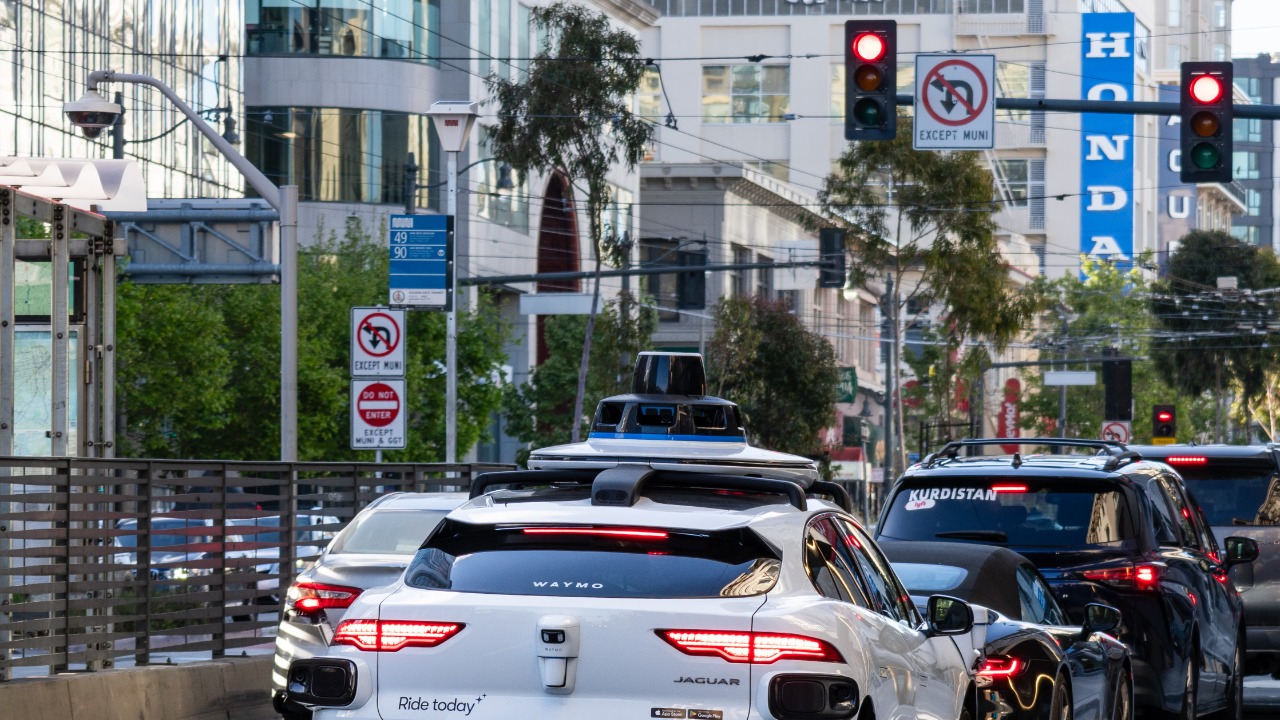

California’s robotaxi map is getting much bigger.
Waymo has received permission to operate passenger service in Sacramento and San Diego, giving Alphabet’s autonomous-driving company another major opportunity to expand beyond its established California markets.
The California Public Utilities Commission approved Waymo’s request to expand its passenger-service territory into both cities, according to reporting from Engadget. The decision does not necessarily mean residents will see large numbers of driverless Waymo vehicles immediately, but it removes an important regulatory obstacle to commercial expansion.
For Waymo, this is about much more than adding two dots to a map.
San Diego gives the company access to one of California’s largest metropolitan areas. Sacramento provides a very different operating environment—and puts autonomous vehicles directly into the state’s capital.
The bigger story is becoming difficult to miss.
Robotaxis are gradually moving from limited experiments into actual transportation networks.
Waymo Already Has a Significant California Presence
Waymo’s expansion did not begin with Sacramento and San Diego.
The company’s commercial robotaxi service, Waymo One, already operates in several major markets, while its California footprint has expanded significantly from its early San Francisco operations.
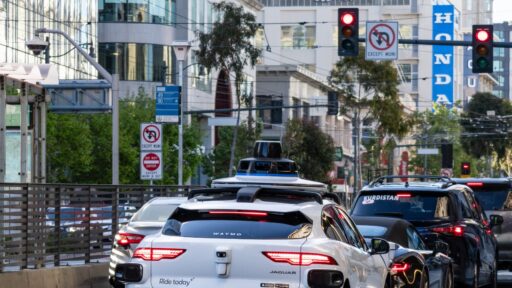
San Francisco became one of the most important proving grounds for fully autonomous transportation because its streets present almost everything a self-driving system dislikes.
Steep hills.
Cyclists.
Pedestrians.
Double-parked vehicles.
Construction.
Dense traffic.
Unusual intersections.
Fog.
Emergency vehicles.
Waymo gradually moved from testing with safety drivers to fully autonomous rides and then paid commercial service.
That cautious rollout has become central to the company’s strategy.
Instead of promising that one autonomous-driving system can immediately work everywhere, Waymo expands city by city.
Sacramento and San Diego represent the next stage of that approach.
Approval Doesn’t Mean Robotaxis Arrive Tomorrow
This distinction matters.
Regulatory authorization gives Waymo permission to operate passenger service in an area.
It does not require the company to launch immediately.
Waymo still needs to prepare each market operationally.
Vehicles need to map and understand roads.
The autonomous-driving system needs to be validated against local conditions.
Charging and maintenance infrastructure must be established.
Fleet-support teams need to be prepared.
Pickup and drop-off locations have to work reliably.
Waymo has historically expanded its operating territory gradually rather than simply activating an entire city at once.
So someone in Sacramento should not assume a driverless Jaguar will necessarily be available from every address immediately.
The regulatory permission creates the possibility.
Waymo still decides how quickly to use it.
San Diego Could Be an Important Robotaxi Market
San Diego makes considerable commercial sense.
The metropolitan area has millions of residents, significant tourism and major destinations spread across a relatively large geographic area.
That creates demand for point-to-point transportation.
Airports.
Hotels.
Beaches.
Universities.
Business districts.
Residential neighborhoods.
Tourist attractions.
Ride-hailing already works well in environments like this because many journeys do not fit neatly into fixed public-transit routes.
Robotaxis could eventually serve the same demand.
San Diego also gives Waymo another opportunity to demonstrate that its technology can operate beyond the specific conditions encountered in San Francisco and Los Angeles.
Waymo’s autonomous-driving technology
A system that works in multiple cities begins looking less like a geographically constrained experiment and more like a scalable transportation product.
Sacramento Presents a Different Challenge
Sacramento is particularly interesting because it does not have the same international profile as San Francisco or Los Angeles.
That may actually make it more important.
Autonomous transportation cannot become mainstream if it only works in a handful of technology-heavy or tourist-oriented markets.
Eventually, robotaxis need to function in ordinary American cities.
Sacramento provides a different combination of suburban roads, downtown streets, highways, government districts and residential areas.
It is also California’s political center.
State lawmakers, regulators and government employees could increasingly encounter autonomous vehicles during ordinary daily travel.
There is something symbolically significant about that.
California officials debating autonomous-vehicle policy may soon be able to experience commercial robotaxis outside their workplaces.
Waymo Isn’t Trying to Sell Customers a Self-Driving Car
Waymo’s strategy differs fundamentally from Tesla’s.
Tesla sells vehicles to consumers and is attempting to make increasingly capable autonomous software available through those vehicles while also developing its robotaxi business.
Waymo does not need ordinary consumers to purchase a Waymo car.
It operates transportation as a service.
The customer opens an application.
Requests a ride.
A vehicle arrives.
The passenger gets in.
The autonomous system drives.
The customer leaves.
That makes Waymo closer to an automated Uber than a traditional car manufacturer.
The company can therefore control the entire autonomous-driving environment more tightly.
Its fleet uses known vehicles.
Waymo controls the sensor package.
It controls the software.
It determines where those vehicles operate.
It can restrict service areas if certain roads or conditions create problems.
That controlled approach may help explain why Waymo has reached commercial driverless operation in multiple U.S. markets.
Waymo Uses Much More Than Cameras
One of the biggest technical differences between Waymo and Tesla involves sensors.
Waymo vehicles use a combination of cameras, radar and lidar.
Lidar sends laser pulses into the environment and measures how quickly they return, helping create a detailed three-dimensional representation of nearby objects.
Cameras provide rich visual information.
Radar can help determine distance and speed while performing well in conditions where cameras may struggle.
Waymo combines information from these systems to understand the vehicle’s surroundings.
That makes the vehicles visually distinctive.
The sensors mounted around a Waymo robotaxi make it difficult to mistake one for an ordinary Jaguar I-Pace.
Tesla has taken a very different approach centered heavily on cameras and neural networks.
The rivalry between those philosophies could become one of the defining engineering battles of autonomous transportation.
Robotaxis Are Becoming a Real Consumer Product
Only a few years ago, a fully driverless taxi seemed like a technology demonstration.
That perception is changing.
Waymo has already provided millions of paid autonomous rides.
The company’s service has expanded across multiple metropolitan areas, and its vehicles increasingly operate without a human safety driver sitting behind the wheel.
This changes how the technology should be evaluated.
A research prototype can occasionally behave awkwardly.
A commercial transportation service needs reliability.
Passengers care about whether the vehicle arrives on time.
Whether the pickup location makes sense.
Whether the ride feels comfortable.
Whether the car gets stuck.
Whether customer support can resolve a problem.
Whether the fare is competitive.
Once money changes hands, autonomous driving stops being purely an engineering challenge.
It becomes a service business.
Uber Could Actually Help Waymo Expand Faster
There is another interesting element in Waymo’s growth strategy.
The company does not necessarily need to build the entire ride-hailing marketplace itself.
Waymo has increasingly worked with Uber in selected markets, allowing passengers to request autonomous vehicles through an app millions of people already use.
Uber and Waymo partnership information
That arrangement solves one of the biggest problems facing any new transportation service:
customer acquisition.
People already have Uber installed.
They already understand how to request a ride.
They already have payment information saved.
They already know the interface.
If autonomous vehicles simply become another type of car available through the same marketplace, adoption becomes considerably easier.
Waymo provides the autonomous-driving technology.
Uber provides access to passengers.
That could become an important model for future cities.
But Human Drivers Aren’t Disappearing Overnight
Robotaxi expansion naturally raises concerns about driving jobs.
Taxi drivers and ride-hailing drivers perform work that autonomous vehicles are explicitly designed to automate.
However, geographic limitations still matter.
A human Uber driver can potentially drive from one city to another, enter unusual private roads, adapt to temporary conditions and travel far outside carefully mapped service areas.
Robotaxis generally expand much more cautiously.
That means human and autonomous rides are likely to coexist for a long time.
The first jobs affected may not disappear entirely.
Instead, the mix of available rides could gradually change.
A dense downtown journey may be handled by a robotaxi.
A complicated suburban or long-distance trip might still go to a human driver.
As autonomous operating areas expand, that balance could shift.
Airports Could Be One of the Biggest Opportunities
Airport transportation is an obvious robotaxi market.
Trips are frequent.
Routes are relatively predictable.
Passengers are accustomed to paying for transportation.
And airports generate demand almost continuously.
San Diego International Airport could therefore become strategically important if Waymo eventually secures the permissions and operational arrangements required for pickups and drop-offs there.
But airports are not simple environments.
Commercial vehicles often need specific permits.
Pickup areas can be tightly controlled.
Traffic is chaotic.
Pedestrians move unpredictably.
Police and airport staff frequently direct vehicles manually.
Waymo has gradually expanded airport access in other markets rather than assuming that general city authorization automatically provides complete airport service.
That cautious approach is likely to continue.
Safety Remains the Issue That Can Change Everything
Robotaxi companies can talk about convenience, cost and technology.
Regulators ultimately care about safety.
Autonomous vehicles do not need to demonstrate that they will never crash.
No transportation system can realistically meet that standard.
The important question is whether they can become safer than human drivers.
That requires enormous amounts of data.
Crashes per mile.
Injury rates.
Pedestrian incidents.
Cyclist interactions.
Emergency-response behavior.
Software failures.
Unusual stops.
Waymo publishes safety information comparing its autonomous-driving performance with human driving in the same operating environments.
Waymo safety research and data
Independent scrutiny remains essential because the company producing the technology also has an obvious commercial interest in presenting it favorably.
As fleets grow, regulators and researchers will have much larger datasets available for evaluating whether robotaxis actually deliver the safety improvement their developers promise.
Emergency Vehicles Remain a Particularly Difficult Problem
A human driver understands social cues that are surprisingly difficult to encode into software.
A police officer waves traffic through a red light.
A firefighter gestures for cars to move onto a shoulder.
An ambulance approaches from an unusual direction.
A construction worker temporarily changes traffic flow.
Humans may interpret these situations imperfectly, but they understand that ordinary road rules have temporarily changed.
Autonomous systems need to make the same judgment.
That is one reason robotaxi companies work closely with emergency services when entering new markets.
As Sacramento operations expand, this becomes particularly interesting because the city contains major state-government facilities and the emergency traffic associated with them.
The robotaxi cannot merely understand road markings.
It needs to understand people.
Weather Will Help Test the System
California provides relatively favorable weather for autonomous vehicles compared with places that regularly experience heavy snow.
But Sacramento and San Diego are not identical.
San Diego’s coastal environment can bring marine-layer conditions and fog.
Sacramento experiences extreme summer heat and seasonal fog.
Autonomous sensors and perception systems need to remain dependable across those variations.
This is another reason geographic expansion matters technologically.
Driving billions of miles in one environment is useful.
Operating safely across many different environments demonstrates something more.
Each new city exposes the system to additional edge cases.
Waymo’s Biggest Challenge May Eventually Be Cost
Getting a robotaxi to drive safely is only half the business problem.
It also needs to make financial sense.
Waymo’s vehicles contain expensive computing equipment and sophisticated sensor arrays.
The company must also pay for charging, cleaning, maintenance, fleet depots, remote assistance and other operational infrastructure.
Human-driven ride-hailing has a major economic advantage:
The driver typically provides the vehicle.
A robotaxi operator owns or finances the fleet itself.
Removing driver wages can eventually create enormous savings, but only if those vehicles operate frequently enough and cheaply enough.
That makes fleet utilization crucial.
A robotaxi sitting unused in a depot is an expensive piece of technology generating no revenue.
Expansion into Sacramento and San Diego provides Waymo with more potential customers—and therefore more opportunities to improve utilization.
Competition Is Arriving Quickly
Waymo is no longer developing in isolation.
Tesla is pushing aggressively into robotaxis.
Amazon-owned Zoox is deploying purpose-built autonomous vehicles.
Uber is partnering with multiple autonomous-driving companies.
Chinese companies are developing their own systems at extraordinary speed.
The competition is therefore changing.
For years, the question was:
Can a car actually drive itself?
Increasingly, the question is:
Who can operate the best autonomous transportation network?
That involves much more than AI.
Fleet costs.
Charging.
Maintenance.
Insurance.
Customer service.
Regulation.
Mapping.
Pricing.
Availability.
Partnerships.
The company that develops the most sophisticated autonomous driver does not automatically win if another company builds a better transportation business around slightly less impressive technology.
Sacramento and San Diego Are More Important Than Two New Cities
That is why Waymo’s latest California approval matters.
Individual expansions can appear incremental.
One city.
Then another.
Then another.
But transportation networks become valuable through coverage.
A robotaxi service that operates inside a tiny downtown area is interesting.
One covering an entire metropolitan region is useful.
One operating across multiple major American cities starts becoming an industry.
Waymo’s permission to offer passenger service in Sacramento and San Diego moves it further along that progression.
Waymo’s current service areas and expansion information
The company still needs to demonstrate that it can scale without compromising safety or creating an economically unsustainable fleet.
It also needs to prove that passengers actually prefer autonomous transportation once the novelty disappears.
But every new city makes robotaxis slightly less unusual.
San Francisco helped demonstrate that driverless cars could operate commercially in dense urban streets.
Los Angeles increased the scale.
Sacramento and San Diego extend the footprint again.
Eventually, the most important milestone may not be another regulatory approval at all.
It will be the moment someone opens a ride-hailing app, sees a driverless option beside a human-driven car, and chooses the robot without thinking there is anything remarkable about it.