
They have homes.
They have jobs.
They may even own property.
Yet many Iranian families are finding that their income no longer covers the basics of everyday life.
This growing group has been described as the “wealthy poor”—people who appear financially stable on paper but struggle to afford food, healthcare, education, and other necessities because inflation has dramatically reduced their purchasing power.
The phrase captures a painful economic reality.
Poverty is not always defined by the absence of assets.
Sometimes it is defined by what those assets can no longer buy.
As food prices continue rising in Iran, many households that once considered themselves part of the middle class are being forced to make difficult choices about spending, nutrition, and daily survival.
Food Inflation Is Changing Everyday Life
Food is one of the clearest places where economic pressure becomes visible.
A family may tolerate rising prices for some purchases by delaying them.
They can postpone buying furniture.
They can repair a car instead of replacing it.
They can reduce entertainment expenses.
Food is different.
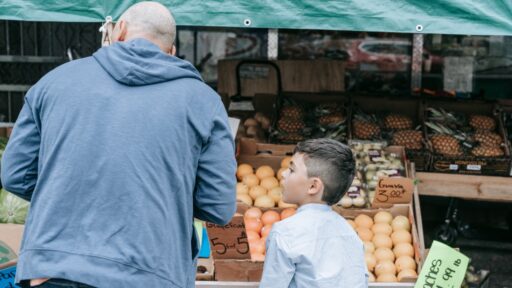
People must continue buying groceries every week.
When food prices rise faster than wages, households immediately feel the impact.
The Food and Agriculture Organization of the United Nations tracks global food-price trends and highlights how food inflation can create significant pressure on household budgets, especially in economies experiencing currency instability and supply challenges.
In Iran, families have faced years of economic pressure caused by inflation, currency depreciation, international sanctions, and broader economic uncertainty.
The result is that many people are not necessarily without income.
Their income simply buys less.
The Meaning Behind “Wealthy Poor”
Traditional measures of poverty often focus on income levels.
But economic hardship can also appear when living costs rise faster than earnings.
A family may own an apartment but struggle to purchase enough quality food.
A professional worker may have a stable job but reduce spending on healthcare.
A retired person may receive a pension but find that daily expenses have increased far beyond expectations.
This creates a group that looks secure from the outside but experiences financial stress internally.
Economists often describe this as a decline in purchasing power.
The problem is not only how much money people have.
It is how much that money can accomplish.
A salary that supported a comfortable lifestyle years ago may now cover only essential expenses.
Inflation Has Changed What Families Consider “Normal”
When prices rise gradually, households can sometimes adjust.
They change brands.
They shop differently.
They reduce unnecessary spending.
But prolonged inflation changes expectations.
Foods that were once considered ordinary may become occasional purchases.
Families may buy less meat, fewer dairy products, or cheaper alternatives.
Parents may reduce personal spending to protect their children’s needs.
These changes can happen slowly, making the economic impact less visible from outside.
A household may still appear functional.
The family may still work.
Children may still attend school.
But the quality of daily life can decline significantly.
Currency Weakness Makes Imported Goods More Expensive
Iran’s economy has faced long-term pressure from currency depreciation.
When a national currency loses value, imported goods become more expensive because businesses must pay more local currency for foreign products.
This can affect:
Imported food.
Medicine.
Agricultural inputs.
Industrial materials.
Transportation costs.
The International Monetary Fund has repeatedly highlighted how inflation and currency instability can weaken household purchasing power and create challenges for economic stability.
Even products that are not directly imported can become more expensive because producers face higher costs for equipment, fuel, packaging, and transportation.
Food prices therefore reflect pressure throughout the entire supply chain.
Middle-Class Families Are Often Hit Hardest
The poorest households usually receive attention because their struggles are easier to identify.
But inflation can also severely affect middle-income families.
These households often have fewer support options.
They may not qualify for assistance programs.
They may have savings that lose value over time.
They may have fixed salaries that cannot keep pace with rising prices.
A low-income family may already be focused on survival.
A middle-class family may suddenly find itself adjusting downward after years of stability.
This transition can create psychological pressure because people are not only losing purchasing power.
They are losing a lifestyle they expected to maintain.
Food Choices Become Financial Decisions
When household budgets become tighter, food decisions change.
Families may prioritize calories over nutrition.
They may choose cheaper products.
They may reduce variety.
They may delay purchasing higher-cost items.
Nutrition researchers have long studied how economic pressure influences diet quality.
The World Health Organization has emphasized that food affordability plays an important role in public health because rising prices can affect access to nutritious diets.
The consequences may not appear immediately.
But over time, reduced dietary quality can influence health outcomes.
Economic hardship can therefore become a health issue.
Businesses Also Feel the Pressure
Rising food prices do not only affect consumers.
They also create challenges for businesses.
Restaurants, grocery stores, and food producers must balance increasing costs with customers who have less money to spend.
If prices rise too quickly, demand falls.
If businesses absorb too much cost, profits disappear.
This creates a difficult environment where every part of the food system feels pressure.
Farmers face higher production costs.
Retailers face customer resistance.
Consumers face reduced choices.
Inflation spreads through the entire chain.
Economic Pressure Can Change Social Behavior
Long periods of financial stress often change how societies function.
Families may delay marriage.
Young people may postpone moving out.
Consumers may avoid major purchases.
People may become more cautious about long-term commitments.
These changes are not always captured by inflation statistics alone.
Economic pressure affects confidence.
When people are uncertain about the future, they often reduce spending and make more defensive decisions.
That can further slow economic activity.
The Challenge for Iran Goes Beyond Food Prices
Food inflation is one symptom of a larger economic challenge.
The issue involves:
Currency stability.
Employment opportunities.
Investment.
Trade restrictions.
Production costs.
Consumer confidence.
Lowering food prices requires addressing these broader factors.
Short-term solutions may provide temporary relief.
Long-term improvement depends on economic stability and stronger purchasing power.
Inflation Creates Invisible Poverty
The story of Iran’s “wealthy poor” highlights an important economic lesson.
Poverty is not always obvious.
A person can own a home and still struggle.
A worker can have employment and still feel financially insecure.
A family can appear comfortable while quietly cutting back on essential needs.
The measurement of poverty must therefore consider more than income alone.
It must consider the relationship between earnings and the cost of living.
The Future Depends on Restoring Purchasing Power
For Iranian families facing rising food costs, the biggest issue is not simply higher prices.
It is the loss of economic predictability.
People need to know that working hard will allow them to maintain a reasonable quality of life.
They need confidence that savings will hold value.
They need stability in the costs of essential goods.
Until purchasing power improves, many families may continue living in a difficult middle ground:
Not officially poor.
But unable to live as they once did.
That is the reality behind the phrase “wealthy poor.”
It describes a group whose financial struggle is not defined by what they own.
It is defined by what they can no longer afford.