
Los Angeles has spent years experimenting with an unconventional defence against extreme heat: covering dark asphalt with lighter, solar-reflective coatings.
The idea may sound cosmetic, but measurements from Pacoima, one of the city’s hottest neighbourhoods, suggest that changing the colour and reflectivity of paved surfaces can influence temperatures beyond the road itself. During an extreme heat event, researchers recorded local air temperatures as much as 3.5°F lower in the treated area than in a nearby comparison neighbourhood.
The results make “cool pavement” one of the more promising tools available to overheated cities. However, researchers also warn that reflective streets are not a complete answer to heatwaves and may affect pedestrians differently depending on sunlight, shade and the material used.
Los Angeles Is Not Simply Painting Roads White
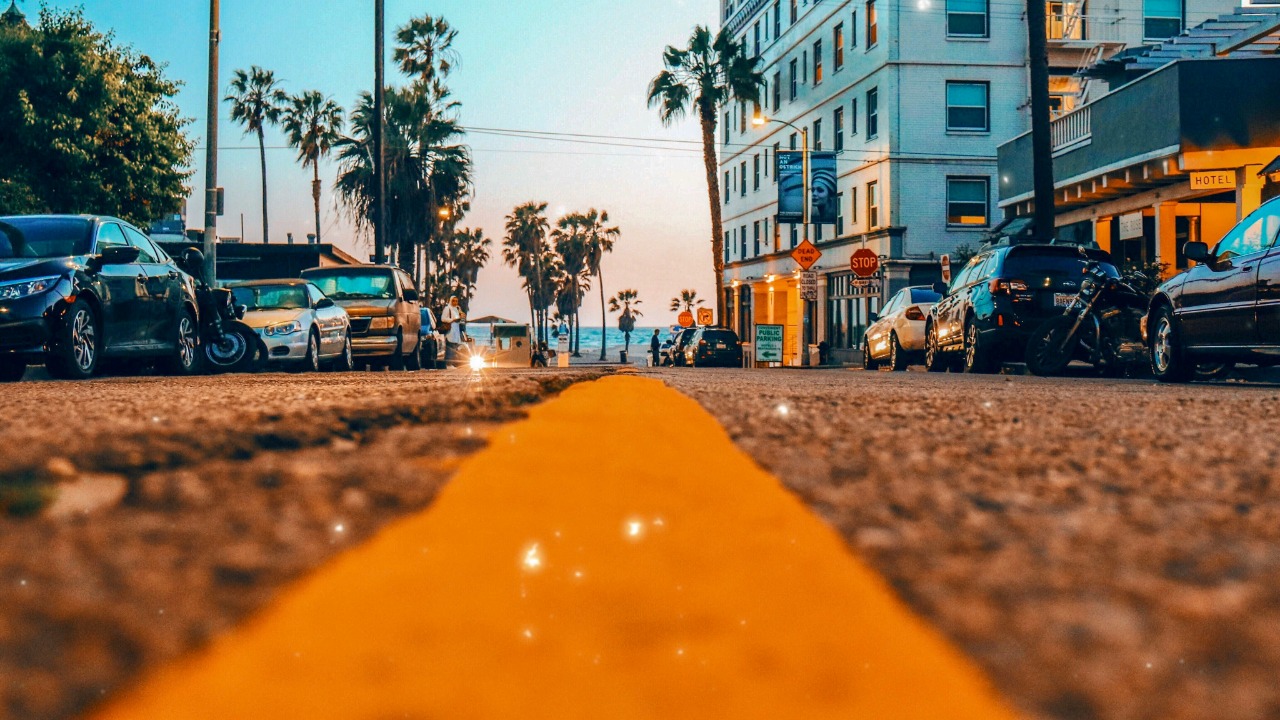
The streets are treated with specialised coatings designed to reflect more solar energy than conventional asphalt. They usually appear light grey rather than bright white, helping reduce glare while increasing the pavement’s solar reflectance, also known as albedo.
Ordinary black asphalt absorbs a large share of the sunlight striking it. The surface heats throughout the day, transfers some of that energy to the surrounding air and slowly releases stored heat after sunset. This process contributes to the urban heat-island effect, in which built-up neighbourhoods remain warmer than surrounding areas.
The US Environmental Protection Agency’s guide to cool pavements explains that reflective coatings, lighter paving materials and evaporative surfaces can all reduce the amount of heat retained by streets and other paved spaces. The EPA notes that conventional asphalt can exceed 150°F at midday under extreme conditions, while tested cool pavements have remained 10°F to 16°F cooler.
The Pacoima Project Covered More Than Roads
The most closely studied Los Angeles experiment took place in Pacoima, a San Fernando Valley community facing high summer temperatures, extensive paved surfaces and limited shade in many locations.
During the summer of 2022, more than 700,000 square feet of asphalt was covered with reflective material. The treatment was applied not only to streets but also to parking areas, basketball courts and playgrounds across an approximately ten-block zone.
The Cool Community Project was organised through a partnership involving Climate Resolve, local community organisations and building-material manufacturer GAF. Researchers compared the treated area with an adjacent neighbourhood that had similar environmental and urban characteristics but did not receive the coating.
This community-scale design was important. Earlier cool-pavement experiments frequently measured a short road segment or compared the temperature of two small surface samples. Pacoima allowed researchers to investigate whether treating a larger connected area could affect the surrounding microclimate.
Road Surfaces Became Up to 10°F Cooler
The most immediate result appeared at ground level. The coated surfaces were as much as approximately 10°F cooler than comparable untreated asphalt during the study.
That reduction occurred because more incoming solar radiation was reflected rather than stored inside the pavement. The treated surfaces also tended to warm more slowly before midday or cool more quickly during the afternoon.
Lower surface temperatures can be meaningful even when the change in surrounding air temperature is smaller. Cooler pavement may reduce heat transferred into the atmosphere, lower the temperature of parked vehicles and make playgrounds or other paved areas safer to touch.
The peer-reviewed Pacoima research, published in Environmental Research Communications, found that the coating increased pavement albedo by as much as 0.22. That change was large enough to influence several measurements of the neighbourhood’s thermal environment.
The Air Was Up to 3.5°F Cooler During Extreme Heat
The strongest result came during a severe heat event, when the treated neighbourhood recorded air-temperature reductions of up to 3.5°F compared with the nearby reference area.
During more typical sunny conditions, reductions reached approximately 2.1°F. Summer nighttime temperatures were as much as 0.5°F lower, suggesting that the lighter pavement stored less heat to release after sunset.
Researchers calculated that the coatings offset roughly 25% to 50% of the local census-tract urban heat-island effect during peak-temperature periods. The exact impact varied with the weather, time, wind and measurement location.
A reduction of a few degrees may appear modest beside a triple-digit heatwave. Yet small shifts can influence electricity demand, outdoor working conditions and health risk, particularly for older adults, children, people with existing illnesses and residents without reliable air conditioning.
The effect should not be interpreted as proof that reflective pavement can stop a regional heatwave. It changes the neighbourhood’s response to heat; it does not alter the larger weather system producing the extreme temperature.
Earlier Los Angeles Testing Revealed an Important Trade-Off
Cool pavement does not always make a person standing above it feel cooler.
A separate UCLA and Arizona State University investigation measured treated streets in Pacoima and Sun Valley during 2019. The coated road surface was up to 11°F cooler than untreated asphalt, but researchers detected higher mean radiant temperatures around pedestrian height during parts of the day.
At midday, the radiant-temperature measurement was more than 7°F higher above the reflective pavement. The road absorbed less sunlight, but some of the reflected energy reached pedestrians instead.
This does not directly contradict the later Pacoima project. The studies examined different coating systems, sites, scales and environmental conditions. The later community-scale research found that pedestrian-comfort indicators varied but predominantly showed a cooling benefit, with average reductions in mean radiant temperature and physiological equivalent temperature.
Together, the findings show why road-surface temperature alone cannot determine whether a heat intervention protects people. Researchers must also measure reflected sunlight, wind, humidity and the radiant heat reaching the human body.
Shade Still Protects People More Effectively
Reflective pavement works mainly by changing how a constructed surface handles solar energy. Shade prevents much of that sunlight from reaching the surface and the person in the first place.
UCLA urban-heat researcher V. Kelly Turner has argued that trees, canopies and nearby structures provide substantially stronger direct protection for pedestrians than any change in pavement colour. Reflective coatings may be especially useful where vegetation cannot be planted, but they should not replace shade.
Los Angeles has consequently treated cool pavement as part of a broader neighbourhood strategy. StreetsLA says its heat-response work also includes street trees and other measures intended to make neighbourhoods more liveable as temperatures rise. The city maintains approximately 23,000 lane miles of streets, meaning even a large coating programme can address only part of the paved landscape.
The most effective projects may combine reflective roads with tree planting, shaded bus stops, drinking-water access, cool roofs and indoor cooling centres. Each measure addresses a different pathway through which heat affects people.
Reflective Coatings Have Costs and Maintenance Questions
Cool pavement is not a permanent one-time solution. Vehicle traffic, weather, dirt and ordinary surface wear can reduce reflectivity. Coatings eventually require maintenance or reapplication, and their durability can vary with the underlying pavement and traffic level.
The EPA notes that costs are difficult to compare because they depend on materials, contractors, location, project size and required lifespan. It also states that cool-pavement technologies remain less mature than some other heat-island strategies and currently have no universal US performance standard or labelling system.
The Pacoima study was funded by GAF, which also supplied the reflective coating. Smart Cities Dive reported that the company did not control the study’s design, data collection, modelling or analysis, but the commercial relationship remains relevant when interpreting and replicating the findings.
Independent studies in additional climates and neighbourhood designs will be needed to determine how widely the results can be reproduced.
Los Angeles Has Shown That Streets Can Be Climate Infrastructure
The Pacoima project demonstrates that streets do more than carry traffic. Their colour, material and distribution can shape how entire neighbourhoods absorb and release heat.
Covering 700,000 square feet of asphalt did not make the heatwave disappear. It did, however, produce substantially cooler road surfaces and measurable air-temperature reductions during the hottest conditions.
The results are significant because many cities already possess enormous paved areas that cannot quickly be removed. Reflective treatments offer a way to modify some of that infrastructure without reconstructing every street.
Cool pavement will work best as one part of a larger system rather than a stand-alone cure. Shade provides stronger immediate protection for people, while trees, parks and permeable surfaces offer benefits that reflective coatings cannot reproduce.
Still, Los Angeles has shown that something as ordinary as a street surface can influence local heat. In communities where a few degrees can determine whether outdoor conditions are merely uncomfortable or medically dangerous, changing the pavement beneath the city may have an effect far greater than its light-grey appearance suggests.