
Spain has accused several European Union countries of responding selfishly and irresponsibly to the extraordinary migrant crossings into Ceuta, revealing deep divisions over how the bloc should manage pressure at its external borders. Spanish Prime Minister Pedro Sánchez argued that some governments reacted with political hostility instead of offering practical solidarity after tens of thousands of people entered the Spanish enclave from Morocco.
The confrontation has transformed a border emergency into a wider European political dispute. While Spain says it restored control quickly and prevented onward movement into mainland Europe, several EU governments have demanded tougher measures and questioned whether Madrid’s immigration policies contributed to the crisis.
Tens of Thousands Crossed Into Ceuta
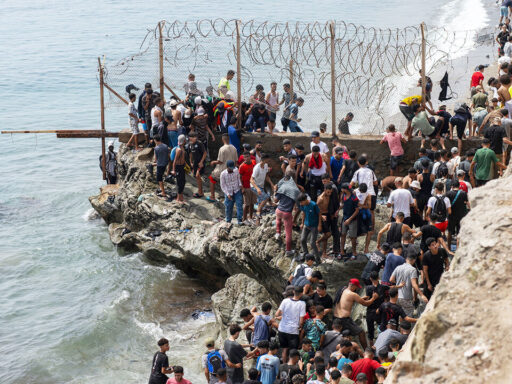
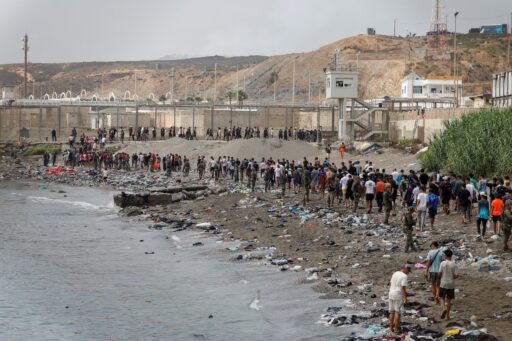
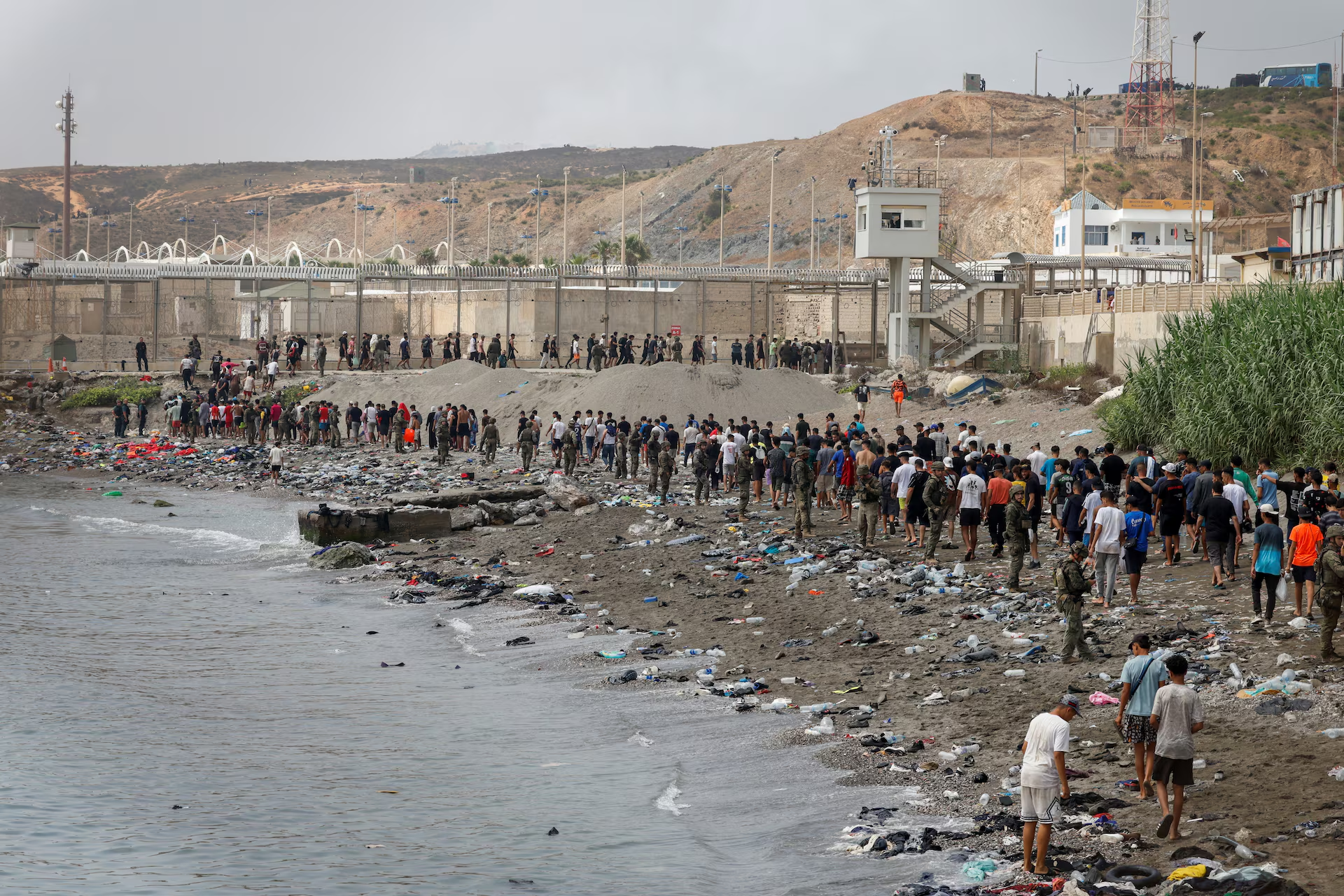
The crisis began when an unprecedented number of migrants crossed from Morocco into Ceuta by land and sea. Spanish authorities estimated that approximately 50,000 people entered the territory, although some reports placed the total closer to 60,000. Many swam around coastal barriers, climbed fences or moved through border areas that had become overwhelmed by the size and speed of the arrivals.
Ceuta is a small Spanish autonomous city on the North African coast. Along with Melilla, it forms one of the European Union’s only land borders with Africa, making it an important and politically sensitive entry point for people attempting to reach European territory. A background report from the Associated Press explains Ceuta’s unique geographic and political position.
The crossings produced chaotic scenes around the border and coastline. Spanish police and military personnel were deployed, reception facilities became overwhelmed and businesses closed temporarily as authorities attempted to regain control. At least 67 people were reported to have died, with many deaths linked to drowning or crushing during the mass movement toward the enclave.
Sánchez Condemns the Reaction From EU Partners
Pedro Sánchez issued a strongly worded letter to senior European officials, including European Commission President Ursula von der Leyen, European Council President António Costa and the Irish government, which currently holds the rotating EU presidency.
In the letter, Sánchez described the reaction from some European governments as selfish, polarising and unlawful. He argued that their statements were influenced by political interests, misinformation and prejudice rather than the facts surrounding Spain’s response.
The Spanish government maintained that most EU members had expressed support, but Interior Minister Fernando Grande-Marlaska said other countries had shown a lack of solidarity and responsibility. Madrid’s position is that a sudden crisis at an external EU border should receive a coordinated European response instead of national measures aimed at isolating Spain.
Sánchez also reminded European leaders that Spain has supported other member states when they faced migration emergencies. He argued that countries located on the bloc’s external borders cannot be expected to manage major movements of people without cooperation from the rest of the union.
Italy Introduces Temporary Border Controls
Italy became one of the main targets of Spain’s criticism after announcing temporary checks on some travellers arriving from Spain by air and sea. The measures apply primarily to non-EU nationals and are expected to remain in place for one month.
Italian Prime Minister Giorgia Meloni’s government presented the decision as a national security precaution. However, Spanish officials and political opponents in Italy described it as a symbolic and politically motivated response because Italy does not share a land border with Spain and the majority of migrants remained in Ceuta.
The temporary restrictions have intensified debate over the future of the Schengen area, which normally allows movement between participating European countries without routine internal border checks. Some governments also raised the possibility of temporarily excluding Spain from parts of the border-free system, a proposal Madrid strongly rejected.
According to Spain, people who entered Ceuta irregularly were not permitted to travel freely into mainland Spain or the wider Schengen zone. The enclave’s location and its special border arrangements mean that reaching Ceuta does not automatically provide unrestricted access to the rest of Europe.
Most Migrants Returned to Morocco
Despite the enormous number of arrivals, Spanish authorities said more than 48,000 people returned to Morocco within approximately 48 hours. Some crossed back voluntarily after discovering that there was no immediate route from Ceuta to mainland Spain.
Migrants interviewed by Reuters after returning to Morocco described exhaustion, hunger, closed businesses and uncertainty about what would happen next. Several said they had been influenced by viral social-media videos suggesting that the border could be crossed and that entry into Ceuta would create an opportunity to reach Europe.
Spanish authorities said misleading online claims had distorted the meaning of a recent Supreme Court ruling. The ruling restricted immediate summary returns in certain circumstances, but it did not prevent Spain from returning migrants through established legal procedures. Smuggling networks were accused of presenting the decision as evidence that anyone reaching Ceuta by sea would be allowed to stay.
Economic hardship also appears to have contributed to the crossings. Many of those involved were young Moroccans seeking employment and greater economic opportunity. Their experiences show that the crisis was shaped not only by border security and political disagreements but also by unemployment, inequality and the belief that life in Europe would offer a more secure future.
Spain Defends Its Immigration Policies
Several European politicians blamed Spain’s migrant regularisation programme for encouraging the crossings. The programme offered a route to legal status for certain undocumented migrants who had already lived in Spain before a defined eligibility date.
Madrid rejected any direct connection between that policy and the Ceuta crisis. The government argued that the scheme did not apply to newly arriving migrants and that people entering Ceuta during the surge would not automatically qualify. An Associated Press fact-check on the Ceuta claims found that many political and social-media statements linking the regularisation plan directly to the crossings lacked supporting evidence.
Spain instead pointed toward organised smuggling activity, false online information and the wider economic situation in Morocco. The government also praised Moroccan authorities for helping stop further crossings and accepting the return of thousands of people.
A New Maritime Barrier Is Being Installed
As crossings slowed, Spanish authorities began installing a 500-metre floating barrier near the Tarajal breakwater, one of the areas used by migrants attempting to enter Ceuta by sea.
The barrier includes floating sections extending above and below the water, while a channel will allow Spanish Civil Guard vessels to continue patrolling the area. Spain says the system is intended to discourage dangerous swimming attempts and restore a clearly defined maritime boundary.
The measure may reduce crossings at that location, but it does not address the social and economic factors that encourage people to attempt dangerous journeys. Humanitarian organizations have repeatedly argued that stronger physical barriers can redirect migration toward less visible and potentially more dangerous routes.
EU Ministers Prepare for Emergency Talks
The dispute has led to plans for an extraordinary meeting of EU justice and interior ministers. Ireland, as holder of the EU presidency, said it would convene the talks to discuss the events in Ceuta and the broader European response.
European Commission President Ursula von der Leyen responded that EU institutions had offered Spain assistance from the beginning of the crisis. She also supported stronger protection of external borders while acknowledging Spain and Morocco’s success in preventing large-scale onward movement.
The meeting is expected to focus on border security, Frontex assistance, cooperation with Morocco and the rules governing temporary internal border controls. It may also expose broader disagreements between governments that favour strict national restrictions and those that believe migration should be managed through shared European responsibility.
Ceuta Crisis Tests European Solidarity
Spain’s accusation of selfishness reflects a long-running weakness in EU migration policy. Member states generally agree that external borders must be protected, but they frequently disagree over responsibility when large numbers of people arrive in one country.
The Ceuta crisis was contained more quickly than initially expected, but the political consequences may last considerably longer. Temporary border restrictions, arguments over Spain’s immigration policies and conflicting accounts of European solidarity have created another test for the bloc’s ability to act collectively.
The central question is no longer only how the border was crossed. It is whether EU governments can develop a response that protects borders, respects legal obligations and avoids turning every national migration emergency into a confrontation between member states.