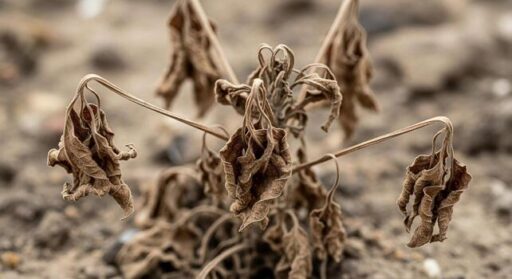
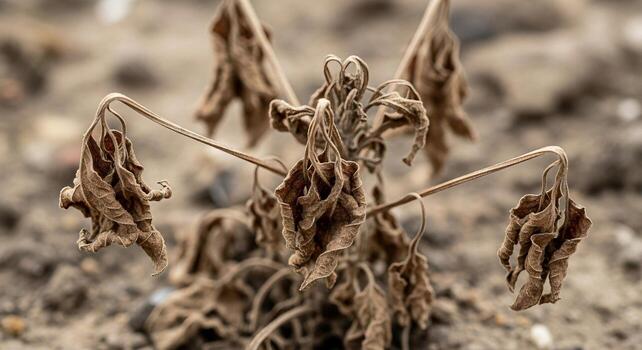

Plants play a crucial role in slowing climate change by removing carbon dioxide from the atmosphere during photosynthesis. However, new research suggests that this natural protection may be more vulnerable to rising temperatures than many climate models currently indicate.
A University of Arizona-led study found that plant canopies are likely to heat more rapidly than the surrounding air during the 21st century. As leaves become hotter and the atmosphere becomes drier, plants may lose some of their ability to cool themselves, maintain photosynthesis and continue absorbing carbon dioxide efficiently.
The findings do not mean that rising temperatures will suddenly prevent every plant from absorbing CO2. Instead, they indicate that heat and moisture stress could progressively weaken plant function across large areas, causing forests, grasslands and croplands to remove less carbon than expected.
Plant Temperature Matters More Than Air Temperature
Climate discussions generally focus on near-surface air temperature because it is widely measured by weather stations and directly affects human health. Plants, however, respond more immediately to the temperature of their leaves and canopies.
Leaves absorb solar radiation and can become warmer than the air around them, much like pavement becomes hotter than the surrounding atmosphere on a sunny day. The temperature experienced by the plant directly influences photosynthesis, respiration, water loss and overall growth.
The study, published in Nature Communications, argues that relying mainly on air temperature can underestimate the stress experienced by vegetation. Lead author Julia K. Green and her colleagues combined satellite observations with simulations from Earth system models to examine how the difference between canopy temperature and air temperature may change over time.
Their findings indicate that the average temperature difference across vegetated land could rise from approximately 0.70°C today to around 0.81°C near the end of the century under a high-emissions scenario. That represents an additional 0.11°C gap, or an increase of roughly 16% in the difference between plant and air temperatures.
Although 0.11°C may appear small, it is a global average calculated across enormous areas and long periods. Regional differences could be much larger, while daily and hourly temperature spikes may be hidden by monthly averages.
Why Leaves Become Hotter as the Climate Dries
Plants normally cool themselves through transpiration. Water absorbed by the roots travels through the plant and evaporates through small pores in the leaves called stomata. This process works in a similar way to evaporative cooling, allowing part of the energy absorbed by the leaf to be released as latent heat.
As temperatures rise, the atmosphere can demand more moisture. Scientists commonly describe this atmospheric demand using vapor pressure deficit, which measures the difference between the moisture the air can hold and the moisture it actually contains.
A higher vapor pressure deficit effectively creates a “thirstier” atmosphere. Plants initially lose water more rapidly, but when water becomes limited, they begin closing their stomata to protect themselves from dehydration.
Closing the stomata reduces water loss, but it also creates two important problems. Less carbon dioxide can enter the leaf, limiting photosynthesis, while reduced transpiration removes one of the plant’s main cooling mechanisms. The leaf becomes hotter, which can place even greater pressure on the plant.
The University of Arizona’s explanation of the research emphasises that leaf temperature directly affects photosynthesis, transpiration, respiration and other essential processes. Using air temperature alone may therefore make future plant stress appear less serious than it will actually be.
Most Vegetated Regions Could Experience a Growing Temperature Gap
The researchers project that the difference between plant canopy temperature and air temperature will increase across approximately 81% of the world’s vegetated regions.
Some locations could experience canopy-to-air temperature differences that rise by as much as 0.5°C by the end of the century. The largest increases are expected in areas where drying conditions and increasing atmospheric moisture demand restrict plant transpiration.
Particularly exposed regions include grasslands across the central United States, areas extending into southern Canada, parts of southern Europe and savannas in Brazil, Colombia and Venezuela. The edges of tropical forests may also be vulnerable because relatively small environmental changes can push transitional ecosystems toward a different state.
Humid tropical forests may show smaller absolute temperature increases than some arid regions, but the relative change can still be substantial. Many tropical plants have developed under comparatively stable temperatures and may already operate close to the range in which photosynthesis works most efficiently.
Research from EPFL has separately found that tropical forests are increasingly exposed to temperatures above species-specific photosynthetic thresholds. Its analysis showed that the tropical forest area experiencing canopy temperatures above the average critical threshold increased from 43 million hectares to 57 million hectares between 2001 and 2020.
Hotter Leaves Can Reduce Carbon Absorption
Plants absorb carbon dioxide through their stomata and use it to produce sugars during photosynthesis. Some of that carbon supports the development of leaves, roots, branches and trunks, allowing vegetation to store carbon that would otherwise remain in the atmosphere.
When leaves become excessively hot, the biochemical reactions behind photosynthesis become less efficient. Important proteins and cellular structures may become damaged at extreme temperatures, while closed stomata restrict the amount of carbon dioxide entering the plant.
Higher temperatures can also accelerate plant respiration. During respiration, plants use stored sugars and release carbon dioxide. A plant may therefore absorb less carbon through photosynthesis while releasing more through respiration, reducing its net contribution to carbon storage.
The Nature Communications study concludes that increased canopy temperatures are likely to create stronger limits on photosynthesis, vegetation growth and the land carbon sink than estimates based primarily on air temperature suggest. It does not predict that photosynthesis will completely stop across the planet, but it does raise the possibility that existing models overestimate future carbon uptake.
A Weaker Land Carbon Sink Would Affect Climate Projections
Vegetation and soils currently remove a substantial portion of human-produced carbon dioxide from the atmosphere. The Intergovernmental Panel on Climate Change estimated that the land carbon sink absorbed around 29% of anthropogenic CO2 emissions during 2008–2017, although the amount varies from year to year.
This absorption does not eliminate the effects of fossil-fuel emissions, but it slows the rate at which carbon dioxide accumulates in the atmosphere. A weakening land sink would leave a larger proportion of emissions airborne, making it harder to meet climate targets.
A dangerous feedback could then develop. Rising atmospheric carbon dioxide causes additional warming, while hotter and drier conditions reduce plant carbon uptake. More carbon remains in the atmosphere, producing further warming and placing additional stress on vegetation.
The IPCC has concluded that the land carbon sink is likely to grow more slowly under high-emissions scenarios as warming and drying intensify. Heatwaves, droughts, wildfires, insect outbreaks and plant mortality also create uncertainties that are not always fully represented in carbon-cycle models.
Climate Models May Be Missing Important Plant Stress
The University of Arizona study found that the median Earth system model underestimates changes in the canopy-to-air temperature difference across much of the vegetated world.
Current models include interactions among the atmosphere, land, oceans and vegetation, but they differ in how they represent plant water stress, stomatal behaviour, transpiration and canopy temperature. Some also fail to fully represent leaf damage, heat-related leaf loss, mortality events and the interaction between vegetation stress and wildfire.
The researchers used observational constraints to improve estimates of canopy temperature rather than relying exclusively on model outputs. Their results suggest that future projections should place greater emphasis on land-surface and canopy temperatures when estimating photosynthesis, water cycling and carbon storage.
This adjustment could influence predictions of ecosystem change, agricultural productivity, regional drought and the amount of carbon that remains in the atmosphere.
Plants May Adapt, but Their Limits Remain Uncertain
Some plants can acclimate to warmer conditions. Heat-tolerant species may gradually replace vulnerable species, and the temperature at which photosynthesis performs best can shift over time.
However, researchers do not yet know whether adaptation can occur quickly enough to match the pace of climate change. Species in environments with historically stable temperatures may have less capacity to tolerate sudden extremes, while drought, land degradation and habitat fragmentation can make natural ecosystem transitions more difficult.
Adaptation may also change the composition of forests rather than preserving them in their current form. The loss of particular tree species could affect wildlife, water cycling, shade, soil conditions and the overall ability of an ecosystem to store carbon.
Protecting forests from deforestation and degradation could help maintain leaf area and evaporative cooling. The study also found that a lower-emissions scenario produced a smaller increase in the canopy-to-air temperature difference, showing that reducing carbon dioxide emissions could directly limit future plant heat stress.
Rising Heat Changes the Climate Role of Vegetation
The new findings challenge the assumption that air temperature alone provides an adequate picture of how vegetation will respond to global warming.
Plants experience sunlight, heat and atmospheric dryness directly at the leaf surface. When water becomes scarce, they close their stomata, reduce transpiration and lose part of their natural cooling ability. This can raise leaf temperatures, suppress photosynthesis and reduce carbon absorption.
The study does not show that plants will immediately stop taking in carbon dioxide. It provides a more complex warning: vegetation may continue absorbing CO2 while doing so less efficiently than many current projections assume.
That distinction matters because forests, grasslands and croplands are not passive parts of the climate system. They influence carbon storage, rainfall, surface temperatures and atmospheric moisture. As plant canopies heat faster than the surrounding air, their ability to provide those services may become increasingly difficult to maintain.