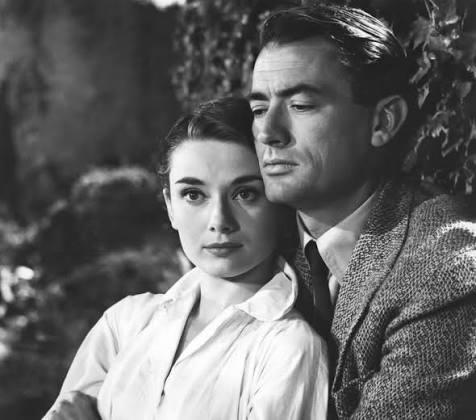

Steven Spielberg and Audrey Hepburn are each associated with some of the most celebrated movies ever made, yet their only collaboration remains surprisingly overlooked. In 1989, Spielberg directed Hepburn in Always, a romantic fantasy that blended aerial adventure, supernatural drama, grief, and old-fashioned Hollywood sentiment.
The movie arrived during an extraordinary period in Spielberg’s career. By then, he had already directed Jaws, Close Encounters of the Third Kind, E.T. the Extra-Terrestrial, The Color Purple, and two Indiana Jones adventures. Earlier in 1989, he had also released the enormously successful Indiana Jones and the Last Crusade. Against those larger cultural landmarks, a quiet fantasy romance about an aerial firefighter struggling to let go of his former life was easier to miss.
However, Always deserves renewed attention for more than Spielberg’s name. It marked Hepburn’s final appearance in a feature film and gave the legendary actress a brief but deeply appropriate role as a compassionate spiritual guide. The American Film Institute’s record for Always confirms that Hepburn played Hap, the guardian angel who helps the movie’s deceased hero understand his new purpose.
A Romantic Fantasy Set Above the Flames
Always follows Pete Sandich, played by Richard Dreyfuss, a daring pilot who fights forest fires from the air. Pete is exceptionally talented, but his willingness to take unnecessary risks constantly frightens his girlfriend, Dorinda Durston, portrayed by Holly Hunter.
Dorinda wants Pete to leave dangerous missions behind and accept a safer position training new pilots. His close friend Al Yackey, played by John Goodman, also believes that Pete’s luck will eventually run out. Pete reluctantly agrees to make a change, but one final firefighting mission ends in tragedy when he sacrifices himself to save Al.
Death does not remove Pete from the story. His spirit awakens in a peaceful, otherworldly landscape, where he meets Hap, a celestial guide played by Hepburn. Hap explains that Pete must return invisibly to the world and pass his experience to a young pilot named Ted Baker. The assignment becomes emotionally painful when Ted begins falling in love with Dorinda, leaving Pete forced to watch the woman he loves build a life without him.
The Turner Classic Movies overview of Always describes the film as Spielberg’s first major cinematic exploration of adult romance. That description captures its unusual place in his filmography: it contains aircraft, danger, visual spectacle, and supernatural wonder, but its central conflict concerns emotional acceptance rather than defeating an enemy.
Audrey Hepburn’s Small but Meaningful Role
Hepburn does not dominate Always, and her screen time is limited. Nevertheless, her presence gives the supernatural story an immediate sense of grace and warmth.
Hap appears dressed almost entirely in white, calmly guiding Pete through the confusion of his death. She does not behave like a dramatic religious figure or a mysterious fantasy creature. Instead, Hepburn plays the character with gentleness, patience, and subtle humor. Hap feels less like an authority issuing commands and more like a reassuring presence helping someone accept an uncomfortable truth.
That interpretation fits naturally with Hepburn’s established screen image. Her performances in films such as Roman Holiday, Sabrina, and Breakfast at Tiffany’s had made her synonymous with elegance, but her strongest work also carried emotional intelligence and vulnerability. Hap allowed her to use those qualities without attempting to recreate the romantic roles of her earlier career.
Spielberg reportedly brought Hepburn out of acting retirement for the part, believing that her presence would give Hap the necessary compassion. Hepburn had largely stepped away from movies and was increasingly devoted to humanitarian work with UNICEF. According to Turner Classic Movies, she enjoyed making Always and described the production as one of the happiest professional experiences of her life.
Always Became Hepburn’s Final Movie
Hepburn’s appearance became more significant in retrospect because Always was her final feature-film role. She later worked on the television documentary series Gardens of the World with Audrey Hepburn and continued her humanitarian activities, but she did not appear in another narrative movie before her death in 1993.
Her final scene in Always now carries an additional emotional weight. Hap completes her purpose and quietly steps away, leaving Pete to continue his own journey. The sequence was not designed as a public farewell to Hepburn, yet it feels remarkably suitable as the final film appearance of an actress remembered for compassion as much as glamour.
Her wider legacy extended far beyond acting. Hepburn won the Academy Award for Best Actress for Roman Holiday at the 1954 Academy Awards, and she later received the Jean Hersholt Humanitarian Award for her work supporting children through UNICEF.
The Movie Was Inspired by an Earlier Hollywood Fantasy
Always was based on A Guy Named Joe, a 1943 romantic fantasy directed by Victor Fleming and starring Spencer Tracy, Irene Dunne, and Van Johnson. The original story followed a World War II pilot who dies and returns as an invisible mentor to a younger aviator.
Spielberg relocated the concept from wartime combat to modern aerial firefighting. The change allowed the movie to retain the danger and heroism of aviation while avoiding a conventional war setting. Pete’s work remains visually exciting, but it is also tied to a practical emergency service that protects communities and natural landscapes.
Spielberg had admired A Guy Named Joe since childhood and preferred to describe Always as being inspired by the earlier movie rather than merely remaking it. The TCM history of A Guy Named Joe explains that Spielberg’s affection for the wartime fantasy eventually led him to reinterpret it with Dreyfuss, Hunter, Brad Johnson, and Hepburn.
Richard Dreyfuss Carries the Emotional Conflict
Although Hepburn’s involvement provides the movie’s most historically notable detail, Always primarily belongs to Richard Dreyfuss and Holly Hunter.
Dreyfuss had previously worked with Spielberg on Jaws and Close Encounters of the Third Kind. Their familiarity helps Pete feel like a recognizably Spielbergian protagonist: gifted, impulsive, humorous, emotionally immature, and unable to understand what truly matters until a crisis forces him to change.
Pete initially believes that remaining close to Dorinda is an expression of love. His invisible presence, however, prevents her from moving beyond grief. His real task is not simply to mentor Ted as a pilot. It is to accept that Dorinda’s future cannot remain attached to his past.
Hunter gives the film its emotional foundation. Dorinda is not merely the girlfriend left behind by a heroic man. She is an accomplished pilot dealing with anger, loss, and the difficult expectation that life should continue after tragedy. Her gradual connection with Ted becomes less about replacing Pete and more about recovering the confidence to live fully again.
Why Always Became One of Spielberg’s Overlooked Movies
Always opened in December 1989 and received a mixed response. The AFI notes that its initial critical reception was subdued, while contemporary and later assessments have often praised its aerial filmmaking but questioned its heavy sentimentality.
The movie also lacked the easily marketable concept of Spielberg’s largest hits. It was too romantic to function purely as an aviation adventure, too grounded to resemble a traditional fantasy epic, and too emotionally sincere to appeal to viewers expecting the tension of Jaws or the wonder of E.T.
Its unusual combination is also what makes it worth rediscovering. The firefighting sequences provide genuine scale, with aircraft moving through smoke, flames, and dangerous terrain. John Williams’ score gives the supernatural moments an ethereal quality while supporting the story’s themes of memory and emotional release. A detailed account of the score explains that Williams and Spielberg intentionally pursued a flowing, dreamlike sound for the film’s spiritual world.
A Gentle Fantasy About Learning to Let Go
Always is not among Spielberg’s most disciplined or universally admired films. Its emotions are broad, its romance is unapologetically sentimental, and certain moments reflect the storytelling style of an earlier Hollywood era.
Yet those qualities make the collaboration between Spielberg and Hepburn feel logical. Both artists understood the value of sincerity, emotional wonder, and characters who discover compassion through extraordinary circumstances.
Hepburn’s role may be small, but it remains the movie’s most memorable symbol. As Hap, she guides a restless man away from possessiveness and toward selfless love. The character asks Pete to stop treating death as an excuse to hold onto the past and begin helping the people he loves move forward.
More than three decades after its release, Always remains a fascinating intersection of two remarkable careers. It gave Spielberg an opportunity to create an intimate supernatural romance, while Hepburn received a final role that reflected the dignity, kindness, and humanity associated with her life beyond the screen.