
A Tesla Cybertruck driver turned a feature test into a costly rescue and a night in jail after intentionally driving the electric pickup into Grapevine Lake in Texas.
Police said the driver entered the water near the Katie’s Woods Park boat ramp to test the Cybertruck’s Wade Mode, which is designed to help the vehicle cross limited sections of shallow water. The truck became disabled and began taking on water, forcing everyone inside to escape before emergency crews recovered it.
No serious injuries were reported, but the driver was arrested on allegations involving entry into a restricted park or lake area and violations of water-safety regulations. The incident occurred on May 18, 2026, and was documented by the Grapevine-area report from NBC 5 Dallas–Fort Worth.
The episode illustrates an important distinction that can be lost in vehicle marketing: being capable of crossing shallow water does not make a truck a boat, and activating a special driving mode does not remove the driver’s responsibility to assess depth, terrain and local law.
The Driver Reportedly Entered the Lake Intentionally
Police were called to Grapevine Lake after the Cybertruck became stranded near the shore.
According to authorities, the driver acknowledged that entering the water was intentional and that the purpose was to test Wade Mode. The vehicle reportedly moved from the boat-ramp area into water that quickly became too deep or too difficult to cross.
Once the Cybertruck stopped operating and water began entering, the occupants got out safely. The Grapevine Fire Department’s water-rescue team later helped remove the truck from the lake.
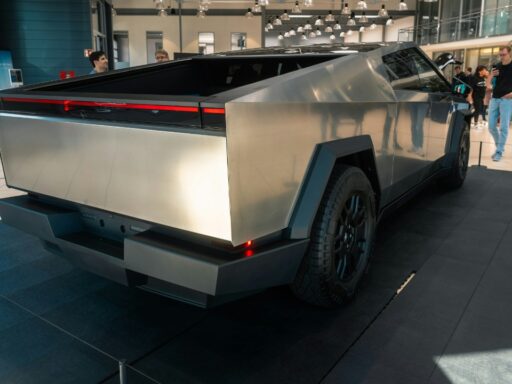
Video of the incident circulated widely online, showing the angular electric pickup sitting partly submerged while responders prepared to recover it. A detailed account and footage were published by FOX 4 News in Dallas.
The driver was identified in subsequent reports as Jimmy Jack McDaniel. He faced charges connected to operating a vehicle in a restricted area and alleged water-safety violations. He was later released after spending the night in jail.
What Tesla’s Wade Mode Actually Does
Wade Mode is an off-road setting intended to prepare the Cybertruck for driving through shallow water.
When activated, the vehicle adjusts certain systems to reduce the risk of water entering critical components. It can raise the suspension and use the air-suspension system to help pressurize the battery enclosure. The feature also modifies vehicle behaviour for low-speed water crossings.
Tesla specifies a maximum wading depth of approximately 32 inches, measured from the bottom of the tire. The company also instructs drivers to move slowly and evaluate the route before entering.
That depth rating applies under suitable conditions. It does not guarantee success in every body of water.
A shallow river crossing with a visible, firm base is very different from a lake ramp where the floor may suddenly drop away. Soft mud, underwater holes, currents and submerged debris can cause a vehicle to lose traction or sink below its rated limit.
Tesla’s guidance also places responsibility on the driver to determine whether the water is safe. Damage caused by driving through water may not be covered under the vehicle warranty.
The complete operating instructions should always be reviewed through the official Tesla Cybertruck owner’s manual before using any off-road or water-crossing feature.
Wade Mode Does Not Make the Cybertruck Amphibious
The confusion surrounding the incident may partly reflect earlier public statements about the Cybertruck’s potential ability to travel through water.
In 2022, Elon Musk wrote that the Cybertruck would be waterproof enough to function briefly as a boat and cross rivers, lakes and relatively calm seas. Those comments attracted widespread attention before the production version reached customers.
The current vehicle, however, is not marketed or legally classified as a boat. Wade Mode is designed for controlled, shallow-water crossings, not navigation through deep lakes.
A vehicle can float temporarily because trapped air provides buoyancy. That does not mean it can steer, remain stable or prevent water from entering indefinitely. Once water reaches openings, changes the vehicle’s balance or removes tire contact with the ground, control can disappear rapidly.
Reports of the Texas incident noted that Grapevine Lake reaches considerable depths, while the boat-ramp area becomes deeper as it extends from shore. The Cybertruck’s 32-inch wading specification was therefore not a licence to continue driving into the lake.
Why Lakes Are More Dangerous Than Shallow Crossings
Drivers may think a calm lake is safer than a moving river because there is no visible current. In reality, a lake can create different but equally serious hazards.
The depth may be impossible to judge from inside a vehicle. Clear water can appear shallower than it is, while dark or muddy water can hide sudden drop-offs.
Boat ramps are specifically designed to slope downward into deeper water. A vehicle may maintain traction near the shore and then lose contact with the surface as the ramp continues below the waterline.
The lakebed may also contain soft sediment. A heavy vehicle can sink into mud even when the water itself remains below the official wading limit.
The Cybertruck weighs several thousand pounds, depending on configuration. That mass can help maintain contact on a firm surface, but it also makes recovery more difficult once the vehicle becomes stuck or submerged.
Electric vehicles add a further complication because their battery packs and high-voltage systems require careful handling after water exposure. The presence of water does not automatically cause electrocution, but emergency responders must treat a damaged or submerged EV as a specialized recovery situation.
The Arrest Was About More Than a Failed Vehicle Test
The driver was not arrested simply because the Cybertruck became stuck.
Police alleged that he entered an area where ordinary vehicle operation was restricted and violated rules governing activity on the lake. Reports indicated that the charges included operating a vehicle in a prohibited park or lake area and water-safety offences, including an issue related to boat registration.
That distinction matters because off-road capability does not override local regulations.
Boat ramps are intended for launching and retrieving authorized watercraft, not for testing whether a road vehicle can operate as one. Driving into a public lake can also create risks for passengers, rescue workers and nearby boat users.
Recovery operations consume public resources and may introduce environmental concerns if fluids, debris or damaged components enter the water.
The Grapevine Police Department’s reported response was direct: even when a vehicle includes a water-crossing feature, willingly driving it into a lake is neither encouraged nor automatically legal.
Water Damage Could Make the Cybertruck Extremely Expensive to Repair
The Cybertruck may survive controlled shallow-water crossings, but prolonged or deep submersion can affect numerous systems.
Water can enter the cabin, electrical connectors, motors, suspension components and low-voltage electronics. Mud and contaminated water may remain inside hidden spaces even after the exterior appears dry.
The battery enclosure is designed to resist water intrusion, but no passenger vehicle should be assumed completely waterproof under every condition. Physical damage, pressure, depth and duration can all affect sealing.
After immersion, the truck may require inspection by trained technicians before it is charged, driven or stored near structures. Corrosion can also appear later, creating failures weeks or months after the original incident.
Insurance coverage may depend on the policy and circumstances. An insurer could investigate whether the damage resulted from an accident, prohibited activity or intentional misuse. Tesla’s own exclusion of certain water-related damage from warranty coverage means the owner could face a substantial repair bill.
The cost of towing a disabled Cybertruck from a lake and assessing the high-voltage system may itself be significant before any component replacement begins.
The Incident Does Not Prove Wade Mode Is Useless
A failed attempt in a lake does not establish that Wade Mode cannot work as intended.
The feature is designed for specific situations such as shallow flooded roads, streams or off-road crossings where the depth and surface have been assessed in advance.
Several conventional pickups and sport utility vehicles also advertise wading-depth ratings. Those ratings always depend on speed, water depth, entry angle, surface condition and maintaining traction.
Problems usually arise when drivers interpret a maximum capability as a guarantee. A vehicle rated to cross 32 inches of water should not automatically enter water that appears close to 32 inches deep, because waves, uneven terrain and vehicle movement can temporarily raise the effective depth.
A cautious driver needs a large safety margin. Turning around is safer than treating a public lake as a demonstration site.
A Viral Lesson About Reading the Limitations
The Texas incident became widely shared because it combined an unusual vehicle, an attention-grabbing feature and an outcome that appeared predictable to outside observers.
The Cybertruck was recovered, the occupants escaped and no fatality resulted. The consequences could have been much more serious if the truck had moved farther from shore, overturned or trapped someone inside.
Wade Mode is a real function, but its name describes controlled wading rather than swimming or boating. It cannot measure every hidden drop-off, determine whether a route is legal or compensate for poor judgment.
The most important safety feature in this situation was not the Cybertruck’s suspension or sealed battery enclosure. It was the driver’s ability to decide not to enter water of uncertain depth.
The truck ended up in a lake, emergency crews had to recover it and its driver ended up in jail. That is a remarkably expensive way to learn that a maximum wading specification is a limit not an invitation.