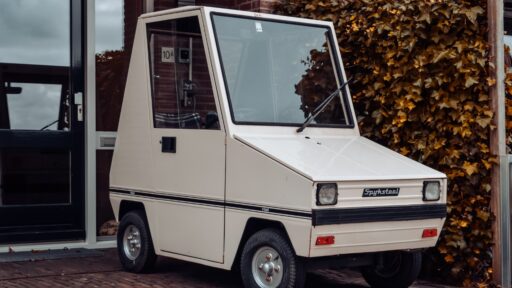
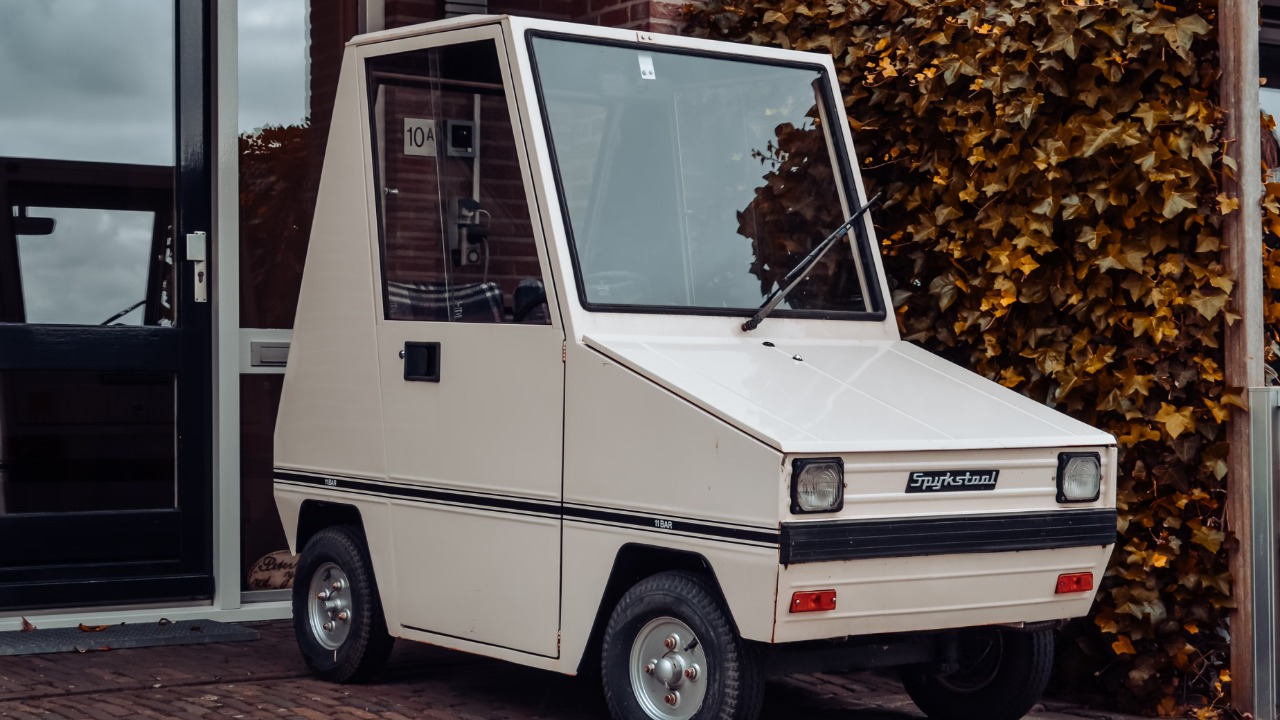

Long before Tesla, modern lithium-ion batteries and nationwide charging networks, a tiny wedge-shaped electric vehicle was already offering drivers a simple alternative to gasoline.
The Comuta-Car was built in Florida from 1979 into the early 1980s. It was slow, basic and visually unusual, but its underlying idea now feels surprisingly modern: most drivers do not need hundreds of miles of range for every journey. They need a small, efficient vehicle capable of completing short commutes and local errands.
With a top speed of about 40 mph and a similar estimated driving range, the Comuta-Car was never intended for interstate travel. It was essentially an electric city runabout created during an era of fuel-price concerns and growing interest in alternative transportation.
The car did not transform the industry, and most drivers today have never heard of it. However, its history shows that many current conversations about affordable urban EVs began decades before the modern electric-car boom. A surviving 1980 example can be viewed through The Henry Ford’s transportation collection.
The Comuta-Car Evolved From the Earlier CitiCar
The Comuta-Car’s story begins with the Sebring-Vanguard CitiCar, which entered production in Florida in 1974.
The CitiCar was developed partly in response to the energy crisis of the 1970s. Instead of attempting to recreate the performance and size of an ordinary gasoline-powered sedan, its designers focused on short urban journeys.
The design looked unlike almost anything else on American roads. Its compact body featured sharp angles, small wheels and a high roof relative to its extremely short length. The vehicle’s appearance is often compared with a doorstop or a golf cart enclosed inside a plastic body.
After Sebring-Vanguard experienced financial difficulties, Commuter Vehicles acquired the design and introduced the updated Comuta-Car. Production continued from approximately 1979 until 1982, using many of the same fundamental parts and ideas as the CitiCar.
The later vehicle included a stronger motor, larger bumpers, glass side windows and a more practical rear hatch. Historical information collected by the Electric Car Society describes the Comuta-Car as a refined continuation of the earlier design rather than a completely new vehicle.
Its Performance Was Modest Even by Modern City-Car Standards
The Comuta-Car used a General Electric motor producing approximately six horsepower.
Its maximum speed was about 40 mph, and it could travel roughly 40 miles before requiring another charge. The National Museum of Transportation lists a vehicle weight of around 1,400 pounds and an original base price of $3,995 for its 1980 example. The museum’s complete specifications are available on its Comuta-Car collection page.
Those figures make it sound closer to a neighborhood electric vehicle than a conventional modern car. It would struggle on fast roads, and a 40-mile range left little room for unexpected detours.
However, its creators were not attempting to build a long-distance touring vehicle. The Comuta-Car’s name clearly communicated its purpose. It was intended to move one or two people around town without consuming gasoline.
That approach anticipated a question still debated today: should every electric car carry a large, heavy and expensive battery when many owners drive only short daily distances?
Lead-Acid Batteries Kept the Technology Simple
Modern electric cars generally rely on lithium-ion batteries that offer high energy density, fast charging and sophisticated thermal management.
The Comuta-Car used conventional lead-acid batteries. They were heavier, stored relatively little energy and required long charging periods, but they were widely available and comparatively inexpensive.
Owners could recharge the vehicle from a normal electrical outlet. A Smithsonian archive describing the earlier CitiCar noted that it could travel approximately 40 to 50 miles and recharge by being plugged into a standard wall outlet overnight. The Smithsonian even used one for short journeys around Washington, D.C.
The technology was simple enough for mechanically confident owners to understand, but it also created limitations. Lead-acid battery performance declined with age and temperature, while the pack’s weight consumed a significant portion of the vehicle’s limited payload.
The Comuta-Car also lacked the safety systems, power electronics and digital battery monitoring found in current EVs. Its simplicity reduced complexity, but it did not provide the efficiency or protection expected from a modern production car.
The Strange Bumpers Had a Practical Purpose
One of the Comuta-Car’s most noticeable features was its unusually large front and rear bumper structure.
The original CitiCar stored batteries beneath the seats. In the Comuta-Car, parts of the battery arrangement were moved into extended compartments near the bumpers, lengthening the vehicle by approximately 16 inches.
The change helped the later car meet evolving safety requirements and provided space for additional batteries and updated mechanical components. A detailed comparison of the models can be found through the CitiCar owners’ historical archive.
The result did not improve the styling. The enormous bumpers made the already unconventional vehicle look even stranger.
Nevertheless, they illustrate the challenges faced by early small-car manufacturers. A compact vehicle could be efficient in urban environments, but federal crash rules, battery packaging and occupant protection made it difficult to keep the design light and inexpensive.
It Was Surprisingly Successful for an Early EV
The Comuta-Car was never a mainstream success in the way the Volkswagen Beetle, Ford Escort or Honda Civic became popular.
Within the limited electric-vehicle market of its era, however, it achieved an important record.
Combined production of the CitiCar and related Comuta-Car variants reached more than 4,000 vehicles. That made the family one of the most successful American electric-car programs of the postwar period, decades before modern mass-market EVs appeared.
The exact production total is commonly reported as 4,444 vehicles. That number included multiple versions produced under the CitiCar and Comuta-Car names.
The achievement is especially notable because the company lacked the resources of a major automaker. These vehicles were built by a small Florida manufacturer using technology that was already limited by the standards of the time.
Some were sold to private drivers, while utilities, government organizations and institutional fleets also experimented with electric transportation.
Why the Comuta-Car Failed to Become Mainstream
Several factors prevented the vehicle from expanding beyond its niche.
The first was performance. A maximum speed of approximately 40 mph restricted where the car could travel safely. Even many suburban roads exceeded its comfortable operating range.
The second was practicality. The cabin was basic, storage space was limited and the short range made the car unsuitable as the only vehicle in most households.
Safety and build quality also presented concerns. The lightweight body and simple construction could not match the crash protection or refinement of larger conventional cars.
Cost was another problem. Although the Comuta-Car avoided gasoline, its purchase price was not low enough to overcome its limitations for most buyers. By the early 1980s, fuel availability had improved, and gasoline cars offered greater range, speed and flexibility.
Commuter Vehicles also encountered manufacturing, financial and insurance difficulties. Production ended before the technology could benefit from better batteries or larger investment.
It Shared Several Ideas With Modern Electric Cars
The Comuta-Car’s hardware is primitive compared with current vehicles, but its design philosophy remains relevant.
It was small, light and optimized for daily urban travel. Rather than carrying enough battery capacity for rare long-distance trips, it focused on the distances many people regularly drove.
Current manufacturers are revisiting similar ideas through compact urban EVs, low-speed neighborhood vehicles and electric quadricycles. These models aim to reduce purchase prices and energy consumption by avoiding oversized batteries.
The difference is that modern technology can provide greater performance from a smaller package. Lithium-based batteries store much more energy than lead-acid packs, while modern motors deliver strong acceleration with far greater efficiency.
Current EVs also benefit from regenerative braking, advanced crash structures, electronic stability control and rapid charging. The Comuta-Car had the right broad concept but arrived before the supporting technology was ready.
Surviving Cars Have Become Unusual Collector Vehicles
Few Comuta-Cars remain in ordinary use.
Some examples are preserved in museums, while others belong to electric-vehicle enthusiasts who maintain or modernize them. Replacement batteries and updated electronic controllers can improve reliability, although modifying an original example may reduce its historical character.
The National Museum of Transportation preserves one from 1980, and The Henry Ford also holds an example in its collection. These vehicles are valuable less for performance than for what they reveal about the history of American electric transportation.
Collectors should expect unusual challenges. Original electrical parts can be difficult to find, the plastic body may require specialized repairs and few mechanics are familiar with the model.
It is also not a practical substitute for a modern EV. Its low speed, minimal safety equipment and aging electrical system make it more suitable for exhibitions, careful local driving and historical preservation.
The Comuta-Car Was Early, Not Necessarily Wrong
The Comuta-Car is easy to dismiss because of its strange appearance and golf-cart-like performance.
However, its creators correctly recognized that electric propulsion was particularly well suited to short city journeys. They also understood that an EV could recharge at home and reduce dependence on fuel stations.
What they lacked was access to lightweight batteries, efficient power electronics, modern safety engineering and a mature charging ecosystem.
The vehicle therefore became a historical curiosity rather than the beginning of a permanent market shift.
More than four decades later, the ideas behind it have returned. Automakers are again trying to build smaller, cheaper electric vehicles for urban drivers who do not need enormous range.
The Comuta-Car may not have been the future of transportation, but it identified an important part of that future much earlier than most people realize.