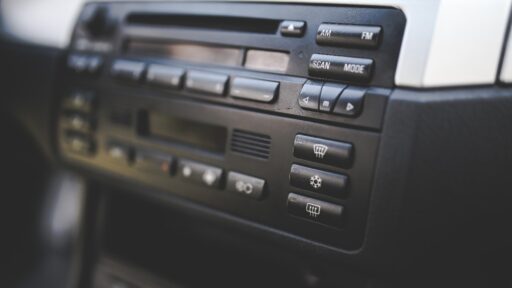
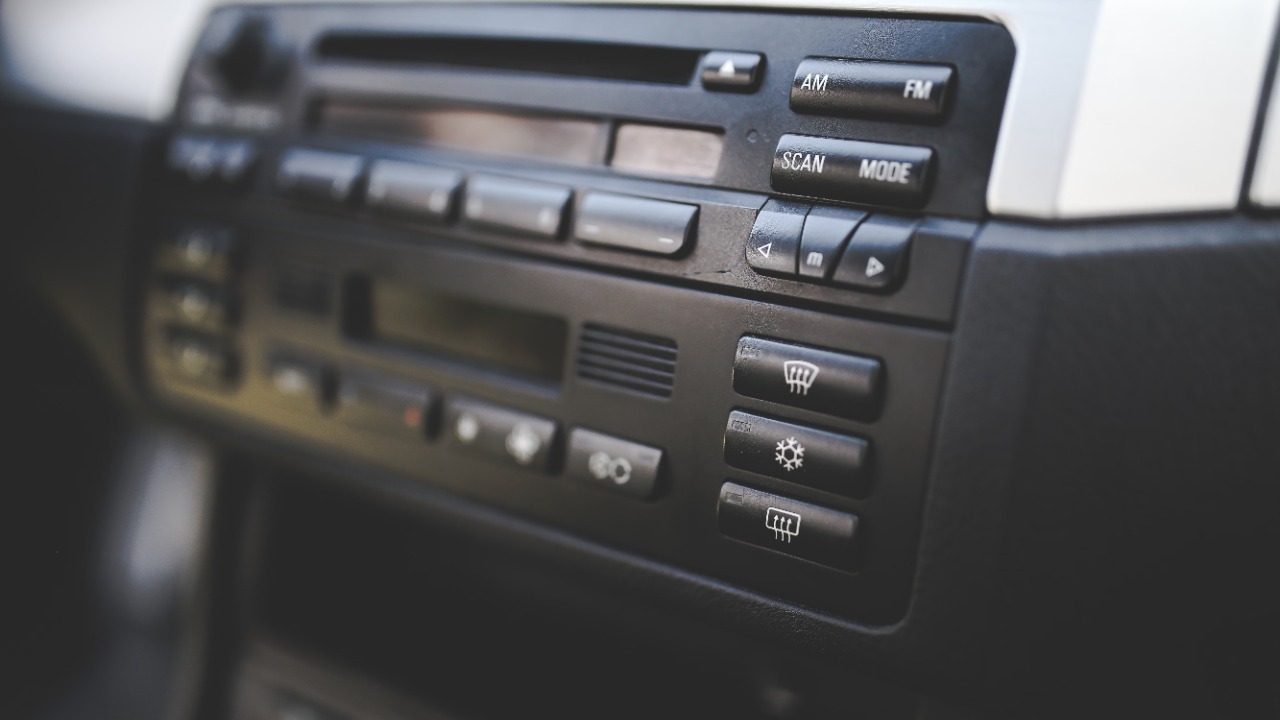

Many electric vehicles arrived with large touchscreens, internet streaming, satellite radio and smartphone integration, yet some lacked a feature that had been standard in cars for generations: AM radio.
Automakers including Tesla, Rivian, Polestar, BMW, Volkswagen and Volvo removed AM reception from at least some electric models. Their main explanation was not that drivers had completely stopped listening. The problem was electromagnetic interference produced by high-voltage motors, inverters, batteries and charging systems.
That electrical noise operates within or near the frequencies used by AM broadcasting. The result can be buzzing, crackling and distorted reception that becomes more noticeable as the vehicle accelerates.
Removing the receiver is cheaper and simpler than redesigning parts of the vehicle to protect a technology some manufacturers consider outdated. However, broadcasters, rural communities and emergency-management advocates argue that AM remains an essential public-safety service. That dispute has led to bipartisan legislation that could require AM reception in future US vehicles.
Electric Powertrains Create Radio Interference
Electric vehicles rely on powerful electrical systems that repeatedly switch current at high speed.
The battery supplies direct current, but the motor often requires alternating current. An inverter rapidly switches and converts that electricity while other converters adjust voltage for different systems inside the vehicle.
These components can produce electromagnetic interference, commonly called EMI. The motor, high-voltage cables and onboard charger can add further electrical noise.
AM stands for amplitude modulation. An AM receiver extracts sound from changes in the strength, or amplitude, of a radio signal. Unfortunately, electrical interference also creates changes that the receiver may interpret as part of the transmission.
That makes AM particularly vulnerable to static and buzzing. FM radio encodes information through changes in frequency and is generally better at rejecting the type of amplitude noise created by an electric drivetrain.
A technical overview from IEEE Spectrum explains that automakers cited unacceptable reception quality when removing AM from EVs, even though engineering methods can reduce the interference.
The Noise Often Changes With the Vehicle’s Speed
Drivers may notice that AM interference is not constant.
As the electric motor and power electronics change their operating frequency, the sound coming through the radio can change in pitch or intensity. Acceleration may produce a rising whine, while regenerative braking can create a different pattern.
The issue is not limited to the main traction motor. Heated seats, windshield wipers, chargers, switching power supplies and other electronic equipment can generate interference if shielding and filtering are inadequate.
Modern vehicles already require careful electromagnetic-compatibility engineering because electrical noise could interfere with sensors, communication networks and safety-related electronics.
Protecting an AM receiver adds another challenge because the antenna must detect relatively weak outside broadcasts while ignoring strong noise generated only a short distance away inside the same car.
Automakers Can Fix the Problem, but It Costs Money
AM reception in an EV is technically possible.
Engineers can use shielded cables, grounded enclosures, filters, carefully positioned antennas and improved motor or inverter designs. Manufacturers can also separate noise-generating components from the receiver and antenna.
The difficulty is making those changes without increasing weight, complexity and cost.
A Center for Automotive Research analysis estimated that requiring AM in electric vehicles could cost automakers billions of dollars across the industry, largely because of the engineering needed to control electromagnetic interference. The estimate was reported by WardsAuto.
That calculation has been disputed by AM-radio supporters, who note that several manufacturers already offer EVs with functional AM reception. Their argument is that the technology is not incompatible with electrification; some companies have simply chosen not to pay for the required design work.
The disagreement is therefore partly economic. Automakers ask whether the benefit justifies the development cost, while broadcasters and lawmakers argue that public safety should not depend solely on market demand.
Some Manufacturers Also Removed AM From Gas Vehicles
Electrical interference explains why the controversy began with EVs, but it is not the complete story.
Some manufacturers considered removing AM from internal-combustion vehicles as well. That showed that infotainment strategy and changing listener habits were also influencing the decision.
Automakers increasingly expect drivers to use Apple CarPlay, Android Auto, satellite services, podcasts and internet-based radio applications. Removing traditional receivers can simplify the interface and encourage the use of connected services.
Ford announced plans to remove AM from additional vehicles but reversed the decision in 2023 after pressure from lawmakers and customers. Other manufacturers continued offering it in combustion vehicles while excluding it from selected electric models.
The Congressional Research Service’s review of AM radio in vehicles explains that the debate involves both technical interference and broader changes in automotive entertainment systems.
AM Radio Still Has Advantages During Emergencies
The strongest argument for keeping AM is not music or talk programming. It is emergency communication.
AM signals can travel long distances, particularly at night, and one powerful station can reach large rural areas. Receivers do not require a mobile-data subscription, internet access or a functioning cellular network.
That matters during hurricanes, floods, wildfires and widespread power failures. Mobile towers can lose power, internet connections can fail and overloaded networks may become unreliable.
The Federal Emergency Alert System uses a network of broadcast, satellite and cellular pathways. AM stations serve as important entry points and distribution channels within that system.
After Tropical Storm Helene damaged communications around Asheville, North Carolina, in 2024, local AM station WWNC continued providing emergency and recovery information when some mobile and internet services were unavailable, according to the Congressional Research Service report.
AM is especially important to agricultural and remote communities where cellular coverage may already be inconsistent before a disaster begins.
Streaming Is Not a Complete Replacement
Many AM stations stream their broadcasts through websites and applications. In ordinary conditions, that can provide clearer audio than an analog signal.
Streaming still depends on several external systems.
The phone must have power, the application must work, the user must have data service and the cellular network must remain available. A driver may also need to search for the correct station instead of simply scanning the local broadcast band.
Internet streaming can introduce delays as well. That may not matter for entertainment, but direct broadcast remains useful when authorities need to distribute urgent weather or evacuation information quickly.
Automakers argue that emergency warnings already reach vehicles through smartphones, FM, satellite services and integrated alert systems. The Alliance for Automotive Innovation has emphasized that FEMA’s Integrated Public Alert and Warning System uses multiple communication paths rather than relying only on AM. Its position is explained in the organization’s AM-radio overview.
The issue is redundancy. No single communication method works perfectly in every disaster, so removing one widely available option may weaken the overall system.
Congress Is Trying to Require AM in New Vehicles
The bipartisan AM Radio for Every Vehicle Act would direct federal regulators to require AM receivers in new passenger vehicles without an additional charge to buyers.
The legislation was introduced as S. 315 in the Senate and H.R. 979 in the House during the 119th Congress.
Supporters say the requirement is necessary because AM forms part of the national emergency-alert infrastructure. Broadcasters also argue that millions of Americans still use it for local news, weather, sports, religious programming and multilingual content.
The proposal has attracted significant bipartisan support. The House Energy and Commerce Committee advanced the House measure in 2025, and AM-radio provisions were included in a House surface-transportation package in May 2026.
Automotive groups oppose a permanent mandate, arguing that it would lock an older technology into future vehicles and impose expensive redesign requirements even when alternative alert systems exist.
AM Radio May Return Even as Listening Habits Change
The debate does not mean AM radio is becoming more popular.
Many stations face declining audiences, aging infrastructure and competition from podcasts and streaming platforms. Some automakers view the receiver as another legacy component that will eventually disappear.
However, public-safety systems are not evaluated only by everyday popularity. A fire extinguisher may rarely be used, but its value becomes clear during an emergency.
That comparison explains why lawmakers are reluctant to let individual manufacturers decide whether millions of drivers retain access to AM broadcasts.
The final outcome may involve a compromise. Vehicles could include digitally processed AM receivers, improved interference suppression or emergency-broadcast functionality integrated into newer infotainment systems.
The Real Reason AM Disappeared
Electric cars did not lose AM radio because batteries somehow make broadcasting impossible.
They lost it because high-voltage electric systems create interference that manufacturers must spend money and engineering effort to control. Some companies concluded that the declining everyday use of AM did not justify that work.
The controversy continues because AM provides something that streaming cannot always guarantee: free, long-range information that can remain available when cellular and internet services fail.
For drivers who never use AM, its removal may seem insignificant. For rural residents, broadcasters and emergency officials, it represents the loss of an additional safety layer.
Electric vehicles can support AM radio. The unresolved question is whether automakers should be allowed to decide that it is no longer worth including or whether public safety makes it important enough for the government to require.