
A powerful solar storm could disrupt far more than satellite television or create unusually bright auroras. A new technical assessment warns that a credible worst-case space-weather event could interfere with GPS positioning and timing, damage satellites, interrupt radio communications and destabilize electrical transmission networks.
The January 2026 report was produced by the United Kingdom’s Science and Technology Facilities Council with contributions from specialists in space physics, aviation, communications, power infrastructure and emergency planning. Rather than imagining an almost impossible disaster, it focuses mainly on extreme conditions that may occur roughly once every 100 to 200 years.
The report is based largely on British infrastructure, but the underlying physical risks apply internationally. Countries at similar geomagnetic latitudes may experience comparable effects, while disruptions to satellites, navigation and communications could spread far beyond the region directly hit hardest.
What Creates a Dangerous Solar Storm?
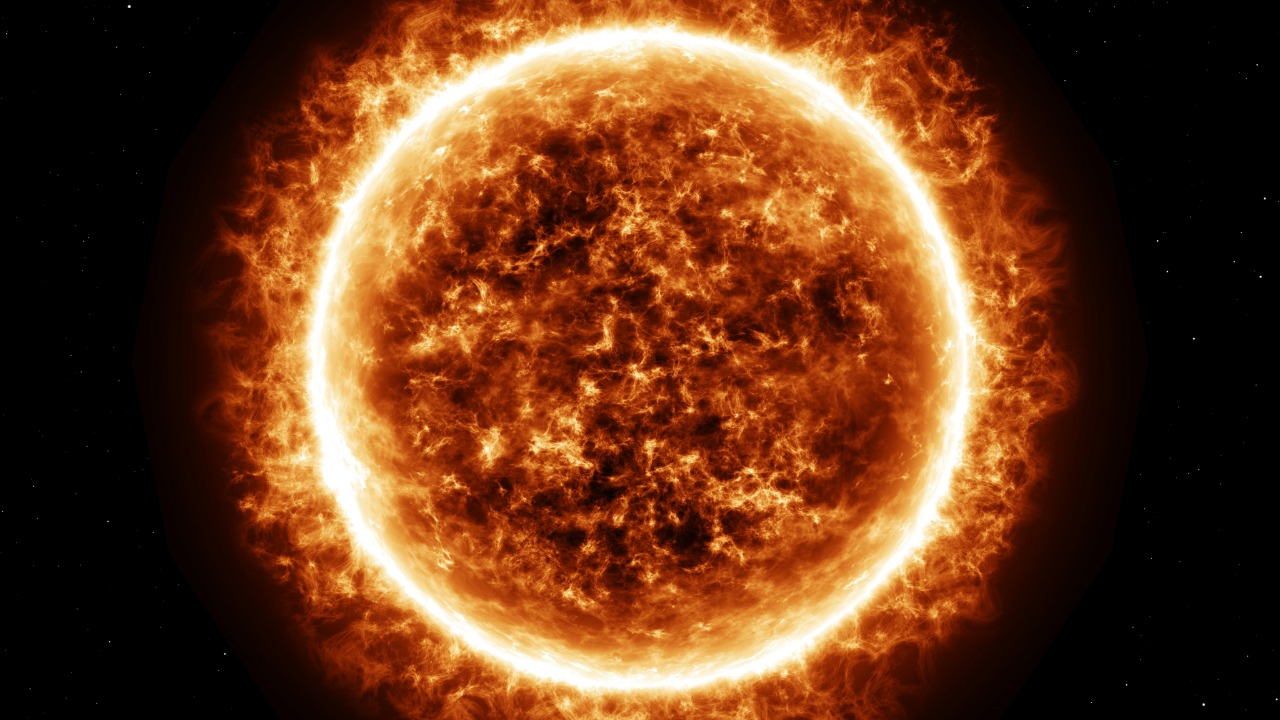
Space weather begins with activity on the Sun. Solar flares release intense electromagnetic radiation, while coronal mass ejections can throw enormous clouds of magnetized plasma into space.
When a sufficiently powerful eruption travels toward Earth, its magnetic field can interact with the planet’s magnetosphere. The resulting geomagnetic storm may disturb the ionosphere, energize radiation belts and generate electrical currents in long conductors on the ground.
Different hazards can arrive at different times. A solar flare may disrupt radio signals within minutes because its radiation travels at the speed of light. Charged particles may follow later, while a coronal mass ejection can take hours or days to reach Earth.
The report stresses that these effects may occur simultaneously, sequentially or in an unpredictable order. Failures in one system could then worsen problems in another, creating cascading disruptions that are difficult to model in advance.
GPS Could Become Inaccurate or Temporarily Unavailable
GPS and other global navigation satellite systems depend on extremely precise radio signals passing between satellites and receivers on Earth.
During a geomagnetic storm, the ionosphere can become irregular and change rapidly. Those changes affect how long navigation signals take to reach a receiver. Correction systems may fail when conditions change faster than updated information can be calculated and transmitted.
The report’s suggested worst-case scenario includes GPS positioning errors exceeding 100 meters, along with repeated losses of service lasting from seconds to tens of minutes. These interruptions could occur intermittently for several days across large regions of the world.
That would affect more than smartphone maps. Agriculture, maritime navigation, aviation, surveying, construction and emergency response all use satellite positioning. Financial networks, telecommunications systems and electricity infrastructure also rely on precise timing signals supplied by navigation satellites.
The May 2024 geomagnetic storm demonstrated how quickly these problems can become expensive. Space.com reported that the loss or degradation of satellite navigation contributed to an estimated $500 million in damage to the American agricultural industry, partly because automated farming equipment could not maintain accurate positioning.
Satellites Could Lose Altitude or Suffer Permanent Damage
Satellites face several risks during severe space weather.
Energetic particles can pass into electronic components, corrupt data, trigger unexpected commands or permanently damage sensitive hardware. Radiation can also degrade solar panels, reducing the amount of electricity a satellite produces and shortening its usable life.
A different problem occurs when solar radiation heats Earth’s upper atmosphere. The atmosphere expands and becomes denser at satellite altitudes, increasing drag on spacecraft in low Earth orbit.
That drag can slow satellites and pull them into lower orbits. Operators may need to perform emergency maneuvers, but sudden atmospheric changes can make orbital predictions inaccurate and complicate the tracking of active satellites and space debris.
During the March 1989 geomagnetic storm, tracking of thousands of objects was lost, and it took North American defense authorities several days to determine their altered orbits. The report also notes that a moderate storm in February 2022 contributed to the loss of 38 newly launched Starlink satellites operating at very low altitude.
A stronger event could produce a dangerous combination of increased drag, unreliable tracking and reduced spacecraft control. In crowded orbital regions, that could raise collision risks at the same time operators have less accurate information about where objects are located.
Electrical Grids Could Experience Regional Blackouts
Solar storms do not send ordinary electrical power directly from the Sun into homes. Instead, rapid changes in Earth’s magnetic field induce currents in long conductors, including high-voltage transmission lines.
These geomagnetically induced currents can enter transformers and push them outside normal operating conditions. Protective equipment may disconnect parts of the network, creating voltage instability or regional blackouts.
Transformers may also overheat or suffer premature aging. Even when equipment does not fail immediately, accumulated damage could reduce grid capacity for months or years after the event.
The 1989 Quebec storm caused a large power outage within about 90 seconds of the grid becoming unstable. Historical events have also damaged transformers and interrupted electricity supplies in Sweden and South Africa.
For a storm comparable to the 1859 Carrington Event, the new report says models suggest currents of tens to hundreds of amps could enter individual substations. It describes an event of that scale as approximately a one-in-200-year possibility, although estimates remain uncertain.
A worldwide blackout is not the most likely outcome. Local geology, grid design, transformer construction and latitude influence vulnerability. The concern is that several regional networks could face stress at the same time while satellite and communication services are also degraded.
Radio and Satellite Communications Could Be Interrupted
Solar flares can increase ionization in the upper atmosphere, absorbing high-frequency radio signals used by aircraft, ships, emergency services and long-distance communications.
A powerful solar radio burst can create another form of interference by overwhelming weak signals. The report describes this as a natural jamming process affecting the sunlit side of Earth.
A December 2006 solar radio burst disrupted navigation systems across the dayside of the planet. Another event in 2015 interfered with aircraft-control radars in Belgium, Estonia and Sweden.
Satellite communications can also experience scintillation, in which irregularities in the ionosphere cause rapid changes in signal intensity and phase. Under severe conditions, receivers may repeatedly lose their connection.
The report identifies possible disruption to L-band, UHF and VHF satellite links. These frequencies support services such as satellite telephones, maritime reporting and some aviation communications.
The Report Does Not Predict an Imminent Disaster
The assessment describes planning scenarios, not a forecast that a catastrophic solar storm is currently heading toward Earth.
A worst-case event is rare, and many severe storms cause limited damage because their magnetic orientation, duration and impact location matter as much as their apparent strength leaving the Sun.
For example, the May 2024 storm reached the highest G5 category on NOAA’s geomagnetic scale but caused no damaging effects to Britain’s power grid. The event nevertheless helped scientists improve models of satellite drag and induced electrical currents.
NOAA’s Space Weather Prediction Center issues watches, warnings and alerts for geomagnetic storms, solar radiation storms and radio blackouts. These notices allow satellite operators, airlines and power companies to take protective measures when forecasts indicate increased risk.
Forecasting remains difficult because scientists may not know the exact magnetic structure of a coronal mass ejection until it reaches monitoring spacecraft relatively close to Earth. That can leave infrastructure operators with limited time to respond.
How Infrastructure Operators Can Reduce the Damage
Power companies can adjust network configurations, reduce stress on vulnerable equipment and monitor geomagnetically induced currents. Satellite operators may place spacecraft into safer modes, delay launches or prepare orbital corrections.
Airlines can reroute polar flights when radiation or radio disruptions become serious. Navigation users can combine signals from several satellite constellations and use dual- or triple-frequency receivers that correct some ionospheric errors more effectively.
Backup timing systems and terrestrial navigation methods can also reduce dependence on GPS. The strongest protection comes from avoiding a single point of failure, because space weather can affect several connected technologies at once.
The report itself focuses primarily on defining the environmental threat rather than prescribing every resilience measure. Its wider message is that governments and industries need to prepare before an extreme event occurs, not after navigation, communications and electricity begin failing together.
A Solar Storm Would Affect Technology More Than People
People on Earth’s surface are largely protected from direct solar radiation by the atmosphere and magnetic field. The immediate danger is therefore not that sunlight or charged particles would physically harm most members of the public.
The main threat is society’s reliance on technologies that operate in space or depend on long electrical networks.
A severe storm could interrupt navigation, communications and electricity while also reducing the ability of operators to understand what is happening. Those overlapping failures could disrupt transportation, food distribution, banking and emergency response even when the storm itself is invisible to most people.
The report does not say that technological civilization would permanently collapse. It warns that a rare but credible solar event could expose how many essential systems depend on satellites, precise timing and stable power.
Preparing for that possibility is not alarmism. It is the same reason societies plan for earthquakes, major floods and other low-frequency disasters whose consequences could be unusually severe.