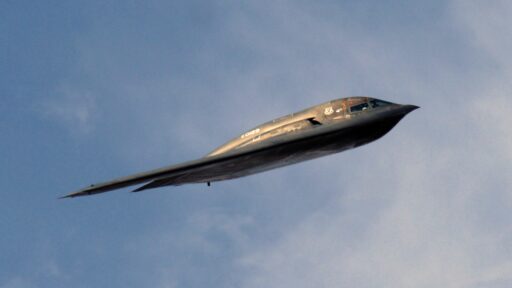
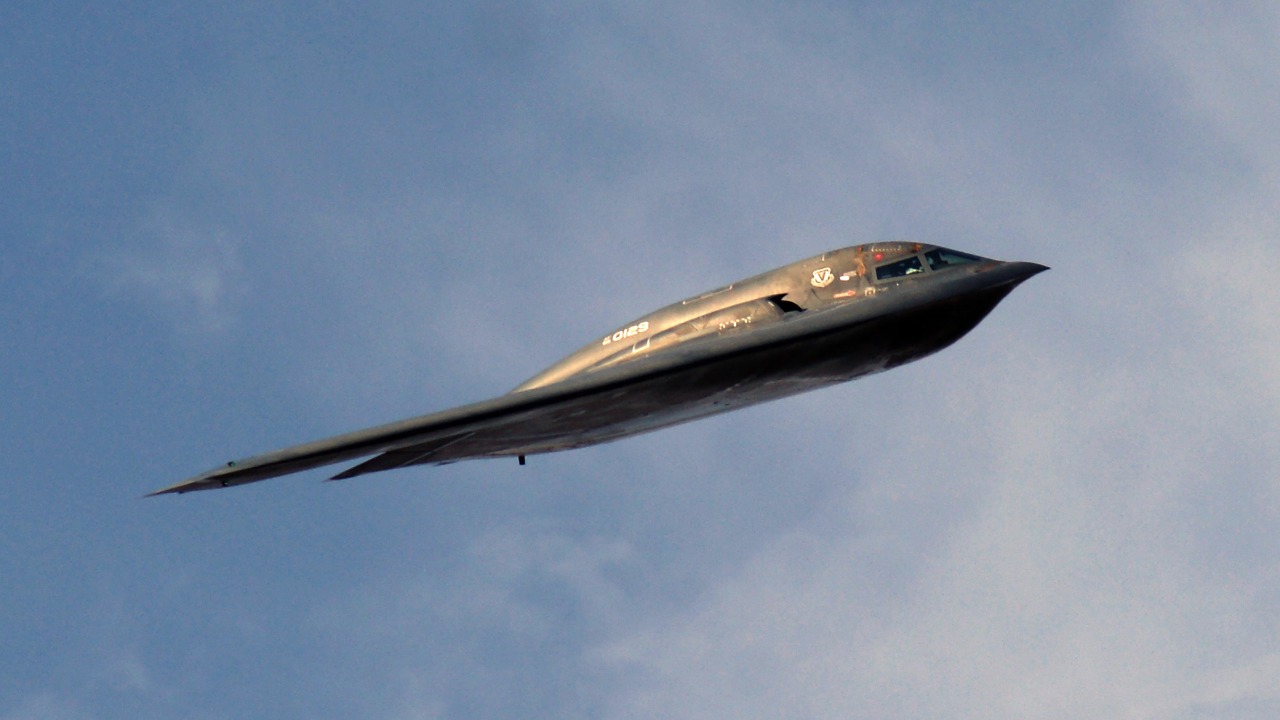

The U.S. Air Force has revealed that the B-2 Spirit stealth bomber can now fire the AGM-158C Long Range Anti-Ship Missile, giving one of America’s most advanced bombers a new maritime strike role. The announcement came after a live-fire sinking exercise in the Pacific, where a B-2 launched the missile against a decommissioned ship during Exercise Valiant Shield 2026.
According to Pacific Air Forces, U.S. airmen and sailors conducted a B-2 LRASM live-fire sinking exercise north of the Mariana Islands on June 27, 2026. The B-2 deployed the Long Range Anti-Ship Missile during the exercise, demonstrating an expanded ability to hold maritime targets at risk across the Indo-Pacific.
That is a major development because the B-2 is best known for penetrating defended airspace and striking fixed land targets. Pairing its stealth and long range with a dedicated anti-ship missile gives U.S. commanders another way to threaten enemy vessels from unexpected directions.
What Happened During the Exercise
The live-fire event took place during Valiant Shield 2026, a large joint exercise in the Pacific. The target was the decommissioned amphibious transport dock USS Juneau, which was used as a sinking exercise target. Sinking exercises, often called SINKEX events, allow the military to test weapons against real ships under controlled conditions.
The U.S. Air Force photo caption from Air Force Global Strike Command said a B-2 Spirit assigned to the 509th Bomb Wing deployed an AGM-158C LRASM to support the live-fire sinking exercise over the Philippine Sea. The caption also said the B-2 flew into the Mariana Island Range Complex and successfully employed the missile.
Military outlet Air & Space Forces Magazine reported that the event marked a significant expansion of the B-2’s maritime strike capabilities. The key point is not simply that the B-2 fired a missile. It is that the Air Force has now publicly shown the bomber can participate directly in anti-ship warfare.
What Is LRASM?
LRASM stands for Long Range Anti-Ship Missile. It is a stealthy, air-launched missile designed to find and attack warships at long distance. It is based on the Joint Air-to-Surface Standoff Missile family, but it is modified for maritime targeting.
Lockheed Martin, the missile’s manufacturer, describes LRASM as a precision-guided anti-ship weapon designed to operate in contested environments. The missile is intended to detect and strike moving ships, even when enemy defenses, electronic warfare, and complex ocean conditions make targeting difficult.
That is different from a standard bomb dropped on a fixed location. Ships move. They defend themselves. They may operate in groups with radars, missiles, decoys, jammers, and aircraft. A modern anti-ship missile must find the target, survive the approach, and hit with enough force to disable or sink it.
Why the B-2 and LRASM Combination Matters
The B-2 is a long-range stealth bomber. It is designed to fly deep into defended areas while reducing the chance of detection by radar. LRASM is a long-range, stealthy anti-ship missile designed to attack ships from outside the reach of many defenses. Putting the two together creates a powerful combination.
A B-2 can carry weapons over long distances without relying on nearby bases. It can fly from U.S. territory, refuel in the air, approach from unexpected routes, and launch missiles against maritime targets. That makes planning harder for an opponent.
The War Zone described the pairing as especially significant for the broad Pacific, where distances are huge and naval forces may operate far from friendly bases. In a theater where ships, aircraft, islands, and missiles are spread across vast ocean areas, long-range strike options matter.
Why This Is Important in the Indo-Pacific
The Indo-Pacific is defined by distance. Bases are far apart, islands are scattered, and naval forces can move across enormous areas. Any conflict in the region would likely involve control of sea lanes, island chains, airspace, and maritime chokepoints.
The United States has been investing heavily in anti-ship weapons because China has built one of the world’s largest naval forces and continues to expand its maritime power. A bomber that can launch anti-ship missiles from long range adds another layer to U.S. deterrence.
Reuters previously reported that the U.S. has been building a larger arsenal of anti-ship weapons to counter China’s maritime capabilities, including systems such as LRASM, Tomahawk, SM-6, and lower-cost ship-killing concepts like QUICKSINK. That broader strategy is about creating enough strike options to complicate any attempt to dominate the seas.
The B-2 Was Not Originally Famous for Ship Hunting
The B-2 Spirit entered service as a strategic stealth bomber built for penetrating air defenses and delivering nuclear or conventional weapons against high-value land targets. It has been used in conflicts ranging from Kosovo to Afghanistan, Iraq, Libya, and strikes against hardened targets.
Its traditional image is not that of a maritime patrol aircraft or anti-ship platform. Aircraft such as the Navy’s P-8 Poseidon, carrier-based fighters, and bombers like the B-1 have been more commonly associated with anti-ship missions. The B-1B, in particular, has long been linked to LRASM carriage.
That is why the B-2 announcement stands out. It suggests the Air Force is expanding the roles of existing platforms instead of waiting only for future systems. The B-2 may now be able to contribute to sea-control missions in addition to its classic strategic-strike role.
Why Stealth Changes the Maritime Strike Problem
Warships are not passive targets. Modern naval groups use radar, electronic warfare, surface-to-air missiles, decoys, aircraft, and layered defenses. A non-stealthy aircraft launching from predictable routes may be easier to detect and intercept.
A stealth bomber changes the geometry. If a B-2 can approach closer or remain harder to track, it may force an opponent to defend a larger area. Even if the missile itself has long range, the launch platform’s stealth can increase uncertainty about where an attack might come from.
That uncertainty is valuable. Naval commanders must protect against threats they can see and threats they cannot easily locate. A stealth bomber carrying anti-ship missiles makes the defensive problem more complex.
Why Sinking Exercises Matter
Sinking exercises are important because they test weapons against real ship structures. Computer models and range tests are useful, but a real ship target provides more realistic data about impact, warhead effects, damage pathways, flooding, fires, and weapon performance.
The U.S. military has used SINKEX events for decades to evaluate weapons and training under controlled conditions. Environmental rules and safety procedures are part of the process, and decommissioned ships are prepared before being used as targets.
The B-2 LRASM event gave the Air Force and Navy a chance to evaluate how the weapon performs when launched from a stealth bomber in a maritime scenario. It also sent a public signal that the capability is no longer theoretical.
Why Public Disclosure Matters
The B-2 is one of the most secretive aircraft in the U.S. inventory. Not every capability is publicly announced. When the Air Force chooses to reveal a new weapons pairing, the announcement itself is part of strategic messaging.
Publicly showing that the B-2 can launch LRASM tells allies, adversaries, and defense planners that the United States has added another long-range anti-ship option. It reassures partners in the Pacific while warning potential opponents that U.S. bombers can threaten ships as well as land targets.
This kind of disclosure can strengthen deterrence. Deterrence depends partly on capability and partly on the opponent knowing that capability exists.
How This Fits With Valiant Shield
Valiant Shield is a major U.S. military exercise focused on joint operations in the Indo-Pacific. It often includes air, naval, space, cyber, and ground components working together across large distances.
The exercise environment is well suited for testing long-range strike, maritime targeting, command-and-control, joint fires, and logistics. A B-2 firing LRASM during Valiant Shield fits the broader theme of integrating air and sea power.
The U.S. military wants its forces to operate together across domains. That means aircraft, ships, submarines, satellites, sensors, and command networks must share targeting information and coordinate fires. Anti-ship warfare is not only about the missile. It is about finding the target, tracking it, authorizing the strike, launching the weapon, and assessing the result.
The Targeting Challenge Remains Huge
Giving the B-2 LRASM is only one part of the maritime strike problem. The harder challenge is often finding and tracking moving ships across the ocean. The sea is enormous, and warships can move, hide, use emissions control, deploy decoys, and operate under air defense cover.
To strike ships effectively, the U.S. military needs intelligence, surveillance, reconnaissance, satellites, aircraft, submarines, unmanned systems, and data links that can locate and update targets. The launch platform and missile matter, but the sensor network may matter even more.
LRASM was designed to help with this problem by giving the missile more autonomous targeting capability than older weapons. Still, the broader kill chain remains central. A stealth bomber with a ship-killing missile is powerful only if the joint force can identify the right target at the right time.
What This Means for the B-21 Raider
The B-2 is eventually expected to be replaced by the newer B-21 Raider, another stealth bomber designed for long-range operations. The B-21 is still entering the force, while the B-2 remains operational.
The B-2’s LRASM integration could preview future maritime roles for the B-21. If the Air Force sees value in stealth bombers carrying anti-ship missiles, it would make sense for the next-generation bomber to support similar or expanded weapons.
That means the announcement is not only about today’s B-2 fleet. It may also show where U.S. bomber doctrine is heading: long-range aircraft that can strike land targets, maritime targets, mobile targets, and high-value defended systems across the Indo-Pacific.
Why This Matters for Allies
U.S. allies in the Pacific, including Japan, Australia, South Korea, the Philippines, and others, closely watch American long-range strike capabilities. Many of these countries are concerned about regional maritime security, freedom of navigation, and the balance of power at sea.
A stealth bomber that can threaten ships gives the U.S. another way to support allied defense without relying solely on carrier strike groups or forward bases. Carriers are powerful but visible. Bases can be targeted. Bombers can operate from farther away and create more uncertainty.
This may also encourage deeper cooperation on targeting, basing, refueling, logistics, and joint exercises. Maritime deterrence is increasingly a networked effort rather than a single-platform mission.
Why Adversaries Will Study the Test Closely
Any potential adversary will study the B-2 LRASM disclosure carefully. They will want to know how many missiles a B-2 can carry, how the aircraft communicates with other sensors, what launch ranges are possible, what defenses might work against LRASM, and how to protect high-value ships.
They may respond by improving air defenses, electronic warfare, decoys, ship dispersal tactics, counter-stealth radars, or long-range missile threats against bomber bases and tankers.
That is how military competition works. One new capability creates pressure for counters, which then drives further development. The B-2 LRASM pairing is a meaningful step, but it is part of a larger competition between strike systems and defenses.
Why This Does Not Mean Ships Are Defenseless
The phrase “can sink ships” can sound absolute, but real combat is never that simple. A successful test against a decommissioned ship proves capability under controlled conditions. It does not mean every missile will always penetrate every defense or sink every target.
Modern warships are built with sensors, defensive missiles, guns, electronic warfare systems, decoys, damage control, and layered protection. The outcome of a real engagement would depend on targeting, weather, readiness, enemy defenses, missile numbers, surprise, tactics, and ship survivability.
The important point is that the B-2 now adds another threat axis. It does not erase naval defenses, but it forces them to account for a stealthy bomber carrying a purpose-built anti-ship missile.
Final Takeaway
The Air Force has revealed that the B-2 Spirit stealth bomber can now launch the AGM-158C Long Range Anti-Ship Missile, giving the aircraft a publicly confirmed ship-killing role. The capability was demonstrated during a live-fire sinking exercise over the Philippine Sea on June 27, 2026, as part of Valiant Shield.
The pairing matters because it combines the B-2’s stealth and long range with LRASM’s maritime strike design. In the Indo-Pacific, where distances are vast and naval power is central, that combination could become a major deterrent.
Still, the announcement should be understood realistically. The B-2 did not suddenly become a simple one-aircraft solution to naval warfare. Targeting, command networks, defenses, and real-world combat conditions all matter. But the message is clear: America’s stealth bomber can now threaten ships from the air, and that changes how opponents must think about protecting fleets in contested waters.