
A personalized melanoma vaccine has shown lasting promise five years after treatment, cutting the risk of the cancer returning or death by 49% when used with the immunotherapy drug Keytruda. The result is one of the clearest signs yet that mRNA technology may play a serious role in cancer treatment, not only infectious disease prevention.
The vaccine is called intismeran autogene, also known as mRNA-4157 or V940. It is being developed by Moderna and Merck as an individualized cancer therapy. According to NYU Langone Health, the combination of the personalized vaccine and pembrolizumab, sold as Keytruda, sustained a 49% reduction in the risk of melanoma recurrence or death after five years of follow-up.
That matters because melanoma can be dangerous even after surgery. Patients with high-risk melanoma may have tumors removed completely, but cancer cells can still remain hidden in the body. If those cells later grow again, the cancer can return locally or spread to distant organs. A treatment that helps the immune system find and attack those remaining cells could change how doctors manage high-risk disease after surgery.
What Makes This Melanoma Vaccine Different?
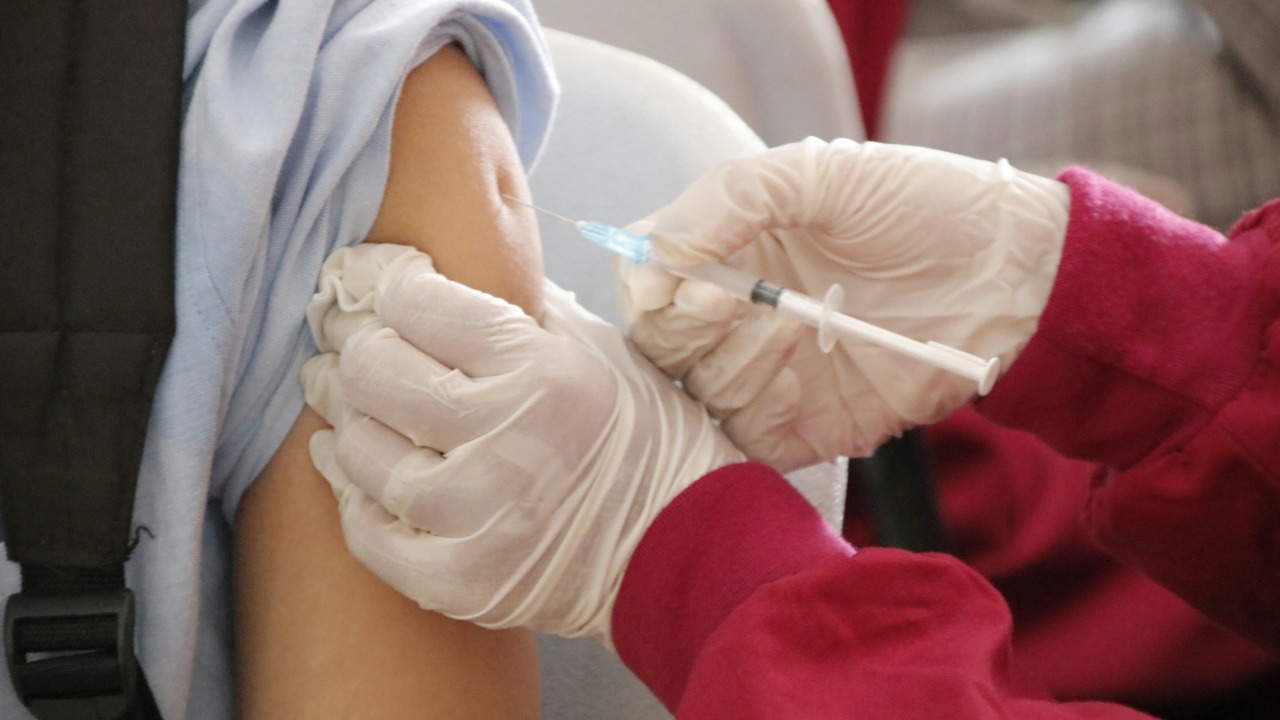
This is not a traditional vaccine that is given to the general public to prevent infection. It is a personalized cancer vaccine made for one patient at a time. Doctors analyze the genetic mutations in a patient’s tumor, then design an mRNA vaccine that teaches the immune system to recognize cancer-specific targets called neoantigens.
In simple terms, the vaccine is built from the tumor’s own fingerprint. It tries to show the immune system what the patient’s cancer looks like so immune cells can hunt down remaining cancer cells after surgery.
Moderna explains its mRNA platform as a way to give the body instructions to produce proteins that can trigger a specific immune response. In cancer, the goal is different from COVID-19 vaccination. Instead of training the immune system to recognize a virus, this vaccine is designed to train it to recognize tumor mutations that are unique to each patient.
How the Trial Was Designed
The five-year data came from the phase 2b KEYNOTE-942 trial, which studied patients with high-risk stage III or IV melanoma after complete surgical removal of their cancer. The trial compared Keytruda alone with Keytruda plus the personalized mRNA vaccine.
According to Merck’s 2026 ASCO update, the study included 157 patients and showed sustained improvement in recurrence-free survival after five years of follow-up. Patients receiving the vaccine plus Keytruda had better long-term outcomes than those receiving Keytruda alone.
The key measurement was recurrence-free survival. That means how long patients lived without the cancer returning. In melanoma treatment, this is extremely important because recurrence can lead to more aggressive disease and harder treatment decisions.
The 49% Risk Reduction Explained
The headline number is a 49% reduction in the risk of recurrence or death. This does not mean 49% of all patients were cured, and it does not mean every patient benefited equally. It means that, compared with Keytruda alone, the combination therapy lowered the relative risk of melanoma returning or death during the follow-up period.
This distinction matters because cancer trial headlines can easily be misunderstood. A risk reduction describes the difference between treatment groups. It does not guarantee an individual outcome. Still, a nearly half-lower risk of recurrence or death after five years is a meaningful signal in a high-risk melanoma population.
The results also showed benefit in distant metastasis-free survival. Reuters reported that Moderna and Merck’s combination reduced the risk of melanoma spreading to distant sites or death by 59% over five years. That is important because distant spread is one of the most serious developments in melanoma care.
Why Melanoma Recurrence Is So Serious
Melanoma is one of the most aggressive forms of skin cancer. When caught early, it can often be treated successfully with surgery. But once melanoma spreads to lymph nodes or distant organs, it becomes more dangerous and harder to control.
The American Cancer Society explains that melanoma is less common than some other skin cancers but is more likely to grow and spread if not found early. This is why prevention, early detection, surgery, immunotherapy, and follow-up care all matter.
High-risk melanoma patients may have no visible cancer left after surgery, but their risk is not gone. Doctors often use adjuvant therapy after surgery to reduce the chance of recurrence. The vaccine-plus-Keytruda approach fits into this adjuvant setting, where the goal is to stop cancer from coming back.
How Keytruda Helps the Immune System
Keytruda is an immune checkpoint inhibitor. It works by blocking PD-1, a protein that can stop immune cells from attacking cancer. Some tumors use the PD-1 pathway to hide from the immune system. By blocking that pathway, Keytruda helps immune cells stay active against cancer.
The FDA has approved pembrolizumab for certain melanoma treatment settings, including adjuvant treatment for some patients after surgery. It is already an important part of melanoma care.
The personalized mRNA vaccine is designed to work differently but complement Keytruda. The vaccine tells the immune system what to look for. Keytruda helps immune cells remain active once they recognize the target. Together, the approach aims to create a stronger and more durable anti-cancer immune response.
Why mRNA Technology Fits Personalized Cancer Treatment
mRNA technology is well suited for personalized cancer vaccines because it can be designed relatively quickly once a tumor’s mutations are identified. Each patient’s tumor may have a different set of mutations, so a one-size-fits-all vaccine may not work well for every cancer.
With this approach, tumor tissue is sequenced after surgery. Researchers identify mutations likely to create immune targets. Then they design an individualized mRNA vaccine encoding selected neoantigens. Once given to the patient, the vaccine is meant to train T cells to recognize and attack cancer cells carrying those mutations.
This is why the treatment is called individualized neoantigen therapy. It is not simply a melanoma vaccine sitting on a pharmacy shelf. It is custom-built for the patient’s tumor profile.
Why Five-Year Data Matters
Early cancer trial results can be exciting, but cancer experts want to know whether benefits last. A treatment may look promising at one or two years but lose its advantage later. Five-year follow-up is important because it suggests the benefit may be durable.
The latest results are especially encouraging because they appear consistent with earlier data. Previous updates had already shown a strong reduction in recurrence risk at around three years. The five-year data suggest that the benefit did not disappear with longer follow-up.
For patients and doctors, durability matters. High-risk melanoma can recur years after surgery. A therapy that continues to show separation between treatment groups over time is more meaningful than one that produces only a short-term delay.
Why This Is Still Not the Final Answer
The results are promising, but the vaccine is still investigational. It is not yet a standard approved melanoma treatment for all eligible patients. The phase 2b trial was relatively small, with 157 patients. Larger phase 3 trials are needed to confirm the benefit, better define safety, and support potential regulatory approval.
Reuters reported that Moderna and Merck are running late-stage studies of the vaccine in melanoma and testing it in other cancers, including lung cancer. These larger trials will be crucial because phase 3 data can show whether the effect holds in a broader patient population.
This caution is important. Many cancer treatments look strong in mid-stage trials but need confirmation before becoming routine care. The five-year results are encouraging, but doctors will want to see full phase 3 outcomes before changing standard practice broadly.
What the Results Mean for Patients
For patients with high-risk melanoma, the results offer hope that future treatment may become more personalized and more effective. A vaccine designed from a patient’s own tumor could help reduce the chance that cancer returns after surgery.
However, patients should not assume this therapy is already available as routine care. Anyone with melanoma should talk with an oncology team about approved treatment options, clinical trials, recurrence risk, and follow-up plans.
Patients should also remember that melanoma care is already changing quickly. Surgery, immunotherapy, targeted therapy, genetic testing, and clinical trials may all play a role depending on tumor stage and mutation profile. The personalized mRNA vaccine may eventually become another tool in that expanding treatment landscape.
What the Results Mean for Cancer Research
For cancer researchers, the trial supports a major idea: the immune system can be trained in a highly personalized way to recognize cancer. If this approach works in melanoma, researchers may explore similar strategies in lung cancer, bladder cancer, kidney cancer, and other tumors where immune therapy already plays a role.
Melanoma is a logical starting point because it often has many mutations, which can create more neoantigens for the immune system to recognize. Cancers with higher mutation burden may be better suited to personalized vaccine strategies, although research is still ongoing.
The success of this approach could also change how cancer vaccines are viewed. For decades, cancer vaccines have been difficult to develop. Many failed to produce strong enough benefits. The mRNA platform may give researchers a more flexible way to design vaccines that match each patient’s tumor biology.
Safety Still Matters
Any cancer treatment must be judged not only by benefit but also by safety. The combination of an immune checkpoint inhibitor and a vaccine can stimulate the immune system, which may cause side effects. Common effects reported in earlier data included fatigue, injection-site pain, chills, fever-like symptoms, and other immune-related reactions.
Keytruda itself can also cause immune-related side effects because it activates immune responses. These can affect organs such as the skin, lungs, liver, colon, thyroid, and other glands. Most side effects can be managed when detected early, but some can be serious.
That is why treatment decisions must be made with cancer specialists. A promising therapy still needs careful monitoring, patient selection, and risk-benefit discussion.
Why This Could Be a Turning Point for mRNA Cancer Therapy
The COVID-19 pandemic made mRNA vaccines widely known, but scientists had been studying mRNA technology for cancer long before that. The melanoma data show why. mRNA can be adapted to encode highly specific targets, which makes it attractive for diseases driven by unique mutations.
If larger trials confirm the results, this could become one of the first major examples of mRNA technology producing durable benefit in cancer treatment. That would be a major milestone for oncology and for personalized medicine.
It could also open the door to more individualized cancer therapies where treatment is designed not only around the cancer type, but around the exact mutations in one person’s tumor.
Why Prevention and Early Detection Still Matter
Even with better treatments, melanoma prevention and early detection remain essential. Sunscreen, protective clothing, avoiding tanning beds, checking changing moles, and seeing a dermatologist for suspicious skin changes can still save lives.
The Skin Cancer Foundation explains that melanoma can be dangerous but is highly treatable when detected early. New therapies are important, but preventing advanced disease remains the best outcome.
A vaccine that reduces recurrence risk after high-risk melanoma is a major advance, but it does not replace skin checks or sun safety. It helps patients after diagnosis and surgery. Prevention helps reduce the chance of getting melanoma in the first place.
Final Takeaway
A personalized mRNA melanoma vaccine from Moderna and Merck has shown sustained benefit five years after treatment when combined with Keytruda. In high-risk stage III or IV melanoma patients whose tumors had been completely removed, the combination reduced the risk of cancer recurrence or death by 49% compared with Keytruda alone.
The therapy also reduced the risk of distant metastasis or death by 59%, suggesting it may help prevent melanoma from spreading to more dangerous sites. These results are encouraging because melanoma recurrence can be life-threatening and difficult to treat.
Still, the vaccine remains investigational, and larger phase 3 trials are needed before it can become a standard treatment. For now, the five-year data represent a strong signal that personalized mRNA cancer vaccines may become an important part of future oncology care.
The most important message is hope with caution. This is not a universal cancer cure, but it may be a meaningful step toward a future where cancer treatment is built around each patient’s own tumor biology.