
A massive coffin discovered near China’s famous Terracotta Army may belong to a doomed prince from one of the most dramatic chapters in ancient Chinese history. Archaeologists have been studying a large tomb within the mausoleum complex of Qin Shi Huang, China’s first emperor, and the clues suggest the burial may be connected to Prince Gao, one of the emperor’s sons.
The discovery has drawn attention because of its size, location, and unusual wealth. According to reporting from The Times, archaeologists found a 16-tonne coffin in a tomb near the Terracotta Army, along with rich burial goods that may point to a high-ranking royal figure. The identity has not been confirmed, but the leading theory is that the tomb may hold Prince Gao, whose tragic death was recorded in ancient Chinese historical texts.
That possibility makes the find more than another impressive tomb. If the evidence eventually confirms the occupant’s identity, the discovery could connect physical archaeology with a 2,000-year-old story of power, succession, fear, and royal sacrifice.
Why This Discovery Is So Important
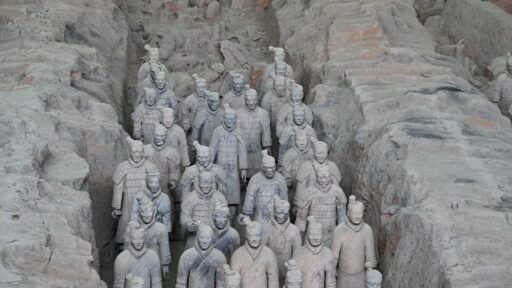
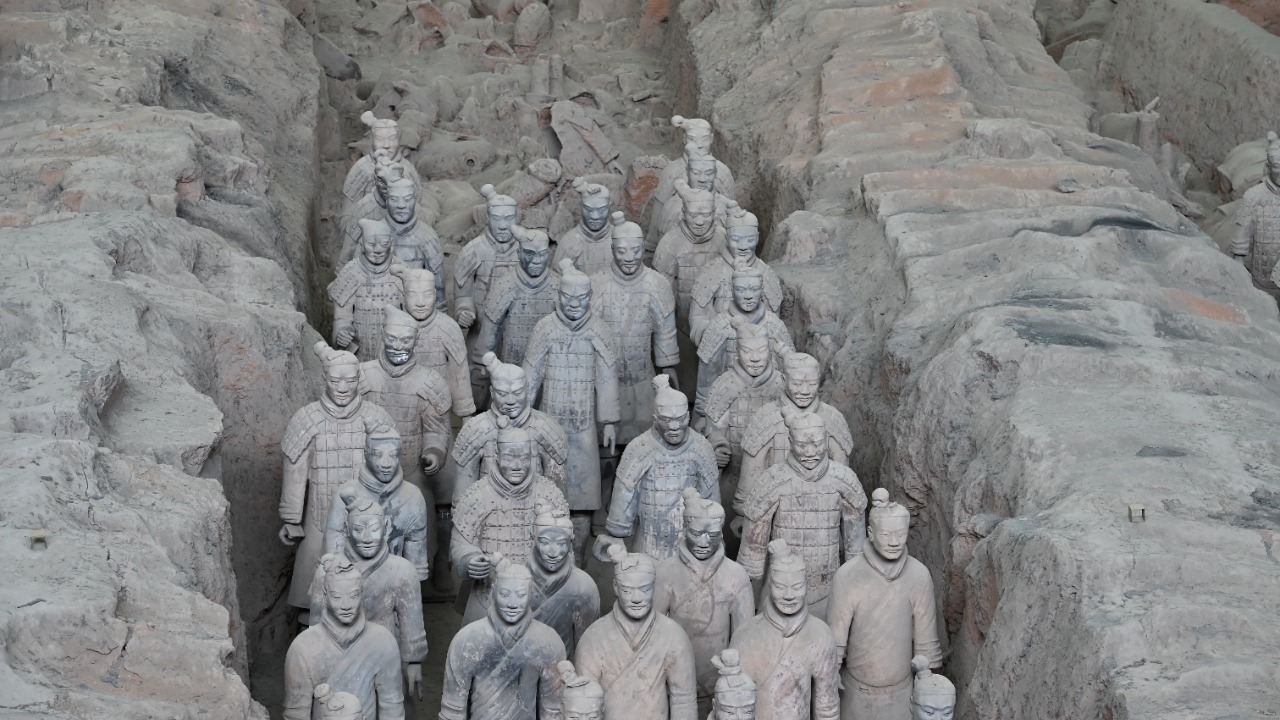
The Terracotta Army is already one of the most famous archaeological discoveries in the world. Thousands of life-sized clay soldiers were buried near the tomb of Qin Shi Huang to guard him in the afterlife. The main imperial tomb itself remains largely unexcavated, but the surrounding mausoleum complex has continued to reveal pits, artifacts, tombs, and evidence of the enormous labor used to build the emperor’s burial world.
A large aristocratic tomb within this complex is significant because it may reveal how close relatives, officials, or elite figures were buried around the first emperor. The UNESCO World Heritage Centre describes the Mausoleum of the First Qin Emperor as a major archaeological site that includes thousands of terracotta warriors, horses, and chariots arranged as part of a vast funerary landscape.
The newly discussed tomb appears to fit into that larger landscape. Its scale and grave goods suggest that the person buried there was not ordinary. The weight of the coffin, the richness of the objects, and the tomb’s location all point toward someone of high status.
What Was Found Inside the Tomb?
Reports describe a huge coffin weighing around 16 tons, surrounded by valuable burial objects. These included weapons, armor, jade items, thousands of bronze coins, and rare gold and silver camel figures. A report by Popular Mechanics noted that the treasure-filled tomb may help support an ancient legend connected to the Qin royal family.
The presence of weapons and armor may suggest that the person buried there had military status or was meant to be remembered with martial symbolism. Jade and bronze coins point to wealth and elite burial customs. The gold and silver camels are especially intriguing because they suggest long-distance trade, prestige, or symbolic meaning during the Qin period.
These objects do not prove the tomb belongs to Prince Gao, but they show that the burial was important. In archaeology, identity is often built from multiple layers of evidence: location, dating, skeletal remains, grave goods, inscriptions, seals, and comparison with historical records. At the moment, the Prince Gao theory is compelling but still not fully confirmed.
Who Was Prince Gao?
Prince Gao was one of the sons of Qin Shi Huang, the ruler who unified China in 221 BCE and became its first emperor. After Qin Shi Huang died, a brutal political struggle followed. The throne passed to Hu Hai, who became the Second Emperor of Qin. Ancient accounts describe violent purges of royal siblings and court rivals during this unstable transition.
The story of Prince Gao comes from the Shiji, or Records of the Grand Historian, written by Sima Qian. This foundational Chinese historical text records that Prince Gao, facing the deadly politics of succession, asked to die and be buried near his father rather than flee or resist. The English translation of related Qin historical material is discussed through resources such as the Internet Sacred Text Archive’s Shiji selections, which helps show how central Sima Qian’s work is to later understanding of early imperial China.
If the tomb really belongs to Prince Gao, it would offer rare physical evidence connected to a story that has survived for more than two millennia. That would make the discovery historically powerful, because it could show that a dramatic ancient account was not only literary memory but may also reflect a real burial event.
Why Prince Gao Is Called a Doomed Prince
Prince Gao is often described as doomed because he lived through one of the most dangerous moments in Qin royal history. After Qin Shi Huang’s death, the question of succession became deadly. The new emperor and powerful court figures allegedly eliminated potential rivals, including royal siblings who might threaten the throne.
In that context, Prince Gao’s reported request to die and be buried in the emperor’s mausoleum appears tragic. It suggests a prince trapped by politics, unable to safely survive the new regime. Instead of leading a rebellion or escaping, he may have chosen death as a way to protect his family or preserve honor.
This is why the possible identification of the tomb matters. A coffin and burial goods are not only objects. They may be physical traces of a human story involving fear, loyalty, dynastic collapse, and the violence of early imperial politics.
How the Tomb Connects to the Terracotta Army
The Terracotta Army was discovered in 1974 near Xi’an in Shaanxi province. It forms part of the enormous mausoleum complex built for Qin Shi Huang. The warriors were designed to protect the emperor in the afterlife, but the wider site includes far more than soldiers. Archaeologists have found pits with officials, acrobats, animals, chariots, weapons, and other features that suggest a complete imperial world constructed underground.
The Emperor Qinshihuang’s Mausoleum Site Museum presents the Terracotta Army as part of a much larger funerary complex rather than a standalone army. This is important because the newly discussed tomb is not random. Its location near the mausoleum may place it within the emperor’s ritual and political landscape.
If a royal son was buried there, it would make sense in symbolic terms. The emperor’s mausoleum was not only a burial place; it was an expression of imperial power. Being buried near it could signal loyalty, status, punishment, or forced association with the emperor’s afterlife.
Why Archaeologists Are Being Careful
Despite the excitement, archaeologists cannot simply declare the tomb to be Prince Gao’s without stronger proof. The strongest confirmation would likely come from an inscription, personal seal, or other named object directly linking the burial to him. Without that, the identification remains a theory based on context and probability.
This caution is important because ancient elite tombs can be difficult to identify. Grave goods may show rank but not name. Skeletons can reveal age, sex, diet, health, and sometimes ancestry, but they do not automatically reveal identity. Historical texts can guide interpretation, but they can also contain political storytelling, later edits, or dramatic details that need to be tested against physical evidence.
The careful approach makes the discovery more credible. Archaeology works best when claims are matched to evidence. The tomb may indeed belong to Prince Gao, but until the final proof appears, the most accurate wording is that it may hold the doomed prince.
What the Coffin Reveals About Qin Burial Culture
The massive coffin and rich objects reveal how seriously the Qin elite treated death, status, and the afterlife. In early imperial China, burial was not only a private family event. It was tied to power, rank, cosmology, and political order. Tombs could display wealth, military identity, social position, and hopes for the afterlife.
Qin Shi Huang’s own mausoleum is the most extreme example of this belief system. The emperor created an underground world filled with soldiers, officials, animals, and symbols of empire. A high-ranking tomb nearby may show how royal relatives were included in or attached to that imperial deathscape.
The gold and silver camels are especially interesting because camels are often associated with movement, trade, and frontier connections. Their presence may hint at luxury exchange networks or symbolic ideas that deserve more study. Even if the occupant is not Prince Gao, the artifacts still provide valuable evidence about wealth, craft, and elite identity in the Qin period.
Why This Find Could Support Ancient Chinese Records
One reason the discovery is so exciting is that it may support details found in ancient historical writing. The Shiji is one of the most important sources for early Chinese history, but like all ancient texts, it must be compared with archaeology. When physical discoveries match recorded events, historians gain more confidence in parts of the written tradition.
The possible Prince Gao tomb may become one of those moments. If a high-status young male burial near the emperor’s mausoleum is eventually matched with a named object, it could strengthen the historical account of Qin royal deaths after the first emperor’s passing.
That would not mean every detail in ancient texts is automatically proven. It would mean that archaeology and literature may be converging around one specific story. This kind of connection is rare and valuable because it brings ancient political drama into sharper focus.
The Bigger Story of Qin Shi Huang’s Mausoleum
Qin Shi Huang’s mausoleum remains one of the most fascinating archaeological sites on Earth. The emperor unified China, standardized writing and measurements, built massive infrastructure, and ruled with intense central authority. His tomb complex reflects that ambition. It was designed not as a simple grave, but as a buried empire.
Yet much of the central tomb remains unopened. Archaeologists have been cautious because excavation could damage fragile materials and because some ancient accounts describe rivers of mercury inside the tomb. Scientific studies have found unusually high mercury levels in the area, which has added to the mystery and caution around the site.
The surrounding discoveries, including this 16-ton coffin, show that the mausoleum still has many stories to reveal without opening the main imperial tomb. Each nearby pit or burial adds another piece to the puzzle of Qin power, belief, fear, and afterlife planning.
What This Means for Modern Archaeology
The possible Prince Gao tomb shows how modern archaeology can revisit ancient stories with new tools. Excavation, conservation, residue analysis, DNA testing, isotope studies, 3D scanning, and artifact comparison can all help researchers understand who was buried, how they lived, and why their tomb was built in a certain way.
This also shows why preservation matters. A tomb that may once have seemed too fragile or risky to excavate can become readable as technology improves. The more carefully archaeologists work, the more information they can recover from damaged wood, corroded metal, bones, soil, and tiny traces of organic material.
The discovery also reminds the public that archaeology is rarely instant. Headlines may focus on a prince, treasure, or giant coffin, but the real work happens slowly. Every object must be recorded, preserved, studied, and compared before researchers can make stronger conclusions.
Final Takeaway
The 16-ton coffin found near China’s Terracotta Army may belong to Prince Gao, a doomed son of Qin Shi Huang whose tragic death was recorded in ancient Chinese history. The tomb’s location, scale, and rich burial goods make the theory plausible, but the identification has not yet been fully confirmed.
If future evidence links the burial directly to Prince Gao, the discovery would be extraordinary. It would connect one of China’s most famous archaeological sites with a personal royal tragedy from the final years of the Qin dynasty. It could also strengthen the connection between physical evidence and ancient records such as the Shiji.
For now, the coffin remains both a mystery and a powerful clue. It shows that the world around the Terracotta Army still holds secrets, and that even after decades of excavation, Qin Shi Huang’s mausoleum complex continues to reveal new stories about power, death, and the people caught inside the first empire’s dangerous politics.