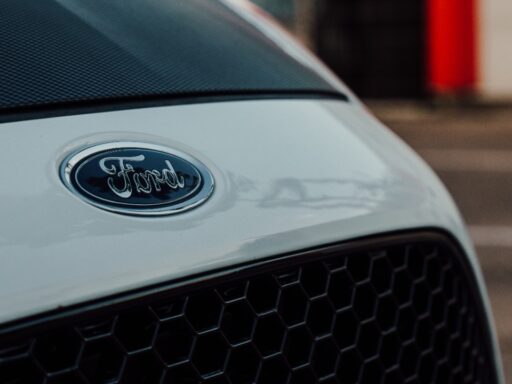

Ford has escalated two safety campaigns into rare “do not drive” recalls, telling some owners to park their vehicles immediately until repairs are made. The shift reflects mounting concern that specific defects in certain Ford Maverick and Bronco Sport models, along with a larger group of Ford and Lincoln vehicles, pose an unacceptable crash or fire risk.
For drivers, the message is blunt: do not assume a recall is minor. The only way to know if a vehicle is affected is to run its Vehicle Identification Number, or VIN, through official recall tools and follow the instructions that appear.
How two Ford recalls escalated into strict ‘do not drive’ warnings
Ford’s “do not drive” language applies to a subset of vehicles already under recall, meaning the underlying problems are not new, but the level of urgency is. In one campaign, certain Ford Maverick and Bronco Sport models are being called back for a fuel leak issue that can increase the risk of fire. After additional analysis and incident reports, Ford moved from a standard recall to a directive that some owners should not drive their vehicles until repairs are complete, a change reflected in guidance on affected Maverick and Bronco models.
The second “do not drive” warning is tied to a broader recall that now covers about 420,000 vehicles. In that case, Ford has identified a defect that can lead to a sudden loss of control or other serious safety failures, and has told owners of certain units to stop driving immediately. That larger action, which includes specific Ford and Lincoln vehicles, has been described as a “stop drive” warning for roughly 420,000 vehicles that need inspection and repair.
“Do not drive” is one of the strongest phrases an automaker can use in a recall notice. Most safety campaigns tell owners to schedule a repair “at their earliest convenience,” which can lead some drivers to delay service for weeks or months. By contrast, a stop drive instruction signals that the company and federal regulators see a credible risk of serious injury or death if the vehicle remains on the road without a fix.
Ford’s decision to escalate these two recalls suggests that new data, such as field reports, warranty claims, or engineering tests, has changed the company’s risk assessment. Once an issue crosses a certain threshold of severity or likelihood, the automaker is expected to communicate that to owners in the clearest possible terms, even if it creates logistical headaches and reputational damage.
Why the upgraded recalls matter for drivers right now
For owners, the stakes are immediate and personal. A “do not drive” label can disrupt daily life, especially for households that rely on a single vehicle for work, school, and caregiving. Yet the alternative is continuing to operate a car or SUV that the manufacturer believes could fail catastrophically, sometimes without warning.
In the case of the Maverick and Bronco Sport fuel system recall, the concern is that a leak could lead to an engine compartment fire, either while driving or shortly after the vehicle is parked. Even if a fire risk is statistically small, the consequences can be severe, particularly if it occurs at speed or in a confined space like a garage. For the larger group of 420,000 vehicles, the defect at issue can affect the driver’s ability to maintain control, raising the possibility of high speed crashes or collisions in traffic.
These escalated recalls also highlight how many owners still miss or ignore recall notices. Mailers can be mistaken for junk, email alerts may go to outdated addresses, and second or third owners often never receive the original manufacturer letter. That gap is why regulators and safety advocates repeatedly urge drivers to check their VINs directly on official recall lookup sites instead of waiting for a letter to arrive.
The VIN is a 17 character code printed on the dashboard near the windshield and on registration documents. By entering that number into a government or manufacturer recall tool, owners can see every open campaign on their specific vehicle, including whether it carries a “do not drive” or “park outside” warning. For anyone with a Ford Maverick, Bronco Sport, or a Ford or Lincoln model mentioned in the 420,000 vehicle recall, running that check has become urgent rather than optional.
There is also a broader safety culture dimension. Recalls only prevent injuries if owners respond to them. When a company uses strong language but drivers treat it like routine maintenance, the protective effect is lost. Conversely, when automakers and regulators reserve “do not drive” for the most serious hazards, it preserves the credibility of the message and encourages people to take it seriously when it appears.
What Ford owners should do and how the response is likely to unfold
For affected owners, the first step is verification. Anyone who drives a recent Ford or Lincoln, and especially those with a Maverick or Bronco Sport, should locate the VIN and check it using an official recall lookup. If the tool shows an open campaign, the owner should read the instructions closely to see whether the language is standard, “park outside,” or “do not drive.”
If a vehicle is under a stop drive notice, the next step is to contact a Ford or Lincoln dealer immediately. Automakers typically offer free towing for vehicles that are not supposed to be driven, and the repair itself is performed at no cost. In some cases, dealers may provide a loaner vehicle or arrange rental coverage while parts are on order, although availability can vary by location and by the specifics of the recall program.
Owners who see a standard recall without a stop drive warning should still schedule service as soon as possible. Even lower tier safety issues can worsen over time or combine with other factors to create dangerous situations. For example, a minor fluid leak can become a major one, and a part that fails rarely can become more prone to failure as the vehicle ages.
Looking ahead, Ford will face the challenge of repairing hundreds of thousands of vehicles while maintaining normal service operations. That scale can strain dealer capacity and parts supply, which is why some owners may encounter wait times for appointments or components. The company will also be under pressure from regulators to track completion rates and to continue outreach to owners whose vehicles remain unrepaired.
For the wider industry, these recalls are part of a pattern in which modern vehicles, packed with complex hardware and software, generate large scale safety campaigns. Automakers are expected to detect problems earlier, communicate them more clearly, and fix them more quickly than in the past. As more companies adopt over the air software updates, some issues can be addressed without a trip to the dealer, but mechanical defects like fuel leaks and structural failures still require physical repairs.
For drivers, the lesson is straightforward. Safety recalls are not theoretical paperwork, they are targeted warnings tied to specific vehicles by VIN. When an automaker uses the phrase “do not drive,” that is a signal that the risk has moved out of the realm of inconvenience and into the territory of life and death. Checking a VIN and following through on repairs is one of the simplest, most effective steps any vehicle owner can take to protect themselves and everyone who shares the road.