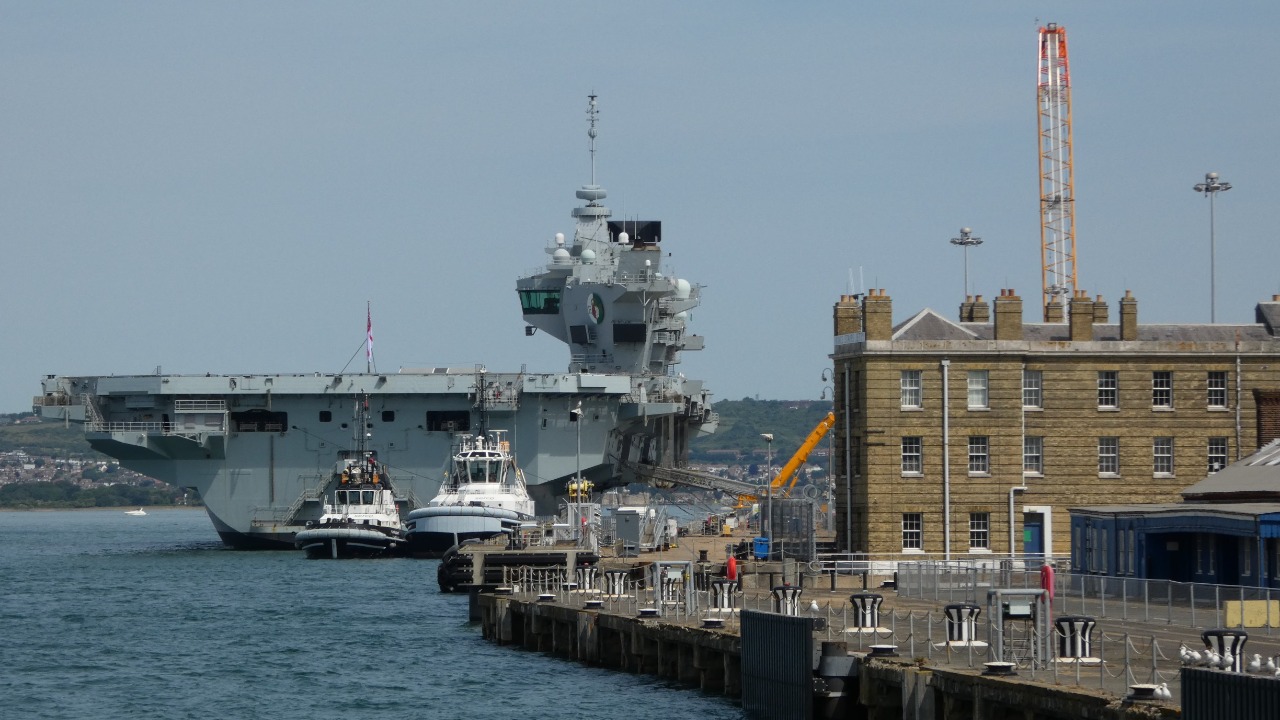

The Pentagon now projects that China could field a fleet of nine aircraft carriers by 2035, a scale of blue-water power that would have been hard to imagine two decades ago. Drawn from the latest assessments of the People’s Liberation Army Navy, that forecast signals not only rapid shipbuilding but a broader shift in how Beijing intends to project force across the Indo-Pacific and beyond.
For the United States and its allies, the question is no longer whether China can build large carriers, but how quickly it can turn hulls, air wings, and escorts into a coherent, combat-ready system capable of challenging U.S. dominance at sea.
How the Pentagon’s carrier forecast for China has evolved
The new projection of up to nine Chinese carriers by 2035 builds on a decade of Pentagon reports that have tracked the People’s Liberation Army’s move from coastal defense to global operations. The latest China military assessment describes a force expanding in both size and sophistication, with particular emphasis on naval aviation and long-range strike capacity, and warns that the PLA is pursuing capabilities designed to limit U.S. access to key theaters such as the Western Pacific and the Indian Ocean, according to recent analysis.
A separate Pentagon-focused review reaches similar conclusions, highlighting how the PLA is modernizing across every domain. It notes that the PLA has increased the number of advanced surface combatants, submarines, and support vessels, and stresses that the navy’s growth is part of a larger effort to field a joint force capable of high-intensity operations against a technologically sophisticated adversary, as described in Pentagon threat outlines.
Within that broader buildup, carriers occupy a special place. They are expensive, complex, and politically symbolic, which is why earlier Pentagon estimates were more conservative about how many China might realistically deploy. The new nine-carrier figure reflects updated judgments about Chinese industrial capacity, dockyard expansion, and the pace at which the PLA Navy has been commissioning large surface ships. One detailed examination of the Pentagon’s projection notes that the United States now expects China to sustain a tempo of carrier construction that would give it a large, regionally focused carrier fleet by the mid 2030s, a finding summarized in a recent commentary.
At the same time, the Pentagon has become more cautious about assuming that technical hurdles will significantly slow Beijing’s plans. Earlier skepticism centered on the difficulty of mastering catapult systems, carrier aviation training, and complex logistics. The new assessment suggests that, while challenges remain, U.S. planners now believe China’s shipyards and defense industry can deliver multiple large-deck carriers within the next decade if current trends hold. Where uncertainty once dominated the conversation, the working assumption has shifted to a high-probability scenario that U.S. forces must plan around.
Why a potential nine-carrier Chinese fleet changes strategic calculations
China already operates the world’s largest navy by hull count, a fact that has forced U.S. analysts to think less about raw numbers and more about what those ships are designed to do. One recent study argues that the more significant issue is the PLA Navy’s growing ability to sustain operations at distance, supported by modern logistics ships, land-based missiles, and integrated air defenses, rather than the simple fact that China has more vessels than the United States, as explained in a detailed assessment.
Carriers sit at the heart of that shift. A fleet approaching nine flattops would allow Beijing to maintain several carrier strike groups on station across multiple regions at once. In practical terms, that could mean simultaneous carrier presence in the South China Sea, near Taiwan, and in the Indian Ocean, backed by land-based assets and long-range missiles. The Pentagon’s own reporting frames this as a growing capacity for “far seas protection,” in which Chinese forces can secure sea lanes, protect overseas interests, and influence crises beyond the first island chain.
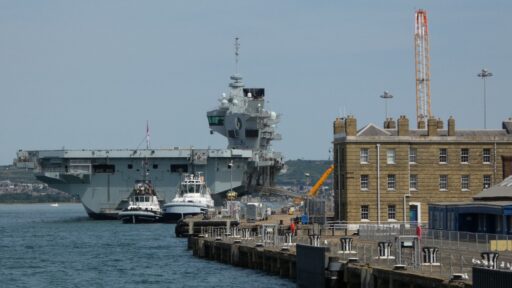
For Washington, that prospect intersects with its own carrier strategy. The U.S. Navy continues to rely on large nuclear-powered carriers, such as the Ford class, to project power. At the same time, American planners are grappling with the vulnerability of these high-value ships to long-range anti-ship missiles and undersea threats. Analysts have pointed out that the emergence of new Chinese carriers is one reason U.S. officials are debating whether to adjust the mix of large-deck carriers, smaller amphibious assault ships, and land-based aircraft, as reflected in discussions about how a new U.S. supercarrier might change naval risk calculations.
Regional allies are watching closely. A Chinese carrier group operating regularly near the Strait of Malacca or off the coast of Africa would reshape how countries such as India, Japan, and Australia think about maritime security. It would also test existing U.S. security guarantees, particularly in scenarios where Chinese and U.S. carrier groups operate in close proximity. The Pentagon’s warning about an increasingly capable PLA, outlined in its broader threat assessment, already highlights the risk of miscalculation in crowded sea and air spaces. A larger Chinese carrier fleet would only amplify those concerns.
There is also a political dimension. Carriers are floating symbols of national power, and Beijing has used its first indigenous carrier milestones to promote narratives of technological achievement and maritime resurgence. A navy with multiple large-deck carriers would reinforce China’s claim to great-power status, especially in regions where U.S. naval presence has long been taken for granted. That symbolism matters in diplomatic contests over port access, basing rights, and arms sales from Southeast Asia to the Middle East.
What the Pentagon expects from China’s next phase of naval expansion
The Pentagon’s forecast of nine carriers by 2035 does not stand alone. It sits within a larger picture of Chinese military modernization that includes hypersonic weapons, integrated air defenses, cyber capabilities, and a rapidly improving space architecture. Analysts who track the annual China military report point out that the PLA is pursuing a coordinated strategy that links naval power with precision strike and information warfare, a pattern described in recent commentary on the report’s findings.
In the naval arena, this next phase is likely to focus on three intertwined tasks. First, China will need to complete and commission additional carriers, including those equipped with electromagnetic catapults and more capable air wings. Second, the PLA Navy must refine its carrier doctrine, integrating fixed-wing aviation, escorts, submarines, and land-based support into coherent strike groups. Third, Beijing will have to sustain the personnel pipeline, from pilots and deck crews to maintenance specialists and staff officers, at a scale that matches a nine-carrier fleet.
The Pentagon’s threat outline stresses that the PLA is already investing heavily in joint training, realistic exercises, and command-and-control systems that can support complex operations, according to detailed reporting. This suggests U.S. planners expect China to pair hardware growth with steady improvements in operational proficiency, even if it takes years for Chinese carrier groups to match the experience of U.S. counterparts.
For the United States, the projected Chinese carrier fleet is driving several responses. Defense officials are pushing for more resilient basing in the Pacific, expanded use of distributed operations, and greater integration with allies’ navies. There is also renewed attention to capabilities that can hold large surface ships at risk, including submarines, long-range bombers, and precision missiles. Analysts argue that the United States will need to think less in terms of platform-on-platform comparisons and more in terms of networks, sensors, and kill chains that can offset numerical disadvantages at sea, a theme echoed in recent analysis of China’s naval rise.
How quickly China can actually reach nine carriers remains uncertain. Shipbuilding schedules can slip, technical problems can emerge, and economic or political shocks can slow defense spending. Some outside assessments, drawing on satellite imagery of Chinese shipyards and naval bases, caution that construction milestones still need to be matched by visible progress in air wing training and support infrastructure, a point reinforced by independent imagery-based studies. Yet the Pentagon’s decision to plan around the nine-carrier scenario signals that U.S. defense planning is no longer betting on those headwinds to keep China’s ambitions in check.