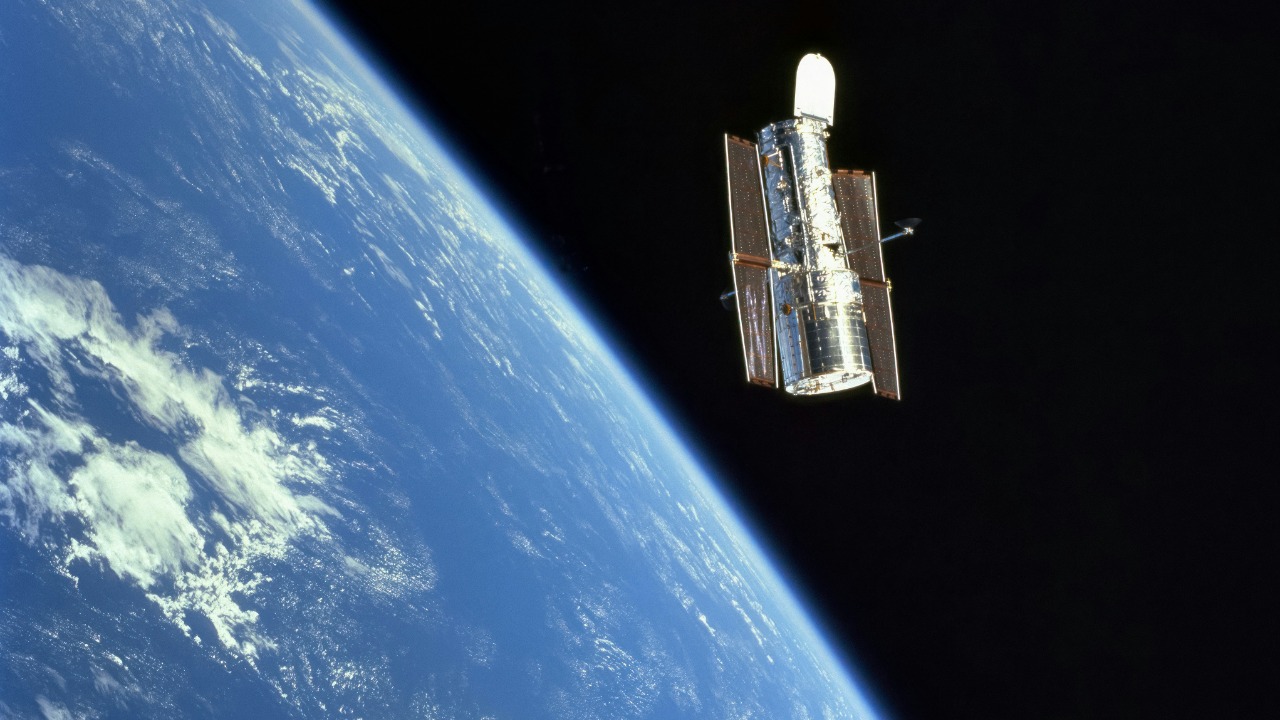

Europe and China have a new set of eyes on the invisible clash between the Sun and Earth. The SMILE spacecraft has reached orbit to watch the solar wind hammer the planet’s magnetic shield, turning a once theoretical boundary into something that can be seen and tracked in real time. For space weather forecasters and planetary scientists, the mission promises a global view of a system that usually has to be reconstructed from scattered measurements and computer models.
How SMILE changes the view of Earth’s magnetic shield
SMILE, short for Solar wind Magnetosphere Ionosphere Link Explorer, is designed to do something no previous mission has done: capture wide field X-ray and ultraviolet images of the entire dayside interaction between the solar wind and Earth’s magnetosphere. Rather than sampling the magnetic field at a single point, SMILE aims to watch the boundary regions evolve as a whole, including the bow shock and magnetopause where the solar wind slows and flows around the planet. According to mission descriptions, its X-ray telescope will detect faint X-rays produced when high speed solar wind ions collide with neutral atoms in Earth’s outer atmosphere, creating a natural tracer of the solar wind’s impact.
The spacecraft’s orbit is tailored for this panoramic perspective. SMILE follows a highly elliptical path that carries it far from Earth for long, continuous views of the dayside magnetosphere, then swings back closer to transmit data and recalibrate its instruments. From apogee, it can see the entire sunlit side of the magnetic bubble at once, a geometry that is impossible for satellites in low Earth orbit. Mission planners expect to use these vantage points to map how the magnetopause moves in and out as solar wind pressure changes, and how the auroral oval responds in the upper atmosphere.
Instrument design reflects that global ambition. The soft X-ray imager is paired with an ultraviolet camera that tracks auroral emissions, allowing researchers to link activity at the magnetopause to brightening and motion in the polar lights. Additional payloads measure local plasma conditions around the spacecraft, tying the large scale images to in situ data. A recent overview of the mission notes that the spacecraft is built to capture X-ray views of Earth’s magnetic boundaries with enough sensitivity to resolve key structures in the magnetosheath, as described in mission briefings.
SMILE also reflects a maturing approach to international cooperation in space science. It is a joint project between the European Space Agency and the Chinese Academy of Sciences, with hardware, operations, and scientific leadership split across institutions in both regions. This collaboration allowed the mission to combine European expertise in X-ray optics with Chinese contributions in spacecraft bus design and ground segment support. The result is a mid sized explorer that would have been more difficult for either partner to finance and build alone.
Why watching solar wind impacts matters right now
The timing of SMILE’s arrival in orbit is not accidental. Interest in space weather has surged as power grids, satellites, aviation, and navigation systems all face growing exposure to solar storms. When the solar wind carries strong magnetic fields that connect with Earth’s field, energy is dumped into the magnetosphere and ionosphere, which can trigger geomagnetic storms, disrupt radio communications, and disturb GPS signals. The current phase of the solar activity cycle is trending toward a busy maximum, raising the likelihood of intense events that can affect infrastructure on the ground and in orbit.
Until now, most space weather monitoring has depended on a network of point measurements: solar observatories that watch the Sun, upstream monitors that sample the solar wind, and a patchwork of satellites and ground stations that record conditions in near Earth space. Models then stitch these data together to predict how the magnetosphere will respond. SMILE is intended to fill a missing piece by providing direct images of the global response, so forecasters can see, for example, whether a sudden increase in solar wind pressure has compressed the magnetopause to within geosynchronous orbit, where many communications satellites reside.
The global perspective has scientific stakes as well. The magnetosphere is a laboratory for plasma physics processes that also occur in distant astrophysical environments, such as magnetic reconnection and shock acceleration. By watching how the boundary regions shift during different kinds of solar wind conditions, SMILE can test theories about how energy is transferred from the solar wind into Earth’s magnetic field and then into the upper atmosphere. The ultraviolet auroral images will help connect those processes to visible consequences, such as the expansion of auroras to lower latitudes during strong storms.
There is also a climate and atmospheric angle. Energetic particles and currents driven by space weather can change the chemistry and density of the upper atmosphere, which in turn affects satellite drag. During periods of heightened solar activity, increased drag can lower satellite orbits faster than expected, as seen with clusters like SpaceX’s Starlink when geomagnetic disturbances heat the thermosphere. By tying solar wind conditions directly to auroral and magnetospheric dynamics, SMILE can refine models that predict how these disturbances evolve and how they influence low Earth orbit traffic.
For Europe, SMILE is part of a broader strategy to treat space weather as a practical hazard, not just a scientific curiosity. Agencies and operators are building early warning systems to protect power networks, aviation routes, and satellite fleets. A mission that can visualize the magnetosphere’s response in near real time gives those systems a better basis for deciding when to put spacecraft in safe mode, reroute polar flights, or adjust grid operations. The fact that the spacecraft is already in orbit means those capabilities can begin to ramp up while the solar cycle is still climbing.
What to watch for as SMILE begins its observing campaign
With SMILE safely in its operational orbit, the next phase is instrument commissioning and calibration. Engineers will spend the early months checking the alignment of the X-ray optics, verifying the sensitivity of the detectors, and fine tuning the spacecraft’s pointing so that the magnetopause and bow shock fall within the field of view. The ultraviolet camera will be cross checked against existing auroral imagers to ensure that brightness and color profiles match expectations. Only after this shakedown period will the mission move into routine science operations.
Once regular imaging begins, researchers will be watching for a few early milestones. One is the first clear global snapshot of the magnetopause during a moderate solar wind disturbance, which would validate the mission’s core concept. Another is the ability to track how that boundary shifts over the course of hours as solar wind conditions change. If SMILE can capture sequences that show the bow shock rippling and the magnetosheath thickening or thinning, it will provide a dataset that modelers can use to tune their simulations.
The mission team also plans coordinated campaigns with other spacecraft and ground observatories. When a strong coronal mass ejection heads toward Earth, for example, SMILE can image the global response while upstream monitors record the incoming plasma and ground magnetometers track currents in the ionosphere. Combining those perspectives should sharpen forecasts and improve understanding of extreme events. Over time, repeated observations under different solar wind conditions will build a statistical picture of how the magnetosphere behaves, from quiet times to major storms.
Public and commercial users are likely to feel the impact indirectly. Improved models based on SMILE data can feed into services that airlines, satellite operators, and grid managers already use. If forecasters can better judge when the magnetopause has moved inside geosynchronous orbit, operators of satellites such as weather imagers and television relays can take targeted precautions instead of relying on broad, conservative warnings. More accurate predictions of auroral expansion can also help aviation planners decide when to avoid polar routes where radio blackouts are more likely.