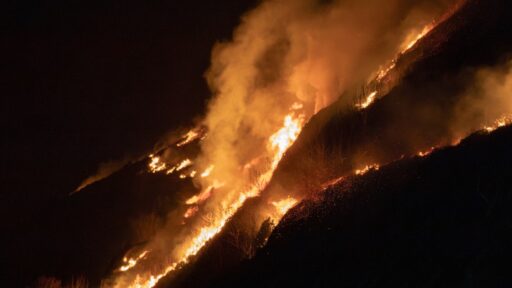
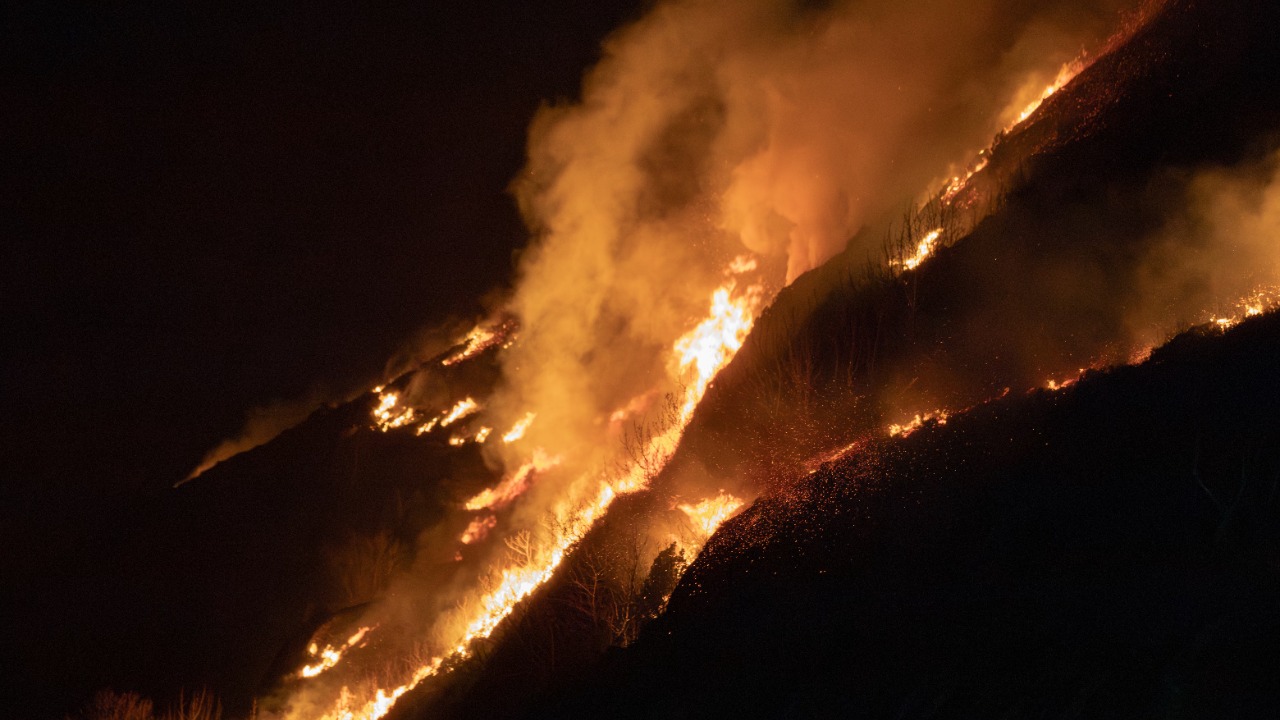

Utah’s fast-moving Cottonwood Fire has become the largest active wildfire in the United States, prompting state leaders to ban most fireworks and declare a statewide emergency just as the summer holiday season begins. The decisions mark a sharp escalation in how Utah is trying to manage a fire that has already burned homes, forced evacuations, and strained firefighting resources.
As the blaze grows and red flag warnings pile up, Utah is effectively trading traditional celebrations for survival, betting that aggressive restrictions now can keep one major disaster from triggering many more.
How Utah tightened rules as the Cottonwood Fire surged to the top of the national list
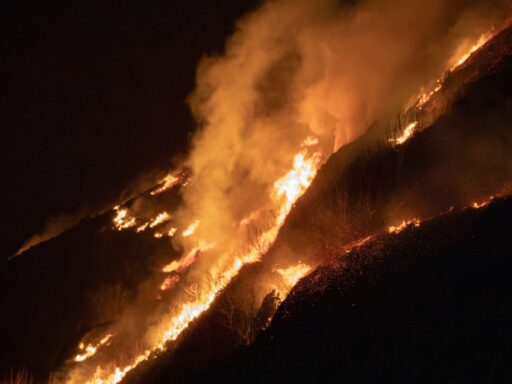
State officials shifted from local firefighting to a statewide crisis footing once the Cottonwood Fire in central Utah expanded into the country’s largest active wildfire. The blaze has burned across Sanpete County and neighboring areas, destroying homes and forcing residents from communities such as Fairview and Indianola as it spread through dry grass, brush, and timber. As crews worked steep terrain and shifting winds, the governor issued a state of emergency to unlock additional money, equipment, and personnel for the response, a step that also helps Utah coordinate federal assistance for the growing incident.
The emergency declaration arrived alongside a sweeping crackdown on fireworks. Utah already limited personal fireworks in some high-risk zones, but the new restrictions go much further. The governor’s order sharply curtails consumer fireworks across large portions of the state, particularly in unincorporated county lands and wildland-urban interface areas where homes sit close to flammable vegetation. Local governments were encouraged to layer on their own bans, and many cities responded by canceling public shows or confining them to tightly controlled launch sites staffed by professionals.
Officials framed the fireworks clampdown as a direct response to the Cottonwood Fire’s behavior and to a broader pattern of early-season blazes. Fire agencies had been dealing with numerous small starts across Utah, often tied to human activity, at the same time forecasters issued repeated red flag warnings for hot, dry, and windy conditions. In that context, the state treated every backyard firework as a potential ignition source that could divert crews from the already dominant Cottonwood incident.
Fire managers also adjusted tactics on the ground as the blaze grew. Air tankers and helicopters were shifted from other assignments to support hand crews and engines on the Cottonwood perimeter, while structure protection teams moved into threatened neighborhoods to clear vegetation, set up hose lines, and help residents evacuate. The emergency declaration made it easier to surge those resources, since it allowed agencies to bypass some routine contracting and reimbursement hurdles and focus on speed.
State leaders repeatedly tied these steps together: the largest wildfire in the country, a formal emergency, and a near-blanket fireworks crackdown. In their view, each measure supports the others, with the goal of keeping Utah’s fire season from spiraling into a multi-front disaster.
Why the fireworks ban and emergency status carry high stakes for Utah right now
Timing is central to the impact of Utah’s decisions. The Cottonwood Fire intensified just as residents were stocking up on fireworks for Independence Day and Pioneer Day, two holidays that traditionally bring days of backyard pyrotechnics and large public shows. By sharply restricting fireworks, Utah is directly intervening in a deeply rooted seasonal ritual in order to reduce the odds of new fires while crews battle the Cottonwood blaze.
State fire officials have long warned that fireworks are a leading cause of human-caused fires during the summer holiday window. In a year when the nation’s largest active wildfire is already burning within Utah’s borders, they argue that the margin for error has vanished. One errant spark in dry grass could trigger another major incident, especially under the kind of red flag conditions described in recent fire weather. With crews stretched on the Cottonwood lines, every avoidable ignition matters.
The emergency declaration also has financial and logistical consequences. It allows the state to tap contingency funds, streamline mutual aid agreements, and request federal support for both suppression and recovery. That means more engines, more aircraft, and more overhead staff can be assigned to Cottonwood and any new fires that might start. It also signals to local governments and residents that the situation is not routine, which can boost compliance with evacuation orders and restrictions.
At the community level, the Cottonwood Fire has already delivered a harsh preview of what is at stake. Homes have burned, ranch operations have been disrupted, and residents have spent nights in shelters while smoke and flames approached their neighborhoods. Reporting on the Cottonwood evacuations has highlighted how quickly conditions shifted from normal summer days to urgent flight, with some families given only minutes to leave. For those communities, the fireworks ban is less an abstract policy than a direct attempt to prevent neighbors from experiencing the same loss.
Economically, the restrictions fall hardest on fireworks retailers and on cities that rely on holiday events to draw visitors. Stands that ordered inventory months in advance are now facing steep losses, and tourism officials worry about quieter downtowns during what is usually a peak season. Yet state leaders have argued that the cost of one large, fireworks-sparked wildfire, in terms of destroyed property, suppression expenses, and health impacts from smoke, would far exceed those short-term business hits.
The health dimension is significant as well. Smoke from the Cottonwood Fire has degraded air quality across parts of central and northern Utah, aggravating asthma and other respiratory conditions. Public health officials have warned residents to limit outdoor activity on smoky days and to keep windows closed when plumes drift over populated areas. Additional fires sparked by fireworks would compound that burden, particularly for children, older adults, and outdoor workers.
Politically, the move tests how far Utah residents are willing to go in trading personal traditions for collective safety. Fireworks are often framed as expressions of patriotism and community pride. Restricting them in order to manage a wildfire emergency forces a conversation about what public celebration should look like in a hotter, drier West, where fire seasons are longer and more intense than in previous decades.
How Utah’s emergency posture could shape the rest of fire season
With the Cottonwood Fire still burning and the state of emergency in place, Utah is effectively treating the current moment as a turning point for the rest of fire season. The fireworks ban is temporary, but it serves as a test case for how aggressively the state might limit high-risk activities during future red flag periods.
Officials have signaled that enforcement will be more visible than in past years. Law enforcement and fire inspectors plan to patrol neighborhoods and open spaces during the holiday window, responding to complaints and citing violations where fireworks are banned. The goal is to back up the policy with clear consequences, rather than relying entirely on voluntary compliance. Coverage of the statewide restrictions has emphasized that message of accountability, especially in high-risk zones near wildlands.
On the firefighting side, the emergency declaration sets up a longer arc of recovery. Once the Cottonwood Fire is contained, state and federal agencies will shift to rehabilitation work, including erosion control, reseeding, and infrastructure repair in burned watersheds. That work is crucial for communities downstream, since post-fire flooding and debris flows can cause severe damage long after flames are out. The emergency status can help fund those efforts and speed up contracting for on-the-ground projects.
The Cottonwood experience is also likely to influence future planning. Fire managers will study how the blaze moved through different fuel types, how evacuation routes functioned, and where communication with residents succeeded or failed. Those lessons can shape updates to community wildfire protection plans, zoning decisions in wildland-urban interface areas, and public education campaigns about defensible space around homes.