
Full-size SUVs are often bought with the expectation that they will serve for a decade or more, hauling families, trailers, and gear without flinching. Fresh longevity data again points to Toyota’s big body-on-frame models as the most likely to reach 250,000 miles, reinforcing a pattern that has held through multiple studies of high-mileage vehicles.
That continued dominance matters as buyers weigh record transaction prices against the promise of long-term durability. It also sharpens the question for rivals: what, exactly, keeps Toyota’s full-size SUVs at the top of the reliability charts while competitors fight for a share of the 250,000‑mile club.
How the latest 250,000‑mile rankings reshaped the full-size SUV field
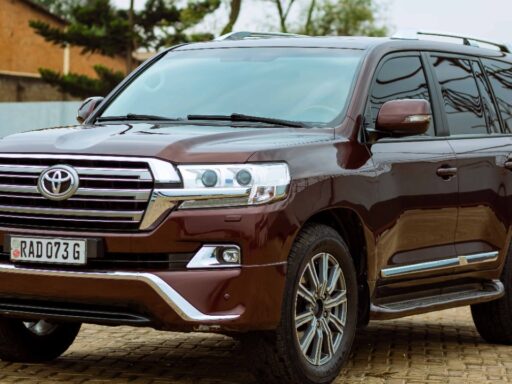
Recent high-mileage rankings that track odometer readings well past 200,000 miles again place the Toyota Sequoia and Toyota Land Cruiser among the SUVs most likely to clear 250,000 miles. In a list of 11 SUVs most to reach that milestone, Toyota’s big body-on-frame models occupy the top tier, ahead of most domestic and European competitors. The same analysis highlights that these trucks are not just edging rivals by a small margin, but often appear with significantly higher projected lifespans based on real-world registration data.
Those results line up with broader reliability studies that track all vehicle types. A breakdown of longest lasting cars, trucks, SUVs, and hybrids shows Toyota with an outsized share of models that regularly pass 250,000 miles, including the Sequoia and Land Cruiser alongside stalwarts such as the Toyota Tundra and Toyota 4Runner. Full-size SUVs built on these truck platforms benefit from the same conservative engineering, with naturally aspirated engines, traditional automatics, and ladder frames that favor durability over cutting-edge efficiency.
Other brands do appear in the latest SUV rankings, and some have made notable gains. The Chevrolet Tahoe and Chevrolet Suburban, for example, now show up as credible high-mileage options, helped by incremental improvements in General Motors’ small-block V8s and updated transmissions. Coverage of a Chevy SUV positioned as a 250,000‑mile workhorse points to the Tahoe and Suburban as the most likely GM entries to match Toyota’s longevity, especially in fleet and towing duty.
Yet the gap at the very top remains. When analysts isolate vehicles that not only hit 250,000 miles but do so in meaningful numbers, Toyota’s full-size SUVs consistently cluster near the front of the pack. An overview of the 10 vehicles most to reach 250,000 miles again leans heavily on Toyota trucks and SUVs, underscoring that the company’s approach to platform sharing and long product cycles continues to pay off in real-world durability.
Why Toyota’s high-mileage dominance matters in the current SUV market
The renewed confirmation of Toyota’s lead in long-distance durability lands at a moment when full-size SUVs carry some of the highest prices in the showroom. Buyers who sign up for a large monthly payment increasingly want proof that the vehicle will last well beyond the warranty window. Data-driven lists of the longest lasting vehicles give shoppers a way to quantify that value, and Toyota’s repeated presence at the top strengthens its pricing power in a segment where discounts are often thin.
Longevity also shapes total cost of ownership in less obvious ways. Vehicles that reliably reach 250,000 miles tend to hold their value better in the used market, which matters both to first owners who eventually sell and to second or third owners who want a durable bargain. Lists of high-mileage SUVs often double as used-car shopping guides, and the Sequoia and Land Cruiser’s strong showing helps explain why clean examples command a premium even with six-figure odometer readings.
The broader context extends beyond full-size SUVs. Analysis of ordinary cars that 250,000 miles highlights that Toyota’s reputation for durability is not confined to truck-based models. Sedans and compact crossovers from the brand also appear frequently in high-mileage studies, which reinforces the idea that Toyota’s engineering and quality control philosophies travel across segments. For buyers cross-shopping a Sequoia against a domestic rival, that pattern can be persuasive in ways a single model comparison is not.
At the same time, the latest rankings show that Toyota no longer has the durability conversation entirely to itself. The presence of Chevrolet’s Tahoe and Suburban, along with long-running models from other brands, signals that competitors are learning from the formula. The write-up on a Chevy SUV aimed at 250,000 miles points to improvements in drivetrain robustness and cooling systems, areas where earlier generations sometimes struggled under heavy towing loads.
For consumers, that competitive pressure is healthy. It pushes rival automakers to prioritize long-term reliability in their full-size SUVs rather than focusing solely on power or technology. It also gives shoppers more credible options if they prefer domestic styling, dealer networks, or specific features that Toyota does not offer. Still, the fact that Toyota’s big SUVs continue to anchor so many lists of 250,000‑mile vehicles means the brand sets the benchmark that others must match.
What long-distance durability means for ownership, maintenance, and model strategy
For owners, a full-size SUV that can realistically reach 250,000 miles changes how the vehicle is used and maintained. Instead of treating a large SUV as a five-year lease appliance, many Sequoia and Land Cruiser drivers plan for a decade or more of service, often in demanding roles that include towing, off-road travel, and frequent long-distance road trips. Studies of high-mileage trucks and consistently point out that these vehicles often rack up miles in commercial or fleet use, which accelerates wear but also reveals weaknesses quickly.
Reaching 250,000 miles is not just about the badge on the grille. Owners who succeed at hitting that number tend to follow strict maintenance schedules, including regular fluid changes, timely replacement of wear items, and early attention to small problems before they become major failures. Guides that highlight cars that reach often stress that even the most durable platforms can be undone by neglect. Toyota’s advantage is that its full-size SUVs appear more forgiving of real-world lapses, thanks to conservative tuning and overbuilt components.
From an automaker’s perspective, the 250,000‑mile benchmark shapes product planning. Vehicles that stay on the road longer keep brand logos visible, which supports reputation and future sales, but they can also slow replacement cycles. That tension helps explain why some manufacturers have historically prioritized features and styling over long-term durability. The latest data on vehicles that last suggests that Toyota continues to accept slightly slower refresh rates in exchange for proven mechanical packages that can survive heavy use.
There is also a sustainability angle. Extending a vehicle’s useful life reduces the number of new SUVs that must be built to meet demand, which cuts the environmental footprint tied to manufacturing. Analyses of the longest lasting hybrids show that Toyota’s strategy carries over into electrified models, suggesting that the company sees durability as part of its answer to regulatory pressure as well as consumer expectations.
How rivals can respond and what buyers should watch for next
The persistence of Toyota at the top of 250,000‑mile rankings will likely push rivals to double down on durability messaging in upcoming redesigns. Chevrolet’s recent focus on a 250,000‑mile Tahoe hints at a broader strategy that could include more conservative engine tuning, upgraded cooling, and reinforced driveline components for high-stress use. Other manufacturers may follow with extended powertrain warranties or maintenance programs meant to reassure buyers that their big SUVs are built for the long haul.
Future lists of the most durable SUVs will also be shaped by the rapid shift toward turbocharged engines and electrification. Smaller turbo units and complex hybrid systems can deliver impressive efficiency and power, but they introduce more parts and software that must survive for 15 years or more. Toyota’s move to twin-turbo hybrid powertrains in its latest full-size trucks and SUVs will test whether its durability edge can survive this transition.