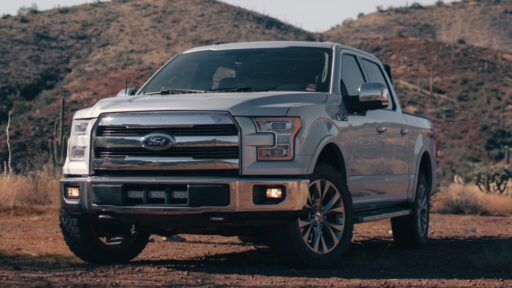
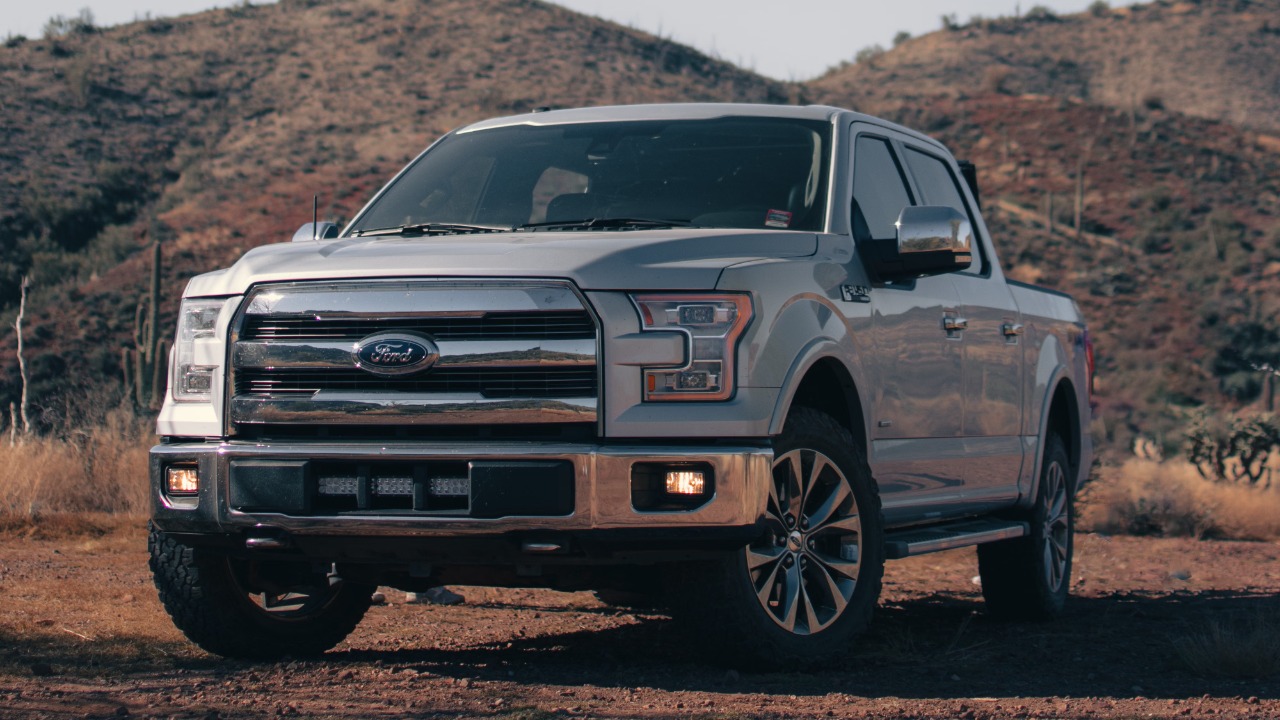

The Ford F-150 has reclaimed a coveted spot on Consumer Reports’ list of top-rated vehicles, a shift driven by improved reliability data that reverses a recent slide for America’s best-selling pickup. For Ford, the move signals that years of incremental updates to powertrains, electronics, and safety tech are finally showing up in owner surveys and testing scores. For truck buyers, it reshapes a competitive landscape that had been tilting toward newer rivals.
What changed in the F-150 to satisfy Consumer Reports again
Consumer Reports bases its top picks on a blend of road-test scores, predicted reliability, owner satisfaction, and safety performance. In the latest rankings of top ten cars, the F-150 is back in the mix after earlier model years struggled with electronics and powertrain glitches. That shift suggests Ford has addressed enough trouble spots to lift the truck’s predicted reliability into competitive territory.
Historically, the F-150 earned strong marks for towing, hauling, and cabin comfort, but recent redesigns introduced complex infotainment systems, turbocharged engines, and driver-assistance suites that brought new failure points. Owner surveys that feed Consumer Reports’ reliability models had flagged issues such as screen freezes, sensor faults, and drivetrain complaints. New data now show fewer of those red flags, helping explain the truck’s improved standing.
Ford has steadily refined the current F-150 generation with software updates, revised calibration for its turbocharged engines, and tweaks to its driver-assistance features. Reliability scores are rarely transformed overnight; they move as multiple model years of owner feedback accumulate. The F-150 now appears to have crossed the threshold where problem rates fall in line with or better than segment norms.
The organization’s methodology has not changed in a way that would uniquely benefit Ford. Consumer Reports continues to combine test-track evaluations with long-term reliability histories, just as it did with earlier lists of best cars of. That continuity indicates the F-150’s return is less about shifting goalposts and more about genuine gains in durability and owner satisfaction.
Safety performance also plays a role. The F-150’s broad availability of advanced driver-assistance systems, along with strong crash-test results, bolsters its case as a top pick. When those safety credentials are paired with reduced complaint rates in areas such as brakes, suspension, and in-car electronics, the truck becomes a more compelling all-rounder in Consumer Reports’ scoring system.
Why the F-150’s renewed status matters in the truck market now
The timing of the F-150’s resurgence on Consumer Reports’ list carries weight because the full-size pickup segment is in the middle of a technological and competitive reset. Rival models like the Toyota Tundra have pressed their advantage by touting strong reliability reputations. In a detailed comparison of the 2022 Toyota Tundra and the 2021 Ford F-150, testers highlighted how the Tundra challenged the on refinement and performance, forcing Ford to respond.
Consumer Reports’ auto rankings carry outsized influence with buyers who prioritize long-term ownership costs. When the F-150 slipped in earlier reliability assessments, it created an opening for trucks like the Tundra and Ram 1500 to pitch themselves as safer bets for those planning to keep a vehicle for a decade or more. The latest list of auto rankings shows how top-pick status can shift the conversation back toward Ford, especially among shoppers who treat Consumer Reports as a deciding factor.
The stakes are high because full-size pickups are profit engines for their manufacturers. A truck that loses its reputation for reliability risks more than a few lost sales. It can drag down resale values, hurt lease terms, and weaken brand loyalty across multiple vehicle lines. The F-150’s improved showing helps stabilize that ecosystem for Ford dealers and existing owners who watch rankings closely.
There is also a psychological component. For years, Ford leveraged the F-150’s reputation as a tough, dependable workhorse. When reliability charts began to show more trouble spots than some Japanese competitors, that narrative frayed. Regaining a top-pick slot allows Ford to reclaim part of that story, now backed by fresh data rather than nostalgia.
For buyers, the shift alters how trade-offs are weighed. A contractor who values towing capacity and bed configurations but hesitated over reported infotainment glitches may now see the risk as more manageable. Fleet managers who factor predicted repair costs into their spreadsheets can plug in updated reliability assumptions. In a segment where purchase decisions often involve five- or six-figure budgets across multiple vehicles, those adjustments matter.
The broader market context also includes the rise of electrified pickups. As Ford pushes the F-150 Lightning and hybrid variants, confidence in the core gas and hybrid models’ reliability helps ease concerns that new technology might bring new headaches. Stronger scores for the conventional F-150 can spill over into perceptions of the entire F-150 family, even when the underlying powertrains differ.
What comes next for Ford and its flagship pickup
Rejoining Consumer Reports’ top picks is a milestone, not a finish line. The F-150 still faces intense pressure from rivals that see reliability leadership as a key differentiator. Toyota, for example, continues to invest in long-lived powertrains and simplified tech interfaces that resonate with buyers who equate fewer gadgets with fewer problems. The Tundra’s recent redesign shows that competitors are not standing still while Ford celebrates.
For Ford, the next challenge is to sustain and extend the F-150’s gains across upcoming model years. That will mean keeping defect rates low as the company layers in new connectivity features, over-the-air updates, and more advanced driver aids. Each added feature is another potential point of failure that can show up in Consumer Reports’ owner surveys if it is not bulletproof.
Software quality will be central. Many of the complaints that drag down modern vehicles in reliability studies have less to do with engines or transmissions and more to do with screens, apps, and driver-assistance behavior. If Ford can maintain a stable infotainment platform, reduce glitchy behavior in navigation and smartphone integration, and refine systems like adaptive cruise control, the F-150’s reliability curve can continue to bend in a positive direction.
Electrification adds another layer. The F-150 Lightning and hybrid versions introduce high-voltage components, complex cooling systems, and battery management software. While Consumer Reports evaluates each configuration on its own merits, owner perceptions often blend together. Strong reliability from gas and hybrid F-150s can build trust that carries over to electric variants, but serious issues in any one version could also cast a shadow across the whole lineup.
Ford must also navigate shifting regulatory and economic conditions. Tougher emissions and fuel-economy standards push truck makers toward downsized engines and electrified drivetrains, which can conflict with the simplicity that long-term owners often prize. Balancing those pressures while keeping repair costs reasonable will be essential if the F-150 is to remain a fixture in future top-pick lists.
On the consumer side, expectations are rising. Buyers who see the F-150 back among Consumer Reports’ favored vehicles will expect that status to translate into real-world ownership experiences with fewer trips to the service bay. If Ford delivers, the truck’s renewed recognition can reinforce brand loyalty and justify premium pricing. If it stumbles, rankings can slide again just as quickly.
The F-150’s return to Consumer Reports’ good graces therefore reads as both validation and warning. It validates Ford’s recent efforts to tighten quality control and refine complex technology. It also warns that in a segment defined by fierce competition and rapid change, reliability leadership is always provisional. The next few model years will show whether the F-150’s latest accolade marks the start of a new era of dependability or a brief high point in an ongoing tug-of-war for truck buyers’ trust.