For shoppers who keep vehicles long after the new-car smell fades, a handful of SUVs have quietly built reputations for running well past their factory warranties. These models combine conservative engineering, proven drivetrains, and owner-friendly maintenance needs that help them rack up miles long after most rivals are on their second or third owner. As used prices stay elevated and new-vehicle technology grows more complex, SUVs that can be trusted beyond the warranty window are drawing fresh attention.
How long-haul SUVs are evolving beyond basic warranty coverage
Traditional factory warranties on SUVs tend to cluster around three years or 36,000 miles for bumper-to-bumper coverage, with powertrain protection often stretching to five years or 60,000 miles. Reliability data and real-world ownership reports, however, show a distinct group of models that routinely operate well beyond those limits with relatively modest repair histories. These long-lasting SUVs usually share a few traits, including naturally aspirated engines, conventional automatic transmissions, and platforms that have been refined rather than reinvented every few years.
Durability is also being redefined as electrification spreads. Real-world data on electric vehicles indicates that many high-voltage battery packs retain usable capacity far longer than early skeptics predicted. One analysis of fleet and owner records found that most EV batteries actually outlast the vehicles they power, at least in terms of practical service life. That finding matters for SUVs because it suggests that battery-electric crossovers and sport-utilities may follow the same pattern as the most reliable gasoline models, serving multiple owners over a decade or more without catastrophic component failure.
Automakers have responded by quietly hardening parts that were once considered wear items. Cooling systems, high-pressure fuel components, and turbochargers now benefit from better materials and tighter quality control. In some cases, manufacturers have extended powertrain warranties on specific SUVs after field data showed that engines and transmissions were surviving well beyond initial expectations. These shifts have helped several mainstream models build a track record of crossing 150,000 or even 200,000 miles while still feeling structurally sound.
Software has undergone a similar evolution. Modern SUVs rely on complex control modules, and early generations sometimes suffered from glitchy electronics that undermined otherwise solid mechanicals. Current long-lived models tend to use more mature software stacks and simplified user interfaces that age more gracefully. Over-the-air updates can also patch issues before they become chronic, which reduces the risk that an electronic fault will sideline an otherwise healthy vehicle after the warranty clock runs out.
Nine standout SUVs that routinely run well past the warranty
Within this broader shift, nine SUVs in particular have built reputations for long service lives that extend well beyond factory guarantees. They span compact, midsize, and full-size segments, and include both gasoline and electrified options. What unites them is a consistent pattern of owners reporting high mileage with relatively contained repair costs, along with industry data that places them near the top of reliability rankings.
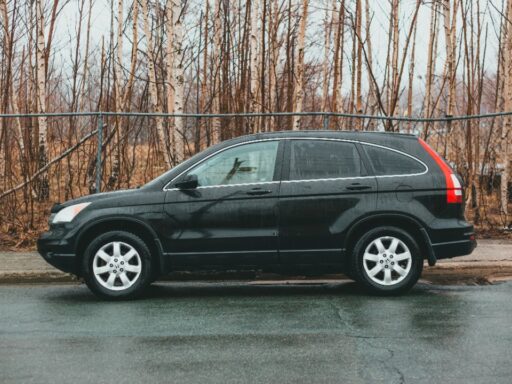
Among compact crossovers, the Toyota RAV4 and Honda CR‑V are frequent examples of models that keep going long after their initial coverage ends. Both rely on four-cylinder engines with conservative outputs and have benefited from years of incremental refinement. Owners often report that these SUVs reach six-figure mileage totals with original engines and transmissions still intact, provided that basic maintenance is followed. Their popularity also means parts are widely available, which keeps repair prices in check once warranties expire.
In the midsize category, the Toyota Highlander and Subaru Outback often appear on lists of vehicles that owners keep for a decade or longer. The Highlander’s V6 and hybrid drivetrains have earned a reputation for resilience, while the Outback’s all-wheel drive system and wagon-like packaging encourage long-term ownership among drivers who value practicality over novelty. Both models tend to attract buyers who prioritize reliability, which in turn leads to attentive maintenance habits that further extend vehicle life.
Full-size SUV shoppers looking for longevity frequently gravitate toward body-on-frame models such as the Toyota 4Runner and Chevrolet Tahoe. The 4Runner, in particular, is known for its truck-based chassis and relatively unstressed V6 engine, a combination that suits high-mileage highway use as well as off-road duty. The Tahoe’s V8 options have also proven capable of covering substantial distances when serviced on schedule, which is why these vehicles are common in fleet and law-enforcement roles where uptime is critical.
Luxury buyers are not excluded from the long-life club. The Lexus RX and Lexus GX have both built strong reputations for reliability that carry over into the SUV space. The RX pairs a smooth V6 or hybrid powertrain with quality interior materials that age gracefully, while the GX uses a rugged platform that shares components with off-road oriented models in other markets. Owners of these vehicles often report that the cost of occasional repairs after warranty expiration is offset by the lack of frequent major failures.
Rounding out the nine, the Toyota Land Cruiser occupies a special place in durability discussions. Although it has shifted between mainstream and more premium positioning over the years, its core identity as a global workhorse remains. In many regions, Land Cruisers are expected to operate in harsh conditions with minimal support, and that design philosophy translates into a vehicle that can easily outlast a standard warranty period in less demanding suburban use. Its resale values reflect that reality, as buyers are willing to pay a premium for a model widely regarded as a long-term asset.
Why long-lasting SUVs matter more in the current market
The appeal of SUVs that outlive their warranties has grown as vehicle prices and financing costs have climbed. Many households are stretching loans to six or seven years, which means the final payments often arrive after the original bumper-to-bumper coverage has expired. In that environment, choosing a model with a strong durability record can significantly reduce financial risk. A single major repair on a less reliable SUV can erase any savings from a lower purchase price.
Used-vehicle dynamics add another layer. Shoppers who buy three to five year old SUVs are effectively betting on how the vehicle will behave during its second warranty-free phase. Models with strong reliability reputations tend to command higher prices in the used market, but they also offer a better chance of avoiding surprise expenses. For buyers who plan to keep a vehicle for eight to ten years, paying more upfront for a proven long-haul SUV can be a rational strategy.
Environmental considerations are also pushing more attention toward longevity. Extending the service life of an SUV spreads the embedded manufacturing emissions over a longer period, which can reduce the lifetime carbon footprint per mile. This is especially true when a durable vehicle replaces multiple shorter-lived models that each require energy-intensive production. As more SUVs adopt hybrid or battery-electric drivetrains, the combination of lower operating emissions and longer usable life could significantly change the sustainability profile of family transport.
Insurance and ownership costs further reinforce the value of durable models. Insurers often adjust premiums based on claim histories, and SUVs with fewer catastrophic failures tend to generate more predictable loss patterns. At the same time, owners of long-lived vehicles benefit from familiarity, since they can spread learning curves for advanced driver-assistance systems and infotainment features over many years instead of switching to a new interface every lease cycle. That stability has a practical safety benefit, as drivers who know their vehicles well are less likely to be distracted by unfamiliar controls.
How durability will shape the next wave of SUV design
Looking ahead, the concept of an SUV that comfortably survives beyond its warranty is likely to influence both engineering and marketing strategies. Automakers are already emphasizing battery longevity in electric SUVs, citing real-world data that high-voltage packs can maintain useful capacity for hundreds of thousands of miles. As more buyers come to expect that level of durability, manufacturers may face pressure to align mechanical components and interior materials with similar lifespans.