
Archaeologists in southern Mexico have revealed a Zapotec tomb dating back roughly 1,400 years, crowned by a massive stone owl that once watched over the dead. The burial chamber, discovered in Oaxaca, preserves vivid murals, sculpted figures, and offerings that capture a moment when regional powers and religious ideas were colliding across Mesoamerica. The carved owl, at once guardian and omen, turns the tomb into a rare window on how the Zapotecs understood death, authority, and the supernatural.
New details from a Zapotec royal tomb and its stone owl guardian
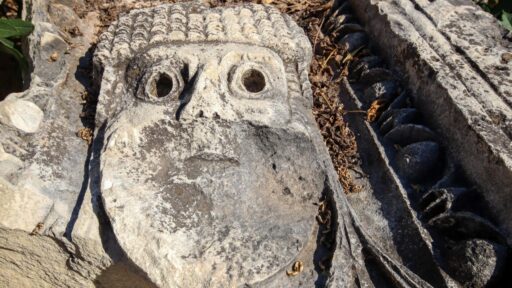
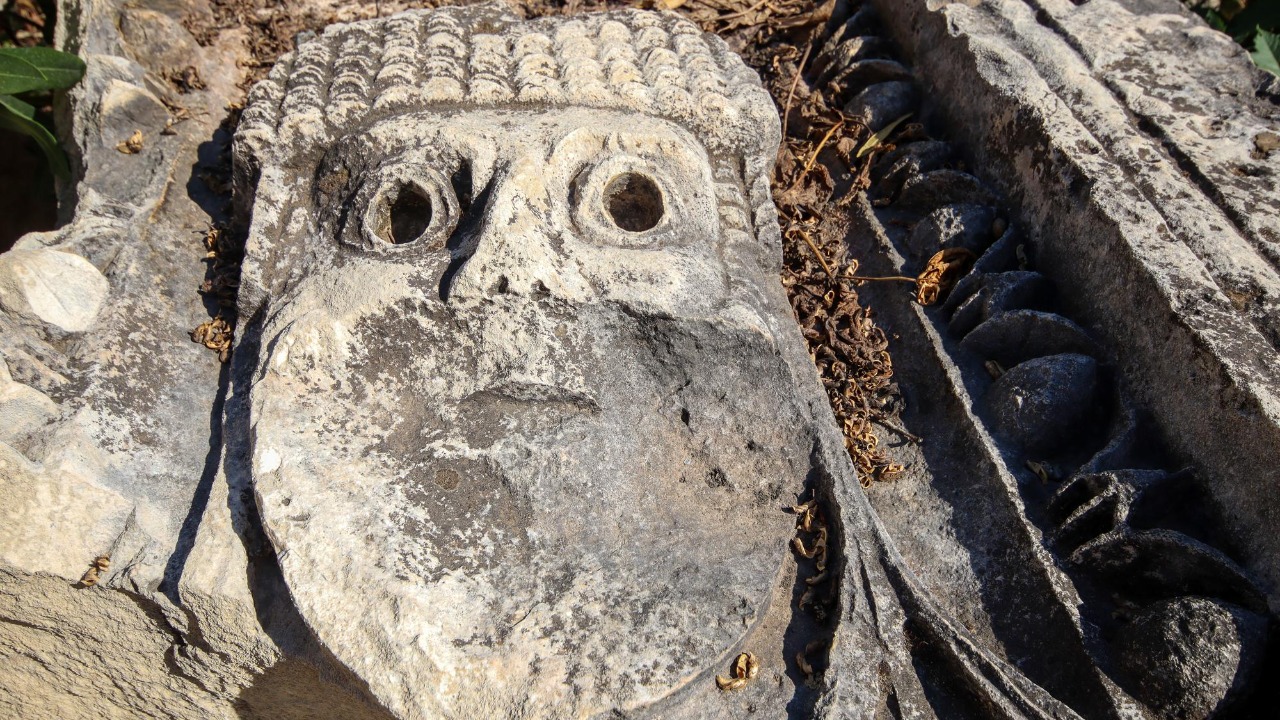
The newly presented tomb lies in the Oaxaca Valley, at a Zapotec ceremonial center where archaeologists have been documenting elite burials and public architecture. Mexican officials have described it as a 1,400-year-old chamber, likely used for high-status individuals connected to the local ruling line. Above the entrance, specialists reconstructed a monumental owl carved from stone, which originally crowned the structure and signaled that this was no ordinary grave. With its outstretched wings and forward gaze, the bird frames the doorway, turning the entire facade into a kind of supernatural threshold for anyone approaching the burial space, as shown in footage of the Oaxaca tomb.
Inside, the chamber walls preserve intricate murals that combine geometric bands, stylized figures, and symbolic scenes. Archaeologists have highlighted painted panels that still retain reds, blacks, and earthy tones, despite centuries underground. Sculpted stone figures and carved reliefs line the interior, including deities, nobles, and perhaps ancestors who were meant to accompany the dead. Together, the elements suggest a carefully choreographed funerary program, where every painted border and sculpted motif reinforced the authority of the lineage buried within.
The burial goods appear consistent with an elite Zapotec context. Ceramic vessels, personal ornaments, and ritual items were arranged near the bodies, likely to serve both as offerings and as equipment for the journey into the afterlife. While full catalogs of the finds are still being compiled, early descriptions point to a mix of everyday objects elevated by their placement in the tomb and highly symbolic pieces that speak directly to religious practice. The owl that crowns the structure fits into this pattern, acting as a visual emblem of the tomb’s spiritual significance.
How the discovery reshapes understanding of Zapotec power and religion
Mexican archaeologists have called this Zapotec tomb one of the most significant finds in recent years, and heritage specialists have gone further by describing it as the most important archaeological discovery in Mexico in the last decade. That assessment, detailed in a report that labels the complex a benchmark for Zapotec research, underscores how much new information is packed into a single structure. The site’s combination of preserved murals, sculptural program, and architectural context gives scholars a rare, integrated view of elite ritual, a point emphasized in the HeritageDaily coverage.
The carved owl at the top of the tomb is central to that reassessment. In Mesoamerican iconography, owls often signal night, death, and the underworld, but they also appear as messengers and protectors. By placing a monumental owl above the doorway, Zapotec builders effectively turned the tomb into a stage for a specific religious message. The bird may have represented a protective entity that guarded the deceased from hostile forces, or a guide that escorted souls along their path. Its size and placement suggest that whatever role it played, it was meant to be seen from a distance and recognized instantly by anyone familiar with Zapotec religious symbols.
Murals and sculptures inside the tomb help clarify how that symbolism operated in practice. Scenes appear to blend depictions of rulers with divine or mythological figures, blurring the line between human authority and sacred power. This visual strategy fits a broader Mesoamerican pattern in which kings and nobles presented themselves as intermediaries between the community and the gods. In the Oaxaca tomb, the owl above and the figures within seem to work together, presenting the deceased as participants in a cosmic drama that extended far beyond their lifetimes.
The discovery also feeds into a larger story about how different Mesoamerican cultures adopted and adapted each other’s religious practices. Excavations at a separate site in central Mexico have uncovered a 1,000-year-old altar linked to the Toltec empire, along with clear evidence of human sacrifices that were carried out as part of state rituals. Archaeologists working there documented a ceremonial platform, offerings, and skeletal remains that tie sacrifice directly to political power, as described in the report on a Toltec altar. Placed alongside the Zapotec tomb, such finds show how elites across regions used architecture, imagery, and sometimes blood to anchor their authority in sacred narratives.
Although the Zapotec tomb has not been presented as a site of human sacrifice in the same direct way, its elaborate design and prominent guardian suggest that the community invested heavily in the spiritual management of death. The tomb’s age, roughly 1,400 years, places it in a period when Teotihuacan’s influence was receding and new regional powers were experimenting with their own visual languages. The owl-topped structure appears to be part of that experimentation, a local answer to broader questions about how to visualize the journey of the soul and the responsibilities of those who ruled.
Future research and public access for the owl-topped tomb
For archaeologists, the tomb is only partly a finished story. Specialists are still analyzing pigments from the murals to reconstruct their original color schemes and to identify whether artisans used imported materials or local recipes. They are also studying the stone of the owl itself, looking for tool marks and quarry signatures that might link it to specific workshops in Oaxaca. Such technical work will help determine how labor and resources were organized for a project that clearly required substantial investment.
Bioarchaeologists are examining the human remains from the chamber to establish age, sex, health, and possible kinship ties among those buried. Isotopic analysis can reveal where individuals grew up and what they ate, offering clues about whether the tomb housed a single family line or a broader political group. If DNA preservation allows, genetic testing could show how closely related the occupants were, which in turn would clarify whether the owl-crowned structure functioned as a dynastic mausoleum or a more collective resting place.
Conservation teams face their own set of challenges. The murals and sculptures, once sealed and stable underground, are now exposed to moisture, temperature changes, and human presence. Specialists are applying consolidants to fragile pigments, controlling light levels, and designing barriers that allow visitors to see the tomb without touching or breathing directly on vulnerable surfaces. Decisions about whether to leave the owl in place, move it to a museum, or install a replica on-site will shape how future generations encounter the monument.
Mexican cultural authorities have already begun to integrate the tomb into broader heritage and tourism plans for Oaxaca. The site adds a new focal point to a region that already attracts visitors to Monte Albán, Mitla, and other Zapotec and Mixtec centers. If managed carefully, the owl-topped tomb can support local economies through guided tours, educational programs, and collaborations with community artisans who draw on ancient motifs in contemporary crafts. At the same time, officials must balance visitor access with the need to protect fragile materials that have survived more than a millennium.
Scholars expect that the tomb will become a reference point in debates about how to interpret Zapotec religion and political organization. As new studies are published, the owl may be reclassified, reinterpreted, or linked to specific myths recorded in later colonial documents. Comparative work with other Mesoamerican sites, including Toltec and Maya centers, will help clarify whether the Oaxaca guardian belongs to a shared symbolic vocabulary or represents a uniquely Zapotec innovation. Either way, the discovery ensures that a stone bird carved 1,400 years ago will continue to shape conversations about life, death, and power in ancient Mexico.