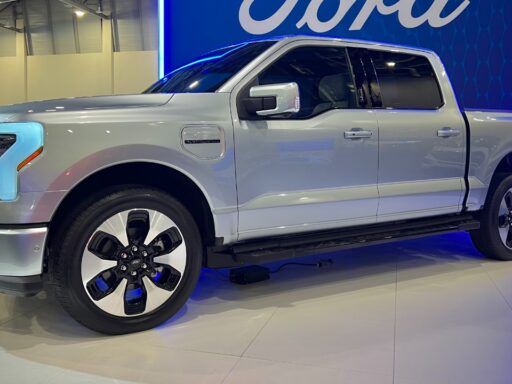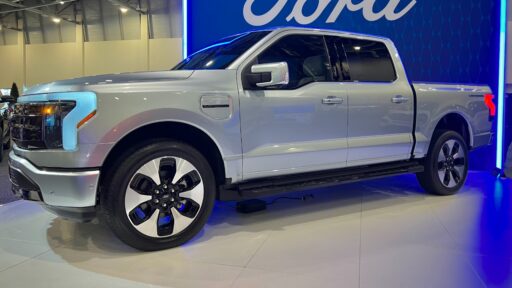
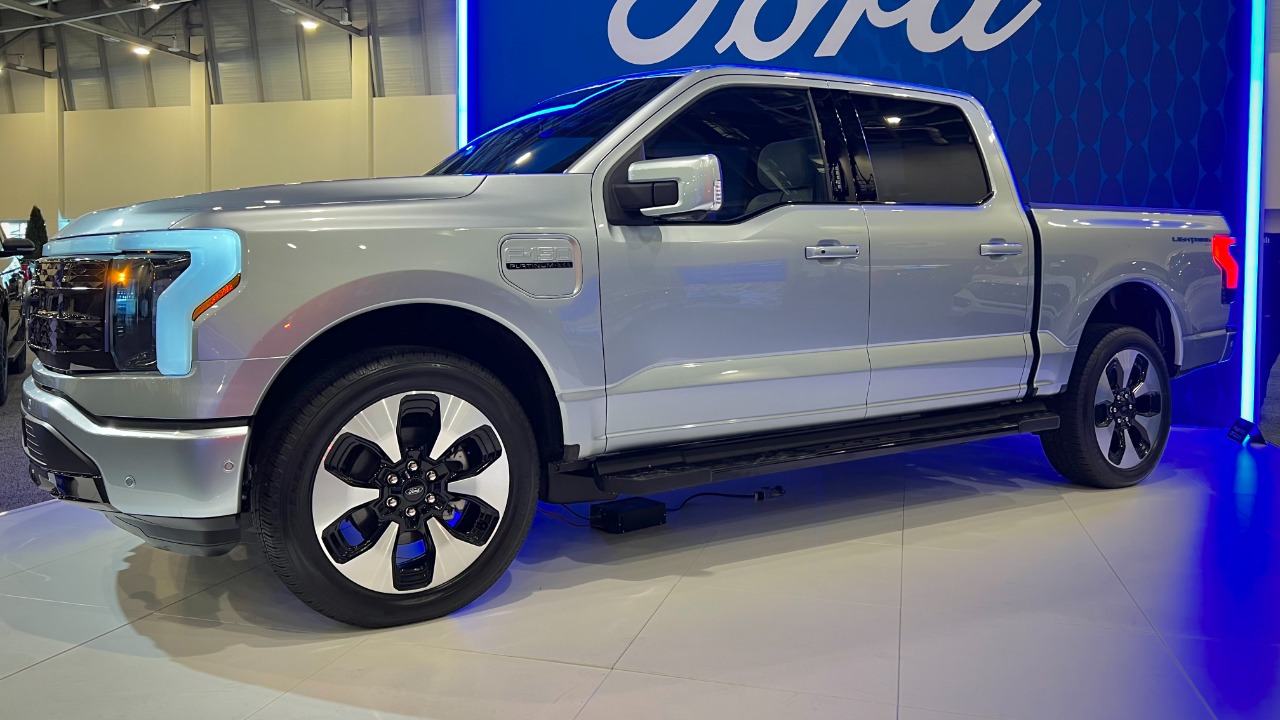

Ford is recalling 14,843 F-150 Lightning electric pickups in the United States because their rear light bar can malfunction, causing the reverse lights to flicker or shut off completely. The defect affects trucks built with a specific supplier module and raises fresh questions about quality control on one of Ford’s most visible electric models. Ford says it is not aware of any crashes or injuries tied to the issue, but the scale of the recall and the nature of the failure make it more than a routine service bulletin.
Details of the F-150 Lightning rear light bar recall
According to recall documents, the issue centers on the full-width light bar that runs across the tailgate of certain F-150 Lightning trucks. That bar houses the white reverse lamps, which are supposed to illuminate reliably whenever the driver selects reverse. In the affected vehicles, a fault in the internal electronics can cause the reverse lights to flicker, dim or go completely dark, even though the truck is in reverse gear. The problem is intermittent, meaning owners might see normal operation on some drives and a failure on others.
The recall covers 14,843 trucks, all of them F-150 Lightning models that use a specific supplier’s LED driver module for the rear light bar. Ford’s investigation traced the problem to that module, which can experience a partial internal failure that disrupts power to the reverse lights. The rest of the light bar can continue to function, so the red running lights or brake lights may still work while the white reverse lamps misbehave. That split behavior can make the defect harder for drivers to notice quickly.
Owners of affected trucks are expected to receive official notification by mail with instructions to schedule a service visit at a Ford dealer. During that visit, technicians will inspect the rear light bar and replace it if it falls within the defective batch. According to recall guidance, the repair will be performed at no cost to the customer, including parts and labor, which is standard practice for safety campaigns of this type.
Ford’s internal testing and field reports prompted the company to open an engineering review earlier this year. That review included analysis of warranty claims, dealer feedback and component testing from the supplier. Once engineers reproduced the flickering and loss of illumination in lab conditions, Ford moved to file a formal recall. Reporting on the campaign notes that the affected trucks span multiple trims, including work-oriented Pro models and higher-end Lariat and Platinum versions, as long as they carry the specific rear light bar assembly identified in the recall.
How the malfunction affects safety and compliance
Reverse lights are not cosmetic features. They serve as a critical signal to pedestrians, cyclists and other drivers that a vehicle is backing up, and they help the driver see obstacles behind the truck in low light. When those lamps flicker or fail, people behind the vehicle may have no visual cue that a 6,000 pound pickup is moving toward them. Even if the driver relies heavily on the rear camera, other road users still depend on the white lights as a clear warning.
The F-150 Lightning’s rear light bar is also a defining design element, which makes the failure more visible from a brand perspective. Federal safety rules, however, focus on function rather than styling. U.S. regulations require that reverse lamps provide consistent white light when the transmission is in reverse. A lamp that flickers or cuts out can fall out of compliance with those standards, which exposes the automaker to regulatory pressure in addition to customer frustration.
Ford has said that it is not aware of any accidents or injuries linked directly to the faulty light bar. Even so, the company’s own defect report acknowledges that the malfunction could reduce rearward visibility and make it harder for others to detect that the truck is backing up. Safety advocates often point out that low-speed backing incidents tend to involve children or older adults in driveways, parking lots and alleys, where a few extra feet of warning can be the difference between a near miss and a serious injury.
The recall also intersects with the F-150 Lightning’s technology story. Many owners rely on features such as the 360-degree camera system and parking sensors, which can give a sense of security while maneuvering in tight spaces. A defective reverse lamp does not disable those systems, but it does remove a traditional and legally required layer of protection. For drivers who share the truck with family members or employees, a hidden lighting defect introduces risk that cannot be managed through careful driving alone.
Why the recall matters for Ford’s EV strategy and reputation
The F-150 Lightning is not just another truck in Ford’s lineup. It is the electric counterpart to the company’s best-selling F-Series, and it carries much of the weight of Ford’s electric vehicle strategy. Any recall on this model draws attention, even when the mechanical fix is straightforward. The rear light bar issue lands in a context where Ford has already faced scrutiny over software glitches, production pauses and earlier recalls on the Lightning and other EVs.
Industry analysts often view safety campaigns as a normal part of modern vehicle life, especially as electronics become more complex. Repeated quality problems, however, can erode consumer confidence, particularly among buyers who are still hesitant about electric trucks. For some prospective customers, hearing that nearly 15,000 Lightnings need new rear light bars reinforces a perception that first-generation EVs are more fragile or experimental than their gasoline counterparts.
Ford has emphasized that it is proactively addressing the defect and that the remedy is relatively simple. The company’s communications around the campaign attempt to frame it as a targeted fix rather than a systemic failure. Coverage of the recall notes that owners can continue to drive their trucks while they wait for service, although they should be aware of the potential for intermittent light loss and exercise extra caution when reversing at night or in crowded areas. One report on the campaign, for example, highlights that 14,843 F-150 Lightning are included in the recall and that Ford dealers will replace the affected light bars free of charge.
The recall also feeds into a broader conversation about how traditional automakers manage supplier relationships in the EV era. The defective component here is a specialized LED module, not a simple bulb. That kind of part often comes from a third-party supplier that works closely with the automaker’s engineering team. When a module fails in the field, it can reflect gaps in joint validation testing or quality checks at the supplier level. For Ford, tightening those processes is critical as the company adds more complex lighting signatures and electronic features to its electric lineup.
What Lightning owners should do next and how Ford is responding
For current F-150 Lightning owners, the immediate step is straightforward. Once recall notices arrive, they should contact a Ford dealer, confirm whether their truck’s VIN is included and schedule a repair appointment. Owners who suspect their reverse lights are already flickering or failing can ask dealers to check for open recalls even before receiving a letter. In many cases, dealers can look up recall status by VIN and order replacement parts in advance to minimize downtime.
Until the repair is completed, drivers can take a few practical measures to reduce risk. They can verify reverse light operation periodically by backing toward a wall or garage door at night and checking for consistent white illumination in the mirrors or camera display. If the lights appear to flicker or go dark, drivers should be especially cautious when reversing in areas with pedestrians and may want to rely more heavily on the rear camera and parking sensors, while recognizing that those tools do not replace visible warning lights for others.