
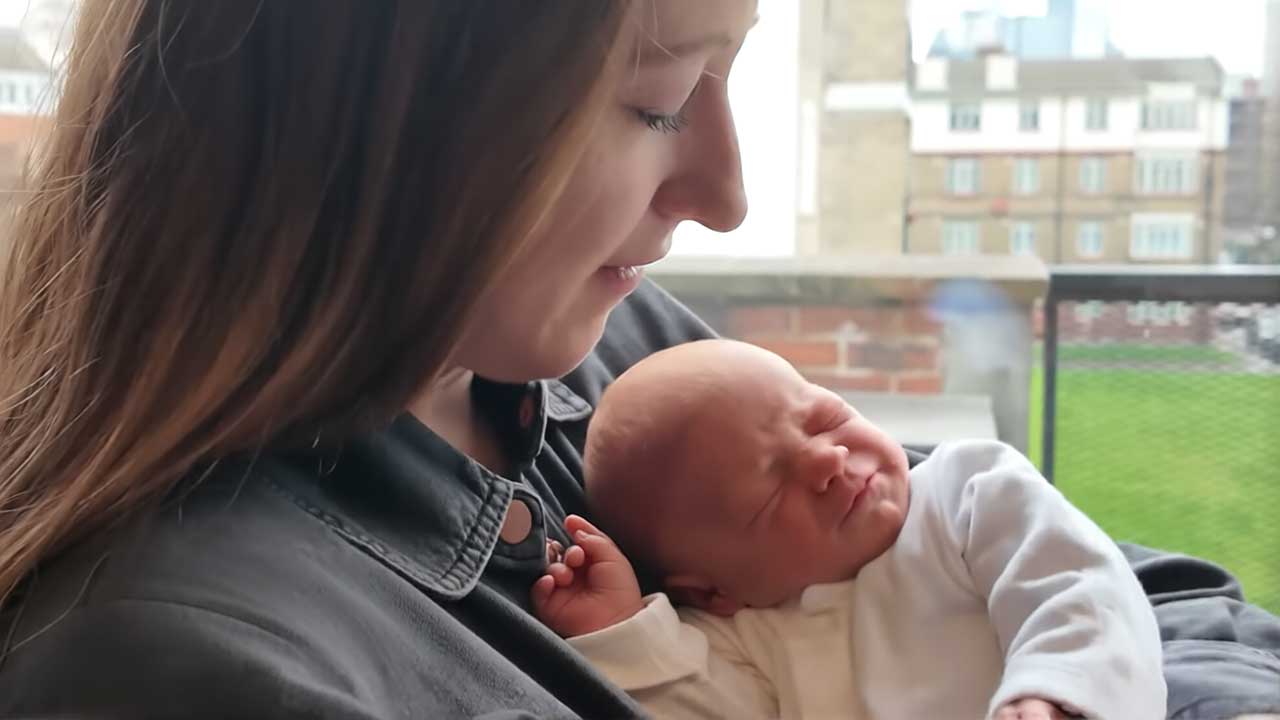

A quiet delivery room in London has become the setting for a medical first that is rippling far beyond the hospital walls. A British woman has given birth after receiving a womb from a deceased donor, creating a new path to parenthood for people who were previously told pregnancy would never be possible. The birth of her son, Hugo Richard Norman Powell, is being hailed as a landmark for transplant medicine and fertility care in the U.K. and around the world.
The story brings together grief and generosity, high‑risk surgery and everyday family hope. A donated uterus, removed from a woman who had died, was transplanted into Grace Bell, who had been born without a viable womb, and later sustained Hugo’s life until he was delivered healthy and strong. For families facing similar diagnoses, the achievement signals that what once sounded like science fiction is starting to move into clinical reality.
The birth that rewrites expectations
At the center of this breakthrough is Hugo Richard Norman Powell, described as a healthy boy and the first child in the U.K. to be born to a mother who received a womb from a dead donor. Reports say Hugo was delivered in London after a pregnancy that followed years of uncertainty for his mother, who had long been told she would never experience pregnancy because she did not have a functioning uterus. In coverage that invites readers to “Celebrate the birth of Hugo Richard Norman Powell,” the child’s full name has quickly become shorthand for a new chapter in reproductive medicine, with his arrival framed as both a family joy and a scientific milestone.
Hugo’s mother, identified as Grace Bell in multiple accounts, had been born without a viable womb, a condition that typically rules out carrying a pregnancy and leaves adoption or surrogacy as the only routes to parenthood. Her situation changed after she underwent a transplant using a uterus from a deceased donor, followed by fertility treatment that led to embryo transfer and pregnancy. One detailed account of the case, titled “UK Baby Born After Deceased Donor Womb Transplant,” notes how the birth in London to Grace Bell del, who once believed she would never experience pregnancy, has given hope to women without a womb and has been described as a landmark birth in the city.
The woman behind the milestone
The patient at the heart of the story, Grace Bell, has been described in official hospital communications as someone who was born without a viable womb and who is now the mother of a baby boy following a groundbreaking transplant. An announcement titled “Delighted mum gives birth to baby boy following groundbreaking womb transplant” from Imperial College Healthcare explains that Grace Bell, who was born without a womb, underwent the procedure as part of a pioneering research programme and later delivered her son, making her case just the third such successful birth in Europe. The same update highlights that the programme has been designed to offer highly specialised care to a small number of patients, reflecting both the complexity of the surgery and the careful selection of candidates.
Other reports flesh out Grace Bell’s journey in more personal terms, presenting her as a British woman who had to confront the emotional shock of being told she would not be able to carry a child, before choosing to undergo a high‑risk transplant and fertility treatment. In a widely shared account that frames her son as a “miracle” baby, she is described as a British mother speaking publicly about the experience of giving birth to her baby boy after undergoing a womb transplant from a dead donor in London, with coverage tagged under “NEED TO KNOW” and “British” to underline both the novelty and the national significance of the case. Taken together, these reports show a patient who moved from private grief to public symbol, while still insisting that she primarily sees herself as a parent who wanted to hold her own child.
How the transplant and pregnancy worked
Behind the emotional headlines lies a complex surgical and medical process that involved a multidisciplinary transplant and fertility team. The uterus used in Grace Bell’s case came from a deceased donor, whose family had consented to womb donation as part of wider organ donation arrangements. According to the Imperial College Healthcare description of the programme, the surgery took place at a major London center, where specialists carried out the transplant and then monitored the graft while immunosuppressive drugs were used to prevent rejection. The same “Delighted mum gives birth” announcement explains that Grace Bell’s transplant was part of a structured research protocol, with strict criteria and follow‑up, and that her eventual pregnancy and delivery represent just the third successful birth from this type of procedure in Europe, a figure that is cited as “just the third in Europe” in the hospital’s own wording.
Fertility treatment also played a central role. Before the transplant, eggs were collected and fertilised to create embryos that could later be transferred once the transplanted womb had settled. One detailed account of the case, presented under the heading “UK Baby Born After Deceased Donor Womb Transplant,” explains that the birth in London came after Grace Bell del underwent embryo transfer at a fertility clinic, leading to a pregnancy that was carefully monitored until Hugo’s delivery. Another report, which refers to the case as the “First British baby born using transplanted womb from dead donor,” notes that Bell’s successful womb transplant from a deceased donor was followed by plans to remove the transplanted womb after her pregnancies are complete, in order to limit long‑term exposure to immunosuppressive medication and reduce the risk of complications.
Why this is a first for the U.K.
Clinicians and researchers are clear that Hugo’s birth is a national first. A detailed news feature that describes the case as a “First British baby born using transplanted womb from dead donor” states that a baby boy has become the first child in the U.K. to be born using a womb transplanted from a dead donor, and that his mother had previously been unable to carry her own child because she was born without a womb. A companion report on the same case, which uses the phrase “First British baby born using transplanted womb from dead donor” in another context, reiterates that this is the first time in the U.K. that a pregnancy has been carried to term in a uterus taken from a deceased donor, underscoring the difference between this procedure and other fertility treatments that do not involve transplantation.
Specialists involved in the field point out that the achievement builds on years of preparatory work, including ethical review, surgical training, and coordination with transplant authorities. The charity and research group behind much of the U.K. effort, highlighted on the site of Womb Transplant UK, has long argued that uterine transplantation could offer a new option to women with absolute uterine factor infertility, a term used for those who lack a functioning womb. The organisation’s materials describe how the team has worked through regulatory and practical hurdles to reach the point where a patient like Grace Bell could receive a transplant and later carry a pregnancy, and they present the birth of Hugo as evidence that the concept can move from theory to practice in a controlled research setting.