
Frozen in Siberian ground for roughly 14,000 years, a tiny wolf puppy has turned out to be an accidental archivist of a vanished world. Inside its stomach, researchers have recovered meat from one of the last woolly rhinoceroses, along with enough DNA to reframe how, and how fast, that Ice Age giant disappeared.
I see this discovery as more than a scientific curiosity. By decoding a single ancient meal, scientists are piecing together why woolly rhinos vanished while other megafauna survived, and they are testing ideas that echo forward into today’s climate and extinction crises.
The wolf pup in the permafrost
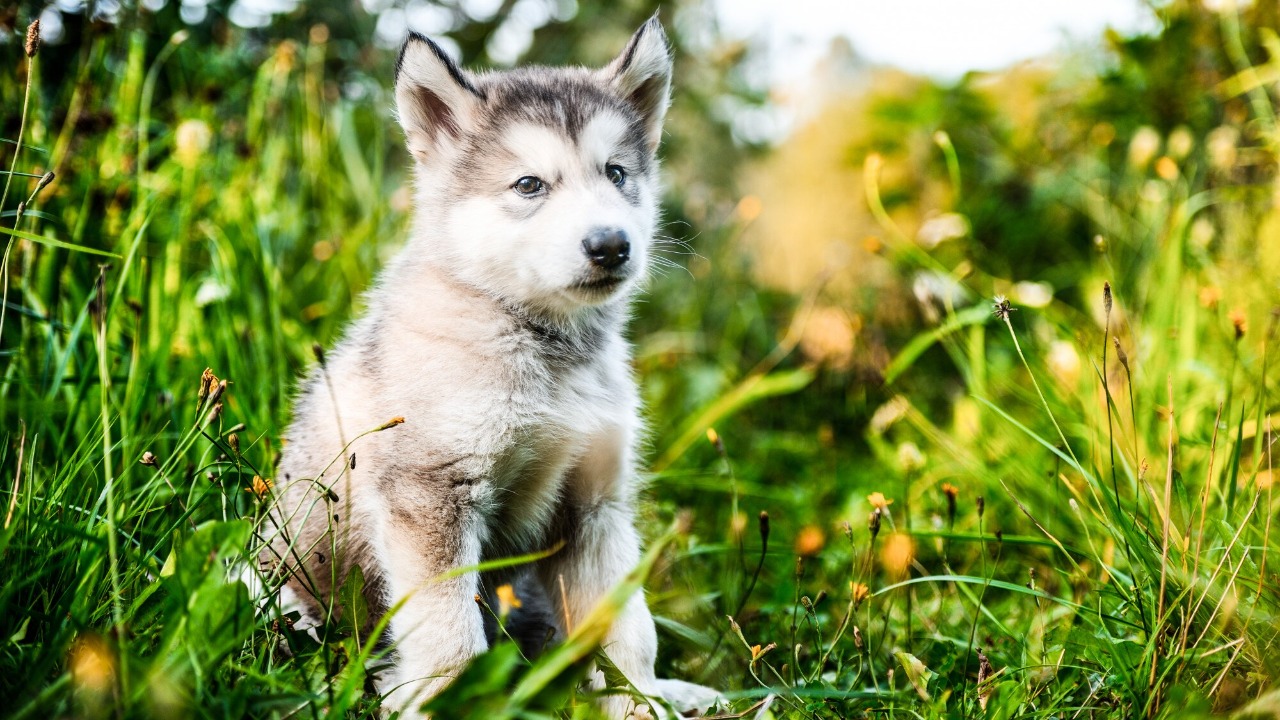
The story begins near the village of Tumat in northeastern Siberia, where mammoth ivory hunters uncovered a mummified wolf pup, Still covered in fur and curled as if asleep, preserved in permafrost so intact that its internal organs were largely untouched. When researchers opened the carcass, they found its stomach packed with grayish meat still threaded with hair, an almost impossible stroke of luck for anyone trying to reconstruct Ice Age food webs, as detailed in early reports from Tumat. An autopsy later confirmed that the pup was very young when it died, likely only a few weeks old, which meant its last meal had been provided by adults in the pack rather than hunted on its own.
For years, the strange meat sat as a mystery sample while techniques in ancient DNA analysis caught up with the opportunity. Earlier coverage described how researchers initially suspected the tissue might belong to a common Ice Age herbivore, perhaps a reindeer or bison, before genetic testing revealed something far rarer. The preserved flesh, pulled from the pup’s gut and examined in detail, became the focus of a series of studies that would eventually show it came from a woolly rhinoceros, a result that surprised even veteran paleontologists who had never seen intact megafauna meat inside an autopsy.
A 14,400-year-old meal and a 14,400-Year-Old genome
When geneticists finally sequenced the mystery meat, they realized they were looking at one of the youngest woolly rhinos ever recorded, dating to roughly 14,400 years ago, a period when the species was already in steep decline. The tissue sample featured in the new work is described as part of a 14,400-Year-Old Woolly Rhino Genome, and the analysis shows that the animal was a juvenile, probably only a few years old, whose flesh had been torn into chunks before ending up in the pup’s stomach, as outlined in a detailed account of the Ancient Wolf Stomach. For me, that timing matters, because it places this individual rhino very close to the species’ final disappearance from Eurasia.
Scientists were able to sequence the genome from the woolly rhino tissue inside the stomach of the wolf, turning a single meal into one of the most complete late-surviving rhino genomes on record. They compared this genome with two previously sequenced woolly rhino genomes, one that was around 18,000 years old and another about 50,000 years old, to track how the population changed as the climate warmed, a comparison that They say spans key warming pulses like the Bølling–Allerød interstadial. The woolly rhinoceros DNA found in the pup’s gut is now considered one of the youngest genetic records of the species ever discovered, a benchmark highlighted in coverage that notes how this late-surviving lineage helps clarify the final chapters of rhino history toward the end of the last Ice Age, as described in a synthesis of Towards the.
What the stomach says about extinction
The genetic story emerging from this 14,400-year-old rhino is not one of a species that had been slowly wasting away for tens of thousands of years. Instead, When Scientists Examined the Contents of a 14,400-Year-Old Ice Age Wolf’s Stomach, They Found that the rhino genome showed relatively healthy diversity, which suggests that the final extinction was rapid rather than a drawn out demographic collapse. Scientists from the Centre for Palaeogenetics, who led the analysis, argue that this pattern fits better with a sudden environmental shock than with a long, gradual decline, a conclusion that is laid out in detail in the discussion of the Woolly surprise.
That conclusion dovetails with other work suggesting that woolly rhinos were highly specialized for cold, dry steppe conditions and may have been particularly vulnerable to abrupt warming. New clues to woolly rhino extinction found in wolf’s stomach indicate that climate shifts, rather than overhunting alone, likely played a central role in the species’ quick extinction, a point that New reporting emphasizes. When I look at the combined evidence, the picture that emerges is of a robust population pushed past a tipping point by rapid environmental change, with human pressures perhaps adding stress but not necessarily driving a slow genetic unraveling, a nuance that is reinforced by the way Scientists frame the rhino’s final centuries.
How predators and people fit into the story
The wolf pup’s last meal also reveals something about predator behavior at the end of the Ice Age. Still covered in fur when it was found, the pup was clearly too young to hunt on its own, so adults in the pack must have either scavenged or actively hunted the juvenile rhino whose meat ended up in its belly, a scenario described in reconstructions of how wolves learned to hunt juvenile woolly rhinos near Still. One interpretation is that as climates shifted and habitats fragmented, predators may have increasingly targeted young rhinos, compounding the pressures on already stressed populations.
At the same time, the very existence of a 14,400-Year-Old Ice Age Wolf and its rhino meal hints at a landscape where humans, wolves, and megafauna were all competing for the same prey. When Scientists Examined the Contents of that Old Ice Age Wolf Stomach, They Found evidence that large carnivores were still thriving in the same regions where people were expanding, a reminder that human hunting was only one part of a complex ecological squeeze, as explored in the broader context of the When Scientists Examined that stomach. I find it telling that the wolf pack was able to bring down or access a juvenile rhino at all, which suggests that even as the climate warmed, these ecosystems still supported formidable predators and prey right up until the rhinos’ abrupt disappearance.
From Quick Take to long-term lessons
Quick Take summaries of the research have focused on the striking headline fact that a wolf pup frozen in the Siberian tundra for 14,000 years had woolly rhino meat in its stomach, and that it took roughly a decade for scientists to fully decode what that meant. A wolf pup frozen in the Siberian ground for that long is extraordinary enough, but the real payoff is that the team could reconstruct a near-complete rhino genome from a wolf cub’s stomach, a feat highlighted in coverage that frames the find as a bridge between Ice Age ecology and modern conservation, as seen in the analysis of the Quick Take. For me, the speed and precision of that work show how far ancient DNA science has come since the pup was first unearthed.
Scientists were able to sequence the genome from the woolly rhino tissue inside the stomach of the wolf using methods that would have been impossible when the carcass was first found, turning undigested meat into a time capsule of population health and extinction dynamics. One researcher described the discovery of intact tissue inside an Ice Age carnivore as “completely unheard of,” underscoring how rare it is to find soft tissue rather than just bone, a reaction captured in early accounts of the 14,000 year old puppy that munched on a rhino for its last meal, as reported in a piece that quoted astonished experts on the Ice Age. As I see it, the lesson is that even a single, well preserved stomach can overturn assumptions about how a species died out, and can sharpen our understanding of how quickly climate and ecological pressures can push a seemingly healthy population over the edge.