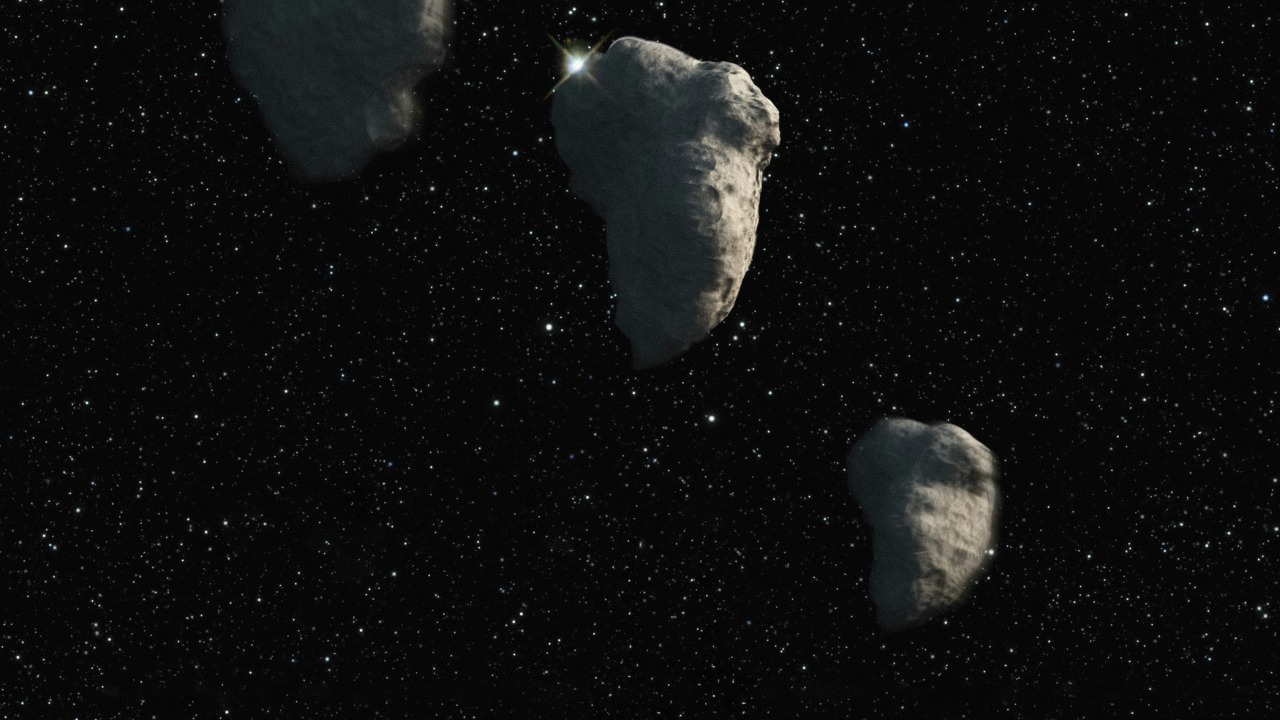

A rock barely a few dozen meters across can erase a metropolis, trigger global economic chaos, and, yes, strip supermarket shelves of basics like toilet paper in a matter of hours. Planetary defense experts now treat that scenario not as science fiction but as a planning problem, shaped by real objects already tracked in the sky. The recent saga of asteroid 2024 YR4, a so‑called “city killer,” shows how close calls can jolt the public while quietly sharpening the systems meant to keep millions of people, and their supply chains, alive.
When I look at the numbers behind 2024 YR4 and similar threats, the story is less about a single doomsday rock and more about how fragile modern life is to sudden shocks. A city‑destroying impact would not only kill directly in the blast zone, it would also ripple through global logistics in ways that feel eerily familiar after pandemic‑era shortages, only faster and far more violent.
From long shot to near miss: how 2024 YR4 spooked Earth
Asteroid 2024 YR4 vaulted into public view after astronomers realized it was a near‑Earth object with the right size and orbit to do serious damage if it ever struck. Early calculations suggested that this “city killer” class rock, only tens of meters wide, had a nonzero chance of hitting Earth in the 2030s. As more telescope data came in, the estimated impact probability briefly climbed to one of the highest levels ever recorded for an object of this size, enough to justify intense tracking and public briefings.
That risk spike did not last. With additional observations, specialists refined the orbit and drove the odds back down, showing that the chance of a collision, once pegged as high as one in 32, was in fact far lower, and then effectively zero. A detailed analysis of the updated trajectory concluded that the impact probability, which had risen to that one‑in‑32 figure, had fallen again as the path of 2024 YR4 relative to Earth became clearer. The episode underscored a basic truth of asteroid monitoring: early numbers are often rough, and the most alarming estimates tend to soften as the data set grows.
Why a “no threat” verdict still matters
Once the orbit of 2024 YR4 was nailed down, the message from scientists was blunt. The object is a near‑Earth asteroid, but updated modeling showed it has no significant chance of hitting Earth in 2032 and beyond. Planetary defense teams folded those results into their risk tables, and the rock slipped off the list of top concerns. For the public, the story seemed to end there, with a sigh of relief and a shrug.
I see a different lesson. The same calculations that now say 2024 YR4 is safe also prove that the detection and tracking pipeline works. Earlier this year, specialists highlighted that the Latest Calculations Conclude 2024 YR4 Now Poses No Significant Threat to Earth in 2032 and Beyond, a verdict reached only after coordinated observations and orbit fitting by multiple teams. That kind of quiet success is exactly what would be needed if a different rock, on a different trajectory, ever pointed squarely at a major city.
What a city‑destroying impact would actually do
Even with 2024 YR4 off the hazard list, the physics of a city‑scale impact remain sobering. A rock in this size range would release energy comparable to a large nuclear weapon, flattening buildings, igniting fires, and killing people across a dense urban core. In a widely shared clip, a short video described how a “city‑killer” asteroid with a 2.3% chance of hitting Earth could, in a worst case, devastate a metropolitan area on December 22, 2032, a scenario that drew 792 likes and 45 comments as viewers tried to process the scale of destruction.
The direct blast would only be the start. Analysts who study planetary defense warn that an impact from one of these objects could lead to mass casualties, refugee crises, political instability, supply chain disruptions, and more, with even smaller events like the Chelyabinsk meteor capable of worldwide effects if they occurred over the wrong place. One assessment of kinetic deflection technology noted that impact from one of these city‑destroying rocks would not stay a local disaster for long. It would quickly become a global emergency, with ripple effects that reach supermarket aisles and factory floors thousands of kilometers away.
Toilet paper, triage, and the fragile web of modern life
When people joke about an asteroid wiping out toilet paper, they are really talking about the fragility of just‑in‑time logistics. A strike on a major port city, industrial hub, or key transport corridor would instantly sever shipping lanes and warehouse networks that keep basic goods flowing. In a televised segment on the rising risk estimates for 2024 YR4, presenters noted that we turn now to the asteroid being called a city killer and that there is a chance it could hit Earth, before reminding viewers that an asteroid hit in the past had already shown how disruptive such events can be. The implication was clear: even a near miss can rattle markets and trigger precautionary stockpiling.
Online discussions about hypothetical impacts often drift quickly from fireballs to food and hygiene. In one widely read thread, commenters debated what humanity would actually do if an asteroid hit a major city, with some arguing that the west, in collaboration with Japan and Russia, would likely fund a massive reconstruction effort like in WWI or II. That kind of mobilization would be aimed not just at rebuilding buildings but at restoring the flow of essentials, from medical supplies to the humble rolls that became symbols of scarcity during the pandemic.
How planetary defense tries to stay ahead of the next scare
Behind the headlines, planetary defense has become a structured, technical discipline. Earlier this year, NASA and other teams raced to collect as much data as possible on 2024 YR4 before it slipped out of view until 2028, with Astronomers using radar and optical telescopes to tighten the error bars on its orbit. That sprint of observations is standard practice for new near‑Earth objects, because the first few weeks after discovery often determine whether a rock can be tracked confidently for decades or lost in the noise.
Once the data are in hand, specialists feed them into models that project where an object will be relative to Earth during future flybys. In the case of 2024 YR4, that process led to a clear statement that it will not hit Earth after all, even though early estimates had raised alarms. The same toolkit, refined on this relatively benign object, would be used to decide whether to launch a deflection mission or evacuation campaign if a future asteroid refused to blink away from the risk tables.