
A family vehicle lives a harder life than many people realize.
It spends years hauling car seats, groceries, sports equipment, school bags, pets and vacation luggage. It sits in traffic, survives spilled drinks, completes thousands of short trips and often becomes the vehicle everyone assumes will simply start every morning.
Then something strange happens.
The children grow up.
The car seats disappear.
And some of those vans just keep going.
Recent longevity research supports the idea that certain family haulers can survive remarkably high mileage. iSeeCars’ latest analysis found the Honda Odyssey has a 13% predicted chance of reaching 250,000 miles, nearly three times the industry average, while separate lifespan research identified the Toyota Sienna, Honda Odyssey and Dodge Grand Caravan among the minivans with the greatest mileage potential.
The original Morning Overview list stretches the definition slightly by including several van-like family vehicles and SUVs, but the common theme remains the same: these are machines with reputations for surviving long after their original family duties are finished.
1. Honda Odyssey: The Family Van That Refuses to Retire
Few vehicles are more closely associated with long-term family ownership than the Honda Odyssey.
It arrived in North America for the 1995 model year and eventually evolved into the V6-powered sliding-door minivan most buyers recognize today. Over multiple generations, Odysseys have accumulated enormous mileage in family, shuttle and commercial service.
The numbers support that reputation.
iSeeCars currently ranks the Odyssey as its most reliable minivan and estimates that roughly 24% have the potential to reach at least 200,000 miles.
That does not make every Odyssey indestructible. Earlier V6 generations became notorious for automatic-transmission problems, while power sliding doors can become expensive headaches as vehicles age.
Still, a properly maintained Odyssey can remain useful long after the children who once occupied its third row are driving cars of their own.
2. Toyota Sienna: Possibly the Strongest Traditional Minivan Bet
If the Odyssey has a genuine longevity rival, it is the Toyota Sienna.
Toyota introduced the Sienna for 1998 on a stretched Camry-derived platform, deliberately giving American families something more conventional than the unusual mid-engine Previa it replaced.
That decision aged exceptionally well.
In iSeeCars’ lifespan research, the Sienna has an estimated potential lifespan approaching 240,000 miles, ranking ahead of the Odyssey and Grand Caravan among minivans.
Later generations added all-wheel drive, while the current Sienna switched completely to a hybrid powertrain.
That creates an interesting long-term question.
Older V6 Siennas have decades of durability evidence behind them.
Today’s hybrid version promises significantly better fuel economy but introduces traction-battery components whose ultimate 20-year ownership story is still being written.
Either way, the Sienna remains one of the strongest answers to the question:
Which minivan would someone buy if keeping it for 15 years were part of the plan?
Toyota’s history of the Sienna
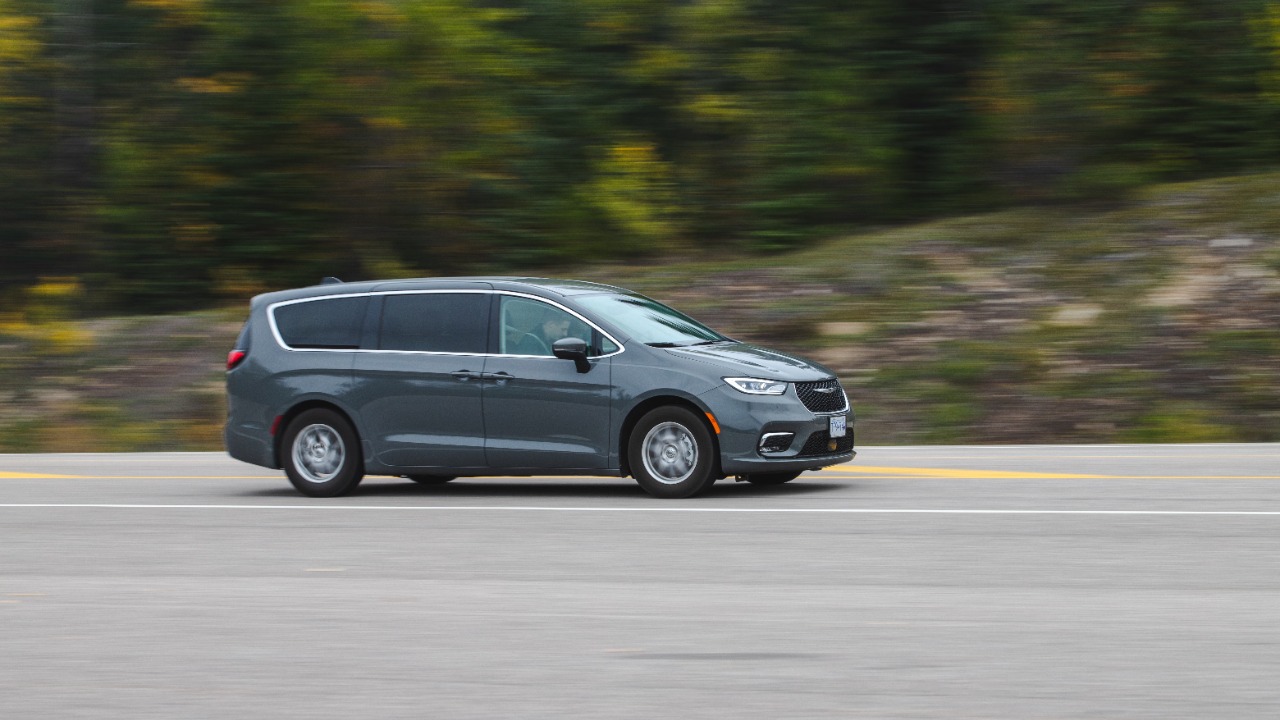
3. Chrysler Pacifica: Comfortable, Clever and Still Proving Itself
The Chrysler Pacifica arrived for 2017 as the modern successor to the Town & Country.
It brought Chrysler’s brilliant Stow ‘n Go seating into a considerably more contemporary package and eventually offered something unusual in the segment: a plug-in hybrid.
The Pacifica deserves recognition for practicality and comfort, but calling it proven for extreme longevity requires more caution than with the Sienna or Odyssey.
Morning Overview correctly notes that it simply has a shorter track record. Early plug-in hybrid examples also faced recalls, including concerns involving battery fires.
That does not mean a Pacifica cannot last.
It means buyers considering one for 200,000-mile ownership should pay close attention to service history, recall completion and powertrain choice.
The Pacifica is arguably the most sophisticated traditional American minivan.
Whether it becomes one of the longest-lasting will take more years to establish.
4. Toyota Previa: The Strange Egg That Wouldn’t Die
Toyota’s Previa is one of the most unusual minivans ever sold in America.
Rather than placing its four-cylinder engine conventionally under the hood, Toyota mounted it almost flat beneath the front seats.
The resulting egg-shaped van looked futuristic in the 1990s and gained a reputation for accumulating enormous mileage.
Its problem today is not necessarily durability.
It is serviceability.
Working on a mid-engine minivan is inherently less straightforward than opening the hood of a Sienna. Parts availability also becomes more difficult as survivors approach three decades old.
That creates a strange situation.
The Previa’s mechanical toughness helped many examples survive.
Its age and unusual engineering now make keeping those survivors alive increasingly expensive.
For enthusiasts, that is part of the appeal.
For an ordinary family wanting cheap transportation, an old Sienna is the easier proposition.
5. Honda Element: Not a Minivan, but It Thinks Like One
The Honda Element stretches the definition of “minivan,” but its inclusion makes sense.
Built from 2003 through 2011 using CR-V-related mechanicals, the boxy Element offered rear-hinged doors, a highly configurable interior and durable cabin materials designed around active lifestyles.
It seated only four.
Its clamshell doors could be awkward in tight parking spaces.
Yet the Element became one of those vehicles owners found endlessly useful.
Camping.
Dogs.
Bicycles.
Surfboards.
Moving furniture.
College.
Commuting.
Its relatively conventional Honda four-cylinder drivetrain is a major reason so many remain on the road.
Perhaps the clearest sign of the Element’s success is how expensive clean used examples can remain despite being more than 15 years old.
It became more desirable after Honda stopped making it.
6. Kia Carnival: The Newcomer With Something to Prove
The Kia Carnival replaced the Sedona name in the U.S. for 2022, combining traditional minivan practicality with SUV-inspired styling.
Kia also backs new Carnivals for the original owner with its long powertrain warranty, which gives buyers additional reassurance during early ownership.
But warranty length and actual lifespan are not the same thing.
The Carnival simply has not existed long enough to establish the 20-year durability record of an Odyssey or Sienna. The hybrid version is newer still.
That means buyers considering a Carnival as a decade-plus family vehicle are partly betting on Kia’s modern manufacturing quality.
So far, it is an appealing bet.
It is not yet a historically proven one.
7. Dodge Grand Caravan: Kept Alive by Sheer Ubiquity
The Dodge Grand Caravan may be the ultimate example of a vehicle surviving because everyone knows how to fix one.
The stretched Grand Caravan arrived in 1987 and remained in production until 2020.
Over those decades, fleets bought enormous numbers of them.
Taxi companies.
Rental agencies.
Wheelchair-accessibility converters.
Families.
Businesses.
That created a vast ecosystem of used components, replacement parts and mechanics familiar with the platform.
iSeeCars estimates a potential lifespan of around 209,000 miles for the Grand Caravan.
That does not mean it had Toyota-level engineering consistency.
Earlier Chrysler automatic transmissions earned a poor reputation, and numerous components can become maintenance items with age.
But inexpensive parts availability matters enormously once a vehicle reaches 150,000 miles.
A van lasts only if repairing it still makes economic sense.
For millions of Grand Caravans, it did.
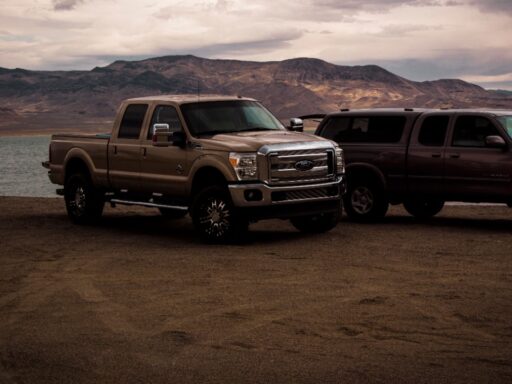
8. Chevrolet Suburban: When a Family Van Becomes a Truck
The Chevrolet Suburban is obviously not a minivan.
It earns a place here because it has performed the same basic family-hauling job for generations while using fundamentally different engineering.
Its body-on-frame construction and truck-based powertrains make it larger, heavier and thirstier than a traditional minivan.
They can also make it remarkably durable.
The latest iSeeCars longevity study gives the Suburban an 11.8% predicted chance of exceeding 250,000 miles, roughly 2.5 times the overall vehicle average.
That is substantial evidence behind the reputation.
Fleet operators understand this well.
Airport shuttles and livery services can put enormous mileage onto full-size GM SUVs because their truck-derived components were designed around demanding loads.
The trade-off is operating cost.
A Sienna transports a family efficiently.
A Suburban transports the family, boat and half the garage.
9. Ford Transit Connect: A Work Van Pretending to Be a Family Car
The Ford Transit Connect came from the opposite direction.
Instead of designing a family vehicle and making it tougher, Ford took a compact commercial van and added windows and passenger seating.
That gave the Transit Connect wagon an unusually practical shape.
Its commercial roots also meant it was designed around frequent loading, unloading and everyday fleet use.
The downside was refinement.
It could not match a Sienna or Odyssey for ride comfort, noise isolation or passenger luxury.
Ford also discontinued North American Transit Connect sales after 2023, making long-term parts and dealer support a larger consideration.
But as a practical family-and-work vehicle, the formula remains appealing.
Sometimes longevity comes not from sophisticated engineering but from a vehicle being designed to work every day.
Which Minivan Has the Best Evidence for Long-Term Ownership?
Once the list is narrowed to actual minivans, the answer becomes much clearer.
The Toyota Sienna and Honda Odyssey have the strongest modern evidence.
iSeeCars estimates the Sienna’s potential lifespan at roughly 239,607 miles and the Odyssey’s at 235,852 miles, with the Grand Caravan and Kia Sedona trailing above 200,000 miles.
More recent analysis also places the Odyssey among the top 25 vehicles overall for the likelihood of reaching 250,000 miles.
That does not guarantee a used example will survive.
Maintenance history matters enormously.
So does generation.
A neglected Toyota with 120,000 miles can be a worse purchase than a carefully maintained Chrysler with 150,000.
Longevity rankings describe populations of vehicles.
They do not replace an inspection of the one sitting in front of a buyer.
The Secret Isn’t Simply Buying the “Right” Badge
A minivan that survives 250,000 miles still needs help.
Oil changes cannot be ignored.
Transmission fluid matters.
Cooling systems age.
Suspension components wear.
Timing belts need replacement on engines that use them.
Sliding doors develop problems.
Rust can destroy an otherwise healthy vehicle in regions that heavily salt roads.
A family’s driving habits matter too.
Ten years of gentle highway commuting is very different from ten winters of short trips, potholes and road salt.
The badge establishes the starting point.
Maintenance determines much of what happens afterward.
Sometimes the Best Family Car Is the One You Stop Needing
That is what makes high-mileage minivans unusually interesting.
They are purchased for a specific stage of life.
Children arrive.
Space becomes essential.
Sliding doors suddenly make more sense than sports-car styling.
Then the children become teenagers.
Then drivers.
Then adults.
Eventually, the vehicle that was bought because three car seats needed somewhere to go no longer has any car seats at all.
And yet an Odyssey or Sienna with proper maintenance may still have years of driving left.
That may be the most meaningful definition of automotive durability.
Not simply surviving 200,000 miles.
But staying useful long enough that the reason the family originally bought the vehicle disappears before the vehicle does.