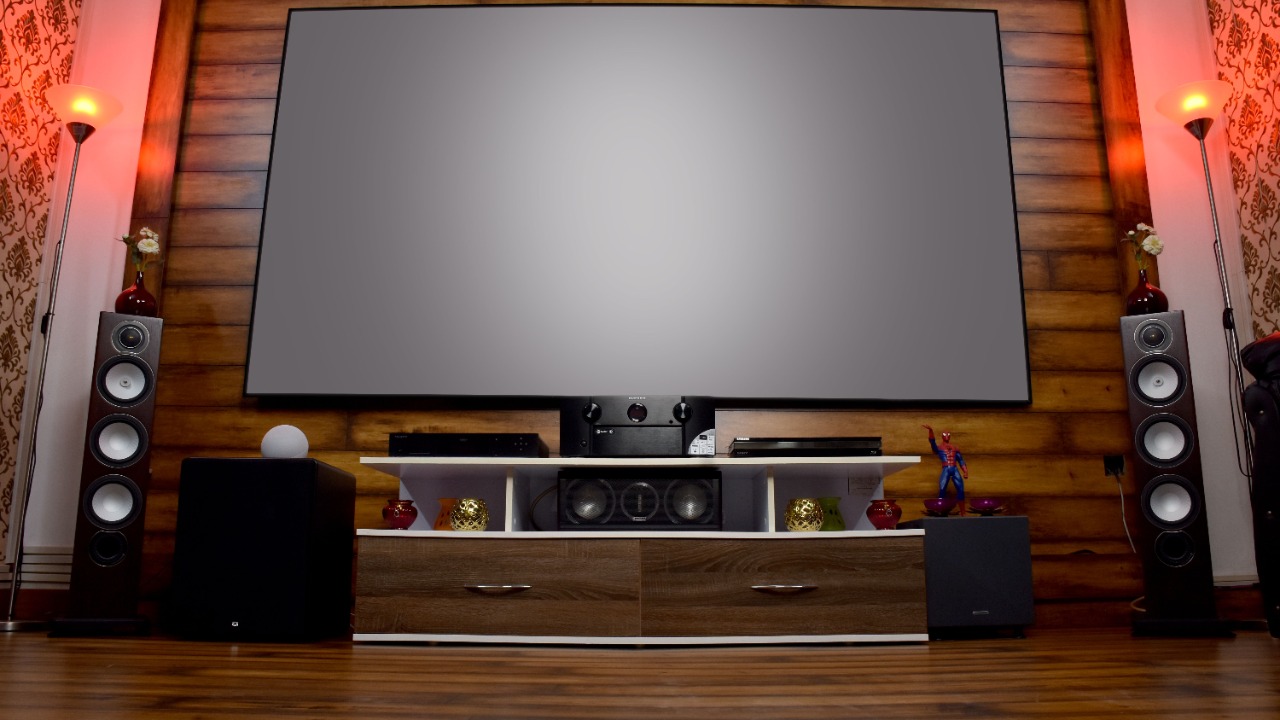

A home theater system can turn an ordinary living room, basement or spare bedroom into a dedicated entertainment space. Instead of relying on a television’s built-in speakers, it combines a larger display with properly positioned audio equipment to create a more immersive viewing experience.
The setup does not need to copy a commercial cinema exactly. A basic system might include a television, soundbar and subwoofer, while a more advanced room may use a projector, AV receiver, surround speakers and acoustic treatment.
The main advantage is control. The homeowner chooses the screen, sound, seating, lighting and content while avoiding ticket prices, crowded auditoriums and fixed showtimes.
A well-planned system can also support gaming, music, sports and family events. These six benefits explain why home theaters continue to attract homeowners even as televisions and streaming services become more capable.
1. Movies Become More Immersive
The most immediate benefit is a more cinematic experience.
Television speakers are usually small and positioned inside a thin cabinet. They can reproduce everyday programming adequately, but they often struggle to create convincing bass, wide sound or clear separation between effects.
A home theater system places speakers around the listener. In a conventional 5.1 arrangement, front speakers handle much of the music and action, a centre channel reproduces dialogue, rear speakers create surrounding effects and a subwoofer handles low frequencies.
More advanced systems may add overhead or upward-firing speakers for height effects. Dolby explains that Dolby Atmos can place sound around and above the listener, making aircraft, weather and moving objects appear to travel through three-dimensional space.
This added direction improves more than loud action scenes. Quiet environmental sounds, music and off-screen dialogue can also feel more natural.
The system does not need dozens of speakers to make a difference. A well-positioned soundbar and subwoofer can provide a noticeable improvement over built-in TV audio, especially in a small room. Separate speakers generally offer greater control and a wider soundstage in larger spaces.
2. Dialogue Can Become Easier to Understand
Many viewers raise the volume during conversations and lower it again when an action sequence begins.
This problem is partly caused by the wide dynamic range used in modern film soundtracks. It can also result from poor television speakers, room reflections or dialogue being mixed primarily into a centre channel that the television cannot reproduce clearly.
A dedicated home theater system can improve speech clarity by assigning dialogue to a separate centre speaker. Because that speaker is positioned close to the screen, voices appear to come from the actors rather than from the side of the room.
Some receivers and soundbars also include dialogue-enhancement modes. These can raise the frequencies associated with speech without increasing every explosion or musical effect equally.
Sony, for example, describes centre-speaker and voice-enhancement functions designed to improve the placement and clarity of conversations in its current home-theater sound systems.
Speaker quality alone will not solve every dialogue problem. The centre channel must be angled toward the seating area, and hard surfaces may need rugs, curtains or other materials to reduce excessive echoes.
Once properly set up, however, clearer speech can reduce dependence on subtitles and make films, dramas and news programs easier to follow at a comfortable volume.
3. Every Viewing Session Becomes More Convenient
A commercial theater offers scale, but it also requires travel, tickets and planning.
At home, a film can begin whenever the household is ready. Viewers can pause it, adjust the temperature, prepare their own food and choose the seating position.
This convenience becomes particularly valuable for families with children, people with mobility limitations and anyone who dislikes crowded venues. There is no need to arrive before a fixed showtime or sit through advertisements and trailers unless the viewer chooses to watch them.
The home environment also allows greater control over accessibility. Subtitles, audio-description tracks, screen brightness and volume can be adjusted for the people in the room.
Streaming platforms provide a large library of films, television programs, documentaries and live events. Physical Blu-ray and Ultra HD Blu-ray discs can provide higher bitrates and more consistent quality for viewers who prioritize audio and video performance.
The result is not merely a replacement for occasional cinema visits. A home theater makes higher-quality entertainment available on ordinary evenings without the preparation required for a trip outside the home.
4. The Same System Can Improve Sports, Gaming and Music
A home theater is not limited to movies.
Sports broadcasts can benefit from a larger screen and wider sound. Crowd noise fills the room, commentary remains centred and field-level effects create a stronger sense of being inside the stadium.
Gaming can benefit even more from directional audio. Sounds arriving from behind or beside the player may reveal approaching opponents, vehicles or environmental threats. A large display and responsive audio system can also make racing, simulation and adventure games feel more engaging.
Compatibility still matters. Gamers should check that the television or receiver supports the required resolution, refresh rate, variable refresh rate and low-latency features. Passing a console through an older receiver may limit video performance even when the television itself supports newer standards.
The speakers can also function as a serious music system. Stereo recordings may use the front left and right speakers, while compatible spatial-audio releases can use the complete surround arrangement.
Modern systems often support Bluetooth, Wi-Fi or direct streaming from phones and computers. Sony notes that its surround systems can be used for music and podcasts as well as films and television through common wireless connections.
This flexibility helps justify the cost because the equipment can serve several forms of entertainment rather than remaining unused between movie nights.
5. It Creates a Dedicated Space for Family and Guests
A home theater can become a social area rather than a room used only by one enthusiast.
Families can establish regular movie nights, watch important sporting events together or use the space for children’s entertainment. Guests can gather for premieres, tournaments, concerts and major broadcasts.
The dedicated environment can also reduce everyday distractions. Controlled lighting, comfortable seating and better sound encourage viewers to focus on the content rather than watch casually while moving around the house.
This benefit does not require a completely separate room. A living room can function as a theater when the television, speakers and furniture are arranged around a clear viewing position.
A dedicated room offers more freedom. Darker walls, blackout curtains, acoustic panels and fixed seating can improve performance without affecting the design of the main living area.
The room can also be customized for the household. Some people prefer traditional cinema-style seating, while others choose sofas, recliners or a flexible layout suitable for children and guests.
A successful home theater is therefore not defined by how expensive it looks. Its value comes from making entertainment more enjoyable and easier to share.
6. The System Can Be Upgraded Gradually
A home theater does not need to be purchased all at once.
A homeowner can begin with a television and soundbar, then add a subwoofer or rear speakers later. A component-based system might start with an AV receiver and two front speakers before expanding to a centre channel and full surround arrangement.
This flexibility makes it possible to spread the cost over time and replace individual parts without rebuilding the entire system.
Separate components can also offer greater longevity. A good pair of passive speakers may remain useful across several generations of televisions, streaming devices and receivers.
A soundbar is usually easier to install and occupies less space. Consumer Reports describes it as a relatively straightforward and affordable solution for weak television audio, although separate-component systems may be better suited to large rooms or listeners seeking a more theater-like result. Its soundbar buying guide explains the main differences buyers should consider.
Planning for upgrades can prevent unnecessary spending. Running speaker wire before walls are finished, selecting a receiver with spare channels and leaving ventilation space around equipment can make later improvements easier.
A Home Theater Can Reduce Entertainment Spending Over Time
Installing a system requires an initial investment, but it may reduce the frequency of paid cinema visits.
A family buying several tickets, food and transport for each new release can spend a significant amount on a single evening. Watching at home still requires streaming subscriptions, rentals or discs, but the same equipment can be used repeatedly.
The savings should not be exaggerated. Premium televisions, projectors, receivers and speakers can cost far more than years of occasional cinema tickets.
The financial argument becomes stronger when the system replaces several activities. It may function as a cinema, gaming setup, music system and event space within the home.
Buyers should calculate the complete installation cost rather than focusing only on the television. Cables, speaker stands, wall mounts, seating, acoustic treatment and electrical work can add to the budget.
Better Control Can Improve the Experience
A home system allows the owner to control settings that are fixed inside a commercial theater.
Screen brightness can be adjusted for the room. Speaker levels can be balanced around the main seats. Bass can be reduced at night, and listening modes can be changed for films, television or music.
Many modern receivers and premium soundbars include automatic room calibration. A microphone measures how test sounds behave in the room, after which the system adjusts delays, levels and frequency response.
Calibration cannot correct every acoustic problem, but it can improve consistency when speakers are positioned at different distances from the listener.
Room design remains important. Placing a sofa directly against the rear wall can create uneven bass, while an uncovered window may produce distracting reflections on the screen.
The best results usually come from treating the system as a complete room rather than a collection of expensive devices.
Installation Requires Thoughtful Planning
Home theaters also have disadvantages.
A multi-speaker system creates cables, requires space and may disturb neighbouring rooms. Large projectors perform best in controlled lighting, while powerful subwoofers can transmit vibration through walls and floors.
Equipment also consumes electricity. Televisions, receivers, consoles and streaming devices contribute to a home’s plug loads, particularly when they remain in standby mode. The US Department of Energy recommends considering efficiency when purchasing televisions and recognizing the cumulative electricity use of entertainment equipment. Its energy-efficient television guidance provides a useful starting point.
Ventilation is essential because receivers, amplifiers, consoles and projectors generate heat. Equipment should not be packed tightly inside closed cabinets unless sufficient airflow is provided.
Homeowners should also avoid selecting the largest screen that physically fits. Viewing distance, resolution and room layout determine whether the image feels immersive or uncomfortable.
Is a Home Theater Worth Installing?
A home theater is most worthwhile for households that regularly watch films, television, sports or play games together.
Its greatest benefits are stronger immersion, clearer dialogue, greater convenience and the ability to use one system for several types of entertainment. It can also create a dedicated social space and be upgraded gradually as the budget permits.
The ideal setup does not need to be extravagant. A correctly positioned midrange system can outperform expensive equipment installed without attention to room size or speaker placement.
A small room may need only a capable television, soundbar and subwoofer. A larger dedicated room can justify separate speakers, an AV receiver and a projector.
The goal is not to duplicate every feature of a commercial cinema. It is to create a comfortable, controlled environment that makes entertainment more enjoyable for the people who use it.